
Side-by-Side IQ Profile
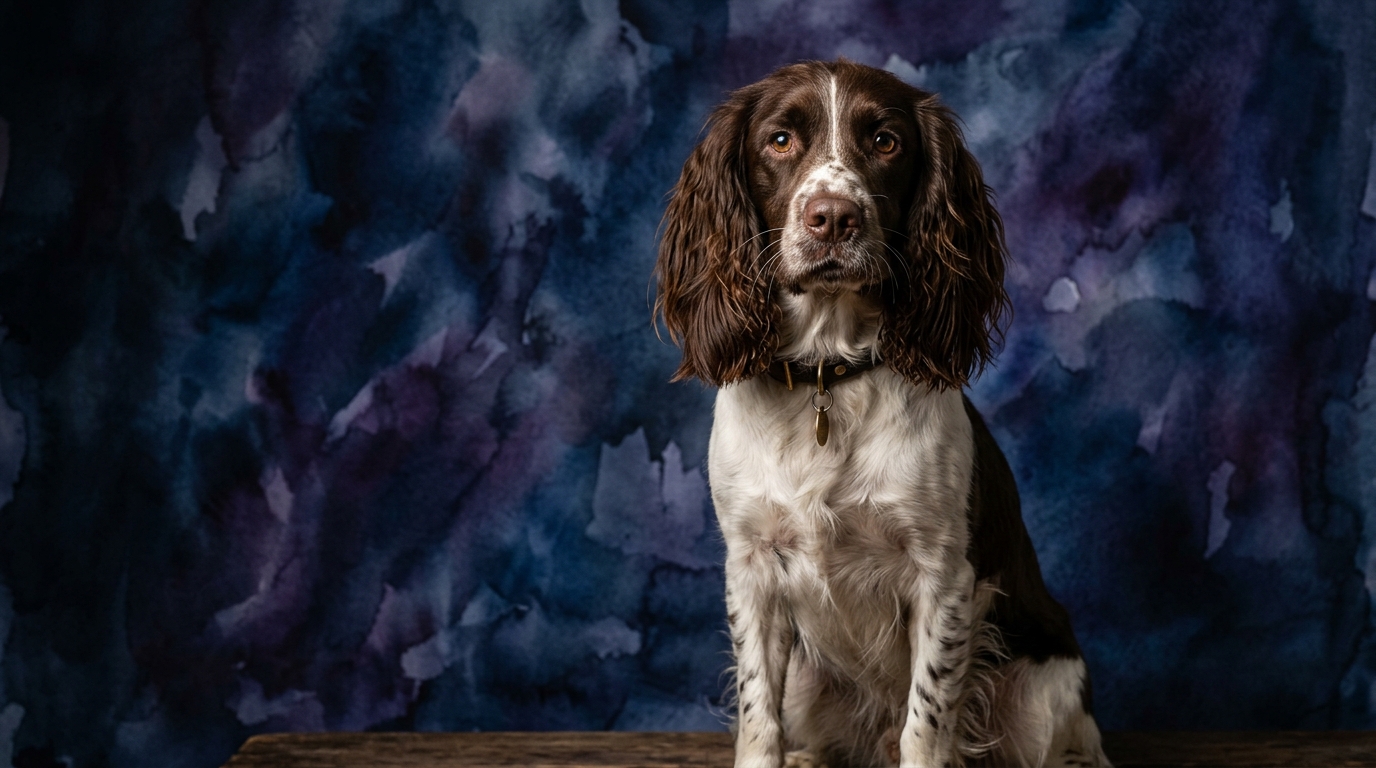
The English Springer Spaniel, with its impressive Coren rank of 13, showcases a robust cognitive profile. Its Problem Solving ability is rated 4/5, indicating a strong capacity for navigating complex situations and finding solutions. Training Speed is exceptional at 5/5, reflecting a keen eagerness to learn and rapid acquisition of new commands and behaviors. Social Intelligence, at 4/5, highlights its cooperative nature and adeptness at understanding human cues and intentions. An Instinctive Drive of 5/5 underscores its powerful natural instincts for scent work and retrieving, while its Memory, also 4/5, allows for excellent retention of past experiences and learned tasks.
The Parson Russell Terrier, though not Coren-ranked, presents a distinct cognitive makeup tailored for its demanding role. Its Problem Solving ability stands at 3/5, suggesting a more independent, persistent approach to challenges rather than rapid, collaborative solutions. Training Speed is 3/5, indicating that while trainable, it may require more consistent effort and creative methods compared to breeds eager to please. Social Intelligence is 3/5, pointing to a more self-reliant disposition that, while not aloof, can be less focused on human-centric cooperation. Its Instinctive Drive, rated 3/5, is intensely focused on its original purpose of hunting vermin, manifesting as tenacious pursuit, and its Memory at 3/5 supports retention of hunting strategies and learned routines.
Where English Springer Spaniel Wins Cognitively
The English Springer Spaniel demonstrably outshines the Parson Russell Terrier in several key cognitive dimensions, making it a highly versatile and adaptable companion. Its Problem Solving score of 4/5, compared to the Parson's 3/5, means a Springer is more likely to quickly assess novel situations, such as figuring out how to open a gate or retrieve a toy from an awkward spot, often with an eye towards human collaboration. This isn't just about raw brainpower, but about a cognitive style that prioritizes efficient, often cooperative, solutions.
Furthermore, the Springer's superior Social Intelligence (4/5 vs. 3/5) allows for a deeper, more nuanced understanding of human communication, including subtle body language and vocal tones. This fosters a highly responsive partnership, where the dog anticipates commands and readily adjusts its behavior based on handler feedback. Coupled with its 5/5 Training Speed and 4/5 Memory, the Springer excels at mastering complex sequences of commands, excelling in disciplines like obedience, agility, and scent detection, where rapid learning and accurate recall are paramount. Its high Instinctive Drive (5/5) is also broader, encompassing retrieving, flushing, and tracking, making it a more multi-faceted working dog than the specialized terrier.
Where Parson Russell Terrier Wins Cognitively
While the Parson Russell Terrier's cognitive scores are generally lower than the Springer's, its unique profile offers distinct advantages in specific contexts. The Parson's Problem Solving ability (3/5) is less about rapid, collaborative solutions and more about tenacious, independent, and often creative persistence in the face of obstacles. For instance, when pursuing quarry underground, a Parson must independently navigate complex tunnels, outwit its prey, and find its way back, tasks where relentless determination trumps quick obedience. This self-reliance in problem-solving is a cognitive win for specific working roles.
Its Instinctive Drive, rated 3/5, is not as broad as the Springer's, but it is incredibly focused and intense, a critical asset for its original purpose. This drive manifests as an unyielding determination to pursue and engage vermin, a cognitive specialization that makes it exceptionally effective in its niche. The Parson's Social Intelligence (3/5) might imply less reliance on human direction in the field, allowing it to make independent decisions crucial for successful hunting without constant handler input. This independence, while challenging for some training methods, is a cognitive strength in scenarios demanding autonomy and single-minded focus on a task.
Which is Easier to Train and Why
When it comes to ease of training, the English Springer Spaniel holds a significant advantage over the Parson Russell Terrier, a difference rooted deeply in their cognitive blueprints. The Springer's Training Speed is rated an outstanding 5/5, reflecting an inherent eagerness to please its handler and a rapid ability to associate commands with actions and rewards. Their high Social Intelligence (4/5) further enhances this, as they are adept at reading human intentions and respond enthusiastically to positive reinforcement, making training sessions productive and enjoyable. Springers thrive on cooperative tasks and mental stimulation, quickly picking up complex routines and exhibiting excellent recall, even amidst distractions.
In contrast, the Parson Russell Terrier, with a Training Speed of 3/5 and Social Intelligence of 3/5, presents a different training challenge. While certainly trainable, they possess a strong independent streak and a tenacious, self-directed nature that can sometimes be perceived as stubbornness. Their problem-solving skills are geared towards autonomous action rather than awaiting instruction, meaning they might devise their own solutions if a command isn't immediately clear or compelling. Training a Parson requires consistency, patience, and often more creative, engaging methods to capture their attention and channel their intense focus. They respond best to training that taps into their innate drive and allows them to feel like they are 'winning' or achieving a goal independently, rather than merely obeying.
Which Suits Active Owners vs Relaxed Owners
For active owners seeking a highly engaged and cooperative canine partner, the English Springer Spaniel is an exceptional fit. Its Instinctive Drive (5/5) demands significant physical and mental exercise, including long walks, runs, scent games, and retrieving activities. Coupled with its high Problem Solving (4/5) and Memory (4/5), Springers thrive on learning new tricks, participating in dog sports like agility or flyball, and performing tasks that challenge their cognitive abilities. Their social intelligence (4/5) means they genuinely enjoy being part of family activities and require consistent interaction, making them ideal for owners who want a constant, active companion involved in their daily routines. A relaxed owner might find a Springer's need for engagement overwhelming.
The Parson Russell Terrier, while also requiring an active lifestyle, suits a different kind of active owner—one who appreciates tenacity, independence, and a dog with a strong will. Its instinctive drive (3/5), though intense, is highly focused, meaning they need outlets for digging, chasing, and exploring. Their problem-solving (3/5) and social intelligence (3/5) suggest they are less prone to being 'velcro' dogs and might be content with independent exploration in a secure yard, provided their exercise needs are met. Relaxed owners would likely struggle with a Parson's persistent energy and need for mental stimulation, which, if unchanneled, can lead to destructive behaviors like excessive digging or barking. They are best for owners who enjoy structured activities like Earthdog trials, long hikes, or engaging in problem-solving games that cater to their terrier instincts, rather than simply casual companionship.
The Verdict
Opt for an English Springer Spaniel if you seek a highly trainable, cooperative, and versatile companion eager to learn and participate in a wide array of activities, from dog sports to family outings.
Choose a Parson Russell Terrier if you value an independent, tenacious, and incredibly focused dog for specific working tasks or for an active lifestyle that appreciates a spirited, self-reliant personality.
🧠 Find Your Pet's IQ Score
Our Pet IQ Lab assessment covers 25+ tests across 5 cognitive dimensions — personalized to your breed.
Take the Full IQ Test →Frequently Asked Questions
Is the English Springer Spaniel truly easier to train than the Parson Russell Terrier?
Yes, the English Springer Spaniel generally demonstrates faster training speed (5/5) and higher social intelligence (4/5), making it more receptive to commands and eager to please compared to the Parson Russell Terrier's more independent nature.
Which breed is better for a family with children, considering their intelligence profiles?
The English Springer Spaniel's higher social intelligence (4/5) and cooperative nature generally make it a more adaptable and patient family companion, though proper socialization is crucial for both breeds to ensure positive interactions.
How do their problem-solving skills differ in practical terms for an owner?
An English Springer Spaniel (4/5) might quickly figure out how to open a treat container or learn a complex puzzle toy with guidance, while a Parson Russell Terrier (3/5) might persistently dig under a fence or independently find a way to access a small critter, relying more on self-directed determination.