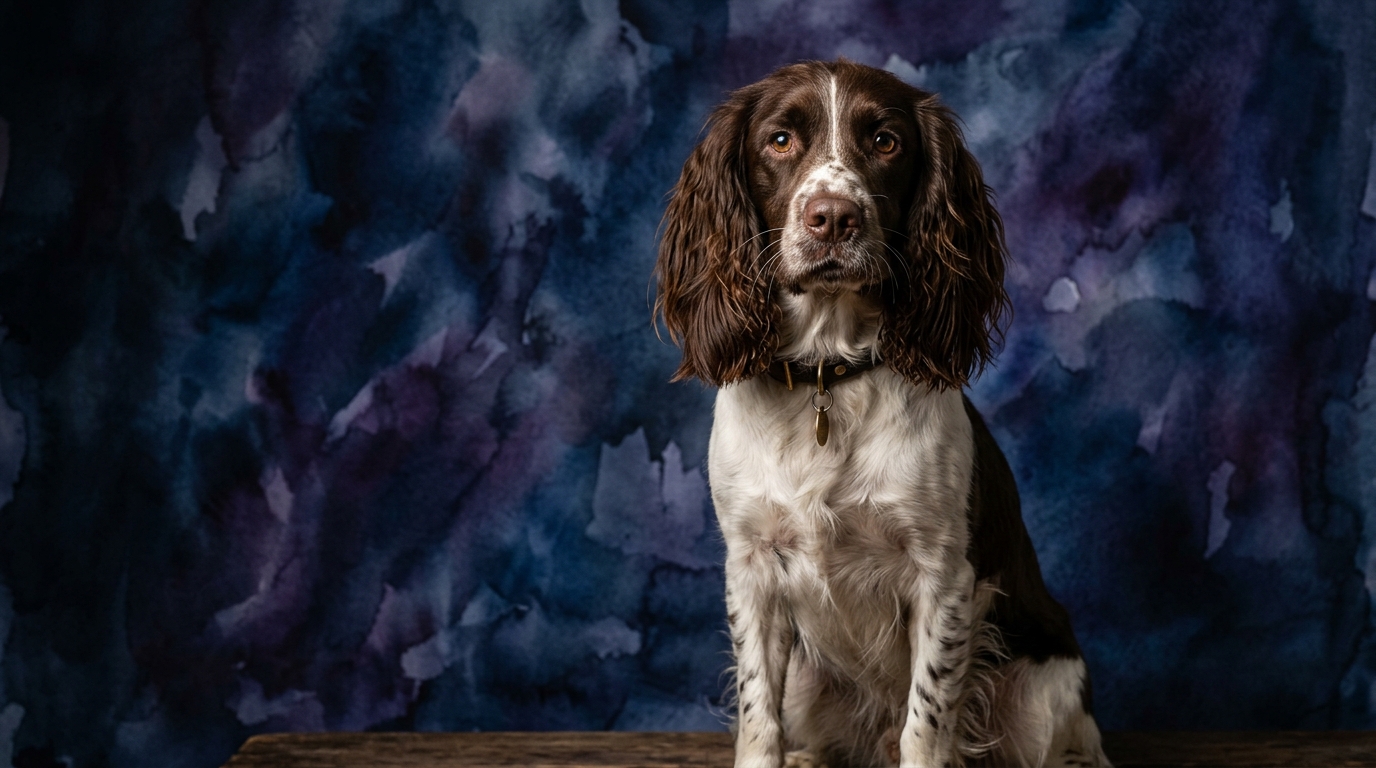
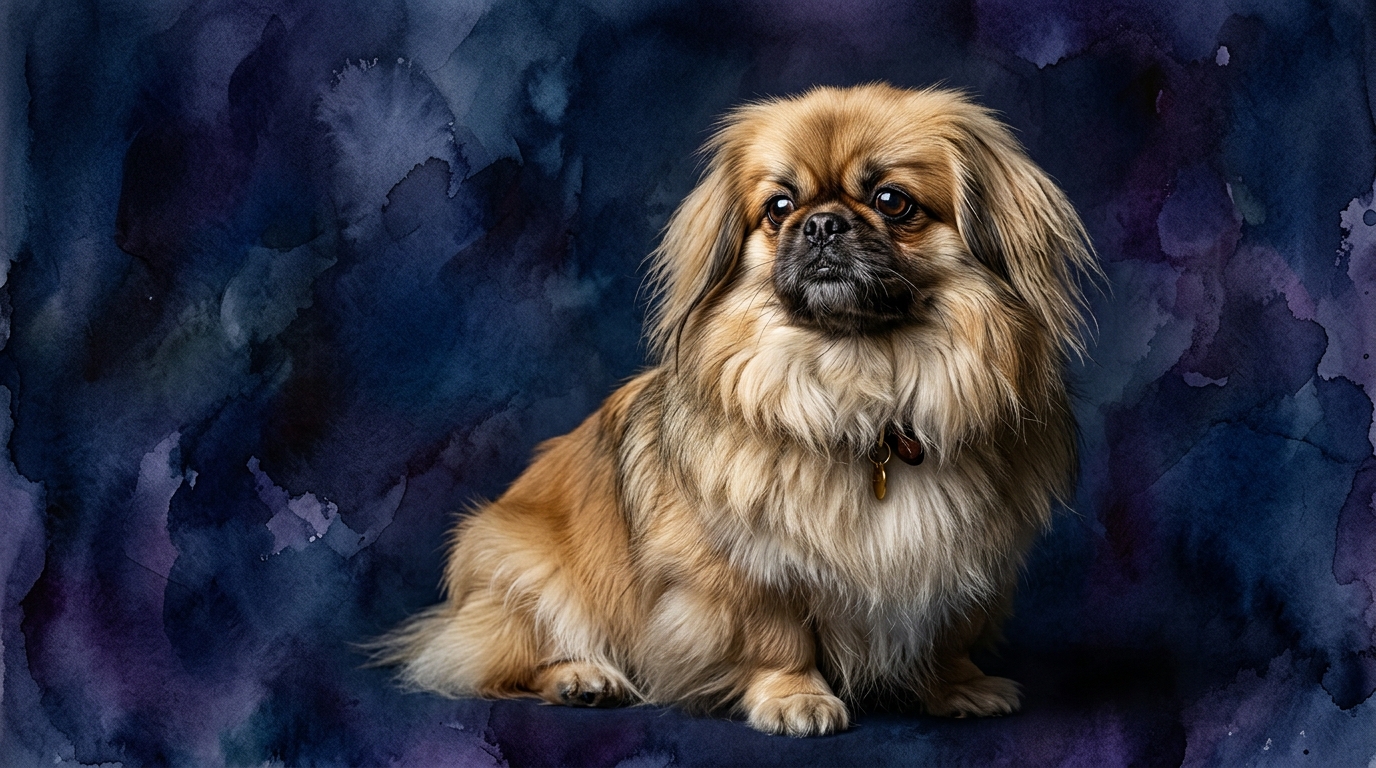
Side-by-Side IQ Profile: English Springer Spaniel vs Pekingese
The Cosmic Pet Pet IQ Lab's five-dimensional framework offers a granular view of canine intelligence, moving beyond general classifications. For the English Springer Spaniel, a Sporting Group member with a Coren rank of #13, their cognitive profile reflects their heritage as a diligent working dog. Their problem-solving (4/5) indicates a strong capacity to strategize complex tasks, especially environmental navigation and retrieval. Training speed, at an impressive 5/5, highlights their rapid assimilation of new commands, a testament to their eagerness. Social intelligence (4/5) points to their adeptness at interpreting human cues and forming cooperative partnerships. An instinctive drive of 5/5 underscores their powerful, inherent motivation for scent work and retrieving, profoundly shaping their engagement. Memory, rated 4/5, ensures they retain learned behaviors reliably, crucial for intricate field work. In contrast, the Pekingese, a Toy Group member with a Coren rank of #77, exhibits a cognitive profile tailored to companionship and independence. Their problem-solving (3/5) suggests practical intelligence focused on navigating their immediate environment and achieving comfort, often through trial-and-error. Training speed (3/5) indicates a moderate learning pace, requiring patience due to their less compliant nature. Social intelligence (3/5) reflects deep, selective bonds with chosen individuals and keen awareness of household dynamics. Their instinctive drive (3/5) centers more on comfort and emotional connection than traditional working tasks. Memory (3/5) serves them well for recalling routines and familiar faces, though not extensive command sets.
Where English Springer Spaniel Wins Cognitively
The English Springer Spaniel's cognitive prowess shines brightest in contexts demanding collaborative problem-solving and environmental mastery, directly stemming from their sporting lineage. Their 4/5 problem-solving isn't just general cleverness; it's specialized intelligence for sequential task execution. Imagine a Springer tracking a scent through varied terrain, navigating obstacles, and precisely locating a hidden object – this involves sophisticated spatial reasoning, memory recall, and adaptive strategy. Their instinctive drive, a perfect 5/5, isn't merely boundless energy; it's a focused mental engine fueling persistent engagement with tasks requiring sustained attention and strategic hunting behaviors. This drive, combined with their 4/5 social intelligence, creates a remarkable synergy. They don't just follow commands; they anticipate a handler's next move, interpreting subtle body language and vocal inflections to work in seamless partnership. This collaborative intelligence is a hallmark, allowing them to excel in complex, multi-stage activities where human-canine teamwork is paramount. Their robust memory (4/5) further supports this, enabling them to retain vast numbers of commands and intricate field patterns, making them exceptionally reliable.
Where Pekingese Wins Cognitively
While the Pekingese may not boast the same working intelligence as a Springer, their cognitive strengths are exquisitely refined for their primary role: devoted companionship. Their social intelligence, though rated 3/5, manifests as an acute perception of their chosen human's emotional state. They often anticipate a desire for comfort or play, offering a nudge or gentle gaze without explicit instruction, showcasing nuanced understanding of interpersonal dynamics. This emotional attunement is a sophisticated form of social problem-solving, enabling them to navigate household relationships and assert their presence subtly. Their problem-solving (3/5) is often geared towards optimizing comfort and securing attention, such as finding the sunniest nap spot, strategically placing themselves on a lap, or using specific vocalizations to communicate desires. This isn't about retrieving a pheasant; it's about mastering the art of being a cherished companion. Their memory (3/5), while not for complex field commands, is highly effective for remembering routines, preferred resting places, and the precise timing of events like meal preparation, demonstrating practical intelligence tuned to domestic life.
Which is Easier to Train and Why
The English Springer Spaniel is considerably easier to train, a direct consequence of their exceptional 5/5 training speed and powerful 5/5 instinctive drive. Bred for generations to work closely with human hunters, they possess an innate desire to please and thrive on having a purpose. This intrinsic motivation makes them incredibly receptive to learning, often grasping new commands and complex sequences in very few repetitions. They approach training sessions with enthusiastic focus, viewing them as stimulating opportunities for partnership. Their cooperative nature means they actively seek to understand and comply with human direction, making them highly biddable. In stark contrast, the Pekingese, with a training speed of 3/5, presents a different training landscape. Their independent spirit and regal self-possession mean they are less driven by an external desire to please and more by their own comfort. While intelligent, they often require significant patience, consistency, and highly motivating positive reinforcement. They can exhibit "selective hearing" if a command doesn't align with their immediate desires. Their problem-solving (3/5) might be employed to cleverly avoid an undesirable task. Effective training for a Pekingese involves making it feel like a mutually beneficial game, respecting their independent nature, and understanding their compliance is earned through trust rather than inherent biddability.
Which Suits Active Owners vs Relaxed Owners
For owners with an active lifestyle, the English Springer Spaniel is an almost perfect cognitive and physical match. Their robust 5/5 instinctive drive isn't just energy; it's a profound need for purposeful engagement demanding regular, vigorous exercise and mental challenges. These dogs thrive when given opportunities to run, fetch, swim, or participate in dog sports like agility or scent work. Their 4/5 problem-solving and social intelligence mean they excel when given tasks to accomplish, making them ideal companions for hiking or trail running. An owner who enjoys outdoor adventures and wants a canine partner actively involved will find the Springer’s cognitive profile aligns perfectly, fostering a deep, working bond. Conversely, the Pekingese is tailor-made for more relaxed owners who appreciate a devoted, low-impact companion. Their lower 3/5 instinctive drive means they are content with shorter, leisurely walks and prefer indoor activities and ample lap time. While they appreciate mental stimulation, it typically revolves around interactive play or learning simple tricks within their home. Owners prioritizing quiet companionship, a strong emotional bond without extensive physical exertion, and a less demanding exercise routine will find the Pekingese's temperament and cognitive makeup an ideal fit, offering deep affection and a calm presence.
The Verdict
Choose an English Springer Spaniel if you are an active owner seeking a highly trainable, collaborative partner for outdoor adventures, dog sports, or a working role where their problem-solving and drive can flourish.
Choose a Pekingese if you desire a devoted, independent companion who thrives on close emotional bonds, enjoys a relaxed indoor lifestyle, and appreciates a more subtle, less demanding form of interaction.
🧠 Find Your Pet's IQ Score
Our Pet IQ Lab assessment covers 25+ tests across 5 cognitive dimensions — personalized to your breed.
Take the Full IQ Test →Frequently Asked Questions
Do English Springer Spaniels need a lot of mental stimulation?
Absolutely. Their high instinctive drive and problem-solving abilities mean they thrive on mental challenges like puzzle toys, obedience training, and scent work, beyond just physical exercise.
Are Pekingese difficult to house train?
Pekingese can sometimes be more challenging to house train due to their independence and smaller bladders, requiring consistent routines and patience, but they are certainly capable of mastering it.
How do their social intelligence ratings affect their family life?
The English Springer Spaniel's 4/5 social intelligence makes them highly adaptable and eager to integrate into family activities, while the Pekingese's 3/5 rating means they form deep bonds with a select few, potentially being more reserved with strangers or less engaged in broad family dynamics.