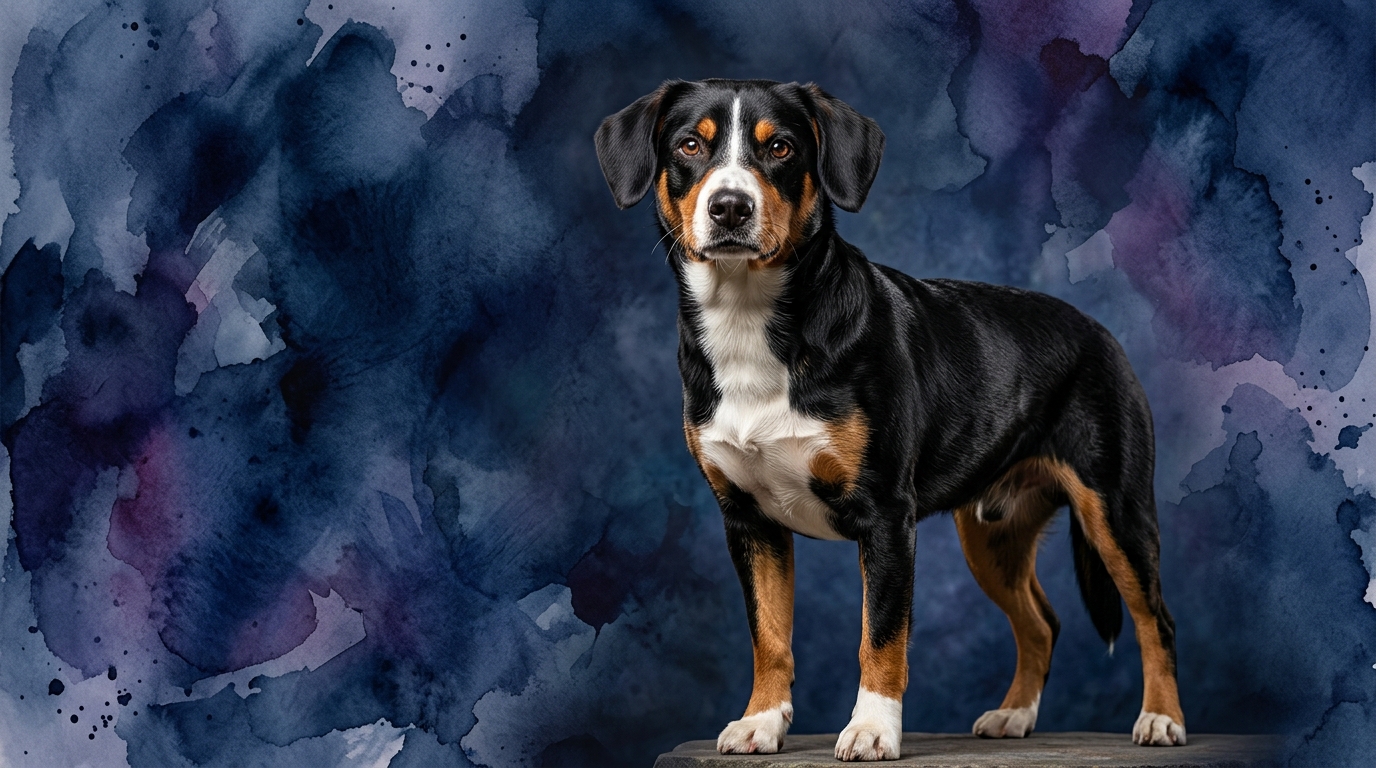
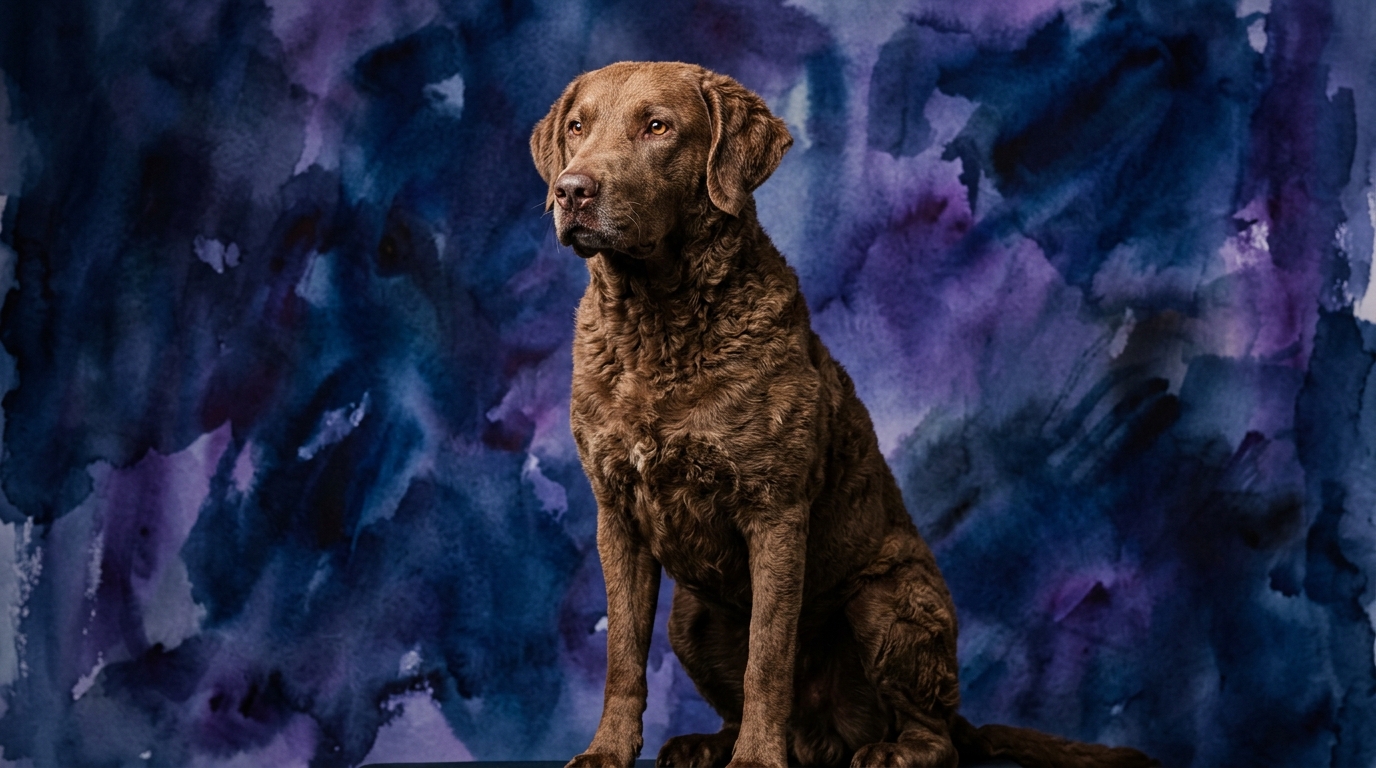
Side-by-Side Cognitive Profiles
The Entlebucher Mountain Dog, a diligent herding breed, registers consistent scores across the board according to The Cosmic Pet Pet IQ Lab. Their problem-solving capacity sits at 3/5, indicating a practical intelligence adept at routine tasks but potentially requiring more guidance for novel challenges. Training speed is also 3/5, suggesting they learn commands at a moderate pace, thriving with consistency. Social intelligence, at 3/5, points to an understanding of human cues and pack dynamics, though they may be more reserved than overtly demonstrative. Their instinctive drive, rated 3/5, is rooted in their herding lineage, manifesting as a desire to gather and manage. Finally, memory at 3/5 suggests good retention of learned information and experiences.
In contrast, the Chesapeake Bay Retriever, a Coren-ranked Sporting dog (#27), shows notable strengths in specific cognitive areas. Their problem-solving score of 4/5 highlights an impressive ability to navigate complex scenarios and figure out solutions independently. Training speed also reaches 4/5, meaning they typically grasp new commands and concepts with efficiency. Social intelligence is rated 3/5, similar to the Entlebucher, indicating an understanding of social cues but often coupled with a reserved independence. The Chesapeake’s instinctive drive, at 3/5, is powerfully focused on retrieving, especially from water. Their memory, scoring 4/5, indicates excellent recall for complex tasks and retained information.
Where the Entlebucher Mountain Dog Wins Cognitively
While the Entlebucher Mountain Dog doesn't boast higher numerical scores in problem-solving or training speed, its cognitive strength lies in the nuanced application of its 3/5 instinctive drive, particularly within a 'flock management' context. Their herding heritage imbues them with a specialized ability to anticipate and influence movement, a subtle form of spatial and social calculation that is less about brute problem-solving and more about predictive control. This specific intelligence allows them to excel in tasks requiring diligent oversight and the ability to maintain order, often relying on their balanced social intelligence to interact effectively within a defined group. They demonstrate a steady, reliable mental presence, less prone to impulsivity and more focused on sustained, directed effort within their perceived duties.
Where the Chesapeake Bay Retriever Wins Cognitively
The Chesapeake Bay Retriever demonstrates clear cognitive advantages in several key areas, notably problem-solving, training speed, and memory. Their 4/5 problem-solving score reflects a dog adept at navigating complex scenarios, often independently figuring out the best path to a retrieve in challenging environments like icy water or dense cover. This ingenuity is a hallmark of their working heritage, demanding a dog that can make quick, effective decisions without constant handler input. Furthermore, the CBR's 4/5 training speed means they grasp new commands and multi-step sequences with remarkable efficiency, often requiring fewer repetitions than many other breeds. This rapid assimilation of information, combined with their 4/5 memory, allows them to retain intricate instructions and recall specific locations or tasks even after significant time has passed, making them exceptionally reliable for demanding retrieve work and complex obedience routines.
Trainability: Which Breed is Easier?
Based on their respective IQ profiles, the Chesapeake Bay Retriever typically presents as the easier breed to train, particularly for a wide range of tasks. With a training speed score of 4/5 compared to the Entlebucher Mountain Dog's 3/5, CBRs generally pick up new commands and routines more quickly. Their superior problem-solving (4/5) and memory (4/5) further enhance their trainability, allowing them to not only learn but also apply and retain complex sequences of behaviors, especially those related to their retrieving instincts. They thrive on purpose-driven tasks and often excel in advanced obedience or working trials due to their mental acuity and focus. The CBR's drive to work for their handler, coupled with their cognitive strengths, makes them highly responsive to consistent, engaging training.
In contrast, the Entlebucher, while attentive and willing to work, might require more repetition and a highly consistent, patient approach. Their herding drive, if not properly directed, can sometimes translate into a strong will or a tendency to 'manage' their environment rather than simply comply, demanding an owner who understands how to harness and channel this specific cognitive predisposition into cooperative training. While they are certainly trainable, their learning curve is steadier, and owners need to be prepared for a more deliberate training journey, focusing on clarity and positive reinforcement to build a strong working relationship.
Cognitive Needs for Active vs. Relaxed Owners
Neither the Entlebucher Mountain Dog nor the Chesapeake Bay Retriever are suited for truly 'relaxed' owners in the sense of requiring minimal engagement. Both are working breeds with inherent drives that demand substantial physical and mental stimulation. However, their specific cognitive profiles suggest different types of active ownership. The Entlebucher Mountain Dog, with its 3/5 scores across the board, thrives with active owners who enjoy structured activities like hiking, agility, or even urban herding games. They appreciate consistent interaction and a clear role within the family, making them suitable for owners who want a diligent companion for regular, varied exercise and mental challenges that tap into their herding instincts. Their cognitive needs are met through a consistent routine and opportunities to 'work' alongside their people, even if that work is simply managing the household's comings and goings.
The Chesapeake Bay Retriever, with its 4/5 problem-solving, training speed, and memory, demands a more intensely active and purpose-driven owner. These dogs excel when given a 'job' that engages their formidable retrieving drive, such as hunting, competitive dock diving, or advanced obedience. Owners who can provide daily, vigorous exercise combined with complex mental tasks, particularly those involving water or retrieval, will find the CBR to be an incredibly rewarding partner. Their cognitive abilities are best utilized when challenged with intricate problems and multi-step tasks that allow them to use their intellect to achieve a goal. An owner seeking a dog content with occasional walks and minimal mental engagement would find either breed challenging, but especially the mentally demanding Chesapeake.
The Verdict
Choose the Entlebucher Mountain Dog if you appreciate a diligent, attentive companion eager for structured activities and nuanced interaction, and you are prepared for consistent, patient training to channel their herding instincts.
Opt for the Chesapeake Bay Retriever if you are an intensely active owner seeking a highly capable, quick-learning partner for demanding outdoor pursuits, especially those involving water and complex retrieval tasks, and you value a dog with impressive problem-solving and memory skills.
🧠 Find Your Pet's IQ Score
Our Pet IQ Lab assessment covers 25+ tests across 5 cognitive dimensions — personalized to your breed.
Take the Full IQ Test →Frequently Asked Questions
Is the Entlebucher Mountain Dog difficult to train?
While not as quick to train as some breeds, the Entlebucher Mountain Dog is certainly trainable. Their 3/5 training speed means they require consistent, patient methods and clear communication, benefiting from owners who understand how to channel their diligent herding instincts into cooperative behaviors.
Do Chesapeake Bay Retrievers make good family pets?
Chesapeake Bay Retrievers can make devoted family pets for the right owners. Their 3/5 social intelligence means they bond strongly with their family, though they can be reserved with strangers and benefit from early socialization to ensure they are well-adjusted to various people and situations. They thrive in active households that can meet their significant exercise and mental stimulation needs.
Which breed is better for an apartment?
Neither the Entlebucher Mountain Dog nor the Chesapeake Bay Retriever are ideal for apartment living due to their high energy levels and working drives. Both breeds require substantial daily exercise and mental engagement to prevent boredom and destructive behaviors, making homes with yards and active outdoor lifestyles much more suitable environments.