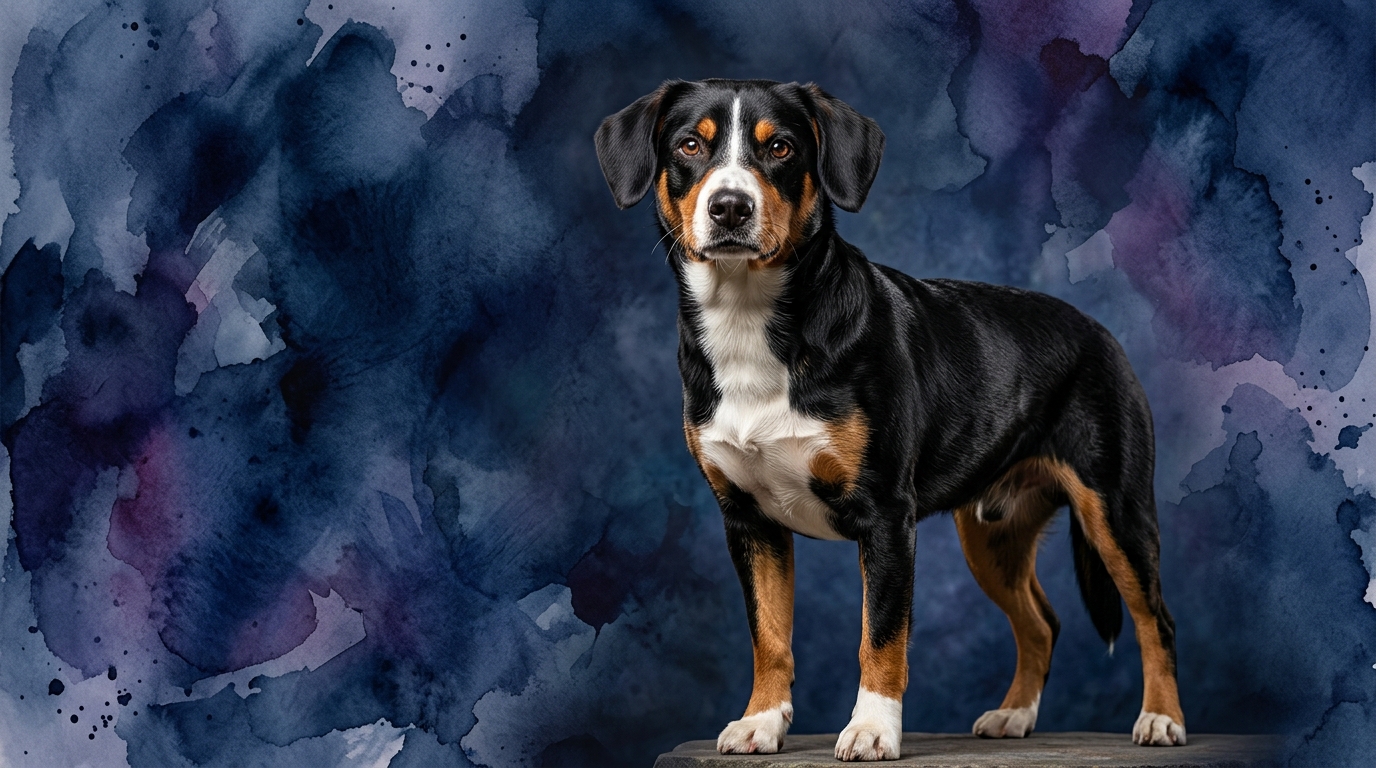
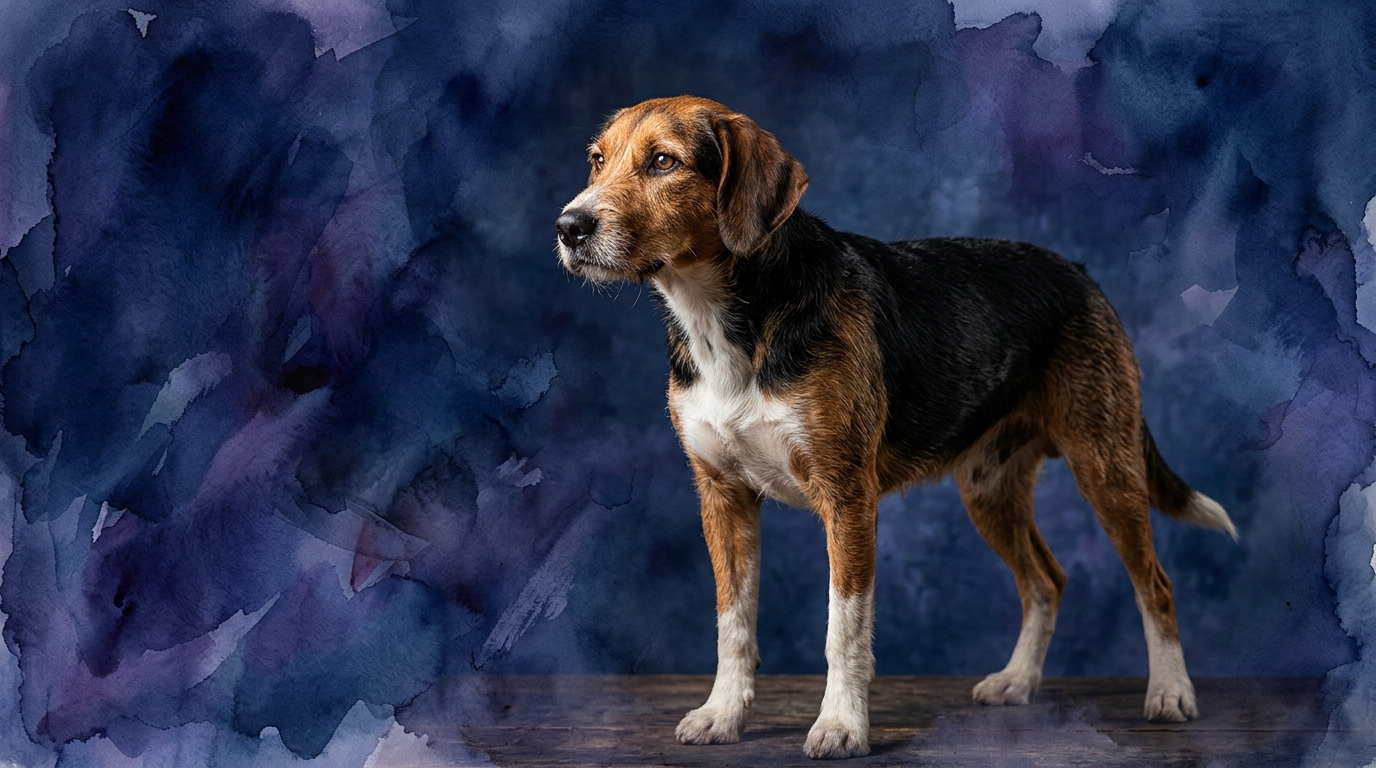
Side-by-Side IQ Profile: Herding Wit vs. Hound Acuity
The Entlebucher Mountain Dog, a robust Herding breed, and the Harrier, a spirited Hound, both register a solid 3 out of 5 across all five Pet IQ Lab dimensions: Problem Solving, Training Speed, Social Intelligence, Instinctive Drive, and Memory. While these scores suggest a moderate yet capable cognitive profile, their application in daily life and historical roles paints a picture of distinct intellectual styles. For the Entlebucher, a 3/5 in Problem Solving often translates to practical, real-world application, such as figuring out how to maneuver livestock through a gate or navigating complex terrain during a herding task, often in close cooperation with a handler. Their Training Speed at 3/5 reflects a willingness to learn and respond to direction, although their independent herding judgment can occasionally present a challenge, requiring clear and consistent guidance.
Conversely, the Harrier's 3/5 in Problem Solving is typically geared towards independent pursuit, excelling at intricate tasks like meticulously following a faint scent trail over varied landscapes, deciphering environmental cues related to prey, or working collaboratively within a pack structure to achieve a common goal. Their 3/5 Training Speed indicates they can certainly learn commands, but their powerful instinctive drive to track can often override immediate compliance, demanding patience and high-value motivation to maintain focus. Both breeds' 3/5 Social Intelligence signifies they are capable of forming strong bonds and understanding social cues, but the Entlebucher's tends to be more handler-centric and watchful, while the Harrier's is often expressed through jovial pack dynamics and a more generalized friendliness. Their 3/5 Instinctive Drive is clearly defined by their heritage: the Entlebucher's drive is rooted in herding and guarding, demanding an outlet for these innate behaviors, while the Harrier's is almost entirely dedicated to scenting and pursuit, a powerful force that shapes their entire cognitive approach. Finally, a 3/5 in Memory for both means they retain learned behaviors and routines effectively, with the Entlebucher remembering commands and family routines, and the Harrier recalling specific scent patterns and the layout of hunting grounds.
Where the Entlebucher Mountain Dog Shines Cognitively
The Entlebucher Mountain Dog's cognitive strengths lie in their capacity for handler-oriented problem-solving and their robust understanding of sequential tasks within a structured environment. Their 3/5 in Problem Solving, when paired with their Herding background, means they excel at tasks requiring logical progression and an ability to respond to complex, multi-step commands. For instance, an Entlebucher might demonstrate superior judgment in deciding the optimal path to move a flock of sheep, adapting their strategy based on the sheep's movement and the handler's signals. This involves anticipating outcomes and adjusting their approach in real-time, a testament to their practical intelligence.
Furthermore, their social intelligence, while rated 3/5, manifests as a keen awareness of their human family's emotions and intentions, making them particularly adept at tasks requiring intuitive partnership. They can often predict a handler's next move or understand subtle cues, making them highly responsive partners in activities like agility or advanced obedience. Their memory, also a 3/5, is particularly strong for routines and learned commands, allowing them to quickly fall back into established patterns and recall specific instructions even after a period of inactivity, which is crucial for a working dog expected to perform consistent duties.
Where the Harrier's Cognitive Edge Emerges
The Harrier, with its Hound lineage, displays cognitive superiority in areas demanding sustained, independent focus and exceptional sensory processing, particularly related to scent. Their 3/5 Problem Solving score is profoundly influenced by their instinctive drive, making them masters of environmental navigation and deduction when following a trail. A Harrier can process a complex tapestry of scents, differentiate between fresh and old tracks, and ignore distracting environmental stimuli to remain singularly focused on their primary objective: the quarry. This form of problem-solving is less about handler direction and more about intrinsic motivation and sensory interpretation.
Their 3/5 Instinctive Drive is not merely strong; it is the engine of their intellect, compelling them to meticulously analyze and interpret a world rich with olfactory information. This drive fuels a remarkable cognitive endurance, allowing them to maintain intense concentration on a scent for extended periods and over vast distances, a feat that requires considerable mental stamina and selective attention. While their social intelligence is 3/5, it often shines in a pack setting, where they demonstrate an innate understanding of hierarchy and cooperative hunting strategies, communicating effectively with fellow hounds through barks and body language to coordinate a pursuit. Their memory, also 3/5, is exceptional for recalling specific scent patterns and the layout of familiar hunting grounds, enabling them to efficiently re-trace steps or locate previously identified areas of interest.
Training Dynamics: Responsiveness vs. Scent-Driven Independence
When it comes to ease of training, the Entlebucher Mountain Dog generally presents a more straightforward path for the average owner due to their inherent desire to work with their handler. Their 3/5 Training Speed means they absorb commands at a moderate pace, but their herding background fosters a natural inclination towards responsiveness and a desire to please their primary person. While they possess an independent streak characteristic of working breeds, they thrive on clear communication and consistent positive reinforcement. Behavioral differences often manifest as a keen watchfulness and a readiness to engage in tasks, making them receptive to structured training sessions, provided the owner establishes clear leadership and provides adequate mental stimulation.
The Harrier, while also scoring 3/5 in Training Speed, presents a different set of challenges. Their powerful 3/5 Instinctive Drive for scenting means they are perpetually scanning their environment for interesting smells, making them prone to distraction. A Harrier might understand a command perfectly well in a quiet room, but the moment a compelling scent hits the air outdoors, their cognitive focus shifts entirely to their primal drive. This requires an owner to be exceptionally patient, consistent, and creative with high-value rewards to compete with the allure of a captivating odor. Training a Harrier often involves working *with* their nose, incorporating scent games and tracking into their routine, rather than attempting to suppress their fundamental nature. Their pack mentality can also mean they are more inclined to follow their nose or another dog than a human command if the incentive isn't strong enough.
Lifestyle Match: Active Engagement vs. Endurance Pursuit
Neither the Entlebucher Mountain Dog nor the Harrier is suited for genuinely relaxed owners; both demand significant engagement and activity, albeit in different forms. The Entlebucher, a Herding breed, thrives with active owners who can provide a 'job' or structured activities that engage their problem-solving abilities and instinctive drives. This might include dog sports like agility, obedience, herding trials, or even just long, varied hikes that allow them to explore and 'work' alongside their human. They are best suited for owners who enjoy a collaborative partnership, are prepared to provide consistent mental and physical stimulation, and can channel their watchful nature into appropriate roles. An Entlebucher without sufficient mental and physical outlets can become bored, leading to undesirable behaviors.
The Harrier, on the other hand, is an endurance athlete built for sustained, vigorous activity. Their cognitive strengths are intrinsically linked to their physical capacity for long runs and scent work. They are ideal for active owners who enjoy activities like trail running, long-distance hiking, or participating in scent-based dog sports such as tracking or barn hunt. Their pack-oriented nature also means they often enjoy the company of other dogs, making them suitable for multi-dog households or owners who frequent dog parks. A Harrier requires ample opportunity to run and follow their nose; a relaxed owner who cannot meet these needs will likely find themselves with a frustrated and potentially destructive companion. Their focus is less on human-directed 'work' and more on the independent pursuit of their innate drives, requiring owners to understand and facilitate this natural inclination.
The Verdict: When to Choose Each Breed
The Verdict
Choose the Entlebucher Mountain Dog if you seek a highly engaged, collaborative canine partner for structured activities and desire a watchful family member, ready to work alongside you. They thrive with consistent guidance and opportunities to apply their practical intelligence in a partnership role.
Opt for the Harrier if you are an endurance-oriented owner who can provide extensive opportunities for running and scent work, appreciating a dog whose cognitive strength lies in independent pursuit and olfactory dedication. They are best for those who can channel their powerful instincts into appropriate outlets.
🧠 Find Your Pet's IQ Score
Our Pet IQ Lab assessment covers 25+ tests across 5 cognitive dimensions — personalized to your breed.
Take the Full IQ Test →Frequently Asked Questions
Do Entlebucher Mountain Dogs and Harriers learn at the same pace?
While both breeds score 3/5 in Training Speed, their learning styles differ. Entlebuchers tend to be more handler-focused and responsive to direct instruction, whereas Harriers, despite understanding commands, are often more distracted by their strong scent drive, requiring greater patience and higher-value rewards to maintain focus.
Which breed is better for complex problem-solving tasks?
The 'better' breed depends on the type of problem. Entlebuchers often excel at handler-directed, multi-step problem-solving like agility courses or herding tasks requiring strategic thinking. Harriers shine in independent problem-solving related to scent work, such as meticulously following complex trails and deciphering environmental cues without direct human intervention.
Are these breeds suitable for first-time dog owners?
Neither the Entlebucher Mountain Dog nor the Harrier is typically recommended for novice dog owners. Both breeds possess strong working drives and require consistent training, extensive socialization, and significant mental and physical stimulation to thrive, demanding an experienced owner who understands their specific cognitive and behavioral needs.