A Side-by-Side Look at Their IQ Profiles
The Cosmic Pet Pet IQ Lab assigns both the Entlebucher Mountain Dog and the Lhasa Apso a consistent 3/5 across all five dimensions of intelligence: Problem Solving, Training Speed, Social Intelligence, Instinctive Drive, and Memory. This numerical equality, however, belies the unique ways each breed applies its cognitive faculties, deeply influenced by their historical roles and inherent temperaments.
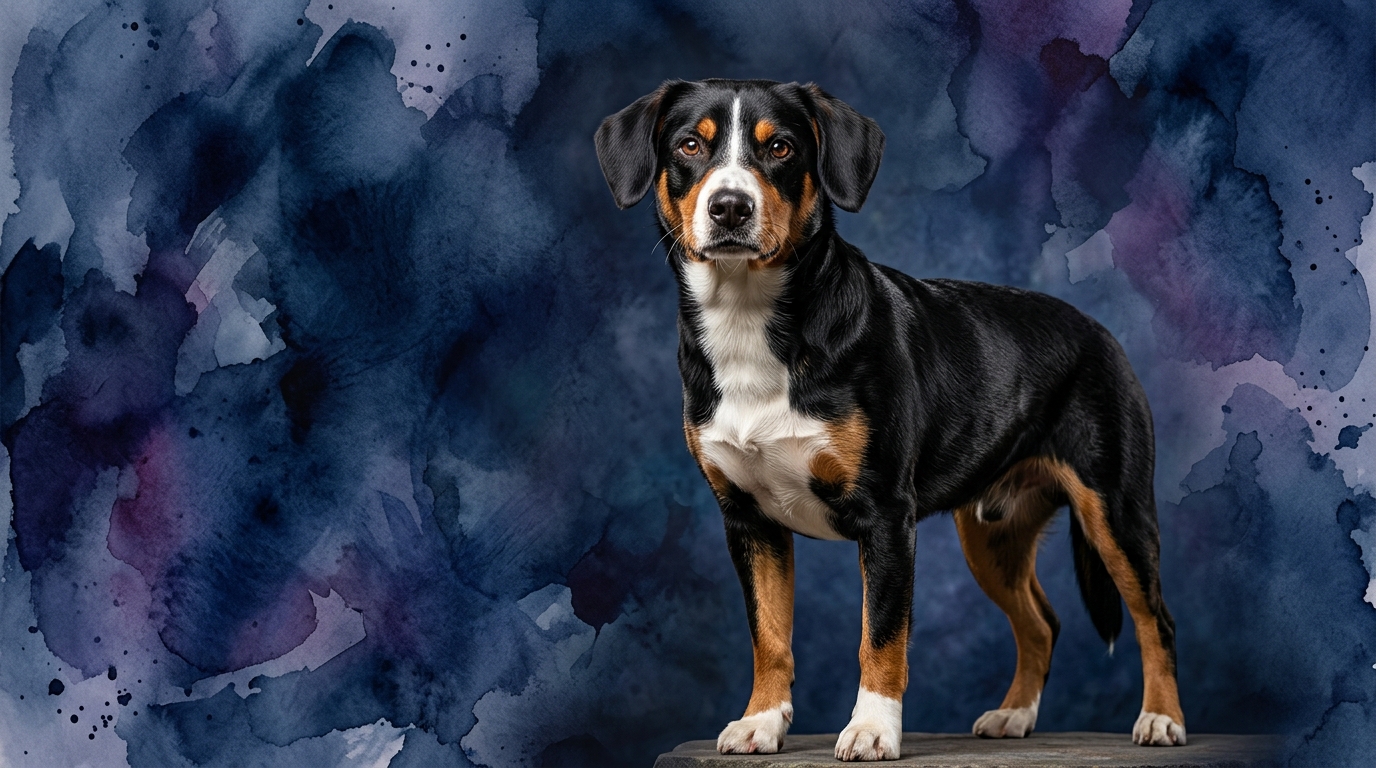
The Entlebucher Mountain Dog, a robust working breed from Switzerland, is not Coren-ranked, yet demonstrates a practical intelligence geared towards its herding origins. Its Problem Solving (3/5) involves navigating complex outdoor environments and managing livestock, often requiring physical and strategic adaptation. Training Speed (3/5) reflects an efficiency in learning tasks tied to work, while Social Intelligence (3/5) is expressed through understanding pack dynamics and responding to handler cues. A 3/5 in Instinctive Drive signifies a persistent urge to herd and be active, underpinning much of its cognitive output. Memory (3/5) is reliable for retaining commands and routines essential for its working capacity.
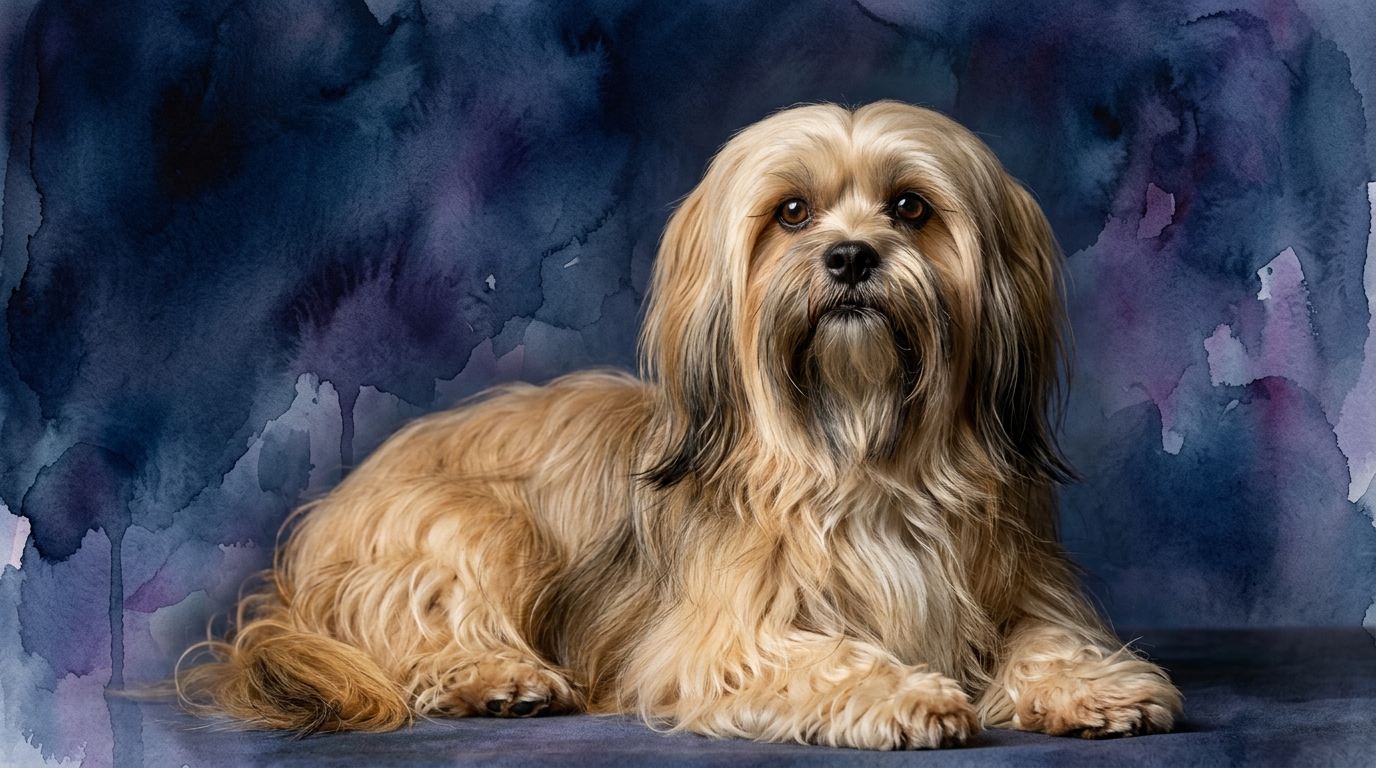
In contrast, the Lhasa Apso, a sentinel from the Tibetan plateaus and Coren-ranked at #68, channels its identical 3/5 scores into a distinct set of cognitive strengths. Its Problem Solving (3/5) often manifests as observational analysis within a defined territory, identifying anomalies and strategizing alerts. Training Speed (3/5) indicates learning capability, though often tempered by an independent streak requiring patient, motivational approaches. Social Intelligence (3/5) is finely tuned to discerning family members from strangers and understanding subtle household dynamics. An Instinctive Drive (3/5) is expressed as vigilant guarding and territorial awareness, while Memory (3/5) is excellent for remembering routines, people, and perceived threats within its protective sphere.
Where the Entlebucher Mountain Dog Excels Cognitively
While both breeds share identical numerical IQ scores, the Entlebucher Mountain Dog's cognitive strengths are profoundly rooted in its heritage as a herding and farm dog. Its Problem Solving (3/5) often translates into a superior capacity for spatial reasoning and predictive intelligence within dynamic, open environments. An Entlebucher can quickly assess a changing landscape, anticipate the movements of livestock or other animals, and adapt its strategy in real-time to achieve a specific outcome, such as guiding a flock or retrieving a stray.
This involves a complex interplay of rapid observation, decision-making under pressure, and a deep, practical understanding of cause and effect in a physical space. Their Instinctive Drive (3/5) is not merely a measure of energy, but a directed motivation that fuels their persistence in completing multi-step tasks. This breed excels in integrating physical prowess with mental strategy, making them particularly adept at complex sequences of action that require continuous cognitive engagement with their surroundings, a trait less pronounced in breeds with more static, observational roles.
Where the Lhasa Apso Shines Cognitively
The Lhasa Apso's cognitive advantages are a direct product of its centuries-long role as a vigilant indoor guardian and companion. Its Problem Solving (3/5) shines in nuanced observational intelligence and pattern recognition within a stable, defined territory. They possess an exceptional ability to detect subtle shifts in their environment, noticing unusual sounds, smells, or movements that might escape human perception, and then assessing their potential significance.
This requires a keen capacity to process sensory information, compare it against established norms, and make astute judgments about potential threats or anomalies. Their Social Intelligence (3/5), though numerically equal to the Entlebucher's, manifests as a profound capacity for selective attachment and discerning loyalty. They are adept at understanding the complex social dynamics of their immediate human family, forming deep bonds, while maintaining a cautious and often wary stance towards outsiders. This specific application of social intelligence is critical to their function as a discerning sentinel, allowing them to effectively differentiate between accepted members and potential intruders.
Training Dynamics: Entlebucher vs. Lhasa Apso
Despite both breeds scoring 3/5 in Training Speed, the perceived 'ease' of training and the most effective approaches differ considerably due to their distinct behavioral drivers. The Entlebucher Mountain Dog, with its strong herding and working instincts, typically approaches training with an inherent eagerness to engage and a desire for a 'job.' Their Instinctive Drive (3/5) often translates into a natural inclination to cooperate and follow direction when given a clear purpose, making them highly responsive to task-oriented learning and reinforcement through activity. They thrive on structured routines and consistent guidance, often viewing training as a collaborative effort to achieve a shared goal.
The Lhasa Apso, while equally capable of learning (3/5 Training Speed), possesses a more independent and self-assured temperament, a remnant of its historical role as a self-reliant sentinel. Their Social Intelligence (3/5) is often paired with a discerning nature, meaning they may choose to comply based on whether they perceive a command as relevant or beneficial, rather than an inherent eagerness to please. Training a Lhasa Apso demands significant patience, consistent positive reinforcement, and a deep understanding of their motivations. They can be less overtly enthusiastic about instruction and may test boundaries, so owners must earn their respect and cooperation through fair, engaging, and consistent methods.
Matching Canine Cognition to Owner Lifestyles
For owners who embrace an active lifestyle and seek a canine partner for adventures, structured activities, and a sense of purpose, the Entlebucher Mountain Dog is often the more fitting choice. Their robust physical and mental energy, combined with a strong Instinctive Drive (3/5) for purposeful engagement, means they thrive when provided with ample opportunities for exercise, advanced training, and a 'job' to do, whether it involves herding, agility, or extensive outdoor exploration. They require consistent mental and physical stimulation to prevent boredom and channel their considerable intelligence and drive constructively into productive outlets.
The Lhasa Apso, while not a purely sedentary breed, generally suits owners with a more relaxed pace of life who appreciate a vigilant, affectionate, and discerning companion within the home environment. Their physical exercise needs are moderate, but their cognitive needs are met through observation, interactive play, and consistent, patient training that respects their independent nature. They are content to be involved in daily household routines and serve as watchful guardians, making them an excellent fit for individuals or families who can provide companionship, mental stimulation through puzzles or engaging interactions, and a stable, predictable routine without the demands of an intensely active, working-dog lifestyle.
The Verdict
Choose the Entlebucher Mountain Dog if you are an active individual or family seeking a highly engaged working companion who thrives on structured tasks, physical exertion, and collaborative training to channel their formidable herding instincts.
Choose the Lhasa Apso if you value a discerning, independent, and watchful companion who excels in observational intelligence within the home, appreciating an owner who offers patient, consistent guidance and respects their self-assured nature.
🧠 Find Your Pet's IQ Score
Our Pet IQ Lab assessment covers 25+ tests across 5 cognitive dimensions — personalized to your breed.
Take the Full IQ Test →Frequently Asked Questions
Do the similar IQ scores mean these breeds are equally easy to live with?
While their IQ scores are numerically identical, the manifestation of their intelligence differs significantly, impacting daily life. The Entlebucher's working drive requires active management and tasks, whereas the Lhasa Apso's independent, sentinel nature requires consistent boundaries and patience to manage effectively.
How does an Entlebucher's 'instinctive drive' differ from a Lhasa Apso's, given both score 3/5?
For the Entlebucher, a 3/5 instinctive drive is channeled into herding and active work, demonstrating a persistent desire for physical and mental tasks in a collaborative setting. For the Lhasa Apso, a 3/5 drive manifests as vigilant guarding and territorial awareness, focused on observation and alerting within its defined space, often with self-directed initiative.
Can a Lhasa Apso perform complex tasks like an Entlebucher, or vice versa?
While both breeds are capable of learning, their cognitive strengths are specialized. An Entlebucher might struggle with the subtle, observational guarding nuance of a Lhasa Apso, preferring active intervention. A Lhasa Apso, while clever, lacks the inherent physical and mental drive for sustained, large-scale herding or complex multi-step working tasks typical of an Entlebucher.