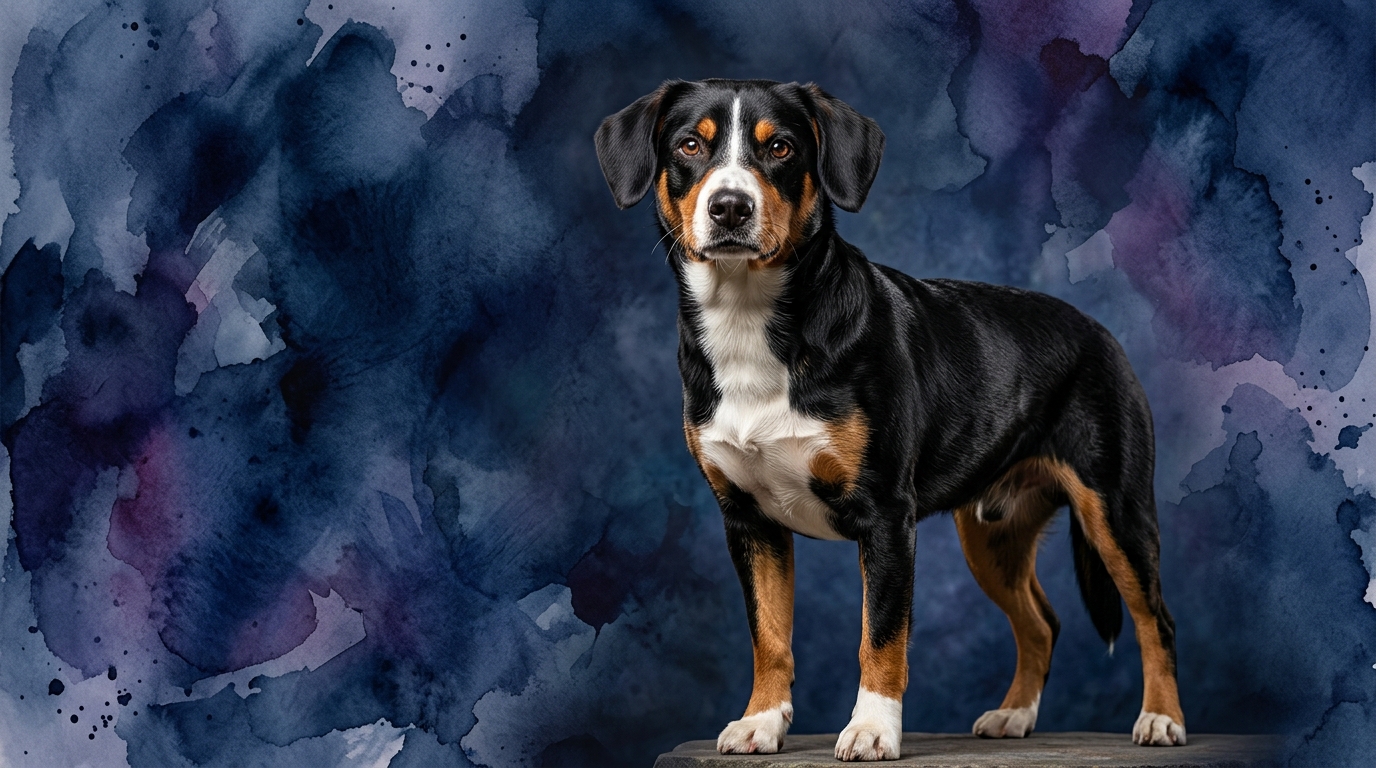

Side-by-Side Cognitive Profiles: Entlebucher Mountain Dog
The Entlebucher Mountain Dog, a robust member of the Herding group, exhibits an intelligence rooted in its historical role as a cattle driver and farm guardian in the Swiss Alps. Their cognitive abilities are geared towards practical application within a structured environment, making them reliable and observant companions.
When we assess their Problem Solving at 3/5, it reflects a capacity for logical, sequential thought crucial for managing livestock. An Entlebucher might deduce the most efficient path to round up a stray animal, understand complex spatial relationships in a pasture, or figure out how to navigate challenging terrain while keeping a herd together. Their solutions are often deliberate and systematic rather than spontaneous.
Their Training Speed, also at 3/5, indicates a steady and consistent learning curve. Entlebuchers absorb commands and routines reliably, but they aren't typically lightning-fast learners who grasp concepts in a single repetition. They thrive on clear, consistent instruction and appreciate a structured training regimen, often performing best when tasks have a discernible purpose, mirroring their working heritage. Repetition and positive reinforcement build a strong foundation, leading to deeply ingrained behaviors.
Social Intelligence in the Entlebucher, rated 3/5, manifests as a keen awareness of their human family's moods and intentions, particularly those of their primary handler. They are adept at reading subtle cues for direction during tasks and can be discerning with strangers, assessing potential threats or intentions. This isn't an overly effusive or indiscriminately friendly social intelligence, but rather a protective and loyal understanding of their inner circle.
The Entlebucher’s Instinctive Drive, scored 3/5, is strongly tied to their herding nature. This drive compels them to gather, protect, and direct, even in a domestic setting where it might manifest as 'herding' family members or keeping a watchful eye on children. This inherent motivation makes them highly responsive to activities that tap into these instincts, providing a powerful internal reward system for certain tasks.
Finally, their Memory at 3/5 signifies a reliable retention of learned commands, established routines, and the layout of familiar environments. This solid memory is vital for a dog that needs to consistently perform complex tasks over time and remember the boundaries and expectations of their territory. They are not prone to forgetting what they have learned, especially if it's reinforced through regular practice.
Side-by-Side Cognitive Profiles: Rat Terrier
The Rat Terrier, a compact and energetic member of the Terrier group, possesses an intelligence shaped by its legacy as a formidable vermin hunter and farm dog. Their cognitive strengths lie in independent thought, quick reflexes, and persistent focus on a target, making them resourceful and tenacious problem-solvers.
The Rat Terrier’s Problem Solving, also at 3/5, is characterized by its opportunistic and often independent nature. Unlike the Entlebucher's systematic approach, a Rat Terrier might quickly devise a way to access a hidden treat, figure out how to escape a seemingly secure enclosure, or relentlessly pursue a perceived 'pest' using a variety of clever tactics. Their solutions are often born of immediate necessity and a strong drive to achieve their goal.
Their Training Speed, matching at 3/5, suggests they can grasp new concepts quite rapidly, especially when highly motivated by engaging rewards or activities that tap into their natural drives. However, their independent streak and high prey drive can sometimes lead to selective hearing or a momentary lapse in focus if something more interesting (like a squirrel) captures their attention. They learn quickly but require consistency and creativity to maintain engagement.
Social Intelligence in the Rat Terrier, rated 3/5, is often expressed through their alertness and keen observation of their environment and human companions. They are quick to pick up on household dynamics, understand routines, and can be quite charming in their interactions when they want something. Their social awareness helps them navigate their domestic world effectively, often using their cleverness to their advantage.
The Rat Terrier’s Instinctive Drive, also at 3/5, is intensely focused on hunting and chasing. This powerful prey drive fuels their boundless energy and provides immense motivation for activities that simulate the thrill of the chase or the satisfaction of 'catching' something. This instinct is a core part of their being and strongly influences their behavior and cognitive focus.
Their Memory, rated 3/5, is particularly strong for locations of perceived prey, past successes in problem-solving, and routines that lead to exciting outcomes like walks or play sessions. They remember what works and where the 'fun' happens, making them excellent at recalling patterns associated with rewards or stimulating activities. This reliable memory contributes to their efficiency as hunters and their ability to learn complex sequences related to their interests.
Where the Entlebucher Mountain Dog Shines Cognitively
The Entlebucher Mountain Dog truly shines in cognitive tasks requiring structured collaboration and nuanced spatial reasoning. Their intelligence is best applied to situations where they need to understand and execute complex, multi-step instructions, particularly when those instructions involve managing objects or other beings in a defined space. For instance, an Entlebucher excels at advanced obedience, agility courses that demand precise sequential movements, or even scent work where methodical searching is paramount. Their strength lies in their ability to process and act upon information in a reliable, predictable manner, making them exceptional partners in purposeful activities where consistency and a steady approach are valued above independent improvisation. They demonstrate a superior capacity for maintaining focus on a long-term goal, even when immediate rewards are not present, driven by an inherent desire to fulfill a perceived job.
Where the Rat Terrier Excels Cognitively
Conversely, the Rat Terrier excels in cognitive applications demanding independent ingenuity, quick adaptation, and relentless, singular focus. Their intelligence is perfectly suited for tasks that require rapid assessment of a situation and the devising of immediate, often unconventional, solutions. A Rat Terrier will demonstrate exceptional cleverness in figuring out how to bypass obstacles to reach a desired object, persistently working at a puzzle toy until it yields its treasure, or meticulously following a scent trail with unwavering determination. They possess an impressive ability to filter out distractions when their prey drive is engaged, allowing for intense, concentrated problem-solving on a specific target. This breed demonstrates a remarkable capacity for learning through trial and error, quickly adjusting their approach based on immediate feedback, making them highly adaptable and resourceful in novel or challenging environments.
Training Dynamics: Entlebucher vs. Rat Terrier
The training experience with an Entlebucher Mountain Dog is generally characterized by a need for consistency, clarity, and a calm, confident handler. They respond well to positive reinforcement methods, particularly when tasks are presented as a 'job' or have a clear purpose, tapping into their desire for structure and collaboration. While their training speed is 3/5, meaning they are not the fastest learners, they are highly reliable once a command is understood and ingrained. Entlebuchers can be sensitive to harsh corrections, which may lead to withdrawal or stubbornness; a patient, fair, and consistent approach yields the best results. They thrive with a leader who provides clear boundaries and predictable routines, allowing them to feel secure and understand their role.
Training a Rat Terrier, while also rated 3/5 for speed, requires a different approach due to their independent nature and potent prey drive. They learn quickly when highly motivated, but their attention can be fleeting if the training isn't engaging or if environmental distractions (like a rustling leaf) are present. High-value rewards, varied training sessions, and incorporating games that mimic hunting behaviors (like 'find it') are crucial to maintaining their interest. Rat Terriers can exhibit a stubborn streak, a classic terrier trait, meaning they might 'choose' not to comply if they don't see the immediate benefit or if their independent will takes over. A handler who understands terrier tenacity, can be creative with motivation, and maintains a sense of humor will find success, channeling their energy and focus effectively.
Ideal Lifestyles: Active Owners vs. Relaxed Owners
For the Entlebucher Mountain Dog, the ideal owner is someone who embodies an active lifestyle and can provide consistent mental and physical engagement, often with a structured purpose. These dogs are not suited for purely relaxed, sedentary homes where their cognitive and physical needs would go unmet. They thrive with owners who enjoy hiking, long walks, dog sports like agility, obedience, or even urban herding classes. An Entlebucher needs to feel like they have a 'job' to do, even if it's just a consistent routine of training and companionship. Their loyalty and protective instincts mean they flourish when deeply integrated into family life, but they require owners capable of providing firm, gentle leadership and ample opportunities to utilize their working intelligence.
The Rat Terrier, while also energetic, suits owners who appreciate a spirited, independent companion with a zest for exploration and a need for varied mental challenges. While they can adapt to apartment living more readily than an Entlebucher, this is only if their owners are committed to providing vigorous daily exercise, engaging play, and opportunities for scent work or puzzle-solving. They are not dogs for owners seeking a purely 'lap dog' experience, though they are affectionate indoors after their energy has been expended. Rat Terriers excel with owners who can channel their prey drive into appropriate outlets, provide consistent boundaries, and enjoy an active, dynamic relationship with their pet. Their adaptability makes them suitable for active individuals or families who appreciate their cleverness and can provide diverse stimulation.
The Verdict
Choose the Entlebucher Mountain Dog if you seek a steadfast, purposeful companion who thrives on structure, collaboration, and a consistent routine, offering reliable partnership in active, task-oriented households.
Opt for the Rat Terrier if you appreciate an independent, spirited, and clever dog with a zest for exploration and mental challenges, ideal for owners who enjoy engaging their pet in varied activities and can manage a keen prey drive and tenacious spirit.
🧠 Find Your Pet's IQ Score
Our Pet IQ Lab assessment covers 25+ tests across 5 cognitive dimensions — personalized to your breed.
Take the Full IQ Test →Frequently Asked Questions
Do Entlebucher Mountain Dogs or Rat Terriers make better family pets?
Both can be excellent family pets, but their suitability depends on the family's lifestyle. Entlebuchers are devoted and protective, often forming strong bonds with children, while Rat Terriers are playful and energetic, enjoying interaction but might be too boisterous for very young children without supervision. Supervision and early socialization are key for both.
What are the key differences in their energy levels?
Both breeds are energetic, but their energy manifests differently. Entlebuchers have a steady, enduring energy for work, requiring consistent daily exercise and mental engagement. Rat Terriers possess bursts of high-intensity energy and require vigorous play, walks, and opportunities to explore, often with a keen focus on scent and chase, needing outlets for their hunting drive.
Are these breeds good for first-time dog owners?
Neither breed is typically recommended for entirely novice owners. Entlebuchers benefit from experienced handlers who can provide firm yet gentle leadership and consistent training to manage their protective and herding instincts. Rat Terriers, with their independent streak and strong prey drive, also thrive with owners who understand terrier temperaments and can provide engaging mental and physical outlets, requiring a proactive approach to training and socialization.