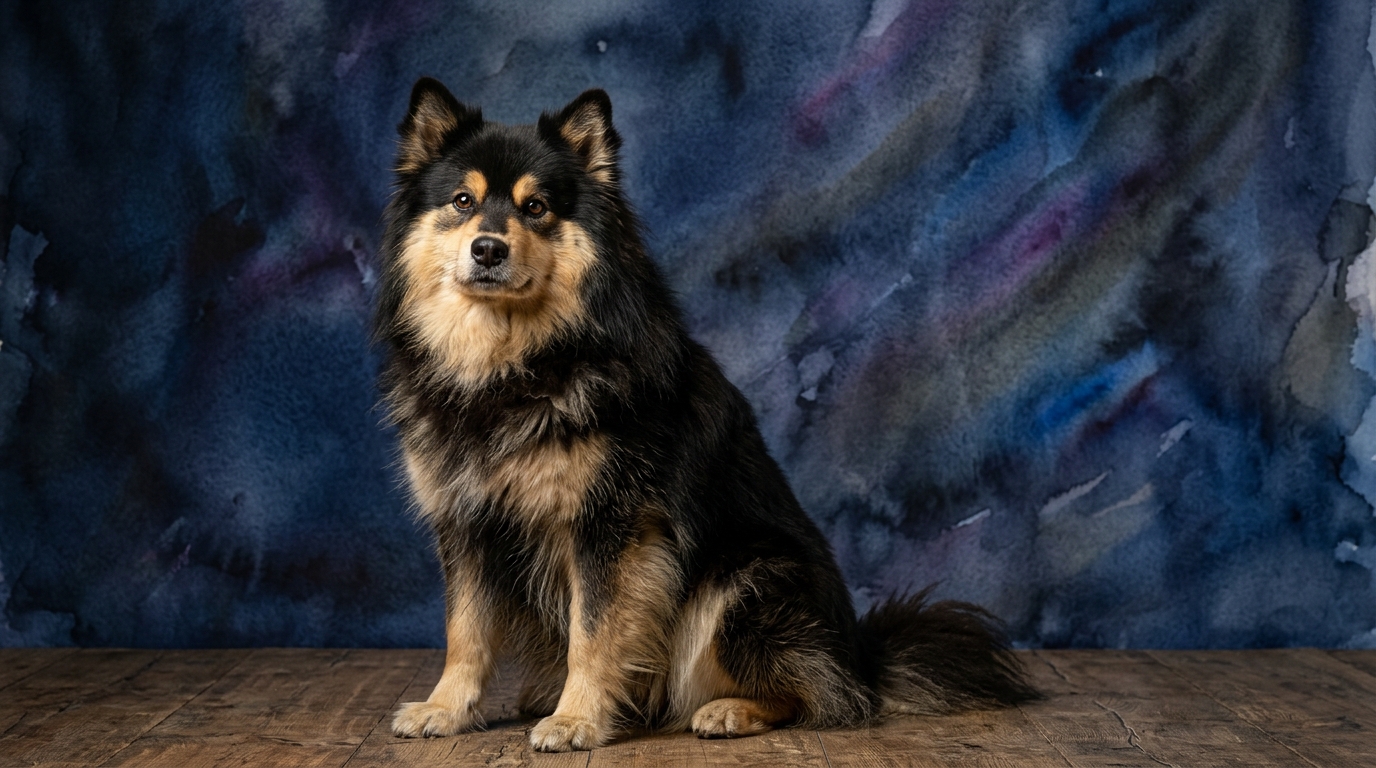

Side-by-Side IQ Profile: Unpacking Moderate Competence
In The Cosmic Pet Pet IQ Lab, both the Finnish Lapphund and the Black Russian Terrier receive a consistent rating of 3/5 across all five cognitive dimensions: problem-solving, training speed, social intelligence, instinctive drive, and memory. This uniform scoring doesn't suggest an identical mental landscape, but rather indicates a robust, competent level of cognitive function that manifests uniquely within each breed's specialized context and historical purpose. To truly appreciate their intellect, we must look beyond the numbers and into the specific ways these capacities are utilized by each breed.
For the **Finnish Lapphund**, a herding dog from the Arctic, their **Problem Solving (3/5)** reflects a proficient ability to navigate dynamic, often challenging natural environments. This includes finding creative ways to manage livestock, such as reindeer, across varied terrains or adapting to sudden weather changes, often requiring independent decisions when human guidance is remote. Their **Training Speed (3/5)** indicates a steady and reliable learning pace; while they grasp commands well, their herding independence means they often assess the utility of a task, requiring consistent, positive reinforcement to maintain engagement. **Social Intelligence (3/5)** for a Lapphund is deeply rooted in cooperative work, allowing them to read the subtle cues of both their human handlers and their flock, understanding group dynamics for effective management. Their **Instinctive Drive (3/5)** is primarily a strong, yet manageable, impulse to gather and control, often expressed through circling or a desire to keep their 'flock' (family members) together, alongside a natural resilience to harsh climates. Finally, their **Memory (3/5)** is solid, aiding in recalling routines, learned commands, specific herding routes, and the faces of their trusted human and animal companions, ensuring consistent performance in familiar and dynamic settings.
The **Black Russian Terrier**, a breed developed for military protection, also demonstrates a 3/5 across all cognitive dimensions, but with a distinct application. Their **Problem Solving (3/5)** is geared towards assessing and managing situations within a protective context. This means they can intelligently discern potential threats, navigate complex training scenarios, and find effective ways to fulfill their guarding duties, often requiring strategic thought in unfamiliar or high-stakes environments. Their **Training Speed (3/5)** signifies a consistent, solid rate of absorbing new information and commands, particularly when provided with clear, firm leadership. Their eagerness to work and inherent desire for a purpose can translate into effective learning, though their strong will means they thrive on structure and a confident handler. The BRT's **Social Intelligence (3/5)** is characterized by a keen awareness of their family's emotional states and a nuanced ability to differentiate between welcomed individuals and perceived intruders. Their discerning nature allows them to read intentions, understand social hierarchies, and respond with appropriate protective or welcoming behaviors. Their **Instinctive Drive (3/5)** reflects a pronounced, yet controllable, drive for guarding and protection, geared towards vigilance, territorial defense, and a readiness to act when their family or property is threatened. Lastly, their **Memory (3/5)** is sound for commands, training sequences, and distinguishing between friends and strangers, crucial for consistently applying learned behaviors and maintaining vigilance over time, remembering past interactions and their outcomes.
Where the Finnish Lapphund Excels Cognitively
Despite sharing a 3/5 rating across all cognitive dimensions with the Black Russian Terrier, the Finnish Lapphund uniquely excels in specific applications of these traits, particularly within dynamic, open environments. Their problem-solving ability, while rated similarly, manifests with a distinct emphasis on independent decision-making crucial for herding. A Lapphund frequently assesses environmental variables like terrain, weather, and flock movement, making nuanced choices without constant human instruction—a necessity when supervising reindeer across vast, often challenging landscapes. This independence, coupled with their social intelligence, allows them to subtly influence group behavior, reading the collective mood of animals and preempting movements, rather than relying on forceful intervention. Their memory for varied routes and past herding successes further solidifies their competence in adaptable, autonomous work, making them particularly adept at tasks requiring fluid, self-directed engagement.
Where the Black Russian Terrier Excels Cognitively
The Black Russian Terrier, while also scoring 3/5 across the board, showcases its cognitive strengths in areas demanding structured vigilance and protective discernment. Their problem-solving, though rated identically, is honed for assessing and managing perceived threats within a defined territory. A BRT's intellect shines in its capacity to process complex situational cues, discerning genuine danger from benign activity, and formulating an appropriate, often strategic, response without unnecessary aggression. This breed's social intelligence, while a 3/5, is acutely tuned to reading human intentions and maintaining a clear hierarchy, allowing them to be both deeply loyal to their family and appropriately reserved with strangers. Their strong instinctive drive for protection, combined with a robust memory for specific training protocols and past encounters, means they consistently apply learned behaviors in high-stakes scenarios, making them exceptionally reliable in roles requiring steadfast, disciplined guardianship.
Ease of Training: A Question of Motivation and Purpose
Assessing which breed is 'easier' to train, despite both having a 3/5 training speed, hinges significantly on their inherent motivations and the handler's approach. The Finnish Lapphund's herding background instills a desire for partnership and collaboration. They are generally responsive to positive reinforcement and enjoy engaging in activities that mimic their ancestral tasks, such as agility or obedience. However, their independent problem-solving streak means they might question or evaluate a command's purpose, requiring a patient, consistent handler who can make training feel like a shared endeavor. They are not typically driven by strict obedience for its own sake, but rather by the satisfaction of working alongside their human.
Conversely, the Black Russian Terrier’s working breed heritage means they often thrive on structure and clear leadership. Their strong instinctive drive for purpose, coupled with a desire to please a respected leader, can make them highly receptive to formal training. While they learn at a solid pace, their formidable presence and protective instincts demand a confident, experienced handler who can establish clear boundaries and provide early, extensive socialization. A BRT might appear easier to train in terms of sheer compliance due to their desire for a 'job,' but their powerful nature and guarding tendencies require a more nuanced and firm approach to ensure balanced behavior.
Suiting Active vs. Relaxed Owners: Beyond Physicality
The cognitive profiles of both breeds offer insights into their suitability for various owner lifestyles, extending beyond mere physical activity levels. The Finnish Lapphund, with its problem-solving rooted in dynamic herding and moderate instinctive drive, thrives with owners who offer mental engagement that mirrors their ancestral work. This doesn't necessarily mean extreme athleticism, but rather consistent opportunities for exploration, puzzle-solving, and activities like herding games, scent work, or advanced obedience that challenge their collaborative social intelligence. They are well-suited to active owners who appreciate a thinking partner and can provide diverse, stimulating experiences, rather than just repetitive physical exercise. A 'relaxed' owner might find their independent streak and need for mental stimulation challenging without adequate outlets.
The Black Russian Terrier, with its cognitive strengths in structured vigilance and protective drives, suits owners who are active in a different sense: proactive in training, consistent in leadership, and dedicated to extensive socialization. Their need for a 'job' and their strong memory for routines means they flourish with owners who provide clear structure, regular training sessions, and opportunities to channel their protective instincts appropriately. While they require physical exercise, their mental stimulation comes more from fulfilling their role within the family unit and understanding their boundaries. A relaxed owner who cannot provide firm guidance and consistent mental engagement might find the BRT's formidable presence and protective instincts overwhelming, regardless of physical activity.
The Verdict
If you seek a collaborative partner for dynamic, independent work, capable of subtle social navigation and problem-solving in fluid environments, the Finnish Lapphund is an excellent choice. They thrive with owners who appreciate a thinking dog and can provide consistent, engaging mental stimulation that taps into their herding heritage.
Conversely, if your lifestyle demands a steadfast guardian with a disciplined, discerning intellect, capable of structured vigilance and strong loyalty within a clear hierarchy, the Black Russian Terrier stands out. They require a confident, experienced owner committed to consistent training, clear boundaries, and extensive socialization to channel their powerful protective instincts effectively.
🧠 Find Your Pet's IQ Score
Our Pet IQ Lab assessment covers 25+ tests across 5 cognitive dimensions — personalized to your breed.
Take the Full IQ Test →Frequently Asked Questions
Are Finnish Lapphunds good for first-time dog owners?
While Finnish Lapphunds are generally amiable, their independent problem-solving and moderate herding drive mean they benefit from owners who understand positive reinforcement and consistent training. A first-time owner willing to commit to mental stimulation and partnership-based training could do well with a Lapphund.
Do Black Russian Terriers need a lot of exercise?
Black Russian Terriers do require regular physical exercise to maintain their robust physique, but equally important is mental stimulation and consistent training. Their strong working drive means they thrive on having a purpose, which can be satisfied through structured activities and clear boundaries as much as vigorous activity.
How do these breeds typically interact with children?
Finnish Lapphunds, with their social intelligence and cooperative nature, are often gentle and patient with children, viewing them as part of their 'flock' to watch over. Black Russian Terriers, while intensely loyal to their family, including children, require early and extensive socialization due to their protective instincts, ensuring they discern family from strangers appropriately.