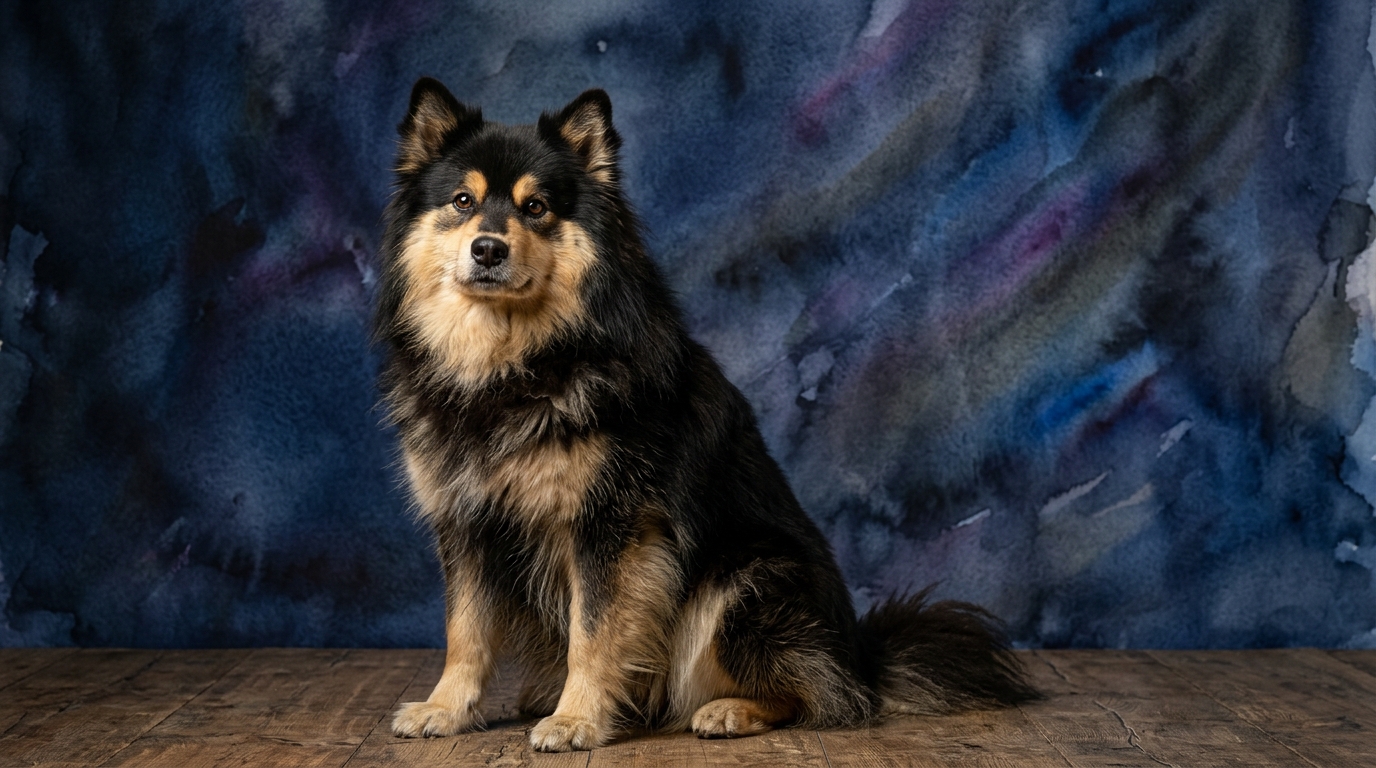
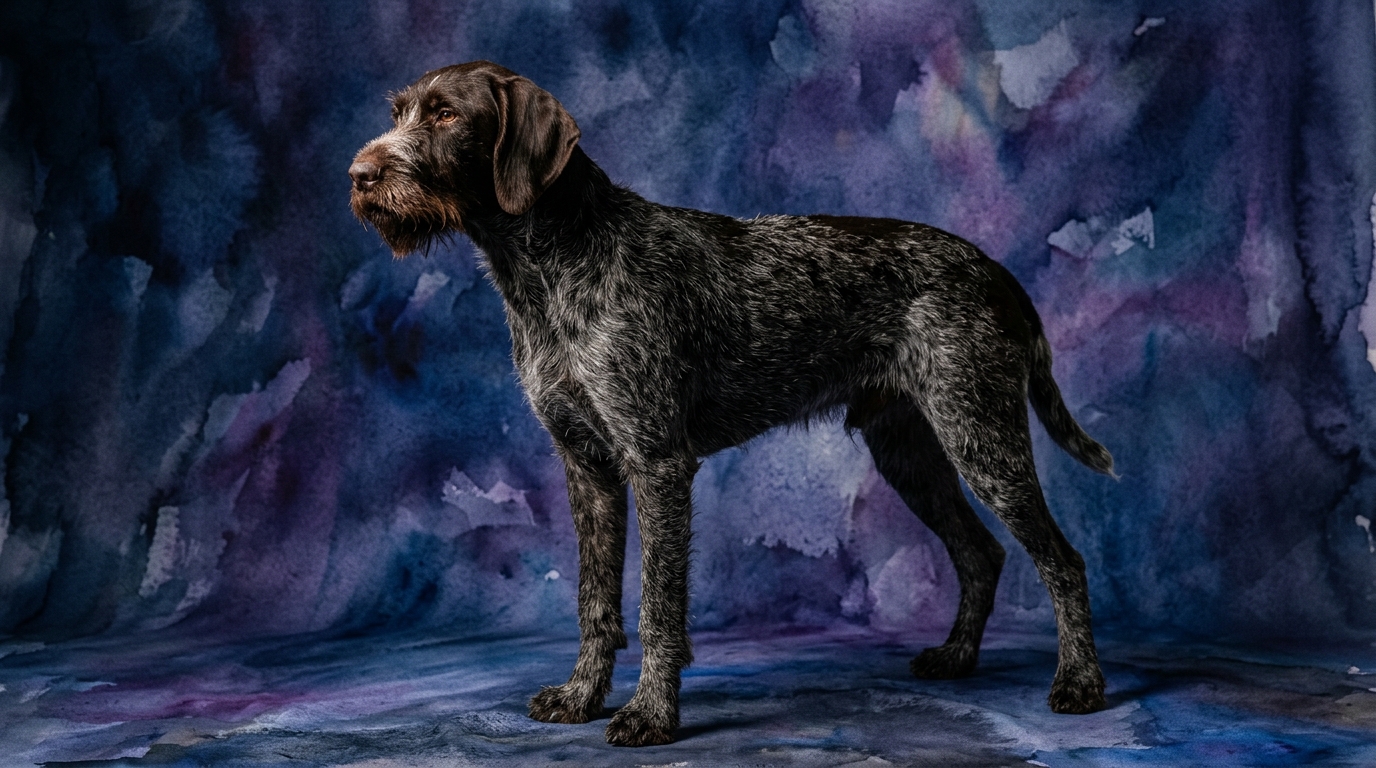
A Side-by-Side Look at Cognitive Profiles
The Cosmic Pet Pet IQ Lab provides a five-dimensional framework for understanding canine intelligence, offering a detailed lens through which to compare these two distinct breeds. While both are working dogs, their cognitive strengths are tailored to very different tasks.
The Finnish Lapphund, a breed developed for herding reindeer in challenging Nordic environments, consistently scores 3/5 across all five intelligence dimensions. Their Problem Solving ability at 3/5 suggests a moderate capacity for independent thought and navigating novel situations, likely reflecting their need to adapt to changing flock dynamics and terrain without constant human direction but within a cooperative framework. Training Speed, also at 3/5, indicates they are trainable and capable of learning commands, though perhaps not at a lightning-fast pace. Their Social Intelligence, rated 3/5, speaks to their cooperative nature within a pack or family unit, essential for working closely with humans and managing livestock. An Instinctive Drive of 3/5 highlights a balanced level of inherent behaviors, such as herding, without being overwhelmingly intense. Finally, their Memory at 3/5 suggests a reliable ability to recall learned behaviors and spatial information, crucial for routine herding patterns.
In contrast, the German Wirehaired Pointer (GWP), ranked #28 by Coren for working and obedience intelligence, showcases a profile geared towards its sporting origins. Their Problem Solving ability stands at 4/5, indicating a strong aptitude for independent decision-making and navigating complex hunting scenarios, such as tracking game through varied cover. A Training Speed of 4/5 means they are quick to grasp new commands and concepts, a vital trait for a breed requiring precise responses in the field. Their Social Intelligence is rated 3/5, similar to the Lapphund, reflecting a cooperative spirit with their human hunting partner. However, their Instinctive Drive is also 3/5, suggesting a focused, but not unmanageable, set of hunting behaviors. A notable strength is their Memory, scoring 4/5, which is invaluable for remembering scent trails, retrieving locations, and retaining a vast repertoire of learned commands over time.
Where the Finnish Lapphund Demonstrates Unique Cognitive Strengths
While the Finnish Lapphund's individual scores might appear lower than the GWP's in some areas, their cognitive profile represents a remarkable balance and consistency that serves their herding heritage exceptionally well. Their uniform 3/5 scores across all dimensions points to a well-rounded and adaptable operational intelligence rather than a specialized, high-intensity focus. This means they are less likely to exhibit extreme tendencies in any single area, leading to a predictable and generally stable temperament.
Their moderate Problem Solving and Instinctive Drive, coupled with their Social Intelligence, allow them to excel in nuanced, cooperative tasks. Instead of rapidly solving complex, novel problems independently, a Lapphund's strength lies in its ability to read subtle environmental cues and group dynamics within a flock, making steady, reliable decisions that maintain order without being overly assertive. Their herding style is often described as 'loose-eyed,' relying on presence and gentle guidance rather than intense stares or forceful movements. This requires a specific kind of social intelligence and memory for patterns, where consistency and observation are prioritized over speed.
Furthermore, the Lapphund's balanced memory and training speed contribute to their resilience and ability to thrive in diverse family environments. They retain training well and are receptive to learning, making them a steady and reliable companion for those who appreciate a consistent pace. Their cognitive profile suggests a dog that is thoughtful and observant, capable of making sound judgments within their established social structure, rather than a dog driven by immediate, intense impulses.
Where the German Wirehaired Pointer Excels Cognitively
The German Wirehaired Pointer's cognitive profile clearly highlights its strengths as a dedicated and efficient hunting companion. Their elevated Problem Solving score of 4/5 is a direct asset in the field, enabling them to independently assess and navigate challenging terrain, locate game, and adapt to unforeseen obstacles without constant handler intervention. This capacity for quick, effective decision-making is paramount when working in dynamic outdoor environments.
Their superior Training Speed (4/5) and Memory (4/5) are interconnected advantages. A GWP's ability to quickly absorb and retain commands, even complex sequences, makes them exceptionally responsive in hunting situations where precision and immediate recall are critical. Whether it's a 'whoa' command to hold a point or a 'fetch' from dense cover, their rapid learning and robust memory ensure consistent performance. This cognitive agility allows them to build a vast repertoire of skills and respond reliably to subtle cues from their handler.
While their Instinctive Drive is rated 3/5, similar to the Lapphund, the *application* of this drive in a GWP is highly focused on scenting, pointing, and retrieving. Their cognitive architecture supports the efficient execution of these tasks, making them tenacious and effective in their specialized role. They process sensory information quickly and translate it into purposeful action, demonstrating a cognitive efficiency tailored for their sporting purpose. This drive, combined with their problem-solving ability, means they are not merely following commands but actively engaging their intellect to achieve their hunting objectives.
Ease of Training: Behavioral Differences in Action
When considering which breed is easier to train, the German Wirehaired Pointer generally holds an advantage due to its higher scores in Training Speed (4/5) and Memory (4/5). These dogs are typically very keen to learn and pick up new commands with fewer repetitions. Their strong problem-solving skills (4/5) mean they can often generalize learned behaviors to new contexts more readily, adapting quickly to variations in training exercises or environments. Their eagerness to please a handler, combined with their focused drive, means they thrive on structured training and mental engagement.
The Finnish Lapphund, with a Training Speed of 3/5 and Memory of 3/5, is certainly trainable but may require a more patient and consistent approach. They absorb information steadily rather than rapidly, meaning an owner might need to provide more repetitions and clear, consistent cues. Their social intelligence (3/5) suggests they respond well to positive reinforcement and cooperative methods, valuing the partnership with their human. While they may not be as quick to master complex sequences as a GWP, their moderate instinctive drive and balanced temperament mean they are less prone to impulsive behaviors that can derail training. They might be more forgiving of handler inconsistencies, but consistent, engaging training is still key to unlocking their full potential.
Lifestyle Match: Active Owners vs. Relaxed Owners
For owners seeking an active, purpose-driven companion, the German Wirehaired Pointer is an ideal match. Their strong instinctive drive (3/5), combined with high problem-solving and memory scores, means they require significant physical exercise and mental stimulation that taps into their hunting heritage. These are not dogs content with short walks; they thrive on activities like hiking, running, field work, dog sports such (e.g., agility, dock diving), and extensive off-leash exploration where they can utilize their scenting abilities. An owner who is equally active and can provide consistent engagement and a 'job' for their GWP will find a highly fulfilled and cooperative partner. A relaxed owner will likely find a GWP to be restless and potentially destructive if their considerable energy and cognitive needs are not met.
The Finnish Lapphund, while also an active breed, possesses a more balanced activity level, making them more adaptable to a range of active lifestyles. Their herding background means they appreciate regular outdoor activities, such as long walks, hiking, or even participation in dog sports like agility or obedience, where their moderate training speed and social intelligence can shine. However, their consistent 3/5 scores across the board suggest they can also be content with quality time indoors with their family after their exercise needs are met. They are not typically high-strung but do require consistent mental engagement to prevent boredom. A truly 'relaxed' owner might still find their activity needs challenging, but the Lapphund is generally more amenable to varying daily routines compared to the intensely focused GWP, making them a good fit for active families who also appreciate a calm presence indoors.
The Verdict
Choose the Finnish Lapphund if you seek a balanced, adaptable companion with a consistent temperament and a steady learning pace, thriving in cooperative relationships with a moderately active family.
Opt for the German Wirehaired Pointer if you are an highly active individual or family seeking a quick-witted, purpose-driven dog that excels in rapid learning, independent problem-solving, and demanding outdoor activities.
🧠 Find Your Pet's IQ Score
Our Pet IQ Lab assessment covers 25+ tests across 5 cognitive dimensions — personalized to your breed.
Take the Full IQ Test →Frequently Asked Questions
Do Finnish Lapphunds bark a lot due to their herding background?
Finnish Lapphunds do use their voices to communicate, a trait stemming from their herding role where barking helped manage reindeer. While not excessive, they can be vocal and may require training to moderate their barking, especially when excited or alerting to new stimuli.
Are German Wirehaired Pointers suitable for first-time dog owners?
German Wirehaired Pointers can be challenging for first-time owners due to their high energy, strong drive, and need for consistent, engaging training and mental stimulation. They thrive with experienced owners who understand working breeds and can provide a structured environment and sufficient outlets for their instincts.
How do their social intelligence scores (3/5 for both) translate into their family interactions?
Both breeds, with a 3/5 social intelligence, are generally cooperative and form strong bonds with their families. The Lapphund's social intelligence often manifests as a desire to be part of family activities and a gentle demeanor, while the GWP's social intelligence is often geared towards a strong working partnership with their chosen person, extending to family members.