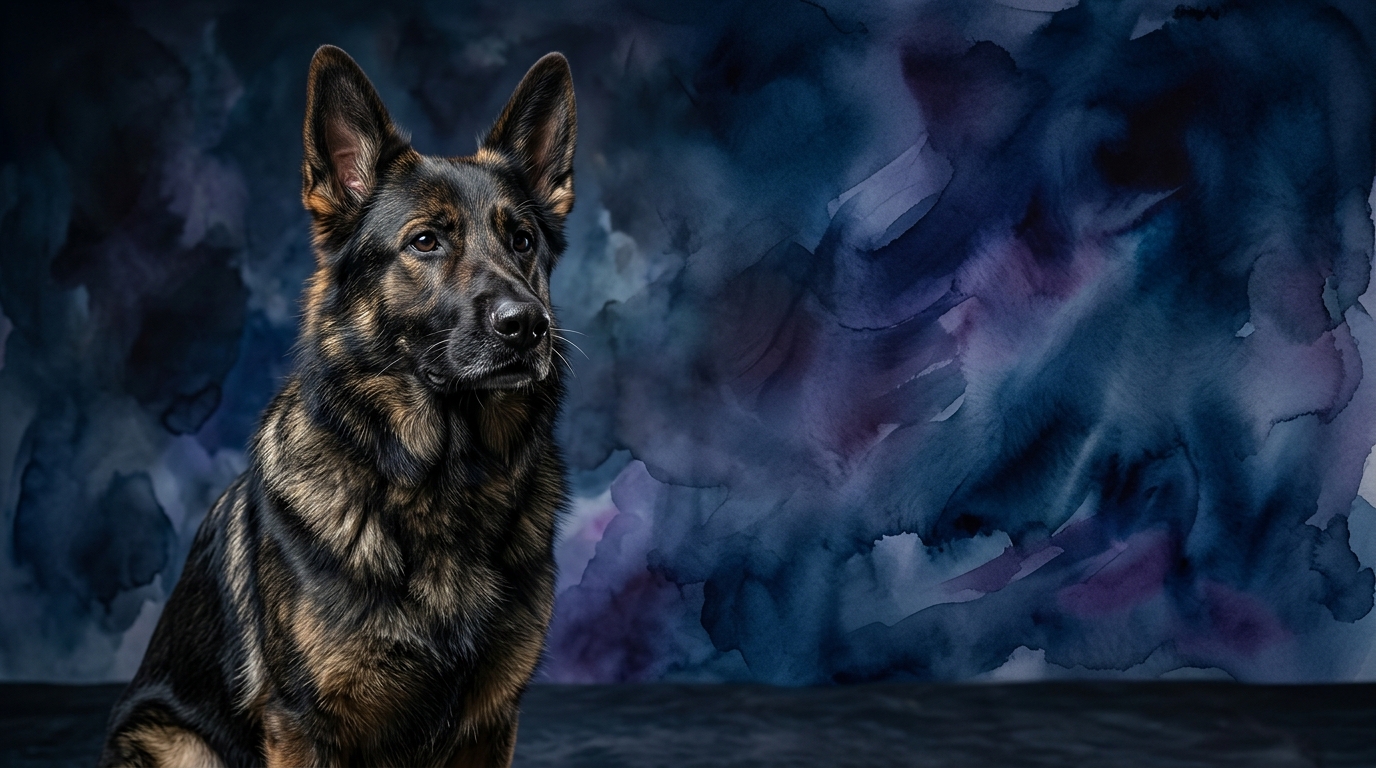
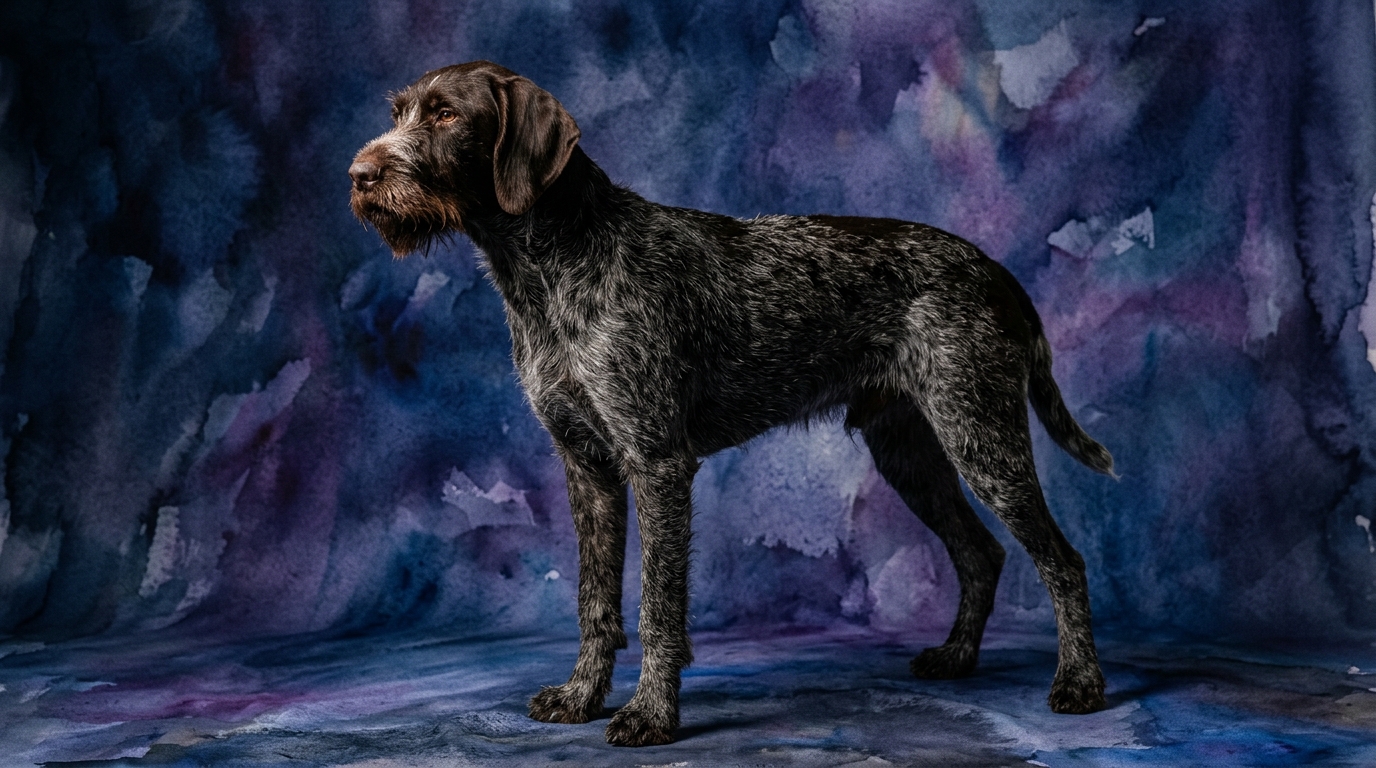
Side-by-Side IQ Profile: German Shepherd vs. German Wirehaired Pointer
The Cosmic Pet Pet IQ Lab's framework offers a granular view of canine cognitive abilities, illuminating the distinct mental landscapes of the German Shepherd and the German Wirehaired Pointer.
The German Shepherd, a breed rooted deeply in herding and protection, exhibits remarkable cognitive breadth, registering a perfect 5/5 across all five dimensions. Their problem-solving capacity is exceptional, allowing them to decipher complex scenarios and devise effective solutions, whether tracking a scent or navigating an obstacle course. Training speed is unparalleled; they grasp new commands and routines with impressive swiftness, often requiring minimal repetition before mastery. Social intelligence is a cornerstone of their character, enabling profound bonds with humans, an acute understanding of emotional cues, and a willingness to work collaboratively. Instinctive drive is robust and versatile, fueling their natural inclination to herd, protect, and perform tasks with unwavering focus and endurance. Memory is equally strong, allowing them to recall vast repertoires of commands, learned behaviors, and past experiences with perfect clarity. This comprehensive cognitive profile, reflected in their Coren rank of #3, underscores their adaptability and proficiency in diverse roles.
In contrast, the German Wirehaired Pointer, a sporting dog bred for tenacious hunting across varied terrain, presents a focused yet different cognitive blueprint. Their problem-solving ability scores a commendable 4/5, indicating a strong capacity to overcome challenges encountered in the field, such as locating hidden game or navigating dense cover. Training speed is also proficient at 4/5; they learn new tasks effectively, though they may require slightly more consistent application and motivation than their German Shepherd counterparts. Social intelligence, rated at 3/5, suggests a more independent nature; while they form bonds, their primary focus often remains on their task rather than constant human interaction. Their instinctive drive, also at 3/5, is specifically tuned for hunting pursuits, demonstrating determination and endurance in tracking and retrieving, albeit with a narrower scope than the German Shepherd's broad working drives. Memory stands at 4/5, enabling them to retain hunting strategies, commands, and game locations with good accuracy. Their Coren rank of #28 reflects a specialized intellect, optimized for their demanding sporting role.
Where the German Shepherd Wins Cognitively
The German Shepherd's cognitive architecture provides distinct advantages, particularly in areas demanding intricate understanding and adaptive responses. Their perfect 5/5 in problem-solving means they excel at tasks requiring abstract thought and novel solutions, such as complex search-and-rescue operations or deciphering intricate scent puzzles. This breed doesn't merely follow commands; they often anticipate needs and make decisions based on contextual understanding, a trait fostered by their strong social intelligence (5/5). Their training speed (5/5) is a significant cognitive win, allowing them to master a vast array of commands and behaviors with remarkable efficiency, making them highly receptive to advanced obedience, protection work, or service roles. Furthermore, their superior memory (5/5) ensures these complex learned behaviors are retained reliably over long periods, reducing the need for constant refreshers. This combination positions the German Shepherd for roles demanding sophisticated decision-making and rapid, precise execution.
Where the German Wirehaired Pointer Wins Cognitively
While the German Shepherd boasts broad cognitive superiority, the German Wirehaired Pointer's cognitive profile offers unique advantages tailored to its heritage. Their 4/5 problem-solving and 3/5 instinctive drive, when combined, create a dog supremely adept at independent, tenacious work in challenging environments. Unlike the German Shepherd, whose social intelligence often drives collaborative problem-solving, the GWP can exhibit strong self-reliance in the field, adapting to conditions with less constant human direction. Their slightly lower social intelligence (3/5) can be a cognitive benefit in scenarios where a dog needs to focus intently on a task, such as tracking game through dense cover, without being overly distracted by human presence. Their robust memory (4/5) is perfectly suited for recalling game locations and navigating complex terrain during a hunt, demonstrating a functional, task-specific cognitive edge highly efficient for their purpose. This breed's specific mental makeup excels at prolonged, independent hunting where perseverance and self-directed problem-solving are paramount.
Which is Easier to Train and Why?
Based on the Cosmic Pet Pet IQ Lab scores, the German Shepherd is unequivocally easier to train than the German Wirehaired Pointer. The German Shepherd's perfect 5/5 in training speed signifies an extraordinary capacity for rapid learning and concept acquisition. They are acutely attentive to human directives and body language, driven by their 5/5 social intelligence and a strong desire to please and collaborate. This means they often pick up new commands after just a few repetitions, making the training process highly efficient and rewarding. Their natural inclination to work alongside humans and their profound understanding of social cues translates into a dog eager to engage in structured learning and complex tasks.
The German Wirehaired Pointer, with a 4/5 in training speed and 3/5 in social intelligence, is certainly trainable but requires a different approach. Their independent nature and task-oriented focus mean they might not always prioritize human approval over their own instincts, particularly when a compelling scent is involved. While they learn effectively, they may demand more patience, consistency, and motivation tailored to their innate drives, such as using game-related rewards or field exercises. They might take slightly longer to generalize commands across different environments or require more consistent reinforcement to maintain behaviors, reflecting their self-directed cognitive style.
Which Suits Active Owners vs. Relaxed Owners?
Neither the German Shepherd nor the German Wirehaired Pointer is suitable for a relaxed owner; both breeds demand significant physical and mental engagement, though the nature of that engagement differs. The German Shepherd, with its pervasive 5/5 instinctive drive and boundless cognitive capacity, thrives on having a "job." They require consistent mental stimulation through complex training, problem-solving games, and structured activities that challenge their intellect and physical stamina. Owners must be prepared for daily, vigorous exercise combined with intricate mental tasks to prevent boredom and destructive behaviors. Their high social intelligence also means they crave deep interaction and inclusion in family activities, making them unsuitable for owners who cannot dedicate substantial time to their companionship and training.
The German Wirehaired Pointer, while also requiring an active lifestyle, leans towards outdoor, utility-driven activities. Their 3/5 instinctive drive is keenly focused on hunting, tracking, and exploring, meaning they need ample opportunities for long hikes, runs, or actual field work. Their 4/5 problem-solving and memory are best engaged through activities that mimic their ancestral purpose, such as advanced scent work, agility, or retrieving games. While they are active, their 3/5 social intelligence means they might tolerate periods of independent activity more readily than a German Shepherd, but this does not equate to being a couch potato. Owners must be committed to providing regular, intense physical outlets that satisfy their desire to explore and work, often in rugged environments.
The Verdict
Choose a German Shepherd if you seek a highly cooperative, versatile companion eager for complex training, profound social interaction, and a deep partnership in various working or family roles.
Choose a German Wirehaired Pointer if you desire a tenacious, independent working dog primarily for active outdoor pursuits like hunting, field trials, or rigorous hiking, appreciating their self-directed problem-solving and enduring drive for specific tasks.
🧠 Find Your Pet's IQ Score
Our Pet IQ Lab assessment covers 25+ tests across 5 cognitive dimensions — personalized to your breed.
Take the Full IQ Test →Frequently Asked Questions
Does a German Shepherd's higher social intelligence make them better family pets?
A German Shepherd's 5/5 social intelligence often translates to a deep connection with family members, an understanding of human emotions, and a strong desire to be involved. This can make them excellent, protective family companions, provided their extensive physical and mental needs are met, ensuring they channel their drives positively.
Can a German Wirehaired Pointer be trained for purposes other than hunting?
Absolutely. With 4/5 in problem-solving and training speed, a German Wirehaired Pointer can excel in various dog sports like agility, obedience, or tracking. While their instinctive drive is geared towards hunting, their intelligence and work ethic can be directed towards other challenging activities that provide mental and physical stimulation.
How do their memory scores impact daily life for owners?
A German Shepherd's 5/5 memory means they reliably recall commands and routines, making consistent training highly effective and long-lasting. A German Wirehaired Pointer's 4/5 memory is also very good, meaning they retain learned behaviors well, but might benefit from occasional refreshers or more task-specific reinforcement to keep their attention focused over time.