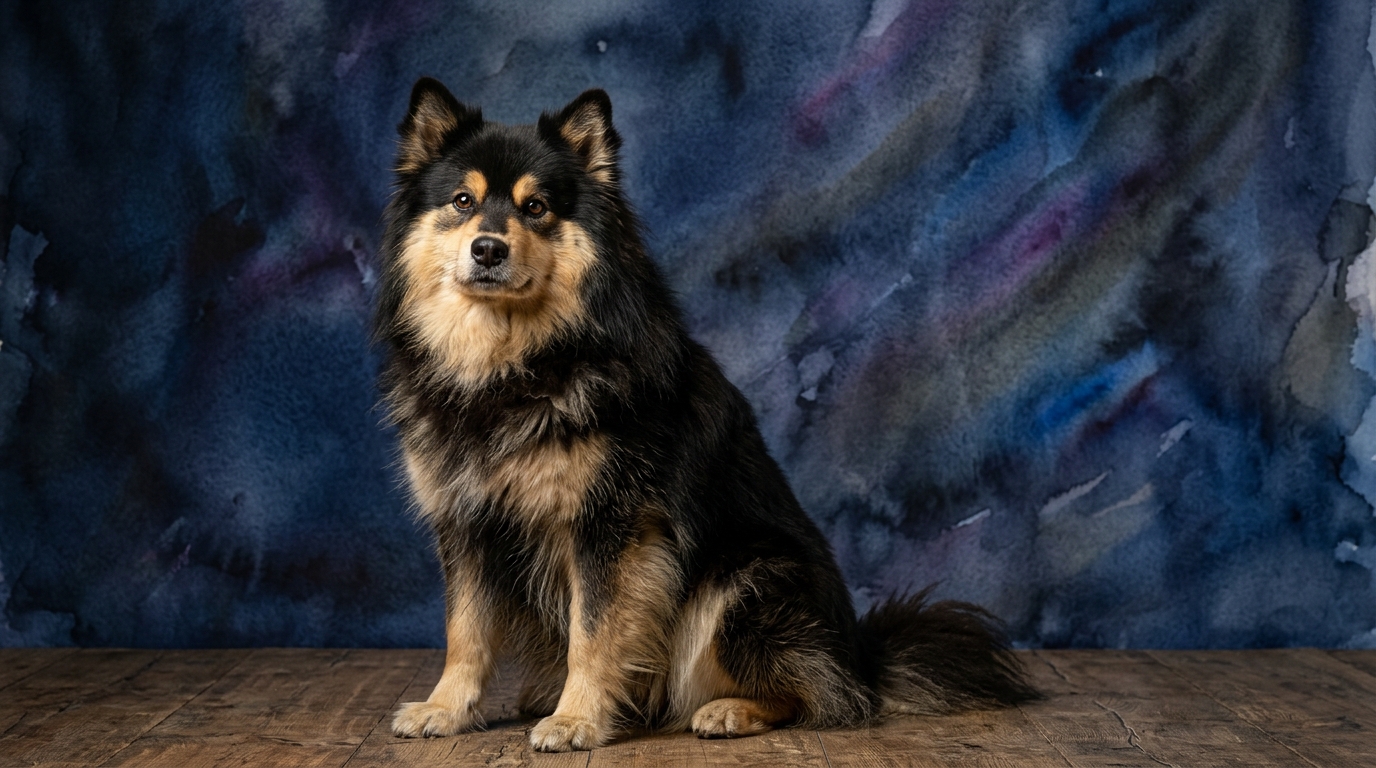

Side-by-Side IQ Profile: Unpacking the 3/5 Score
When two breeds share identical scores across our IQ dimensions, it signifies a baseline of moderate aptitude, but the *application* of that aptitude varies profoundly based on their evolutionary purpose and breed characteristics. Both the Finnish Lapphund and the Lhasa Apso demonstrate a solid, yet not exceptional, capacity across the board, making a deeper dive into their individual expressions of these traits essential.
For Problem Solving (3/5), both breeds possess the capacity to figure out puzzles or navigate challenges, but may require some consistent guidance or repetition to master complex tasks. A Finnish Lapphund might apply this to understanding a new hiking trail or figuring out how to alert its family to a perceived change in the environment, whereas a Lhasa Apso might use its moderate problem-solving to strategically claim the best sunbeam spot or subtly manipulate a toy out from under furniture.
Regarding Training Speed (3/5), neither breed is a lightning-fast learner nor particularly slow. They both absorb new commands and routines at a moderate pace, requiring patience, clear communication, and positive reinforcement for consistent results. The Finnish Lapphund, with its herding background, often enjoys the collaborative aspect of training, while the Lhasa Apso, historically more independent, might require stronger motivation and perceive training as a negotiation.
Social Intelligence (3/5) indicates that both breeds are moderately adept at understanding human cues and social dynamics. A Finnish Lapphund's social intelligence might manifest as a keen awareness of its family's whereabouts, a desire to keep its 'flock' together, and a nuanced reaction to different tones of voice. The Lhasa Apso, on the other hand, often exhibits its social intelligence by discerning subtle shifts in household moods, understanding established routines, and selectively engaging with strangers based on perceived intent.
Instinctive Drive (3/5) reveals a moderate level of innate behaviors. For the Finnish Lapphund, this includes a gentle herding inclination, a natural vigilance, and a desire to patrol its territory, often expressed through alert barking. The Lhasa Apso's instinctive drive is primarily rooted in its ancient role as a sentinel; it possesses a distinct territorial awareness, a strong protective instinct towards its family, and a propensity for watchful observation of its surroundings.
Finally, Memory (3/5) suggests that both breeds retain learned information and experiences moderately well. A Finnish Lapphund will remember training cues, familiar routes, and past interactions with people and other animals, contributing to its adaptability in various environments. The Lhasa Apso demonstrates its memory through consistent adherence to household schedules, recalling preferred human behaviors, and remembering perceived threats or pleasant encounters, reinforcing its role as a steadfast companion and guardian.
Where the Finnish Lapphund Excels Cognitively
While sharing identical scores, the Finnish Lapphund's cognitive strengths are undeniably shaped by its heritage as a reindeer herder in the challenging Arctic. Its Problem Solving at 3/5 is particularly strong in environmental adaptability and resourcefulness. This breed demonstrates a nuanced ability to navigate varied terrains, assess changing weather conditions, and intuitively locate 'missing' family members during outdoor excursions, showcasing a practical intelligence rooted in observation and spatial reasoning.
The Lapphund's Social Intelligence, also at 3/5, is geared towards collaborative effort and group cohesion. They are adept at reading their handler's intentions in a working or training context, often anticipating commands or reacting to subtle body language. Their instinctive drive, while moderate, manifests as a gentle yet persistent desire to keep their 'pack' together, making them particularly attuned to the dynamics of a family unit and quick to notice when someone is separated. This communal awareness is a distinct cognitive advantage.
Furthermore, their Memory at 3/5 is excellent for retaining complex routes and sequences of actions, which would have been vital for herding. This translates into quickly learning multi-step tricks, remembering specific locations of toys or treats, and recalling past social interactions, allowing them to build strong, consistent relationships over time.
Where the Lhasa Apso Shines Cognitively
The Lhasa Apso, with its ancient origins as a sentinel in Tibetan monasteries and palaces, possesses a distinct set of cognitive strengths, even with its 3/5 scores. Its Problem Solving, at 3/5, is highly refined for navigating complex social environments and domestic situations. They excel at figuring out the optimal ways to get what they want from their humans – whether it's more attention, a specific treat, or access to a favored spot – often employing subtle cues and persistence.
The Lhasa Apso's Social Intelligence, while rated 3/5, is exceptionally tuned to human emotional states and household routines. They are remarkably perceptive of their owners' moods, often offering comfort or space as appropriate, and have an uncanny ability to 'know' when it’s time for a walk or a meal. Their Instinctive Drive, also 3/5, is expressed through a highly focused territorial vigilance. They are quick to alert to perceived intruders or unusual sounds, demonstrating a specialized intelligence for discerning threats within their home environment, making them effective small guardians.
Their Memory at 3/5 is particularly strong for recalling specific routines, preferred human habits, and the 'rules' of the house. This contributes to their predictable nature and their ability to integrate seamlessly into a household, remembering which family member is most likely to give in to their charming demands or where the best napping spots are based on past successes.
Training Dynamics: Finnish Lapphund vs. Lhasa Apso
With both breeds scoring 3/5 in Training Speed, neither is inherently simple or overly challenging to train, but their underlying motivations and behavioral tendencies create distinct experiences. The Finnish Lapphund's herding background often instills a desire to work collaboratively with their human. They generally respond well to positive reinforcement, praise, and engaging training sessions that feel like a partnership. Their moderate instinctive drive means they can be attentive and willing to learn a variety of commands, from basic obedience to more complex dog sports, provided the training is consistent and makes sense to them.
In contrast, the Lhasa Apso's history as an independent guardian means they can be more self-willed in training. While capable of learning just as quickly, their compliance often feels more like a choice they make rather than an automatic response. Owners need patience, high-value rewards, and a firm but gentle approach to convince a Lhasa Apso that a command is worth performing. They can be particularly good at selective hearing if they perceive a task as uninteresting or unnecessary. Early and consistent socialization is crucial for a Lhasa Apso to channel their social intelligence constructively, ensuring they are comfortable and discerning in various situations rather than overly suspicious.
Lifestyle Match: Active vs. Relaxed Owners
The Finnish Lapphund, even with moderate instinctive drive, thrives with active owners. Their herding heritage, combined with their naturally energetic disposition, means they require regular physical exercise and mental stimulation. They are excellent companions for hiking, jogging, or participating in dog sports like agility and obedience. Owners who enjoy spending time outdoors and can provide consistent engagement and a sense of purpose for their dog will find a deeply rewarding partnership with a Lapphund. They are not content to be couch potatoes and can become restless without adequate outlets for their energy and curiosity.
The Lhasa Apso, on the other hand, is a better match for more relaxed owners, though 'relaxed' does not mean neglecting their needs. While they do not require extensive physical exertion, daily walks and moderate indoor play are essential. Their mental stimulation comes more from their role as a vigilant companion and their keen observation of household dynamics. They appreciate comfort and routine, making them well-suited for apartment living or homes with less active lifestyles. However, their independent nature and guardian instincts mean they still benefit from consistent training, boundaries, and ongoing socialization to ensure they are well-adjusted and polite members of the family.
The Verdict
Choose the Finnish Lapphund if you seek an engaging, moderately active companion eager to participate in diverse outdoor adventures and collaborative training, valuing a responsive and family-oriented partner.
Opt for the Lhasa Apso if you desire a watchful, independent, yet profoundly devoted companion for a more relaxed home environment, appreciating deep loyalty and a distinct, discerning personality.
🧠 Find Your Pet's IQ Score
Our Pet IQ Lab assessment covers 25+ tests across 5 cognitive dimensions — personalized to your breed.
Take the Full IQ Test →Frequently Asked Questions
Are Finnish Lapphunds good for first-time dog owners?
Finnish Lapphunds can be suitable for first-time owners who are committed to consistent training, socialization, and providing ample mental and physical exercise. Their moderate training speed means patience is required, and their need for engagement suits those prepared for an active companion.
Do Lhasa Apsos bark a lot due to their guardian instincts?
Lhasa Apsos do have a strong instinctive drive for vigilance, which can lead to alert barking, especially when strangers approach or unusual sounds occur. Consistent training and early socialization can help manage this tendency, teaching them appropriate times to vocalize.
How does the Lhasa Apso's Coren rank compare to the Finnish Lapphund's IQ scores?
The Lhasa Apso's Coren rank of #68 places it in the lowest tier for working obedience, which aligns with our 3/5 Training Speed score, indicating moderate obedience aptitude. The Finnish Lapphund is not Coren-ranked, but our IQ Lab scores show identical 3/5 ratings, suggesting their cognitive strengths lie in different applications than formal obedience, more aligned with their herding and environmental awareness.