
Side-by-Side IQ Profile: Herding vs. Sporting Minds
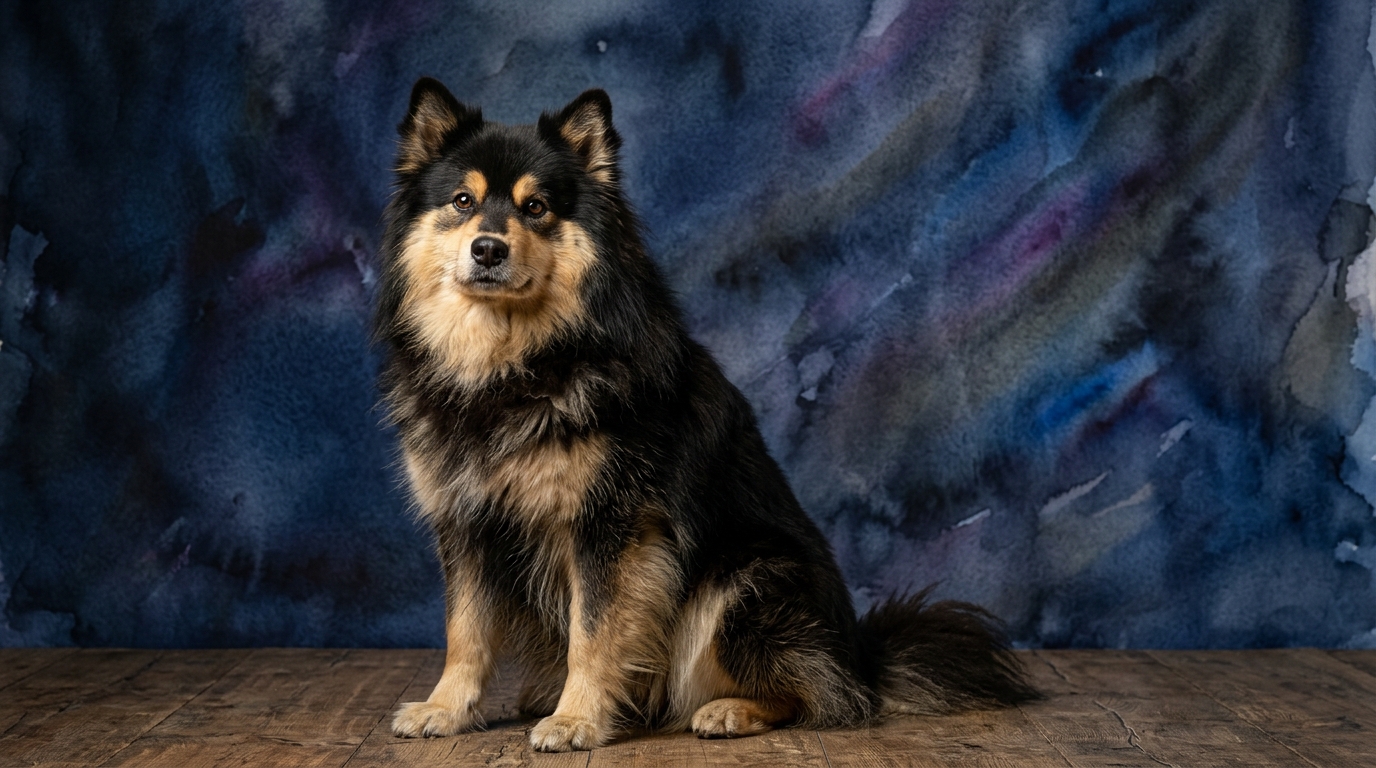
The Finnish Lapphund, a breed steeped in the tradition of herding reindeer in the Arctic, earns a 3/5 in Problem Solving, reflecting its capacity for independent decision-making in dynamic, complex environments. Its Training Speed of 3/5 indicates a willingness to learn, though often with a preference for methods that engage its natural instincts rather than rote repetition. Social Intelligence, also rated 3/5, highlights its ability to read and respond to both human and animal cues, crucial for cooperative work. An Instinctive Drive of 3/5 speaks to its inherent motivation for tasks, particularly those involving movement and supervision, while its Memory, also 3/5, ensures it retains learned behaviors and environmental knowledge essential for navigation and flock management. This breed's cognitive strengths are deeply rooted in its pastoral heritage, demanding a mental agility to adapt to varied terrain and the unpredictable nature of livestock.
In contrast, the Sussex Spaniel, a methodical gundog from the English countryside, also registers a 3/5 in Problem Solving, though its application centers more on persistent scent work and navigating dense cover to locate game. Its Training Speed, also 3/5, aligns with its Coren ranking of #62 among working dogs, suggesting it learns new commands reliably with consistent effort, typically understanding a new command in 40-80 repetitions. Social Intelligence, at 3/5, reflects its partnership with hunters, requiring an understanding of human directives and a cooperative spirit. Its Instinctive Drive of 3/5 is channeled strongly into scenting and flushing game, demonstrating a sustained focus on specific tasks, and its Memory, also 3/5, enables it to recall commands and remember the layout of hunting grounds or the location of retrieved items. The Sussex Spaniel's cognitive framework is tailored for deliberate, focused work alongside a human partner.
Where the Finnish Lapphund Shines Cognitively
While both breeds score equally in raw cognitive dimensions, the Finnish Lapphund's cognitive strengths truly shine in scenarios demanding independent judgment and adaptive problem-solving within a fluid environment. Its ancestral role as a reindeer herder required it to assess vast, open landscapes, anticipate the movements of a herd, and make autonomous decisions to guide them, often without direct human instruction. This translates into a superior capacity for spatial reasoning and a nuanced understanding of group dynamics, allowing it to "read" situations and react proactively.
For instance, a Lapphund might intuitively find the most efficient path around an obstacle to re-gather a straying 'flock' of children in a park, or creatively figure out how to open a complex latch to access a desired area, demonstrating an intrinsic drive to manipulate its environment for a perceived purpose. Their problem-solving isn't just about finding a solution, but about dynamically adjusting that solution as conditions change, showcasing a flexible and context-aware intellect.
Where the Sussex Spaniel Shows its Cognitive Prowess
Conversely, the Sussex Spaniel excels in a different realm of cognitive application: focused persistence and sensory discrimination. Bred to tirelessly work through dense undergrowth, flushing game and retrieving, its problem-solving prowess is deeply intertwined with its olfactory and tracking abilities. A Sussex will demonstrate superior cognitive endurance in following a faint scent trail for extended periods, methodically eliminating distractions and staying 'on task' until its objective is met.
This isn't about broad independent decision-making, but rather a specialized form of sustained, detail-oriented cognitive effort. Their social intelligence, while rated the same, manifests as an unwavering commitment to a specific human-directed task, interpreting subtle body language or whistle commands to execute a precise search pattern. They might not be designing the hunt, but they are executing their detailed role with exceptional precision and tenacity, making them masters of sustained, sensory-driven tasks.
Training Dynamics: Which is Easier and Why?
Both breeds share a 3/5 Training Speed, but their inherent behavioral differences can influence the perceived ease of training. The Sussex Spaniel, with its Coren ranking of #62, falls into the category of "fair working dogs," meaning it typically requires 40-80 repetitions to understand a new command and obeys the first command around 30% of the time. This suggests a dog that is amenable to consistent, patient training, often eager to please its handler in the structured context of fieldwork or obedience. Their methodical nature and focus on specific tasks mean they can be incredibly dedicated learners when the training aligns with their cooperative drive.
The Finnish Lapphund, while equally capable of learning, often brings a more independent, 'what's in it for me?' approach to training. Their herding background fosters a desire to think for themselves and make decisions, which can sometimes be interpreted as stubbornness if training isn't engaging or doesn't leverage their problem-solving skills. While they grasp concepts quickly, they might require more creative, varied training methods to maintain engagement and prevent boredom, thriving when training feels like a puzzle or a partnership rather than rote instruction.
Therefore, while both learn, the Sussex might appear 'easier' for traditional obedience due to its steady, cooperative focus, whereas the Lapphund might require a trainer who appreciates and can channel its independent spirit, making training a more collaborative, less prescriptive endeavor.
Matching Canine Intellect to Owner Lifestyles
When considering lifestyle compatibility, the Finnish Lapphund leans towards active owners who can provide consistent mental and physical engagement. Their herding instincts mean they thrive on having a 'job,' whether it's participating in dog sports like agility, herding trials, or even just regular, varied outdoor adventures that challenge their problem-solving abilities and provide ample opportunity for movement. They are happiest when their minds are stimulated and their bodies are exercised, making them less suitable for purely sedentary lifestyles.
The Sussex Spaniel, while still requiring regular exercise, is generally a better fit for more relaxed owners. They enjoy a good, purposeful walk, especially if it involves sniffing and exploring, but they are not typically high-energy dogs that demand constant vigorous activity. Their methodical nature means they are content with a steady routine and appreciate comfortable downtime indoors. While they enjoy working, their 'active' requirement is more about consistent, moderate activity and mental engagement through scent work, rather than intense, prolonged bursts of energy, making them adaptable to a quieter household that still values daily outings and mental enrichment.
The Verdict
Choose a Finnish Lapphund if you're an active owner seeking a thoughtful, semi-independent companion who thrives on varied mental challenges and outdoor adventures, appreciating a dog that actively participates in decision-making.
Opt for a Sussex Spaniel if you desire a steady, methodical companion who excels at focused tasks like scent work, appreciates a predictable routine, and enjoys diligently working alongside their owner in a cooperative partnership.
🧠 Find Your Pet's IQ Score
Our Pet IQ Lab assessment covers 25+ tests across 5 cognitive dimensions — personalized to your breed.
Take the Full IQ Test →Frequently Asked Questions
Do Finnish Lapphunds and Sussex Spaniels have similar temperaments given their matching IQ scores?
While their IQ scores for cognitive dimensions are identical, their temperaments differ significantly due to their historical roles. Finnish Lapphunds are typically more independent and watchful, reflecting their herding background, whereas Sussex Spaniels are generally more deliberate, patient, and cooperative, aligned with their gundog heritage. These fundamental differences in disposition shape how their cognitive abilities are expressed in daily life.
Can a Finnish Lapphund be trained for scent work, or a Sussex Spaniel for herding?
Both breeds possess a 3/5 instinctive drive, meaning they have inherent motivations that can be channeled. A Finnish Lapphund can certainly be trained for scent work, as all dogs have an olfactory sense, but it may not be their primary cognitive strength. Similarly, a Sussex Spaniel could learn some herding basics, but its methodical nature and lower prey drive compared to true herders might make it less naturally inclined or effective in complex herding situations. Training should always leverage their natural predispositions for optimal results.
How does the Coren ranking of the Sussex Spaniel (62) compare to the Finnish Lapphund's unranked status?
The Coren ranking places the Sussex Spaniel among 'fair working dogs,' indicating a specific benchmark for obedience learning speed and command compliance. The Finnish Lapphund's unranked status doesn't mean it's less capable, but rather that it wasn't included in Coren's specific study methodology focusing on obedience trial performance. Its herding background suggests a different application of its intellect, often valuing independent problem-solving over strict, repetitive obedience, which wouldn't be captured by the Coren scale in the same way.