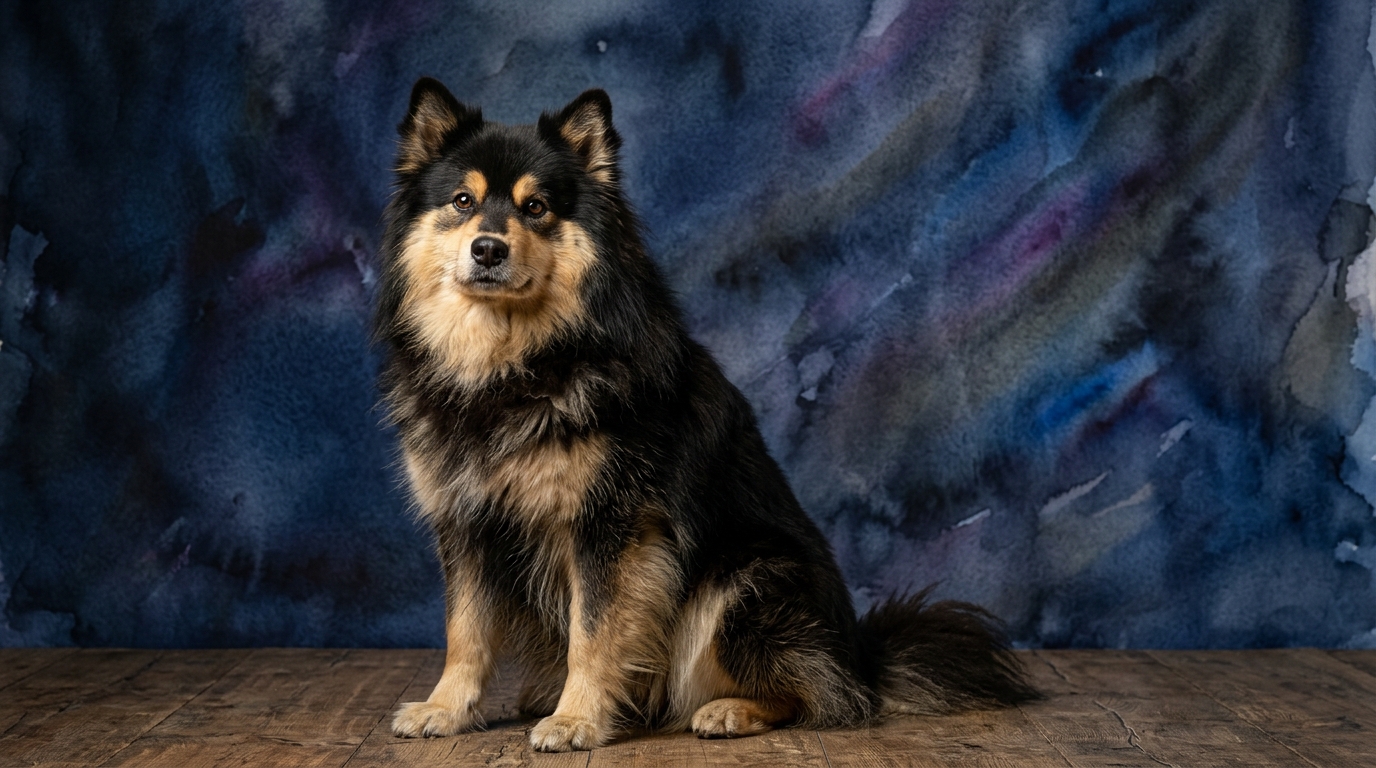

Side-by-Side IQ Profile
The Cosmic Pet Pet IQ Lab provides a comprehensive framework to understand canine cognition, breaking down intelligence into five key dimensions. Here’s how the Finnish Lapphund and West Highland White Terrier measure up:
**Finnish Lapphund:** This herding dog, not Coren-ranked, brings a balanced set of cognitive skills to the table. Their **Problem Solving (3/5)** demonstrates a practical ability to navigate challenges, often finding solutions through observation and trial-and-error rather than complex abstract thought, reflecting their herding heritage where adaptability is key. In terms of **Training Speed (3/5)**, Lapphunds learn new commands at a moderate pace, responding well to positive reinforcement and clear communication, though their independent streak necessitates consistent and engaging methods. Their **Social Intelligence (3/5)** means they possess a good understanding of social dynamics, both within their human family and with other animals, often acting as sensitive companions who reserve their deepest affection for their inner circle. The **Instinctive Drive (3/5)** of a Lapphund manifests as a moderate herding desire to keep their 'flock' (family) together and an observant nature, translating into an awareness of their surroundings. Finally, their **Memory (3/5)** allows them to retain learned information and experiences at a solid, average rate, reliably remembering routines and commands over time.
**West Highland White Terrier:** This terrier breed, Coren-ranked #47, also exhibits a distinct cognitive makeup. Their **Problem Solving (3/5)** capacity is similar to the Lapphund, often approaching challenges with a tenacious, 'never give up' attitude characteristic of their lineage, with solutions frequently practical and goal-oriented. For **Training Speed (3/5)**, Westies learn at a moderate pace, but their independent and sometimes stubborn nature can pose unique challenges, demanding patient, consistent, and reward-based training. Their **Social Intelligence (3/5)** indicates they are adept at reading social cues, often using this understanding to their advantage; however, their assertive personality might not always prioritize human directives over their own desires. A **Instinctive Drive (3/5)** rooted in their terrier purpose for hunting vermin means a strong urge to dig, chase small animals, and explore confined spaces, influencing their focus. Notably, the Westie truly shines in **Memory (4/5)**, showing a distinct edge by grasping and retaining information, whether a learned command or a negative experience, more effectively than the Lapphund, making both good and unwanted habits deeply embedded.
Where Finnish Lapphund Wins Cognitively
While their individual scores are largely similar, the Finnish Lapphund's cognitive profile, particularly in the nuances of their '3/5' ratings, suggests an edge in balanced, adaptable intelligence that serves a companion role well. Their social intelligence, combined with their moderate instinctive drive, allows them to be highly attuned to their family without being overly demanding or single-minded. This balanced approach means they are less likely to be overwhelmed by novel situations or exhibit the strong, specific drives that can sometimes make terriers challenging. Their problem-solving, while not exceptional, is often applied in a way that seeks harmony within the household, reflecting their herding instinct to keep their 'flock' cohesive. This translates to a dog that generally thinks about its place within the family unit, making decisions that often align with group well-being.
Where West Highland White Terrier Wins Cognitively
The West Highland White Terrier's superior memory (4/5 compared to Lapphund's 3/5) is a significant cognitive advantage. This enhanced retention means that once a Westie learns something, it tends to stick, whether it's a complex trick, a house rule, or the location of a hidden treat. This strong memory contributes to their reputation for being clever and resourceful, as they can recall past solutions to problems or remember specific routes and routines with precision. Furthermore, the Westie's Coren rank of #47, which measures working and obedience intelligence, places them above many breeds in their ability to understand and execute commands. While the Lapphund isn't Coren-ranked, this distinction suggests the Westie possesses a slightly quicker grasp of formal obedience tasks, even if their independent nature means they don't always choose to comply immediately. Their problem-solving, though rated similarly, often comes with an added layer of tenacity driven by their instinctive terrier nature, enabling them to persist where others might give up.
Which is Easier to Train and Why
Comparing training ease between these two breeds reveals a nuanced picture, despite both having a '3/5' rating for training speed. The West Highland White Terrier's stronger memory (4/5) might initially suggest easier training, as they retain commands and routines more effectively. However, their independent terrier spirit and assertive nature can lead to challenges. A Westie might understand what you want but choose to ignore it if something more interesting, like a squirrel or a digging opportunity, presents itself. Their training often requires significant patience, consistency, and creative motivation to overcome their inherent stubbornness and strong prey drive. In contrast, the Finnish Lapphund, while also possessing an independent streak, tends to be more cooperative and less driven by intense, singular instincts. Their social intelligence, even at a 3/5, often inclines them to work *with* their humans rather than constantly testing boundaries. While they learn at a moderate pace, their willingness to please their family, stemming from their herding instinct to maintain group cohesion, can make them more amenable to consistent training efforts. Therefore, while both require dedication, the Lapphund generally presents fewer behavioral hurdles rooted in strong, self-directed drives, making the overall training journey potentially smoother for a new owner.
Which Suits Active Owners vs Relaxed Owners
For active owners seeking a canine partner for adventures, the Finnish Lapphund generally presents a more fitting profile. Their moderate instinctive drive and balanced energy levels mean they thrive on regular exercise, mental stimulation, and participation in family activities like hiking, agility, or even herding games. They enjoy being outdoors and have the stamina for longer excursions, while their social intelligence ensures they are happy companions during these endeavors. Their capacity for problem-solving, combined with a willingness to engage, makes them excellent candidates for advanced training or dog sports. Conversely, for owners who prefer a more relaxed lifestyle, the West Highland White Terrier can be a suitable companion, provided their specific needs are met. While Westies do enjoy walks and playtime, their activity requirements are generally less demanding than a Lapphund's. However, 'relaxed' does not equate to 'no effort.' Westies still require consistent mental stimulation to prevent boredom, which can manifest as digging, barking, or other undesirable behaviors. Their strong instinctive drive for hunting and exploring means they benefit from puzzle toys, scent work, and secure outdoor spaces where they can safely express their terrier tendencies. A relaxed owner of a Westie must be prepared to manage these innate drives through structured play and training, rather than expecting a purely sedentary companion.
The Verdict
Opt for a Finnish Lapphund if you seek a balanced, adaptable companion eager to participate in family life and outdoor activities, valuing a dog that intuitively works with you.
Select a West Highland White Terrier if you appreciate a spirited, tenacious personality and are prepared to manage a strong memory and independent streak with consistent, engaging training.
🧠 Find Your Pet's IQ Score
Our Pet IQ Lab assessment covers 25+ tests across 5 cognitive dimensions — personalized to your breed.
Take the Full IQ Test →Frequently Asked Questions
Do Finnish Lapphunds bark a lot?
Finnish Lapphunds are known to be vocal, using barks to communicate alertness or excitement, stemming from their herding roots as watchdogs. Consistent training can help manage excessive barking, but they are naturally expressive dogs.
Are West Highland White Terriers good with children?
West Highland White Terriers can be good with respectful children, especially if raised together, but their assertive and independent nature means supervision is always recommended. They may not tolerate rough play as readily as some other breeds.
How do their grooming needs compare?
The Finnish Lapphund has a thick double coat requiring regular brushing, especially during shedding seasons, to prevent mats and keep it healthy. The West Highland White Terrier has a wiry double coat that needs weekly brushing and professional stripping or clipping a few times a year to maintain its texture and appearance.