
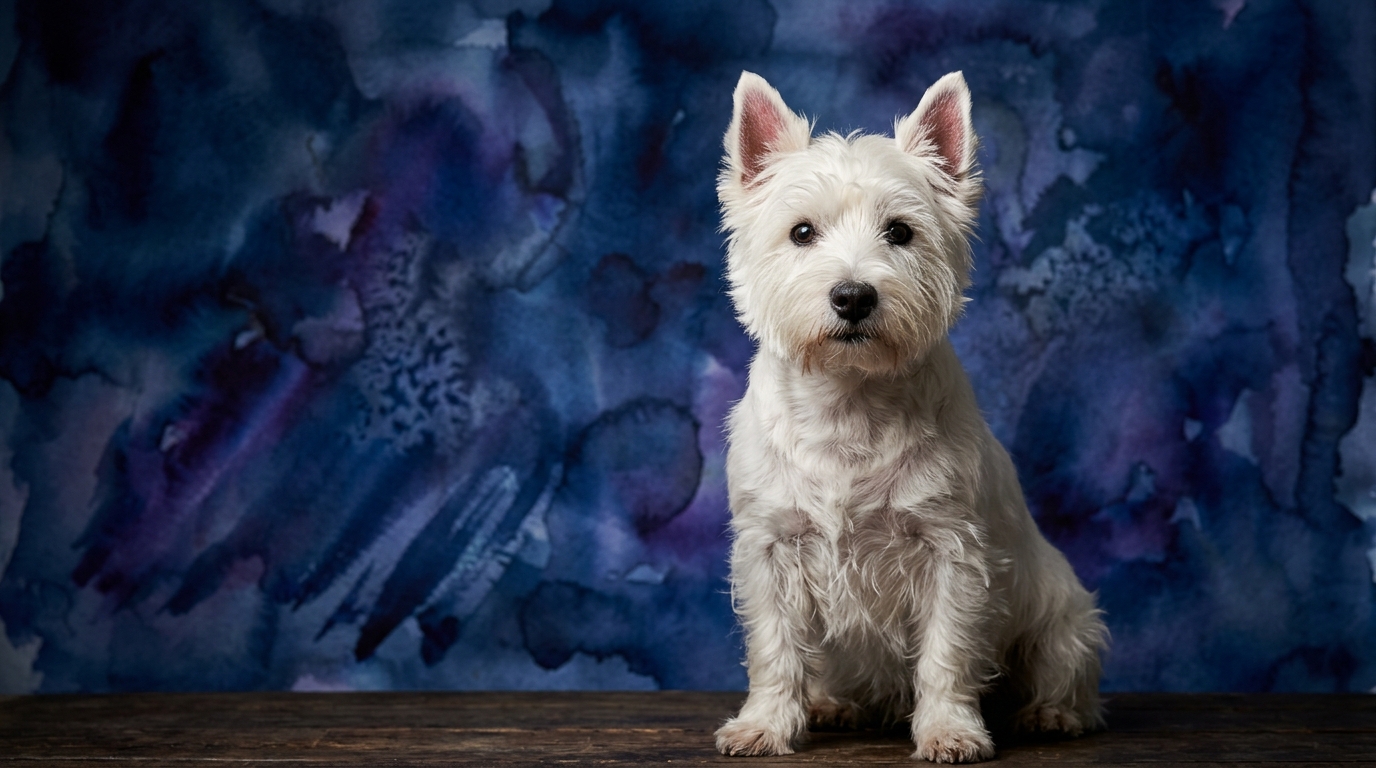
Side-by-Side IQ Profile: German Shepherd vs. Westie
The Cosmic Pet Pet IQ Lab employs a comprehensive five-dimensional framework to assess canine cognition, offering a nuanced view beyond simple rankings. For the German Shepherd, a breed frequently seen in demanding roles, its profile consistently registers at the highest levels across most metrics. Its Problem Solving is rated 5/5, indicating an exceptional capacity to analyze complex situations and devise effective solutions. Training Speed also sits at a perfect 5/5, reflecting how quickly these dogs absorb and execute new commands, often with minimal repetition. Social Intelligence, at 5/5, highlights their profound ability to interpret human cues, intentions, and emotional states, fostering deep partnerships. Instinctive Drive, again 5/5, points to powerful, innately wired behaviors for herding, guarding, or protection that can be channeled into work. Lastly, Memory is rated 5/5, showcasing their remarkable retention of learned tasks, routines, and experiences.
In contrast, the West Highland White Terrier, a breed developed for independent vermin control, presents a different cognitive signature. Its Problem Solving is rated 3/5, suggesting a practical, often self-serving approach to challenges rather than complex strategic planning alongside a handler. Training Speed is also 3/5, meaning they learn at a moderate pace, but may require more consistent motivation and patience due to their independent streak. Social Intelligence, at 3/5, indicates they are certainly aware of their human companions but often process social signals through the lens of their own immediate interests or motivations. Their Instinctive Drive, at 3/5, is strongly channeled towards hunting and digging, rather than broad collaborative work. Interestingly, their Memory scores 4/5, demonstrating a solid ability to recall past events, learned locations, and effective strategies for their specific pursuits, even if their application of that memory is often self-directed.
Where the German Shepherd Excels Cognitively
The German Shepherd’s cognitive strengths are profoundly tied to its heritage as a versatile working dog, making it a standout in collaborative tasks. Its 5/5 Problem Solving score means it doesn't just follow commands but can adapt to novel situations, like navigating an obstacle course with changing parameters or understanding the nuances of a search and rescue scenario. This breed demonstrates a remarkable capacity for abstraction, applying learned principles to new contexts rather than simply rote memorization. Their 5/5 Training Speed is a direct reflection of their inherent desire to work alongside humans and their ability to quickly form associations between actions and desired outcomes, making multi-stage obedience or protection work feel almost intuitive to them. They process information rapidly and internalize new behaviors with efficiency.
Furthermore, the German Shepherd’s 5/5 Social Intelligence is a cornerstone of its working aptitude. They are exceptionally attuned to subtle shifts in human body language, vocal tone, and even emotional states, allowing them to anticipate requests or respond appropriately in complex social environments. This deep understanding enables them to form exceptionally strong, communicative bonds with their handlers, crucial for roles requiring precision and trust. Their powerful 5/5 Instinctive Drive isn't just raw energy; it's a focused, adaptable internal motivation that can be precisely directed towards tasks like herding livestock, guarding property, or tracking scents, demonstrating a sophisticated cognitive control over their innate impulses.
Where the West Highland White Terrier Shows Its Unique Cognitive Strengths
While the West Highland White Terrier’s cognitive profile differs significantly from the German Shepherd, it showcases a distinct brand of cleverness perfectly suited to its original purpose. Their 3/5 Problem Solving, though lower, is characterized by tenacious, independent thought. A Westie faced with a challenge, such as accessing a hidden treat or navigating a tricky burrow, will often employ a trial-and-error approach, persisting until a solution is found, even if it's not the solution a human might prefer. This isn't a lack of problem-solving; it's a different *style* of it—one rooted in self-reliance and resourcefulness, a vital trait for a solo hunter. They are adept at understanding their immediate environment and manipulating it to their advantage.
The Westie's 4/5 Memory score is a particular strength, enabling them to recall specific locations where prey was found, the most effective digging techniques, or the routines of their household. This strong memory allows them to quickly re-engage with past successes and learn from experiences, even if their training speed (3/5) suggests they might take longer to *initially* grasp a new command. Their 3/5 Instinctive Drive, while not as broad as a German Shepherd's, is intensely focused on specific tasks like scenting and pursuing small game. This targeted drive means they can exhibit remarkable focus and determination when engaged in activities that tap into these innate behaviors, displaying a persistence that belies their size and can be a cognitive advantage in specific contexts.
Which is Easier to Train and Why?
Based on their cognitive profiles, the German Shepherd is demonstrably easier to train than the West Highland White Terrier. The German Shepherd's 5/5 Training Speed and 5/5 Social Intelligence mean it rapidly grasps new commands and eagerly seeks to cooperate with its handler. They possess a profound biddability, a strong desire to please, and an innate understanding of hierarchy and teamwork, which makes them highly receptive to instruction. Their ability to process complex sequences and their excellent memory (5/5) allow them to master intricate routines and retain them over time, making them a handler's dream for advanced obedience or working titles.
Conversely, the West Highland White Terrier's 3/5 Training Speed and 3/5 Social Intelligence present more challenges. Westies are independent thinkers, bred to make decisions for themselves in the field without constant human direction. This manifests as a selective hearing and a tendency to prioritize self-rewarding behaviors (like chasing a squirrel) over human commands, especially if the command isn't immediately engaging. While they are capable of learning, their independence means training often requires more patience, consistency, and creative motivation to convince them that following your lead is more rewarding than their own agenda. Their memory (4/5) is good, meaning they *can* remember commands, but their drive often dictates *when* they choose to apply that knowledge.
Suitability for Active vs. Relaxed Owners
The German Shepherd, with its high scores across Problem Solving (5/5), Training Speed (5/5), Social Intelligence (5/5), and Instinctive Drive (5/5), is best suited for active owners who can provide consistent mental and physical engagement. These dogs thrive on purpose and require a lifestyle that incorporates regular training sessions, challenging activities like agility or scent work, and ample opportunities for problem-solving. A relaxed owner who cannot meet these cognitive and physical demands may find a German Shepherd becoming restless or developing undesirable behaviors out of boredom or a lack of appropriate outlet for their drives. They need a job, whether formal or informal, to truly flourish.
The West Highland White Terrier, while not a couch potato, can suit a broader range of owners, including those with a more relaxed lifestyle, provided their specific needs are met. Their 3/5 Instinctive Drive, while focused, still requires an outlet, often through play, walks, or engaging in activities that tap into their natural hunting instincts, like earthdog trials or focused scent games. While they appreciate consistency, their independent nature (Problem Solving 3/5, Social Intelligence 3/5) means they don't always require constant, intense collaborative interaction. They can be content with structured play and mental stimulation that allows for some self-direction, making them a good fit for owners who appreciate a dog with personality and a certain degree of self-sufficiency, but are still committed to daily engagement and training to manage their independent streak.
The Verdict
Choose a German Shepherd if you are an active, committed owner seeking a highly collaborative, intelligent partner for advanced training, working roles, or a deeply engaged family companion. They thrive on purpose and consistent mental stimulation.
Opt for a West Highland White Terrier if you appreciate a tenacious, independent dog with a strong personality, perfect for an owner who enjoys consistent, patient training and engaging in activities that tap into their focused terrier drives.
🧠 Find Your Pet's IQ Score
Our Pet IQ Lab assessment covers 25+ tests across 5 cognitive dimensions — personalized to your breed.
Take the Full IQ Test →Frequently Asked Questions
Do German Shepherds require a lot of mental stimulation?
Yes, German Shepherds require extensive mental stimulation due to their 5/5 Problem Solving and Instinctive Drive. They thrive on learning new tasks, solving puzzles, and having a 'job' to do, which prevents boredom and behavioral issues.
Are West Highland White Terriers difficult to train?
West Highland White Terriers can be more challenging to train compared to biddable breeds due to their 3/5 Training Speed and independent nature. They often require consistent, patient, and positive reinforcement methods to keep them engaged and motivated.
Which breed is better for a first-time dog owner?
Neither breed is typically recommended for an absolute first-time dog owner without significant research and commitment. However, a West Highland White Terrier might be slightly more manageable for a novice willing to learn about terrier traits, whereas a German Shepherd's intense drive and training needs can overwhelm inexperienced owners.