
Side-by-Side IQ Profile: Tailored Cognition
The Flat-Coated Retriever, ranking #17 on Coren's list, exhibits a cognitive profile geared towards cooperative work and complex task execution. Their Problem Solving score of 4/5 indicates a capacity for adaptable thought, allowing them to navigate varied scenarios to retrieve game or understand multi-step commands. A Training Speed of 4/5 reflects their eagerness to please and quick uptake of new instructions, making them responsive companions. Social Intelligence, rated 3/5, shows they are generally amiable and capable of reading human cues, though not primarily driven by intricate social manipulation. Their Instinctive Drive, at 3/5, points to a strong but manageable retrieving impulse, while an impressive Memory of 5/5 ensures they retain learned behaviors and recall information effectively.
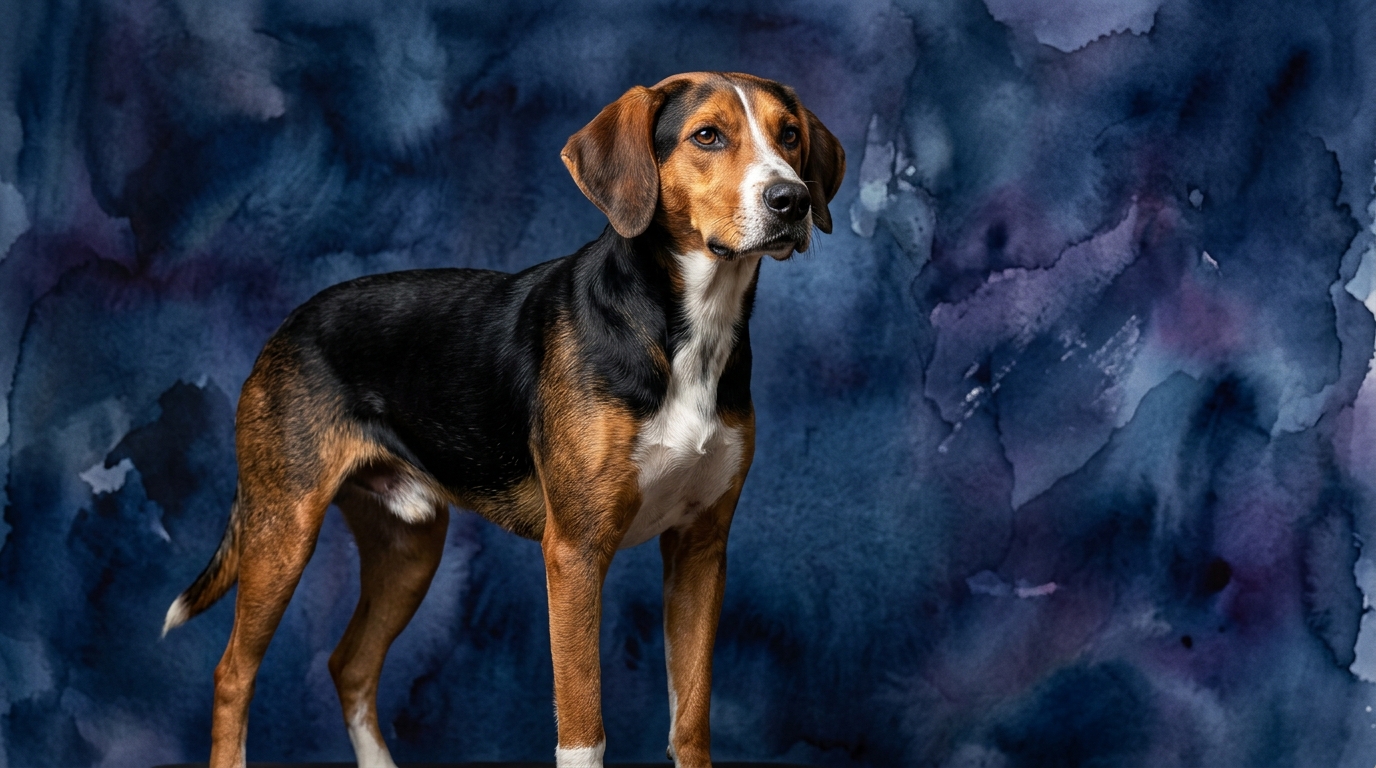
In contrast, the American Foxhound, unranked by Coren, presents a cognitive makeup deeply rooted in their ancestral role as scent hounds. Their Problem Solving is rated 3/5, suggesting a specific kind of intelligence focused on intricate scent puzzles and persistent tracking rather than abstract human-centric tasks. A Training Speed of 3/5 reflects their independent nature; while capable of learning, their primary drive often overrides a desire for immediate human-directed compliance. Social Intelligence, also 3/5, means they are generally friendly, but their focus is often external, towards scents, rather than internal, towards nuanced human interaction. Their Instinctive Drive is a powerful 3/5, dominated by an unwavering pursuit of scent, which can be challenging to redirect. Finally, a Memory score of 3/5 indicates good recall for scent trails and familiar environments, though perhaps less so for a broad repertoire of learned commands.
Where the Flat-Coated Retriever Wins Cognitively
The Flat-Coated Retriever's cognitive strengths shine brightest in environments that demand close partnership and versatile problem-solving. Their superior Memory (5/5) means they excel at retaining a vast vocabulary of commands and complex sequences, making them prime candidates for advanced obedience, agility, or service work. This exceptional recall allows them to consistently perform learned tasks, even after a break, demonstrating a robust cognitive retention. Their higher Problem Solving (4/5) enables them to adapt quickly to novel situations, such as figuring out how to open a gate or retrieve an item from a tricky spot, often by observing and strategizing rather than relying purely on instinct. This breed exhibits a cognitive flexibility that allows them to thrive in structured learning environments where logical progression and human guidance are key.
Furthermore, the Flat-Coated Retriever's combination of Training Speed (4/5) and Social Intelligence (3/5) fosters a highly cooperative learning dynamic. They are attuned to human direction and find satisfaction in working alongside their handlers, interpreting subtle cues and adjusting their behavior accordingly. This makes them adept at tasks requiring fine motor control or precise responses to handler signals, such as competitive retrieving or intricate search patterns. Their problem-solving isn't just about finding a solution, but finding one that aligns with human expectations, showcasing a distinct advantage in collaborative cognitive endeavors.
Where the American Foxhound Wins Cognitively
The American Foxhound's cognitive prowess is deeply specialized, excelling where an unwavering, independent focus on scent is paramount. Their Problem Solving (3/5) is intrinsically linked to their Instinctive Drive (3/5), allowing them to navigate complex olfactory landscapes with incredible precision and persistence. They demonstrate an extraordinary ability to differentiate and follow a specific scent trail over vast distances and varied terrains, a cognitive feat that requires intense concentration and sophisticated sensory processing. This isn't abstract problem-solving, but rather a highly refined, instinct-driven intelligence that few breeds can match.
While their overall Memory is rated 3/5, this breed possesses an exceptional memory for scent, recalling specific trails and the location of past scent sources with remarkable accuracy. This specialized memory allows them to pick up a cold trail or return to an area where a scent was lost, showcasing a unique form of cognitive mapping based on olfaction. Their independence, often seen as a training challenge, is a cognitive advantage in their original purpose; they are designed to make decisions autonomously while pursuing a trail, relying on their own judgment and sensory input rather than constant human direction. This self-reliance in their specialized field is a testament to their distinct cognitive strengths.
Which is Easier to Train and Why
Without question, the Flat-Coated Retriever is significantly easier to train than the American Foxhound, a difference rooted in their fundamental behavioral drives and cognitive priorities. The Flat-Coated Retriever's Training Speed of 4/5 is a direct result of their inherent desire to cooperate and please their human companions. They are generally attentive, eager to engage in structured learning, and quick to form associations between commands and actions. Their strong Memory (5/5) means that once a behavior is learned, it is retained effectively, leading to consistent performance. They thrive on positive reinforcement and respond well to consistent, clear instructions, making the training process a rewarding partnership.
Conversely, the American Foxhound's training presents a more substantial challenge due to their powerful Instinctive Drive (3/5) and independent nature. Their primary motivation is often to follow a scent, which can override any desire to comply with human commands, especially in stimulating outdoor environments. While they have a Problem Solving score of 3/5, this is typically applied to scent-related tasks, not necessarily to understanding abstract obedience cues. Their training requires immense patience, consistency, and often creative methods to capture their attention and motivate them to focus on human-directed tasks. Off-leash reliability is particularly difficult to achieve, as their nose can lead them far astray, demonstrating a behavioral difference where instinct often trumps learned obedience.
Which Suits Active Owners vs. Relaxed Owners
The Flat-Coated Retriever is an ideal match for active owners who seek an engaged, participatory companion for their adventures. These dogs thrive when included in family activities, enjoying long hikes, swimming, fetch, and organized dog sports like agility, obedience, or dock diving. Their cognitive makeup, with strong problem-solving and memory, means they need mental stimulation as much as physical exercise. An owner who enjoys teaching new tricks, engaging in puzzle toys, or pursuing canine sports will find the Flat-Coated Retriever a willing and enthusiastic partner. They are less suited for truly relaxed owners who prefer minimal interaction, as their social intelligence and cooperative nature demand consistent engagement.
The American Foxhound also requires active owners, but their activity needs are fundamentally different, driven by their powerful scenting instincts. They are best suited for owners who understand and can accommodate their need for extensive, often independent, exploration through scent. This means long, secure off-leash areas where they can run and follow their nose, or participation in scent work, tracking, or field trials. A relaxed owner who cannot provide outlets for their intense drive to roam and track would find an American Foxhound challenging, as their pent-up energy and unfulfilled instincts can lead to undesirable behaviors. They are not typically content with short neighborhood strolls; their minds and bodies crave expansive, scent-rich environments, making them a fit for owners who embrace a more rugged, outdoor-centric lifestyle.
The Verdict
Choose the Flat-Coated Retriever if you desire a highly trainable, cooperative companion for active family life, dog sports, and engaging in shared mental challenges.
Opt for the American Foxhound if you are an experienced, active owner who appreciates an independent spirit and can provide ample opportunities for scent work and expansive, secure outdoor exploration.
🧠 Find Your Pet's IQ Score
Our Pet IQ Lab assessment covers 25+ tests across 5 cognitive dimensions — personalized to your breed.
Take the Full IQ Test →Frequently Asked Questions
Are American Foxhounds difficult to train?
American Foxhounds can be challenging to train due to their strong independent nature and powerful scent drive. They require consistent, patient, and often creative training methods to maintain focus on human-directed tasks over their instincts.
Do Flat-Coated Retrievers need a lot of exercise?
Yes, Flat-Coated Retrievers are a high-energy breed that requires significant daily physical and mental exercise. They thrive on activities like long walks, running, swimming, and engaging in dog sports or interactive play sessions with their owners.
Which breed is better for first-time dog owners?
The Flat-Coated Retriever is generally a more suitable choice for first-time dog owners due to their cooperative nature, eagerness to please, and higher trainability. American Foxhounds, with their independent spirit and intense scent drive, often require more experienced handling.