Side-by-Side Cognitive Profiles
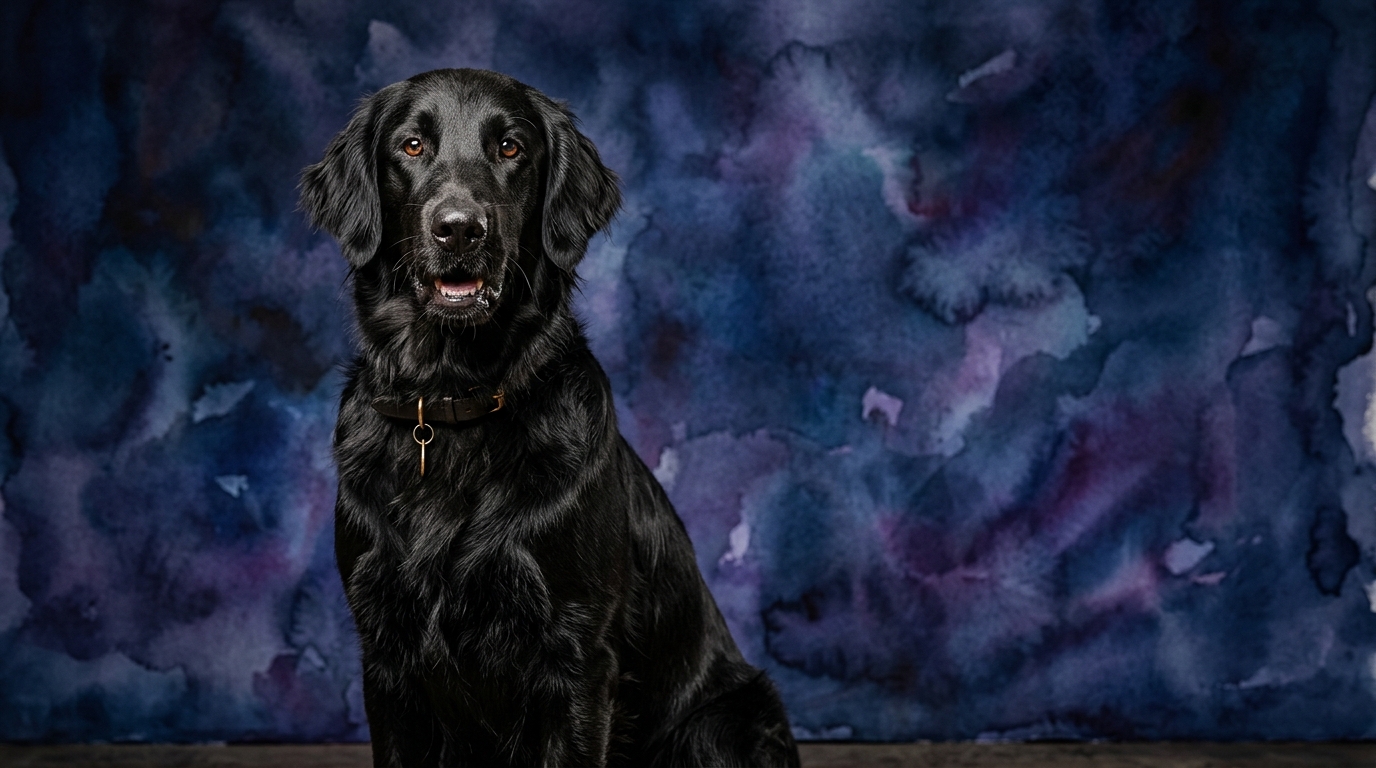
The Cosmic Pet Pet IQ Lab's profiling illuminates the distinct cognitive architectures of the Flat-Coated Retriever and the American Staffordshire Terrier. The Flat-Coated Retriever, ranking #17 on Coren's scale, demonstrates a remarkable Problem Solving aptitude of 4/5, often displaying ingenuity in navigating complex tasks, alongside a Training Speed of 4/5, indicating a swift uptake of new instructions. Its Social Intelligence stands at 3/5, suggesting a good understanding of human interaction, while its Instinctive Drive, also 3/5, is channeled towards its retrieving heritage. A standout feature is its Memory at 5/5, allowing for long-term retention of detailed information and learned behaviors.
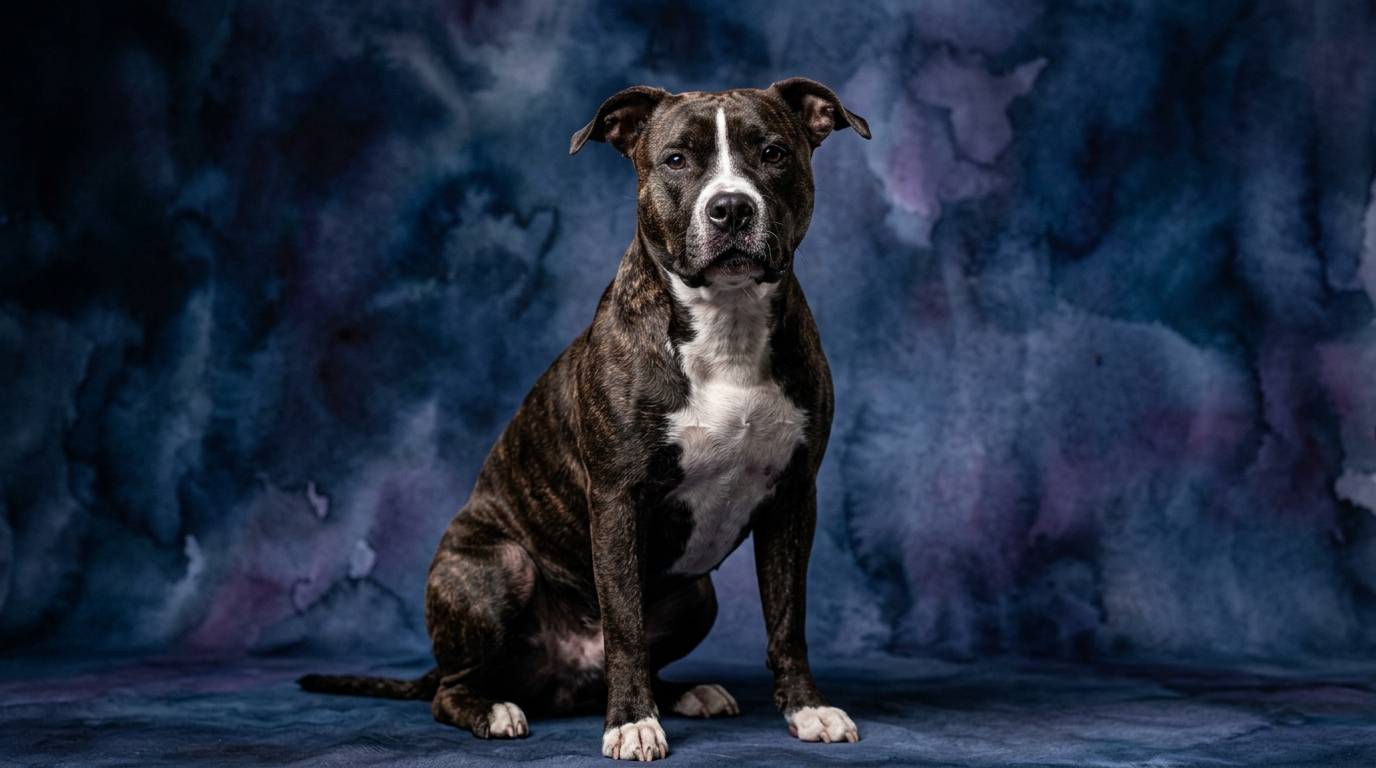
In contrast, the American Staffordshire Terrier, positioned at Coren rank #48, approaches cognitive tasks with a different set of strengths. Its Problem Solving is rated 3/5, reflecting a practical, often physical, approach to overcoming obstacles rather than abstract strategizing. Training Speed is also 3/5, signifying a need for consistent reinforcement to embed new commands. Similar to the Flat-Coat, its Social Intelligence and Instinctive Drive are both 3/5; the AmStaff's drive often manifests in focused engagement and physical activity. Its Memory, while strong, registers at 4/5, suggesting solid recall of routines and training but perhaps with a slightly less expansive capacity than its retrieving counterpart.
Where the Flat-Coated Retriever Wins Cognitively
The Flat-Coated Retriever's cognitive advantages largely stem from its exceptional memory and rapid processing capabilities, traits honed by generations of intricate retrieval work. With a Memory score of 5/5, they can recall complex sequences, the locations of multiple fallen objects, or elaborate scent trails with remarkable precision, making them adept at multi-stage tasks that require remembering previous steps or environmental details. This profound memory also underpins their 4/5 Training Speed, as they can quickly connect actions with consequences and retain new commands after fewer repetitions. Their Problem Solving at 4/5 often involves leveraging this memory to anticipate outcomes or strategize routes, rather than simply brute-forcing a solution. For instance, a Flat-Coat might remember the most efficient path through a dense thicket to retrieve a toy, having learned it from a previous attempt, whereas another breed might repeatedly try less optimal routes. This combination of superior recall and swift learning makes them particularly suited for advanced obedience, intricate dog sports like agility, or roles requiring consistent, detail-oriented performance.
Where the American Staffordshire Terrier Wins Cognitively
While the American Staffordshire Terrier may not match the Flat-Coated Retriever in memory recall or training speed, its cognitive strengths lie in areas demanding resilience, focus, and a practical application of intelligence. Their Problem Solving at 3/5, while not as abstract, is characterized by a tenacious approach; an AmStaff confronted with an obstacle might systematically try different physical manipulations until it succeeds, demonstrating a sturdy, hands-on form of intelligence. This persistence, combined with their moderate Instinctive Drive (3/5), allows them to remain highly focused on a task once engaged, especially if it involves physical interaction or a clear reward. For example, an AmStaff might excel at puzzle toys that require sustained effort and physical manipulation to unlock treats, demonstrating unwavering concentration until the goal is achieved. Their social intelligence, also 3/5, is often expressed through a deep, loyal bond with their primary caregivers, enabling them to read subtle emotional cues within their trusted human circle and respond with unwavering devotion, a cognitive strength rooted in their close companionship.
Which Is Easier to Train and Why
Evaluating ease of training requires considering both the speed of acquisition and the consistency of performance. The Flat-Coated Retriever, with its 4/5 Training Speed and unparalleled 5/5 Memory, generally presents as the easier breed to train for a wide array of commands and complex sequences. Their eagerness to please, coupled with their ability to quickly associate verbal cues with actions and recall these associations over time, means they often pick up new behaviors in fewer sessions. For example, teaching a Flat-Coat a multi-step retrieve, like finding a specific item among others, is facilitated by their strong memory and problem-solving skills. They thrive on positive reinforcement and mental stimulation, quickly understanding the 'game' of training.
The American Staffordshire Terrier, with a 3/5 Training Speed and 4/5 Memory, requires a more patient and consistent approach. While capable learners, they may need more repetitions to solidify commands and can be more prone to 'selective hearing' if not adequately motivated or if the training isn't engaging enough. Their strong physical drive and potential for stubbornness mean that early, consistent socialization and clear, reward-based training are crucial. An AmStaff might take longer to grasp a complex command, but once learned, their persistence can make them reliable performers. However, maintaining focus in distracting environments can be more challenging without firm, consistent guidance, contrasting with the Flat-Coat's often inherent desire to cooperate and perform.
Suited for Active vs. Relaxed Owners
For active owners seeking a dynamic companion, both breeds offer engagement, but with different nuances. The Flat-Coated Retriever, bred for strenuous retrieving tasks, possesses a robust physical and mental energy. Their instinctive drive, combined with a high capacity for learning complex tasks and excellent memory, makes them ideal for owners who enjoy hiking, running, dog sports like agility or obedience, and field work. They thrive on having a 'job' to do, requiring consistent mental stimulation alongside physical exercise to prevent boredom and maintain their cheerful disposition. An active owner who can provide varied training, puzzle toys, and ample outdoor adventures will find the Flat-Coat an enthusiastic and capable partner.
Conversely, while the American Staffordshire Terrier is also an active breed, their energy profile leans more towards bursts of intense play and focused physical activity rather than sustained, intricate work. Their moderate instinctive drive and problem-solving focus make them excellent companions for owners who enjoy vigorous play sessions, long walks, or activities like weight pulling or basic agility. They are generally content with a good daily exercise routine that includes opportunities for mental engagement, such as chew toys or interactive games, followed by relaxed indoor time. A relaxed owner who can commit to daily, structured exercise and consistent training, but who doesn't necessarily seek a dog for advanced competitive sports, might find the AmStaff's balance of activity and affectionate companionship more fitting, provided their exercise needs are met.
The Verdict
Choose the Flat-Coated Retriever if you seek a highly trainable companion for complex tasks, dog sports, or roles requiring exceptional memory and rapid learning.
Opt for the American Staffordshire Terrier if you value a tenacious, loyal companion with a practical problem-solving approach and a need for consistent, focused physical activity.
🧠 Find Your Pet's IQ Score
Our Pet IQ Lab assessment covers 25+ tests across 5 cognitive dimensions — personalized to your breed.
Take the Full IQ Test →Frequently Asked Questions
Is one breed more prone to destructive behavior if not mentally stimulated?
Both breeds require adequate mental and physical stimulation to prevent boredom, which can lead to destructive behaviors. The Flat-Coated Retriever's high cognitive capacity means it can become restless if its mind isn't challenged, while the American Staffordshire Terrier's robust physical drive needs an outlet to prevent redirected energy.
How do their social intelligences compare in a multi-dog household?
Both breeds score 3/5 in social intelligence, indicating a moderate ability to interpret social cues. The Flat-Coated Retriever generally exhibits a more overt friendliness, while the American Staffordshire Terrier, though loyal to its family, might require more careful, early socialization to ensure harmonious interactions with unfamiliar dogs.
Which breed is better for a first-time dog owner?
The Flat-Coated Retriever's eagerness to please and faster training speed can make it slightly more forgiving for a first-time owner willing to provide consistent mental and physical engagement. The American Staffordshire Terrier, while devoted, benefits from an owner experienced in consistent training and managing a breed with a strong physical presence and focused drive.