
Side-by-Side IQ Profile: Flat-Coated Retriever vs. Bull Terrier
The Flat-Coated Retriever, with a Coren ranking of #17, demonstrates a cognitive profile geared towards partnership and efficient learning. Their Problem Solving is rated 4/5, indicating a strong capacity for figuring out novel situations, often employing learned behaviors or experimenting to achieve goals, like retrieving a toy from a complex hiding spot. This breed's Training Speed is 4/5, meaning they assimilate new commands and routines with impressive alacrity, often requiring fewer repetitions than many breeds. Social Intelligence stands at 3/5; while affectionate and people-oriented, their social understanding primarily revolves around their immediate human family and familiar canine companions. Their Instinctive Drive is 3/5, with a prominent retrieving instinct that is generally manageable and can be channeled effectively into activities like scent work or agility. An outstanding feature is their Memory, rated 5/5, reflecting a remarkable ability to recall learned commands, routines, and specific locations over long periods, contributing significantly to their training retention.
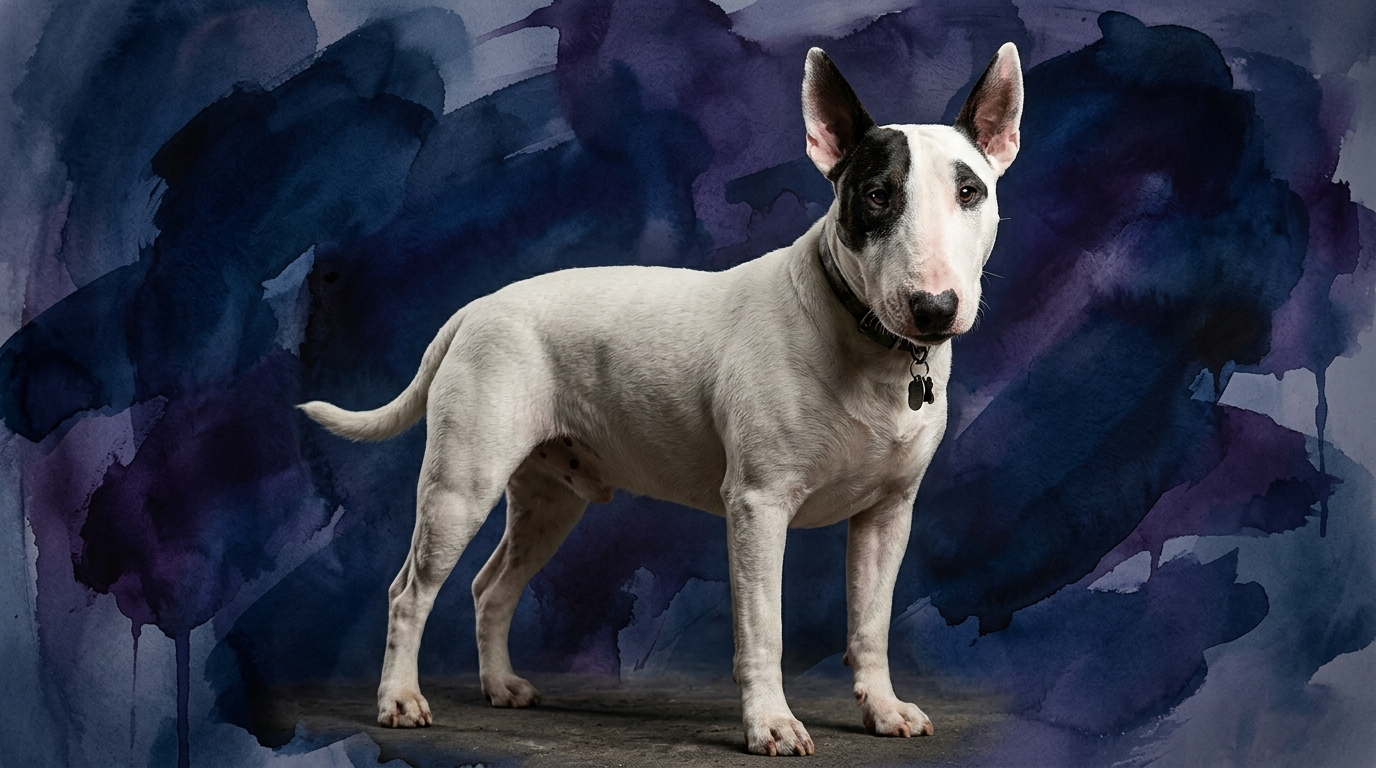
In contrast, the Bull Terrier, ranked #66 by Coren, presents a different cognitive approach, often characterized by determination and independence. Their Problem Solving is 3/5; they approach problems with a blend of determination and sometimes brute force, potentially taking more time to refine their methods but relying on persistence. Training Speed is also 3/5; learning new commands can be a moderate process for a Bull Terrier, as their independent streak means they might require more consistent, patient repetition and highly motivating rewards. Their Social Intelligence is 3/5; Bull Terriers are often described as people-loving and can be quite sensitive to their family's moods, though their interpretation of social cues, particularly outside their inner circle, can sometimes be straightforward. The Instinctive Drive is 3/5, reflecting their terrier heritage with a strong prey drive and tenacious spirit that manifests as intense focus on certain stimuli. Lastly, their Memory is 3/5; they possess a functional memory for commands and routines, retaining information adequately but potentially benefiting from occasional refreshers for less frequently practiced behaviors.
Where the Flat-Coated Retriever Wins Cognitively
The Flat-Coated Retriever truly shines in its capacity for long-term retention and efficient learning, making them a standout for complex tasks. Their perfect 5/5 memory score means they commit intricate sequences, such as multi-step retrieving tasks or elaborate agility courses, to recall with remarkable fidelity, even after extended breaks. This exceptional memory isn't just about remembering tricks; it allows them to build a deep mental map of their environment and past experiences, making them highly adaptable and less prone to forgetting established routines or boundaries.
Furthermore, their 4/5 in problem-solving, coupled with a 4/5 in training speed, indicates a cognitive style that favors observation, rapid assimilation, and strategic application. Faced with a novel challenge, a Flat-Coat is more likely to pause, assess, and then apply a learned principle or experiment with precision, rather than resorting to repetitive actions. This makes them adept at quickly mastering new skills and navigating complex scenarios, from intricate scent puzzles to learning the nuances of a new sport with relative ease.
Where the Bull Terrier Wins Cognitively
While the Flat-Coated Retriever excels in speed and recall, the Bull Terrier's cognitive strengths lie in a different domain: sheer tenacity and independent problem-solving rooted in their terrier heritage. Their 3/5 problem-solving score, while indicating a different approach, reflects a profound determination; they might not solve a puzzle as quickly, but their stubborn perseverance means they are less likely to give up. This relentless effort can lead them to eventually crack a difficult challenge through sustained focus, often employing a unique, self-devised strategy rather than relying on cues or prior training.
The Bull Terrier's social intelligence, also rated 3/5, often manifests as a deep, unwavering loyalty and sensitivity to their immediate human family, even if their broader social interpretations are more direct. They possess an emotional attunement that allows them to bond profoundly and often anticipate their owner's emotional states, offering comfort or seeking engagement based on subtle family dynamics. This emotional connection, while not always outwardly expressive in a traditional "eager-to-please" manner, is a powerful cognitive attribute for forming strong, empathetic partnerships.
Which is Easier to Train and Why
The Flat-Coated Retriever is generally easier to train due to a confluence of favorable cognitive traits. Their 4/5 training speed means they pick up commands quickly, often with fewer repetitions, thanks to their intrinsic motivation to engage and please their handlers. This inherent eagerness, combined with their exceptional 5/5 memory, ensures that once a behavior is learned, it is retained for a long time, reducing the need for constant refreshers. Flat-Coats also tend to be highly responsive to verbal cues and body language, making communication during training more fluid and effective.
In contrast, the Bull Terrier, with a 3/5 training speed, presents a different training dynamic. Their independent nature and tendency to evaluate the "worth" of a command mean that while they are capable of learning, they often require more patience, consistency, and highly motivating rewards. They may learn at a slower pace and require more creative approaches to maintain engagement. Their strong, focused drive, while an asset in some tasks, can also be a distraction if not channeled properly, requiring a trainer to be firm, fair, and incredibly consistent to establish reliable behaviors.
Which Suits Active Owners vs. Relaxed Owners
For active owners seeking a canine partner for sports, adventures, and consistent engagement, the Flat-Coated Retriever is an exceptional match. Their moderate instinctive drive (3/5) is perfectly channeled into activities like retrieving, agility, obedience, and hiking, where their problem-solving acumen and impressive memory allow them to excel. They thrive on having a "job" and consistent mental stimulation, making them ideal companions for those who enjoy structured activities and outdoor pursuits, and who appreciate a dog that is always ready for the next challenge.
Conversely, while the Bull Terrier possesses a robust energy level, their independent cognitive style and focused drive (3/5) can be better suited for owners who appreciate a strong-willed companion and are prepared for a more distinct approach to activity. They enjoy vigorous play and walks, but their problem-solving often manifests as determined exploration or focused engagement with a single object or person, rather than a broad, eager participation in diverse activities. Owners seeking a dog whose energy can be managed with focused bursts of activity rather than constant, varied engagement might find a rewarding partnership with a Bull Terrier, provided they understand and respect their unique cognitive and behavioral traits.
The Verdict
Choose the Flat-Coated Retriever if you seek a highly trainable, eager-to-please companion who excels in structured learning, remembers commands flawlessly, and thrives on active, varied engagement with their human family.
Opt for the Bull Terrier if you appreciate a resilient, independent, and deeply loyal dog who approaches challenges with tenacity, forms profound bonds, and whose unique cognitive style requires a patient, consistent owner who values a distinct personality.
🧠 Find Your Pet's IQ Score
Our Pet IQ Lab assessment covers 25+ tests across 5 cognitive dimensions — personalized to your breed.
Take the Full IQ Test →Frequently Asked Questions
Is a Flat-Coated Retriever better for first-time dog owners?
Generally, yes. Their high training speed and exceptional memory make them more forgiving and easier to guide through basic obedience and house manners, offering a less challenging introduction to dog ownership. Their eagerness to please often simplifies the learning process for both dog and owner.
Do Bull Terriers enjoy brain games or puzzles?
Yes, Bull Terriers can enjoy brain games, especially those that tap into their problem-solving persistence and allow them to work independently. Puzzles that require tenacity to open or toys that dispense treats after a sustained effort can be particularly engaging for them, appealing to their determined nature.
How does the social intelligence rating affect interactions with other pets?
A 3/5 social intelligence rating for both suggests they are generally good with familiar pets within their established social group, but might require careful introductions and supervision with new animals. Neither breed is inherently prone to aggression, but their understanding of nuanced canine social cues might be more direct, necessitating owner guidance in new social settings.