
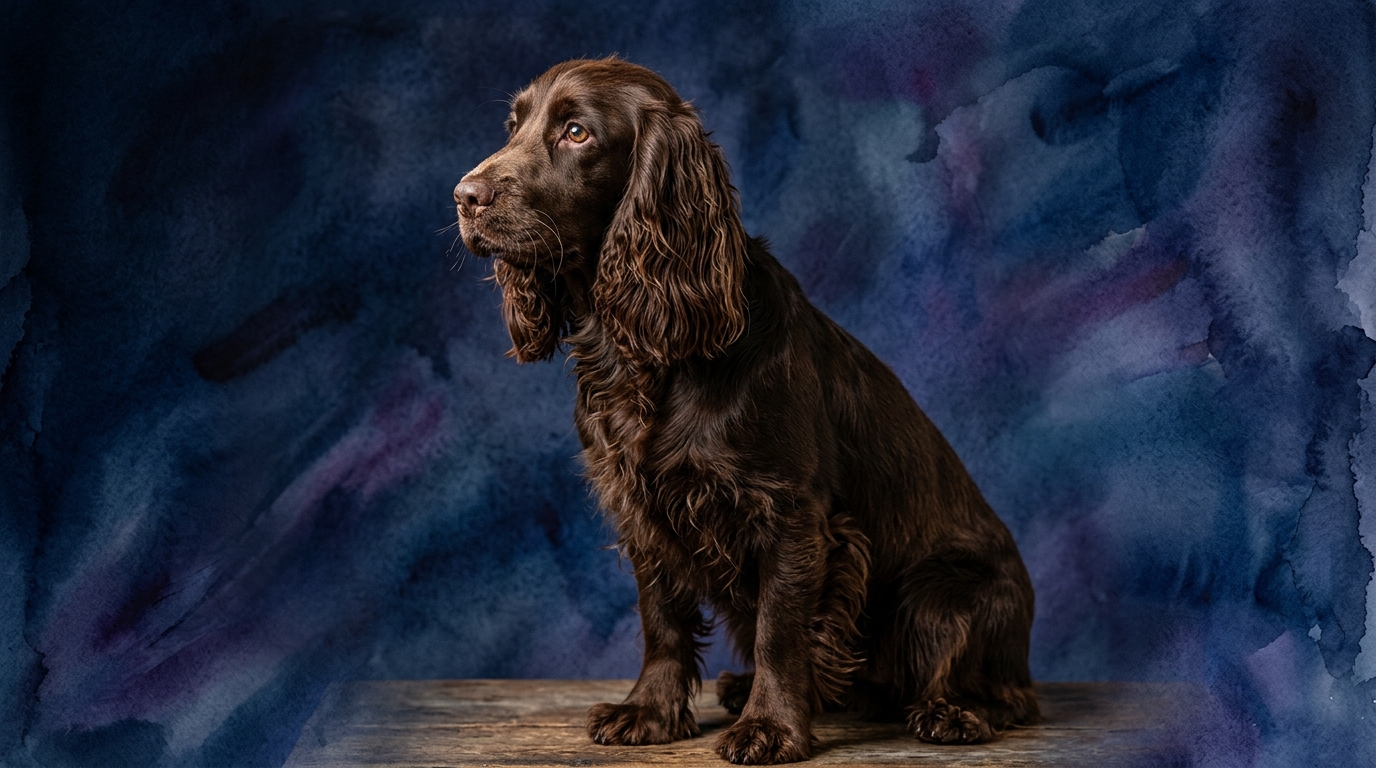
Side-by-Side IQ Profile: Flat-Coated Retriever vs. Field Spaniel
The Cosmic Pet Pet IQ Lab employs a multi-dimensional approach to assess canine cognition, moving beyond simple obedience to understand a breed's full intellectual scope. For the Flat-Coated Retriever, a breed recognized by Stanley Coren as ranking #17 in working intelligence, we observe a distinct profile: Problem Solving 4/5, Training Speed 4/5, Social Intelligence 3/5, Instinctive Drive 3/5, and Memory 5/5. This suggests a dog with a robust capacity for understanding complex tasks and retaining information.
In contrast, the Field Spaniel, while not featuring on Coren's specific ranking, presents a more uniformly moderate cognitive profile within our lab's assessment: Problem Solving 3/5, Training Speed 3/5, Social Intelligence 3/5, Instinctive Drive 3/5, and Memory 3/5. This does not imply a lack of ability, but rather a different approach to learning and interaction compared to its retriever cousin. Both breeds share their Sporting Group heritage, bred for retrieving game, which inherently imbues them with certain cognitive predispositions related to focus and task completion.
Delving into the specifics, the Flat-Coated Retriever's 4/5 in Problem Solving indicates a dog that readily analyzes novel situations and devises solutions, whether it's navigating a complex scent trail or figuring out how to access a desired toy. Their 4/5 Training Speed means they typically grasp new commands and routines with impressive quickness, often requiring fewer repetitions than many other breeds. The standout 5/5 Memory score highlights an exceptional ability to recall learned behaviors, locations, and even specific individuals over extended periods, making them highly reliable once a behavior is established.
The Field Spaniel's consistent 3/5 across Problem Solving and Training Speed suggests a dog that is certainly capable of learning and adapting, but might take a slightly more deliberate approach. They will solve puzzles and learn commands, but perhaps with a bit more trial and error, or requiring a few more repetitions during initial training. Their 3/5 Memory means they retain information adequately for daily life and basic obedience, but might not recall intricate sequences or less-frequent commands with the same immediate precision as a Flat-Coat. Both breeds share a 3/5 in Social Intelligence, indicating a good capacity for understanding human cues and forming bonds, and a 3/5 in Instinctive Drive, pointing to a moderate, manageable level of inherent working urges typical of a gundog.
Where the Flat-Coated Retriever Excels Cognitively
The Flat-Coated Retriever's cognitive strengths are particularly evident in its superior Problem Solving, Training Speed, and Memory scores. A 4/5 in Problem Solving means these dogs are adept at independent thought when faced with novel challenges. Owners might observe them strategizing how to retrieve a ball stuck under furniture or figuring out the mechanism of a complex puzzle toy with relatively little guidance. This cognitive agility allows them to adapt quickly to changing environments and unexpected situations, making them valuable partners in activities requiring quick thinking.
Their 4/5 Training Speed translates into a noticeable efficiency in learning. Flat-Coats often pick up new verbal cues or hand signals rapidly, sometimes within just a few repetitions. This quick assimilation of information is a significant advantage for owners who enjoy teaching advanced tricks, participating in dog sports like agility or obedience trials, or simply desire a dog that can quickly understand and respond to new household rules. The pinnacle of their cognitive profile is arguably their 5/5 Memory. This exceptional recall means that once a lesson is learned, it tends to stick. This applies not only to commands but also to routines, the layout of familiar places, and even the nuances of their owner's moods and habits. This robust memory contributes to their reliability and consistency in learned behaviors, reducing the need for constant refreshers.
Where the Field Spaniel's Cognitive Profile Shines
While the Field Spaniel’s scores are consistently moderate at 3/5, this uniformity across categories presents a distinct cognitive advantage for certain lifestyles. Their 3/5 Problem Solving, for instance, indicates a dog capable of intelligent adaptation without necessarily possessing the intense, often self-directed problem-solving drive that can sometimes lead to mischief in more cognitively ambitious breeds. This means they are less likely to independently devise elaborate strategies to escape the yard or counter-surf, offering a more predictable interaction for owners who prefer a dog that works with, rather than often ahead of, their guidance.
The Field Spaniel's moderate 3/5 Memory, while not as formidable as the Flat-Coat’s, can also be viewed as a cognitive strength in particular contexts. Dogs with extremely high memory scores can sometimes dwell on past negative experiences or develop highly specific, rigid behavioral patterns. A Field Spaniel’s more balanced memory suggests a dog that is less likely to hold grudges, more forgiving of past training missteps, and potentially more adaptable to changes in routine without significant emotional distress. This cognitive profile often translates to a steady, agreeable temperament that is less prone to overthinking or intense fixation, making them wonderfully calm and resilient companions for families seeking a dog with a solid, unfussy disposition.
Training Aptitude: Which is Easier and Why?
Based on their respective IQ profiles, the Flat-Coated Retriever generally presents as the easier breed to train. Their 4/5 Training Speed means they absorb new commands and concepts quickly, often requiring fewer repetitions before a behavior is solidified. This inherent quickness in understanding combines powerfully with their 5/5 Memory, ensuring that once a lesson is learned, it is retained effectively over time. This cognitive combination makes Flat-Coats highly responsive to consistent positive reinforcement methods, allowing owners to progress through training stages with satisfying efficiency, whether it's basic obedience, advanced tasks, or complex dog sports.
The Field Spaniel, with a 3/5 Training Speed and 3/5 Memory, is certainly trainable but might require a slightly more patient and consistent approach. They will learn, but perhaps at a more measured pace, needing more repetitions to firmly embed new behaviors. Owners might find that while a Flat-Coat might master 'stay' in a few sessions, a Field Spaniel might take several more, and might need more frequent refreshers to maintain perfection, especially with less frequently used commands. Their moderate instinctive drive means they are generally willing to work but may need more motivation and engagement to maintain focus compared to a breed with higher training speed and memory. Both breeds benefit immensely from early socialization and consistent, reward-based training, but the Flat-Coat's cognitive architecture provides a more direct path to training success.
Matching Cognitive Profiles to Lifestyles: Active vs. Relaxed Owners
The Flat-Coated Retriever's vibrant cognitive profile, marked by high problem-solving and memory, makes them an excellent fit for active owners who relish engaging their dog's mind as much as their body. These dogs thrive when given opportunities to learn, solve puzzles, and participate in structured activities like agility, obedience, rally, or field work. Owners who enjoy teaching new tricks, exploring complex hiking trails, or engaging in stimulating games will find the Flat-Coat a willing and enthusiastic partner. Their need for mental engagement is significant; an under-stimulated Flat-Coat, despite its agreeable nature, might channel its considerable cognitive energy into less desirable behaviors.
The Field Spaniel, with its balanced and moderate cognitive scores, suits owners who are active but perhaps prefer a slightly less intense cognitive partnership. While still a Sporting breed requiring regular physical activity and mental stimulation, their 3/5 in problem-solving and training speed means they are content with consistent routines and less demanding intellectual challenges. They will enjoy walks, retrieving games, and learning basic to intermediate commands, but might not seek out complex puzzles or advanced training with the same fervor as a Flat-Coat. They are ideal for owners who enjoy outdoor adventures, but also appreciate a dog that is equally content to relax by their side without constantly seeking the next mental challenge. This breed excels in a home where they are cherished companions, provided with consistent, positive interaction rather than highly demanding intellectual work.
The Verdict: When to Choose Each Breed
The Verdict
Choose the Flat-Coated Retriever if you are an active, engaged owner eager to channel a dog's sharp problem-solving skills, rapid learning, and exceptional memory into training, sports, or complex daily interactions. They thrive with consistent mental challenges and a partnership built on mutual intellectual engagement.
Opt for the Field Spaniel if you desire a steady, amiable companion that is trainable and enjoys activity, but has a more moderate, predictable cognitive approach. They are ideal for owners who appreciate a balanced temperament and a dog less inclined to independently seek out complex mental challenges, flourishing in a consistent and loving environment.
🧠 Find Your Pet's IQ Score
Our Pet IQ Lab assessment covers 25+ tests across 5 cognitive dimensions — personalized to your breed.
Take the Full IQ Test →Frequently Asked Questions
Do Field Spaniels require less exercise than Flat-Coated Retrievers?
Both are Sporting breeds and require regular, vigorous exercise to maintain their physical and mental well-being. While a Flat-Coat might demand slightly more intense mental engagement, both need daily opportunities for running, retrieving, and exploring to be truly content.
Which breed is better for first-time dog owners based on intelligence?
For first-time owners, the Field Spaniel's more moderate training speed and problem-solving might be slightly more forgiving, as they are less likely to outsmart their owners or develop complex behavioral patterns quickly. However, both breeds benefit immensely from owners dedicated to consistent positive reinforcement and early socialization.
Does the Flat-Coated Retriever's high memory score affect their emotional reactions?
A 5/5 memory means Flat-Coats recall both positive and negative experiences vividly. This makes positive reinforcement highly effective but also means they can remember past negative interactions, emphasizing the importance of consistent, gentle, and fair training methods to build trust and avoid lingering anxieties.