
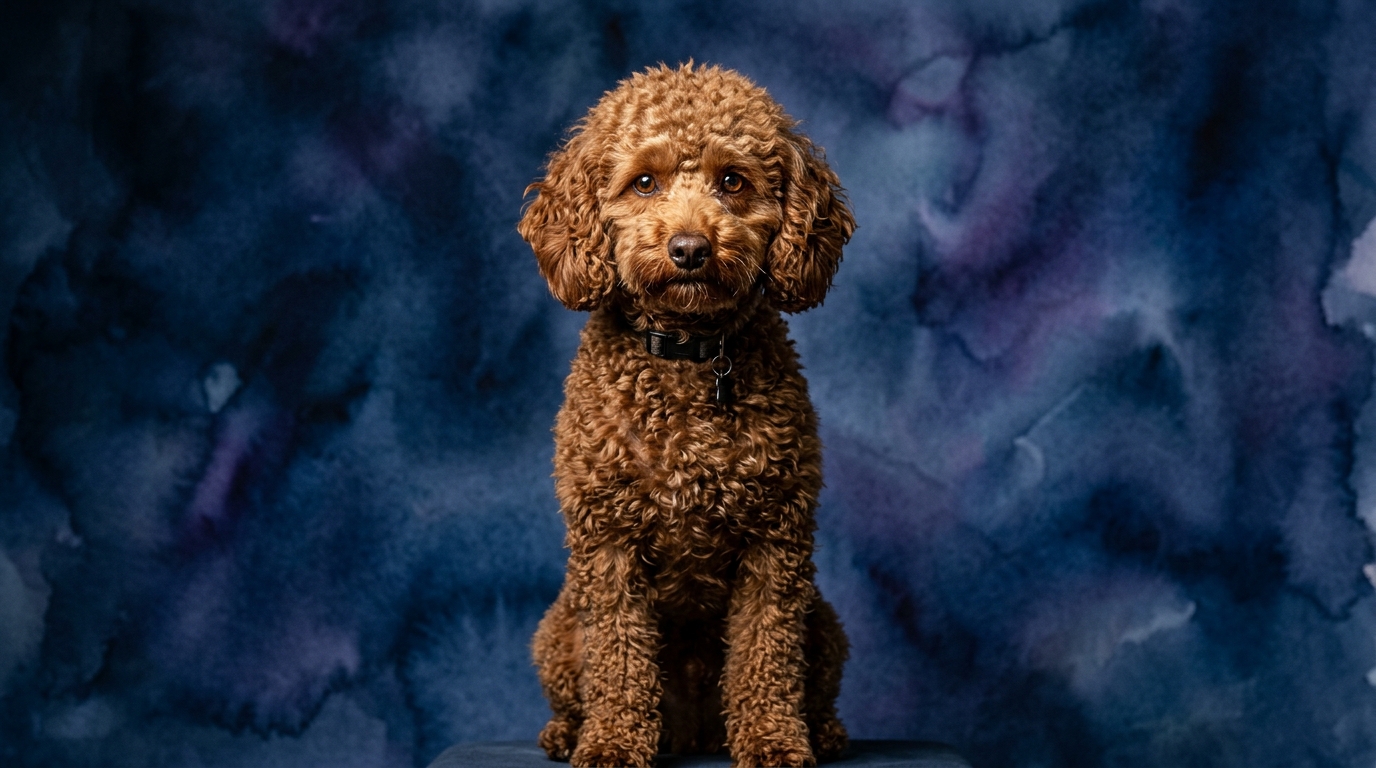
Side-by-Side Cognitive Profile: Flat-Coated Retriever vs. Miniature Poodle
The Cosmic Pet Pet IQ Lab employs five distinct dimensions to assess canine intelligence, offering a granular view beyond general rankings. For the Flat-Coated Retriever, a Sporting group member with a Coren rank of #17, its problem-solving ability scores a solid 4 out of 5, indicating a good capacity for figuring out solutions to novel challenges. Its training speed is also rated 4 out of 5, suggesting it grasps new commands and concepts quite readily, though perhaps not with lightning speed. Social intelligence sits at 3 out of 5, reflecting an adequate understanding of human cues and emotional states, allowing for strong companionship without excessive emotional complexity. Its instinctive drive, also 3 out of 5, points to a moderate inherent motivation for breed-specific tasks, which can be effectively harnessed. A standout trait for the Flat-Coat is its memory, earning a perfect 5 out of 5, signifying an exceptional ability to recall information, commands, and experiences over long periods.
In contrast, the Miniature Poodle, a Non-Sporting breed with an impressive Coren rank of #2, consistently demonstrates heightened cognitive prowess in several areas. It excels in problem-solving, achieving a top score of 5 out of 5, showcasing an outstanding capacity to analyze situations and devise effective strategies. Its training speed is equally exceptional, rated 5 out of 5, meaning it typically learns new tasks and commands with remarkable swiftness, often requiring minimal repetition. Like the Flat-Coat, its social intelligence is 3 out of 5, indicating a good awareness of human interaction and communication, fostering strong bonds. The instinctive drive is also 3 out of 5, suggesting a moderate internal motivation that can be directed towards various activities and challenges. Finally, its memory matches the Flat-Coat's with a perfect 5 out of 5, highlighting an excellent retention of learned behaviors and past experiences.
Where the Flat-Coated Retriever Excels Cognitively
While the Miniature Poodle numerically edges out the Flat-Coated Retriever in two key cognitive areas, the Flat-Coat's specific blend of traits offers unique advantages, particularly for owners seeking a dedicated working companion with enduring focus. Its perfect 5/5 memory, coupled with a strong 4/5 in problem-solving and training speed, makes it exceptionally adept at mastering and retaining intricate, multi-stage tasks over extended periods. Imagine a Flat-Coat consistently remembering the precise location of hidden articles in a scent game, or flawlessly executing a complex sequence of agility obstacles learned weeks ago; its sustained memory power ensures reliability in performance, especially in roles requiring consistent application of learned skills. Furthermore, its 3/5 instinctive drive, while not a 5/5, is specifically geared towards purposeful activity, particularly retrieving, which, when combined with its cognitive attributes, translates into a joyful and persistent partner for field work, scent detection, or even therapy roles requiring consistent, long-term application of learned skills. This breed thrives on collaborative tasks where its cognitive strengths are applied in a structured, often outdoor, environment, showcasing a profound ability to apply retained knowledge to achieve a goal with characteristic enthusiasm.
Where the Miniature Poodle Excels Cognitively
The Miniature Poodle's cognitive profile reveals a breed exceptionally primed for rapid learning and ingenious problem-solving. Its perfect 5/5 scores in both problem-solving and training speed signify an almost immediate grasp of new concepts and an innate ability to creatively overcome obstacles. This means a Miniature Poodle can often learn a new trick or command in just a few repetitions, and when faced with a novel puzzle toy or an unfamiliar situation, it will likely experiment with various solutions until it finds the most effective one. Their quick mental processing allows them to excel in competitive obedience, agility, and even complex trick training, often surprising owners with their capacity for independent thought and adaptation. A Poodle might figure out how to open a cabinet latch or manipulate an object to achieve a desired outcome faster than many other breeds. This cognitive agility makes them particularly responsive to positive reinforcement training methods, as they quickly connect actions with rewards, making the training process feel less like a chore and more like an engaging mental exercise for both dog and owner.
Training Ease: Flat-Coated Retriever vs. Miniature Poodle
Based on the IQ metrics, the Miniature Poodle holds a distinct advantage in terms of sheer training ease. Its 5/5 training speed means it typically picks up new commands and routines with remarkable swiftness, often requiring fewer repetitions than most breeds. Combined with its 5/5 problem-solving ability, the Miniature Poodle isn't just quick to learn; it also understands the *why* behind the commands, making it adept at generalizing behaviors to new contexts and adapting if the situation changes. For instance, teaching a Poodle to "stay" might involve only a few sessions before it consistently holds the position, even with distractions, and understands the concept of holding still in various environments. The Flat-Coated Retriever, with its 4/5 in both training speed and problem-solving, is by no means difficult to train; it simply might require a bit more patience and consistency from the owner. While it learns readily and retains information exceptionally well (5/5 memory), the initial acquisition of a complex skill might take slightly longer or demand a more structured, repetitive approach compared to the Poodle's often intuitive grasp. For an owner seeking rapid progress and a dog that seemingly "reads their mind" during training, the Miniature Poodle presents a more straightforward path.
Activity Needs: Active vs. Relaxed Owners
Both breeds possess an instinctive drive of 3 out of 5, suggesting a moderate need for engagement, but their historical roles and general temperaments dictate different activity profiles. The Flat-Coated Retriever, originating from the Sporting group, carries an inherent desire for physical activity, often involving retrieving, running, and exploring open spaces. While its drive score is not the highest, its energy level and need for purposeful outdoor activity align well with active owners who enjoy long hikes, field work, or dog sports like agility and flyball. They thrive on having a "job" that engages both their body and their considerable memory, and can become restless without sufficient outlet for their physical and mental energies. A relaxed owner might find a Flat-Coat's need for consistent, structured activity overwhelming, potentially leading to boredom-induced behaviors. The Miniature Poodle, despite its equal instinctive drive, often channels its energy differently. Its non-sporting background means its activity needs, while still significant, can often be met with vigorous walks, interactive play, and mental stimulation like puzzle toys or trick training within a more confined space. They are adaptable and can certainly enjoy outdoor adventures, but they are often content with a balance of physical exercise and extensive indoor mental challenges. Therefore, the Miniature Poodle can be a better fit for owners who are active but perhaps prefer less strenuous outdoor pursuits or have less time for extensive daily outdoor excursions, as long as they provide ample mental enrichment.
The Verdict
Opt for the Flat-Coated Retriever if you seek a joyful, enduring partner for structured outdoor activities and collaborative tasks, valuing its exceptional memory and consistent work ethic in the field.
Choose the Miniature Poodle if you desire a swift-learning, highly adaptable companion excelling in rapid skill acquisition and ingenious problem-solving, perfect for diverse mental challenges and competitive dog sports.
🧠 Find Your Pet's IQ Score
Our Pet IQ Lab assessment covers 25+ tests across 5 cognitive dimensions — personalized to your breed.
Take the Full IQ Test →Frequently Asked Questions
Is the Coren rank the only measure of dog intelligence?
No, the Coren rank primarily assesses working and obedience intelligence, reflecting a dog's ability to learn and follow commands. The Cosmic Pet Pet IQ Lab provides a more nuanced view by breaking down intelligence into five distinct dimensions, offering a comprehensive understanding beyond a single ranking.
How does a 3/5 social intelligence impact a dog's relationship with its owner?
A 3/5 social intelligence indicates a good, functional understanding of human cues and emotional states, allowing for strong bonds and responsive companionship. While not at the highest end, it's more than sufficient for a loving pet-owner relationship and effective communication, enabling the dog to largely interpret and react appropriately to human interactions.
Can a dog with a 3/5 instinctive drive still excel in dog sports?
Absolutely, a 3/5 instinctive drive means there's a moderate, inherent motivation that can be effectively channeled through training and positive reinforcement. While some breeds might have a higher natural drive, a dog with 3/5 can still excel in dog sports, especially when paired with strong problem-solving and training speed, as seen in both the Flat-Coated Retriever and Miniature Poodle.