
Side-by-Side IQ Profile
The Cosmic Pet Pet IQ Lab employs five key dimensions to map canine cognition, offering a nuanced view beyond simple labels. For the Flat-Coated Retriever, a breed renowned for its cheerful disposition and retrieving prowess, we observe a Problem Solving score of 4/5, indicating a strong capacity for navigating novel challenges and strategizing. Their Training Speed, also 4/5, reflects a quick grasp of commands and routines, often eager to cooperate. Social Intelligence stands at 3/5, suggesting a moderate ability to interpret human cues and social dynamics, while their Instinctive Drive, 3/5, points to a balanced but present urge for activities like retrieving. A standout feature is their Memory, earning a perfect 5/5, signifying an exceptional ability to retain information over long periods, from complex sequences of commands to the location of hidden objects.
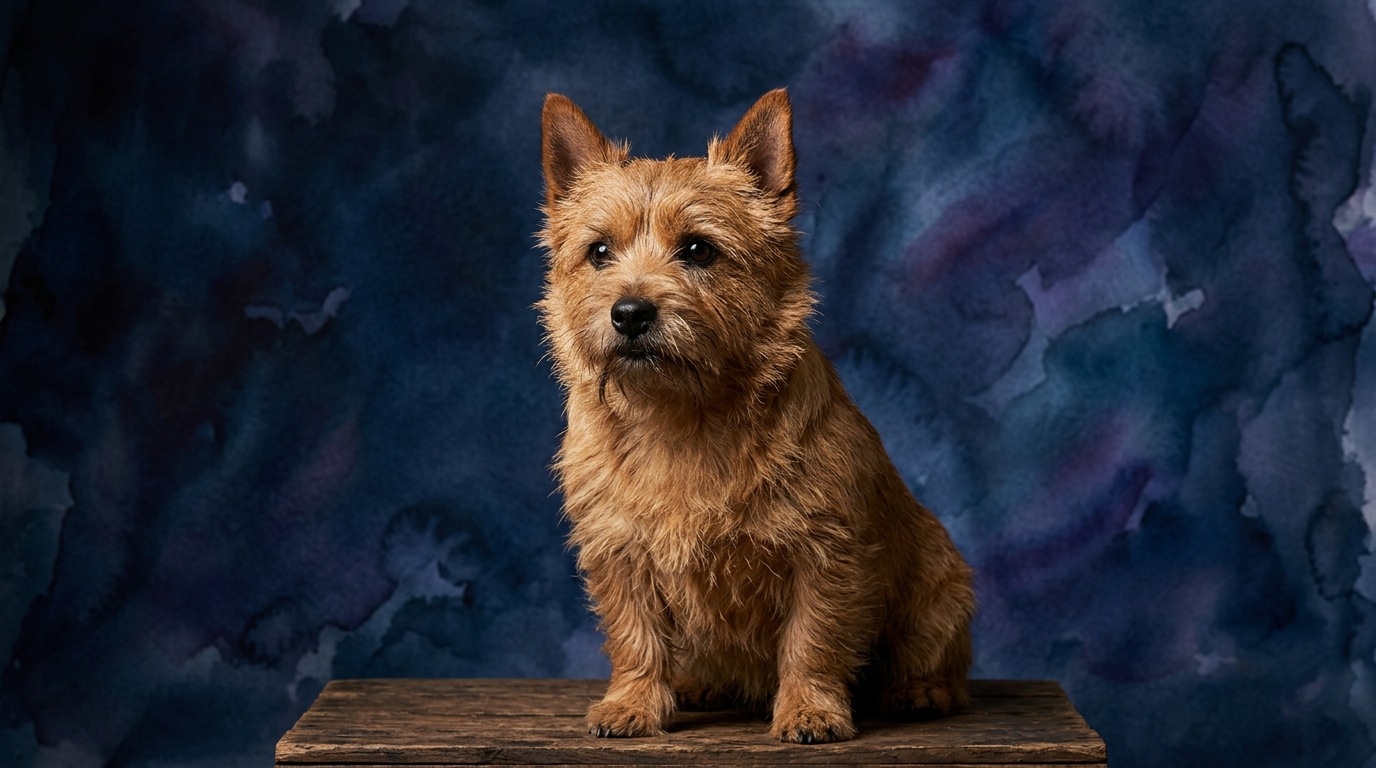
In contrast, the Norwich Terrier, a plucky breed originally bred for vermin control, presents a more uniform cognitive profile. Their Problem Solving score is 3/5, indicating a functional ability to overcome obstacles, though perhaps with less abstract thought than the retriever. Training Speed also registers at 3/5, meaning they learn at a steady pace but might require more repetition or varied motivation. Social Intelligence matches the Flat-Coat at 3/5, showing a similar capacity for understanding social interactions. Instinctive Drive is likewise 3/5, reflecting their inherent terrier traits such as digging, chasing, and independent hunting tendencies. Their Memory score is 3/5, suggesting a solid, practical recall for essential tasks and routines, but without the expansive retention seen in the Flat-Coated Retriever. This unranked status on the Coren scale highlights a different manifestation of cognitive strengths suited to their specific historical purpose.
Where Flat-Coated Retriever Wins Cognitively
The Flat-Coated Retriever distinctly shines in areas demanding high retention and adaptive thinking. Their exceptional 5/5 Memory score means they can effortlessly recall a vast repertoire of commands, remember complex retrieve sequences, and even retain information about people, places, and objects encountered days or weeks prior. This superior recall is invaluable for advanced obedience, field trials, or simply remembering household rules consistently. Furthermore, their 4/5 Problem Solving ability allows them to tackle multi-step challenges with strategic thought, such as figuring out how to open a puzzle toy or navigating an agility course efficiently. Unlike breeds that might rely on trial and error, Flat-Coats often demonstrate a thoughtful approach to new situations, quickly assessing and formulating solutions. This blend of strong memory and problem-solving makes them adept at learning intricate tasks and adapting to varied environments, a hallmark of their Coren ranking at #17.
Where Norwich Terrier Wins Cognitively
While the Norwich Terrier's scores are generally lower or equal to the Flat-Coat's, their cognitive profile represents a different kind of strength, perfectly aligned with their original purpose. Their consistent 3/5 scores across the board, particularly in Problem Solving and Instinctive Drive, speak to a focused, persistent intelligence. Rather than broad, adaptive problem-solving, the Norwich excels at tasks demanding tenacity and a singular focus on a goal, such as methodically pursuing a scent or finding their way through a challenging burrow-like environment. Their problem-solving is often rooted in their strong prey drive, making them exceptionally effective at specific, instinct-driven tasks. This focused determination, though not registering as a higher numerical score in a broad IQ test, is a significant advantage for owners who appreciate a dog with an independent spirit and a clear, unwavering purpose in their activities, such as scent work or earthdog trials.
Which is Easier to Train and Why
When it comes to ease of training, the Flat-Coated Retriever holds a clear advantage, primarily due to their 4/5 Training Speed and inherent desire to work cooperatively with their handler. These dogs are often described as "eager to please," absorbing new commands quickly and consistently, making them excellent candidates for advanced obedience, competitive sports, and service work. Their superior 5/5 Memory further solidifies learned behaviors, requiring less frequent refreshers once a concept is mastered. A Flat-Coat typically thrives on positive reinforcement, responding well to praise and rewards, and their focus tends to remain on the handler during training sessions.
The Norwich Terrier, with a Training Speed of 3/5, presents a different training experience. While certainly trainable, they possess a more independent and sometimes stubborn streak, characteristic of many terrier breeds. Their problem-solving and instinctive drives are often directed towards their own interests, requiring more patience, consistency, and creative motivation from their owner. Training a Norwich often means finding ways to make the task highly engaging and rewarding, as they are less inclined to simply comply out of a desire to please. Their 3/5 Memory means commands need more reinforcement over time compared to a Flat-Coat, preventing skills from fading.
Which Suits Active Owners vs Relaxed Owners
The Flat-Coated Retriever is an ideal companion for active owners who relish engaging their dog in various physical and mental pursuits. Their high energy levels, combined with their 4/5 Problem Solving and 5/5 Memory, mean they thrive on activities like hiking, swimming, retrieving games, agility, and complex puzzle toys. They require consistent mental stimulation to prevent boredom and channel their considerable cognitive abilities constructively. Owners who enjoy teaching new tricks, participating in dog sports, or simply spending hours outdoors will find a Flat-Coat a willing and enthusiastic partner. Their need for both physical exertion and mental challenge makes them less suited for a truly relaxed, sedentary lifestyle, which could lead to frustration or destructive behaviors.
The Norwich Terrier, while also an energetic breed, is better suited for active owners who appreciate a dog with a more independent spirit and a slightly less demanding cognitive load in terms of complex problem-solving or extensive memory tasks. Their 3/5 Problem Solving and Memory scores suggest they are content with activities that align with their terrier instincts, such as exploring new environments, engaging in robust play sessions, or participating in earthdog trials. While they certainly need daily exercise and mental engagement, it might be less about intricate obedience routines and more about opportunities to sniff, chase, and dig. They are not dogs that will be content to simply lounge all day, but their mental needs are perhaps less about continuous, complex learning and more about focused, instinctual engagement.
The Verdict
Choose the Flat-Coated Retriever if you seek a highly trainable, cooperative companion eager for complex mental challenges and extensive physical activity, thriving on intricate learning and consistent engagement. Their exceptional memory and problem-solving skills make them ideal for dog sports and a deeply interactive lifestyle.
Opt for the Norwich Terrier if you appreciate a tenacious, independent spirit in a compact package, valuing focused, instinct-driven activities over broad, complex obedience, and are prepared for a consistent, patient training approach. They suit active owners who enjoy exploring and engaging their dog's natural terrier drives.
🧠 Find Your Pet's IQ Score
Our Pet IQ Lab assessment covers 25+ tests across 5 cognitive dimensions — personalized to your breed.
Take the Full IQ Test →Frequently Asked Questions
Is a Flat-Coated Retriever a good choice for a first-time dog owner?
A Flat-Coated Retriever can be a good choice for a first-time owner who is committed to consistent training, socialization, and providing ample mental and physical exercise. Their biddable nature and quick learning curve (4/5 Training Speed) are advantageous, but their energy and need for engagement require dedication.
Do Norwich Terriers bark a lot due to their terrier nature?
Norwich Terriers can be prone to barking, a common trait in terriers, especially when alerting to perceived threats or expressing excitement. Consistent training from a young age can help manage this tendency, but owners should expect some vocalization driven by their alert and tenacious instincts.
How much daily exercise does each breed typically require?
The Flat-Coated Retriever generally requires at least 60-90 minutes of vigorous daily exercise, including off-leash running and mentally stimulating activities. The Norwich Terrier, while smaller, still needs 30-60 minutes of daily activity, benefiting from varied walks, play, and opportunities to explore their surroundings.