
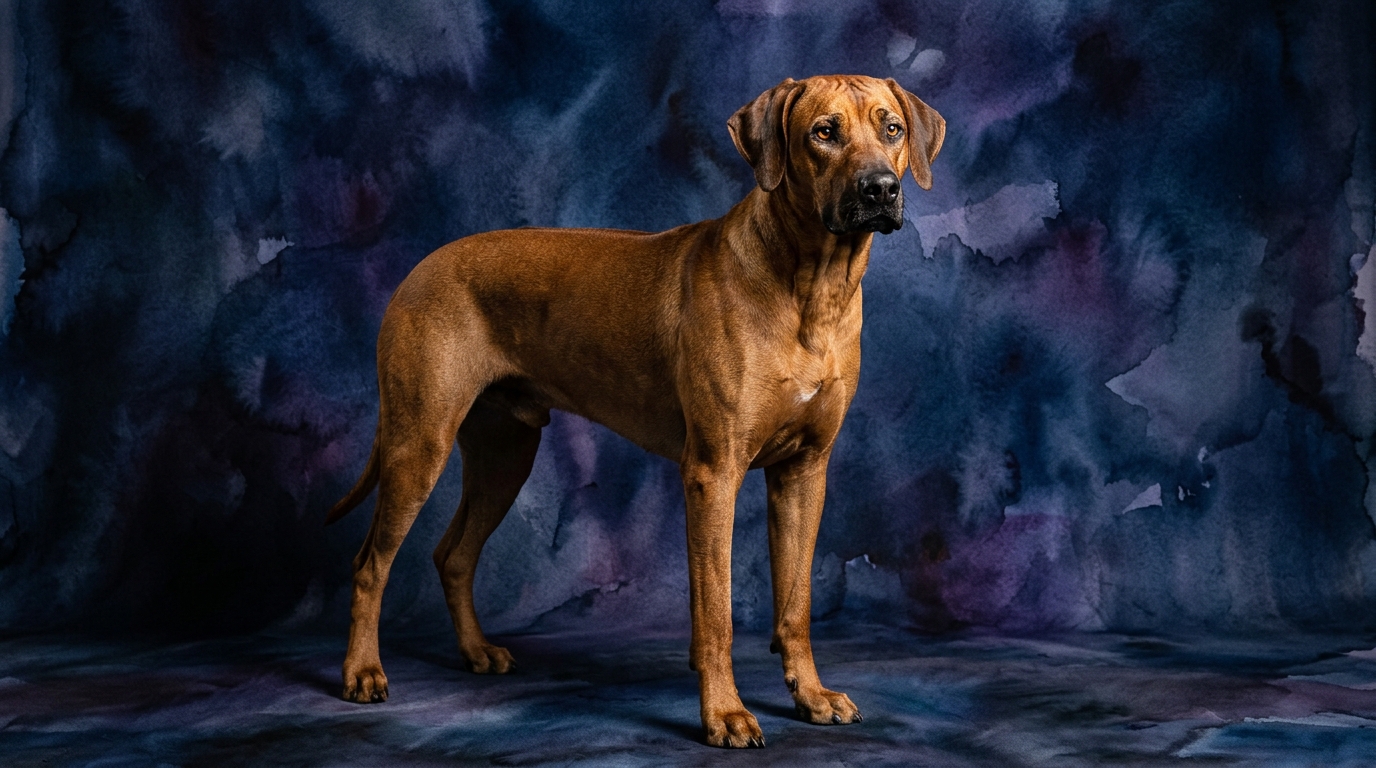
Side-by-Side IQ Profile: Flat-Coated Retriever vs. Rhodesian Ridgeback
The Cosmic Pet Pet IQ Lab employs a multi-dimensional approach to assess canine cognition, moving beyond simple obedience ranks to explore specific facets of intelligence. This allows for a nuanced understanding of how breeds like the Flat-Coated Retriever and Rhodesian Ridgeback approach the world and interact with their humans.
The Flat-Coated Retriever, ranking #17 on the Coren scale, demonstrates a cognitive profile geared towards cooperative endeavors. Their Problem Solving is rated 4/5, indicating an aptitude for deciphering multi-step puzzle toys or navigating complex retrieval scenarios. Training Speed, also 4/5, highlights their quick uptake of new commands and routines, often fueled by a desire to engage with their handler. Social Intelligence stands at 3/5, signifying their capacity to read human cues and adapt, though their primary focus remains on interaction. Instinctive Drive, 3/5, is largely channeled into retrieving and working alongside people, a balanced drive that complements their cooperative nature. A standout feature is their Memory, rated 5/5, allowing for remarkable retention of learned behaviors and experiences, making them consistent performers once a skill is acquired.
In contrast, the Rhodesian Ridgeback, holding a Coren rank of #52, presents a more independent cognitive blueprint, reflecting their heritage as a hunter of large game. Their Problem Solving ability is 3/5, meaning they can find solutions, particularly those related to their environment or achieving personal goals, but might not always align with human-prescribed methods. Training Speed is 3/5; they learn at a moderate pace, often requiring more repetition and consistent motivation to internalize commands due to their discerning nature. Social Intelligence is 3/5, characterized by a deep bond with their family but often a reserved demeanor with strangers, indicating a thoughtful assessment of social dynamics rather than overt eagerness. Instinctive Drive, also 3/5, is powerfully directed towards independent pursuit, tracking, and protection, shaping their focus. Their Memory, rated 3/5, suggests they retain information adequately, but their independent streak means they may choose to 'act on their own counsel' if not sufficiently engaged or if they perceive an alternative course of action.
Where the Flat-Coated Retriever Excels Cognitively
The Flat-Coated Retriever's cognitive strengths lie primarily in their collaborative spirit and impressive recall, making them exceptional partners in structured activities. Their superior Problem Solving (4/5) shines in tasks requiring a clear understanding of human intent and sequential actions, such as navigating intricate agility courses or mastering complex scent work where specific items must be identified and returned. They demonstrate a remarkable ability to connect human requests with desired outcomes, often attempting solutions that align with their handler's expectations.
Furthermore, their faster Training Speed (4/5) means they absorb new commands with fewer repetitions compared to many breeds, often showing an intrinsic joy in the learning process itself. This eagerness to engage and please their human companion significantly accelerates their acquisition of new skills, from basic obedience to advanced tricks. Coupled with their exceptional Memory (5/5), once a Flat-Coat learns a task or a command, it tends to stick, leading to reliable and consistent performance over long periods without significant refresher training.
Where the Rhodesian Ridgeback Shows Cognitive Strengths
While the Rhodesian Ridgeback's cognitive profile might suggest a slower learning curve in cooperative settings, their unique strengths emerge in areas demanding self-reliance and discerning judgment. Their Problem Solving (3/5), though rated lower in cooperative contexts, becomes a distinct advantage in scenarios requiring independent strategy and environmental assessment. For instance, a Ridgeback might excel at figuring out how to bypass an obstacle to reach a specific scent, or assessing a novel outdoor environment for potential pathways, relying on their own judgment rather than waiting for direct human instruction.
Their Instinctive Drive (3/5), while numerically similar to the Flat-Coat, is qualitatively different, geared towards independent pursuit and protection. This translates into a focused determination in tasks like tracking, where they can maintain concentration on a scent trail for extended periods, making intricate decisions about direction and terrain. This drive fosters a cognitive independence that allows them to make quick, self-reliant decisions in dynamic situations. Moreover, their Social Intelligence (3/5), characterized by a reserved and observant nature, enables them to be astute judges of character and situations, particularly in guarding roles where discerning friend from foe is paramount. This isn't about eager interaction, but rather a thoughtful, often cautious, assessment of their surroundings.
Which is Easier to Train and Why?
When it comes to ease of training, the Flat-Coated Retriever generally presents a more straightforward experience due to their inherent desire to cooperate and their cognitive strengths in memory and learning speed. Their Training Speed (4/5) means they grasp new commands and concepts quickly, often requiring fewer repetitions to solidify a behavior. This is significantly bolstered by their superior Memory (5/5), ensuring that once a lesson is learned, it is retained for extended periods, leading to consistent performance. Flat-Coats typically enjoy the interactive nature of training, viewing it as a shared activity and an opportunity for positive reinforcement and connection with their handler, which fuels their motivation.
The Rhodesian Ridgeback, conversely, can be more challenging to train, largely owing to their independent nature and a cognitive profile that prioritizes self-reliance. With a Training Speed of 3/5 and Memory of 3/5, they require more patience, consistency, and creative motivational strategies. A Ridgeback needs to be convinced that a command or task is worthwhile or personally beneficial; they are less inclined to obey simply for the sake of pleasing. Their independent problem-solving means they might 'reason' through a command, sometimes offering an alternative action or testing boundaries if they perceive a better option or lack sufficient motivation. Successful training with a Ridgeback often involves building a deep, trusting relationship and making training sessions engaging and rewarding to overcome their inherent self-determination.
Which Suits Active Owners vs. Relaxed Owners?
Both the Flat-Coated Retriever and the Rhodesian Ridgeback are breeds that require active owners, though their needs manifest in different ways. The Flat-Coated Retriever, with its exuberant personality and cooperative drive, thrives with owners who enjoy highly interactive activities such as retrieving games, agility, obedience trials, long hikes, and regular family outings. Their energy is best channeled through shared physical and mental engagement, where they can work alongside their human companions. A Flat-Coat needs consistent mental stimulation and physical exercise to prevent boredom and potential destructive behaviors, making them unsuitable for truly relaxed or sedentary lifestyles.
The Rhodesian Ridgeback also demands an active owner, but one who understands and respects their need for substantial physical exercise and independent mental challenge. They excel in activities like long-distance running, extensive walks in varied terrains, and scent work that allows them to utilize their natural tracking abilities. While they are loyal and loving companions indoors, their energy and instinctive drive necessitate significant outdoor activity to remain balanced. An owner who is too relaxed or inconsistent in providing structured exercise and mental engagement may find a Ridgeback becoming restless, prone to destructive habits, or developing behavioral issues rooted in unfulfilled needs for purposeful activity and independence.
The Verdict: When to Choose Each Breed
The Verdict
Choose the Flat-Coated Retriever if you desire a highly cooperative, eager-to-please companion for diverse dog sports, family activities, and thrive on shared mental and physical engagement. Their quick learning and excellent memory make training a rewarding, interactive experience.
Opt for the Rhodesian Ridgeback if you appreciate an independent, discerning, and protective companion who requires a confident, consistent handler and substantial outlets for their physical prowess and thoughtful, self-reliant nature.
🧠 Find Your Pet's IQ Score
Our Pet IQ Lab assessment covers 25+ tests across 5 cognitive dimensions — personalized to your breed.
Take the Full IQ Test →Frequently Asked Questions
Are Flat-Coated Retrievers good for first-time dog owners?
Flat-Coated Retrievers can be suitable for first-time owners who are prepared for their high energy, need for consistent training, and strong desire for interaction. Their eagerness to please and quick learning make the training process rewarding, provided owners dedicate time to their needs.
Do Rhodesian Ridgebacks get along with other pets?
Rhodesian Ridgebacks can coexist with other pets, especially if raised with them from a young age and properly socialized. However, their strong prey drive requires careful supervision with smaller animals, and introductions should always be managed thoughtfully.
Which breed is more prone to separation anxiety?
Flat-Coated Retrievers, with their strong social intelligence and desire for constant companionship, are generally more prone to separation anxiety if left alone for extended periods. Rhodesian Ridgebacks, while loyal, tend to be more independent and may tolerate solitude better, provided their exercise and mental needs are adequately met.