
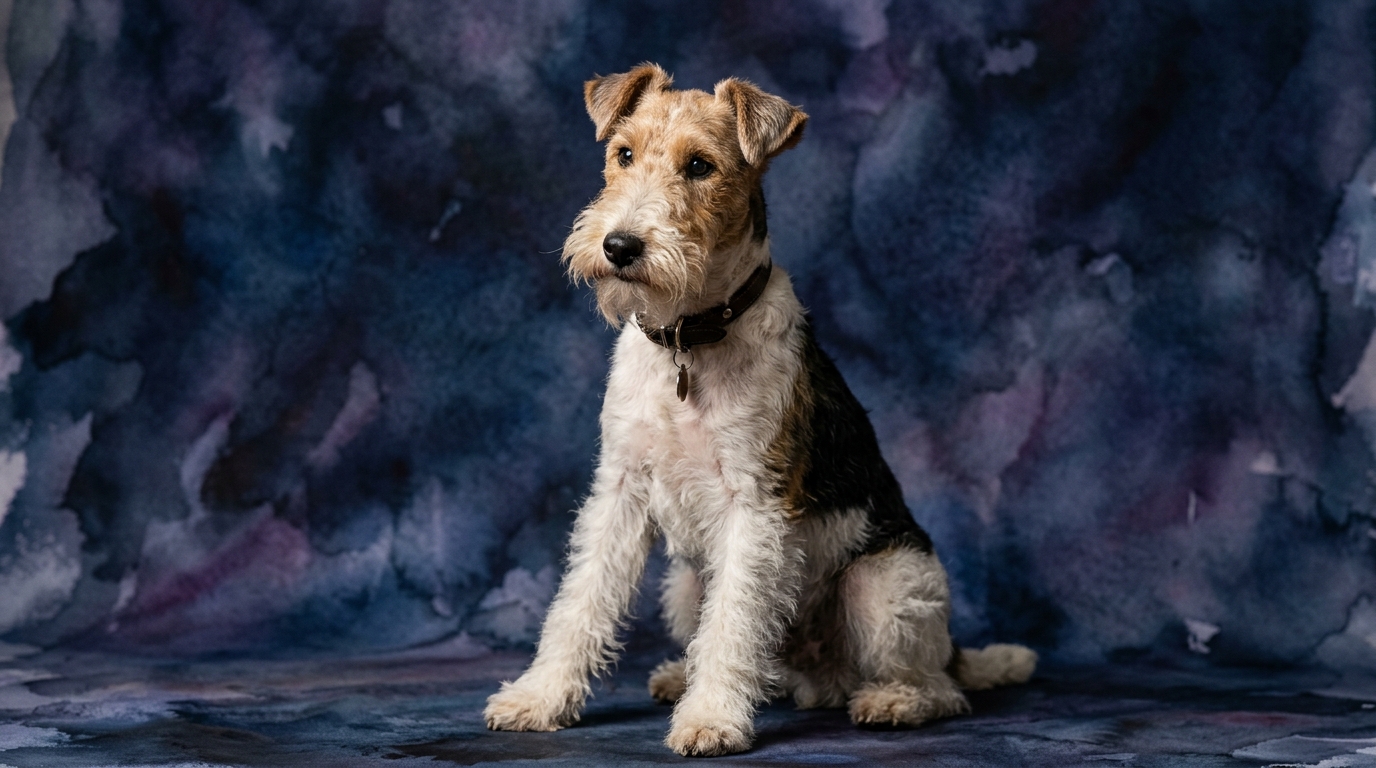
Side-by-Side Cognitive Profile: Flat-Coated Retriever vs. Wire Fox Terrier
The Cosmic Pet Pet IQ Lab provides a detailed look into the cognitive strengths of various breeds, offering five key dimensions for comparison. Let's delve into how the Flat-Coated Retriever and Wire Fox Terrier measure up.
The **Flat-Coated Retriever**, a Sporting dog ranked #17 by Coren for working intelligence, presents a compelling cognitive profile. Their Problem Solving is rated at 4/5, indicating a strong capacity for navigating complex tasks and understanding cause-and-effect with flexible strategies. Training Speed is also 4/5, showcasing their impressive alacrity in picking up new commands due to their eagerness to please and quick association skills. Social Intelligence stands at 3/5, reflecting a moderate understanding of human cues and group dynamics, fostering strong bonds. Their Instinctive Drive is 3/5, a manageable inclination for retrieving and cooperative work rather than an overwhelming urge. A standout feature is their Memory, rated a perfect 5/5, meaning they retain learned behaviors and experiences over extended periods, significantly aiding training responsiveness.
In contrast, the **Wire Fox Terrier**, a tenacious Terrier breed not specifically Coren-ranked, brings a different set of cognitive strengths to the table. Their Problem Solving is 3/5, approaching challenges with clever, often independent thought and persistent exploration rather than always relying on instruction. Training Speed is 3/5, meaning they are capable learners but may require more repetitions and engaging methods due to their independent streak. Social Intelligence is 3/5, similar to the Flat-Coat, indicating awareness and reactivity to their surroundings and family, though often on their own terms. Instinctive Drive is 3/5, stemming from their terrier heritage with a strong prey drive, digging instincts, and a persistent pursuit of perceived quarry. Their Memory is also 3/5, functional for commands and routines but not as exceptional as the Flat-Coat's, potentially needing refreshers for less frequently used cues.
Where the Flat-Coated Retriever Wins Cognitively
The Flat-Coated Retriever's cognitive strengths distinctly outshine the Wire Fox Terrier in areas demanding rapid assimilation and robust recall. Their superior memory (5/5) means they not only learn new commands quickly (Training Speed 4/5) but also retain them with remarkable consistency over time, making multi-step tasks or complex obedience routines more accessible. This breed excels in tasks requiring sequential understanding and the ability to build upon previously learned information, such as advanced retrieve work or agility courses where precise sequencing is paramount.
Their problem-solving (4/5) is often characterized by a more methodical and cooperative approach, seeking to work with their human counterparts to achieve a goal rather than independently exploring every possibility. This collaborative spirit, combined with their eagerness to please, makes them highly receptive to instruction and less prone to 'selective hearing' when a task becomes challenging, allowing for a more predictable and efficient learning curve in structured environments. For owners seeking a dog that can master and execute intricate routines with precision and reliable recall, the Flat-Coated Retriever's cognitive architecture is particularly well-suited.
Where the Wire Fox Terrier Wins Cognitively
While the Wire Fox Terrier may not boast the same scores in memory or training speed, their cognitive strengths lie in their independent problem-solving (3/5) and tenacious application of their instinctive drives (3/5). This breed demonstrates a clever, often ingenious approach to challenges, driven by a deep-seated curiosity and an unwavering determination to achieve their goals, even if it means employing unconventional tactics. Their intelligence is less about rapid compliance and more about persistent investigation and strategic planning to overcome obstacles.
For instance, a Wire Fox Terrier might spend considerable time figuring out how to access a hidden treat or navigate a new environment, not by waiting for instruction, but by actively experimenting and adapting their approach. This breed's strong prey drive and exploratory instincts contribute to a unique form of street smarts, making them particularly adept at tasks requiring independent thought and resilience. They excel in scenarios where a dog needs to think for themselves, such as scent work or navigating unfamiliar terrains, where their keen senses and self-reliant nature allow them to thrive. Their ability to focus intensely on a perceived 'mission' and persist until it's accomplished showcases a different, equally valuable facet of canine intelligence, one that prizes grit and ingenuity over strict adherence to command.
Which Is Easier to Train and Why
When evaluating ease of training, the Flat-Coated Retriever generally presents a more straightforward experience due to their higher scores in Training Speed (4/5) and Memory (5/5). Their fundamental eagerness to please, a hallmark of many sporting breeds, means they are typically highly motivated by positive reinforcement and human approval. They quickly form associations between commands and actions, and their exceptional memory ensures that once a behavior is learned, it is retained effectively. This translates into fewer repetitions needed during initial training and greater reliability in recalling commands even after a break. A Flat-Coat is less likely to 'forget' a learned behavior and more inclined to perform it consistently.
In contrast, the Wire Fox Terrier, with scores of 3/5 in both Training Speed and Memory, can be more challenging. Their independent terrier spirit often means they prioritize their own interests or instincts over immediate compliance. While capable, they may require more creative and engaging training methods to maintain their focus, and their occasional stubbornness can necessitate greater patience and persistence from the trainer. Their strong prey drive might also divert their attention more easily, requiring extra effort in proofing commands in distracting environments. Therefore, while both breeds can be well-trained, the Flat-Coated Retriever’s inherent cooperative nature and cognitive strengths make the training journey typically smoother and more predictable.
Suitability for Active vs. Relaxed Owners
Both the Flat-Coated Retriever and the Wire Fox Terrier are energetic breeds, but their activity needs and how they express them differ, influencing their suitability for various owner lifestyles. The Flat-Coated Retriever, with its sporting background, thrives on purposeful activity that engages both its body and mind. They are ideal for active owners who enjoy long walks, runs, hiking, swimming, or dog sports like agility, obedience, and retrieving. Their cooperative nature and desire to work alongside humans make them excellent partners for these shared activities. While they can enjoy downtime, they are not content with being couch potatoes and require consistent mental and physical stimulation to prevent boredom and potential destructive behaviors.
Conversely, the Wire Fox Terrier, while smaller, possesses an equally robust energy level, often expressed with bursts of intense activity and a strong desire to explore. They suit active owners who appreciate a dog with an independent spirit and are prepared for high-energy play, vigorous walks, and perhaps activities like earthdog trials or scent work that tap into their terrier instincts. They need outlets for their digging and hunting drives. For more relaxed owners who prefer a less demanding exercise routine, neither breed is an ideal fit. Both require significant daily engagement, but the Flat-Coated Retriever's cooperative energy might be more manageable for structured activities, whereas the Wire Fox Terrier's independent drive necessitates owners who can channel its spirited tenacity effectively.
The Verdict
Choose a Flat-Coated Retriever if you seek a highly trainable, cooperative companion eager to learn complex tasks and participate in structured activities, valuing reliable recall and a strong memory. This breed excels with owners who can provide consistent mental engagement and physical exercise through shared endeavors.
Opt for a Wire Fox Terrier if you appreciate a clever, independent spirit with tenacious problem-solving skills, and are prepared to engage a dog whose intelligence is expressed through self-reliance and determined exploration. They thrive with active owners who can channel their spirited energy and strong instincts into purposeful outlets.
🧠 Find Your Pet's IQ Score
Our Pet IQ Lab assessment covers 25+ tests across 5 cognitive dimensions — personalized to your breed.
Take the Full IQ Test →Frequently Asked Questions
Are Flat-Coated Retrievers good for first-time dog owners?
Yes, Flat-Coated Retrievers can be suitable for first-time owners due to their cooperative nature and high trainability. Their eagerness to please and quick learning curve make the training process more forgiving, provided owners are committed to meeting their significant exercise and mental stimulation needs.
Do Wire Fox Terriers bark a lot?
Wire Fox Terriers can be prone to barking, especially if they are bored, lack sufficient exercise, or perceive something needing their attention. Their terrier instincts make them alert and vocal, so consistent training and management are crucial to moderate this behavior.
What kind of mental stimulation do Flat-Coated Retrievers need?
Flat-Coated Retrievers require diverse mental stimulation, including puzzle toys, scent games, advanced obedience training, and learning new tricks. Their excellent memory and problem-solving abilities thrive when challenged with engaging activities that tap into their cooperative and intelligent nature.