
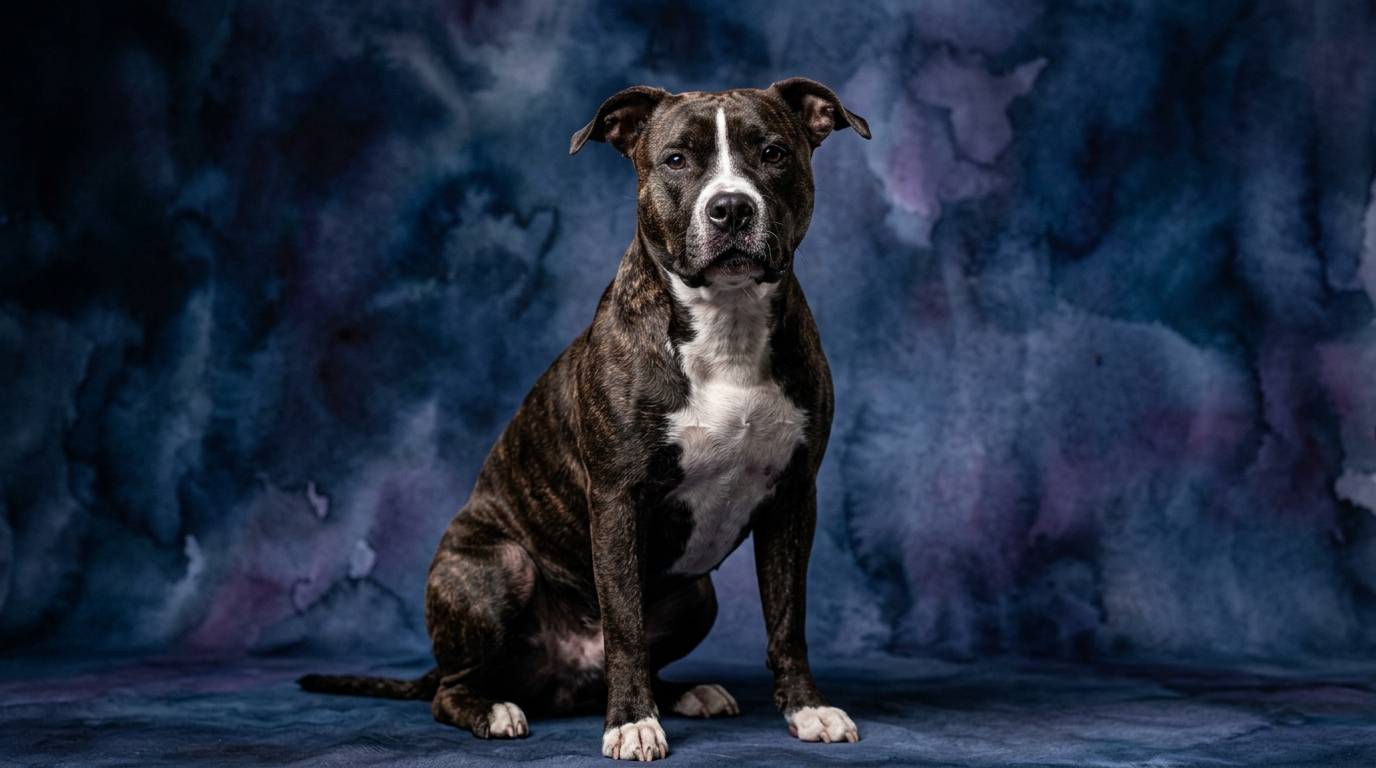
Side-by-Side IQ Profile: French Bulldog vs. American Staffordshire Terrier
The Cosmic Pet Pet IQ Lab evaluates canine intelligence across five key dimensions, providing a detailed look at each breed's cognitive strengths and tendencies. For the French Bulldog, we observe a problem-solving score of 3/5, indicating an average capacity to navigate novel challenges and figure out solutions to moderate puzzles. Their training speed also registers at 3/5, suggesting they learn new commands and routines at a steady, consistent pace, requiring clear and positive reinforcement. A standout trait for the French Bulldog is their exceptional social intelligence, scoring a perfect 5/5; they possess an unparalleled ability to read human emotions and social cues, fostering deep, intuitive bonds. In contrast, their instinctive drive is quite low at 2/5, meaning they have minimal inclination for independent hunting, tracking, or intense guarding behaviors. Finally, their memory stands at 3/5, allowing them to adequately retain learned behaviors and experiences over time.
Turning to the American Staffordshire Terrier, their cognitive profile presents a different set of strengths, alongside their Coren ranking of #48, which places them above average in obedience and working intelligence. They share the French Bulldog's problem-solving score of 3/5, showing a similar capacity for moderate challenges but not necessarily independent, complex problem-solving. Their training speed also aligns at 3/5, indicating an average rate of learning new skills and commands, benefitting from structured and consistent methods. The AmStaff’s social intelligence is rated at 3/5, meaning they understand human cues and intentions reasonably well, though perhaps not with the same finely tuned empathy as the French Bulldog. Their instinctive drive is moderate at 3/5, providing a balanced foundation for play, task engagement, and a degree of territorial awareness. A notable cognitive advantage for the AmStaff is their memory, scoring 4/5, which allows for more effective retention of complex sequences and long-term recall of training.
Where the French Bulldog Wins Cognitively
The French Bulldog's supreme cognitive advantage lies in their exceptional social intelligence, scoring a perfect 5/5. This isn't just about being friendly; it reflects a profound capacity to interpret human emotions, body language, and subtle social cues with remarkable accuracy. This makes them masters of integration into human family dynamics, often anticipating their owner's moods or needs without explicit commands, fostering an incredibly empathetic and intuitive bond. They thrive in environments where emotional connection and nuanced communication are prioritized, making them superb companions who can offer comfort and understanding.
Another significant cognitive win for the French Bulldog is their notably low instinctive drive, rated at 2/5. This translates into a canine companion who is generally less inclined towards independent, instinct-driven behaviors such as intense prey drive, incessant digging, or strong territorial guarding. Cognitively, this means they are often more content with a relaxed home environment and less prone to follow strong scent trails or engage in intense, self-directed 'work.' This low drive contributes to their adaptability to urban living and a calmer household rhythm, as their cognitive makeup doesn't demand constant external stimulation for instinctual fulfillment.
Where the American Staffordshire Terrier Wins Cognitively
The American Staffordshire Terrier exhibits a clear cognitive edge in their superior memory, scoring 4/5. This above-average recall means that once a command, skill, or learned behavior is established, it is retained more effectively and for longer periods. This cognitive strength is invaluable for advanced training, dog sports, or any activity requiring the consistent execution of complex sequences. Owners will find that AmStaffs can build upon their knowledge base efficiently, making them reliable partners in scenarios where consistent responses and long-term retention of lessons are crucial for success.
Furthermore, the AmStaff's Coren ranking of #48 highlights their strong capacity for obedience and working intelligence, which is a testament to their cognitive framework. This ranking indicates an innate ability to understand and reliably execute commands, even in distracting environments. While their problem-solving and training speed are average, this ranking suggests a cognitive predisposition for focused attention and a collaborative spirit in structured training settings. Their moderate instinctive drive (3/5), unlike the Frenchie's lower drive, provides a good foundation for channeling energy into productive, goal-oriented tasks, making them more amenable to purposeful work and activities when properly motivated and guided.
Which is Easier to Train and Why?
Determining which breed is 'easier' to train is nuanced, as both the French Bulldog and American Staffordshire Terrier share an average training speed of 3/5. However, their distinct cognitive profiles lead to different training experiences. The American Staffordshire Terrier's superior memory (4/5) and Coren ranking of #48 suggest they are generally easier to train for formal obedience and complex command sequences. Once they grasp a concept, they are more likely to retain it over time, allowing for steady progression in structured training programs and dog sports. Their moderate instinctive drive can also be channeled effectively into motivation for learning new tasks and working collaboratively.
The French Bulldog, while possessing average training speed and memory, shines in relationship-based training due to their exceptional social intelligence (5/5). They are highly motivated by human approval and connection, making them eager to please their owners. However, their lower instinctive drive and potential for 'bulldog stubbornness' might mean that while they understand what is asked, they may require more creative motivation and patience for rigorous or repetitive tasks. For complex behaviors, an AmStaff might reach mastery faster and retain it longer, whereas a Frenchie might require more consistent, positive reinforcement centered around their desire for companionship.
Which Suits Active Owners vs. Relaxed Owners?
Based on their cognitive profiles, the French Bulldog is an ideal match for relaxed owners or those with a less active lifestyle. Their notably low instinctive drive (2/5) means they do not demand intense physical or mental stimulation to be content. Instead, their exceptional social intelligence (5/5) means they thrive on close human companionship and emotional connection, rather than demanding extensive outdoor adventures or rigorous tasks. They are typically satisfied with moderate daily walks and indoor play, adapting seamlessly to apartment living or a more sedentary home environment where their cognitive needs are met through intimate interaction.
Conversely, the American Staffordshire Terrier is better suited for active owners who can provide consistent engagement and stimulation. Their moderate instinctive drive (3/5) indicates a need for regular physical exercise and mental challenges to prevent boredom and channel their energy constructively. Their above-average memory (4/5) and Coren ranking suggest they benefit significantly from structured activities such as dog sports, advanced obedience, or regular training sessions that tap into their cognitive capabilities. While affectionate, AmStaffs require an outlet for their energy and intellectual potential, making them excellent partners for owners who enjoy an active lifestyle and are keen to involve their dog in various purposeful activities.
The Verdict: When to Choose Each Breed
The Verdict
For those seeking an exceptionally empathetic, lower-energy companion who excels at reading human emotions and thrives on close indoor partnership, the French Bulldog is an ideal choice.
Opt for the American Staffordshire Terrier if you desire a robust, trainable partner for structured activities and an active lifestyle, capable of retaining complex commands and engaging in purposeful work.
🧠 Find Your Pet's IQ Score
Our Pet IQ Lab assessment covers 25+ tests across 5 cognitive dimensions — personalized to your breed.
Take the Full IQ Test →Frequently Asked Questions
Is the French Bulldog difficult to train?
French Bulldogs possess an average training speed and memory, meaning they learn at a moderate pace. Their high social intelligence makes them keen to please their people, but their lower instinctive drive means motivation often stems from connection rather than an innate desire for 'work'.
Do American Staffordshire Terriers have a good memory?
Yes, American Staffordshire Terriers exhibit above-average memory (4/5), allowing them to retain commands, routines, and past experiences effectively. This cognitive strength makes them reliable partners for consistent training and complex skill acquisition over time.
Which breed is better for apartment living based on their cognitive profile?
The French Bulldog's cognitive profile, marked by low instinctive drive and high social intelligence, makes them exceptionally well-suited for apartment living. They are generally content with less intense physical demands and thrive on close companionship within a smaller space.