
Side-by-Side IQ Profile: French Bulldog vs. Belgian Tervuren
The Cosmic Pet Pet IQ Lab employs a five-dimensional framework to assess canine intelligence, offering a nuanced understanding beyond simple 'smart' labels. Let's examine how the French Bulldog and the Belgian Tervuren stack up across these critical cognitive areas.
The French Bulldog, a member of the Non-Sporting group, is not ranked by Coren, reflecting its primary role as a companion rather than a working dog. Its IQ profile includes a Problem Solving score of 3/5, meaning it can navigate straightforward challenges but might not independently devise complex solutions. Training Speed is also 3/5, indicating a moderate pace of learning new commands, often requiring consistent, positive reinforcement. Where the French Bulldog truly shines is in Social Intelligence, scoring a perfect 5/5, demonstrating an exceptional ability to interpret human cues and bond deeply. Its Instinctive Drive is lower at 2/5, suggesting a minimal inherent urge for tasks like hunting or herding, preferring comfort and interaction. Memory stands at 3/5, sufficient for retaining routines and basic commands but less for intricate sequences.
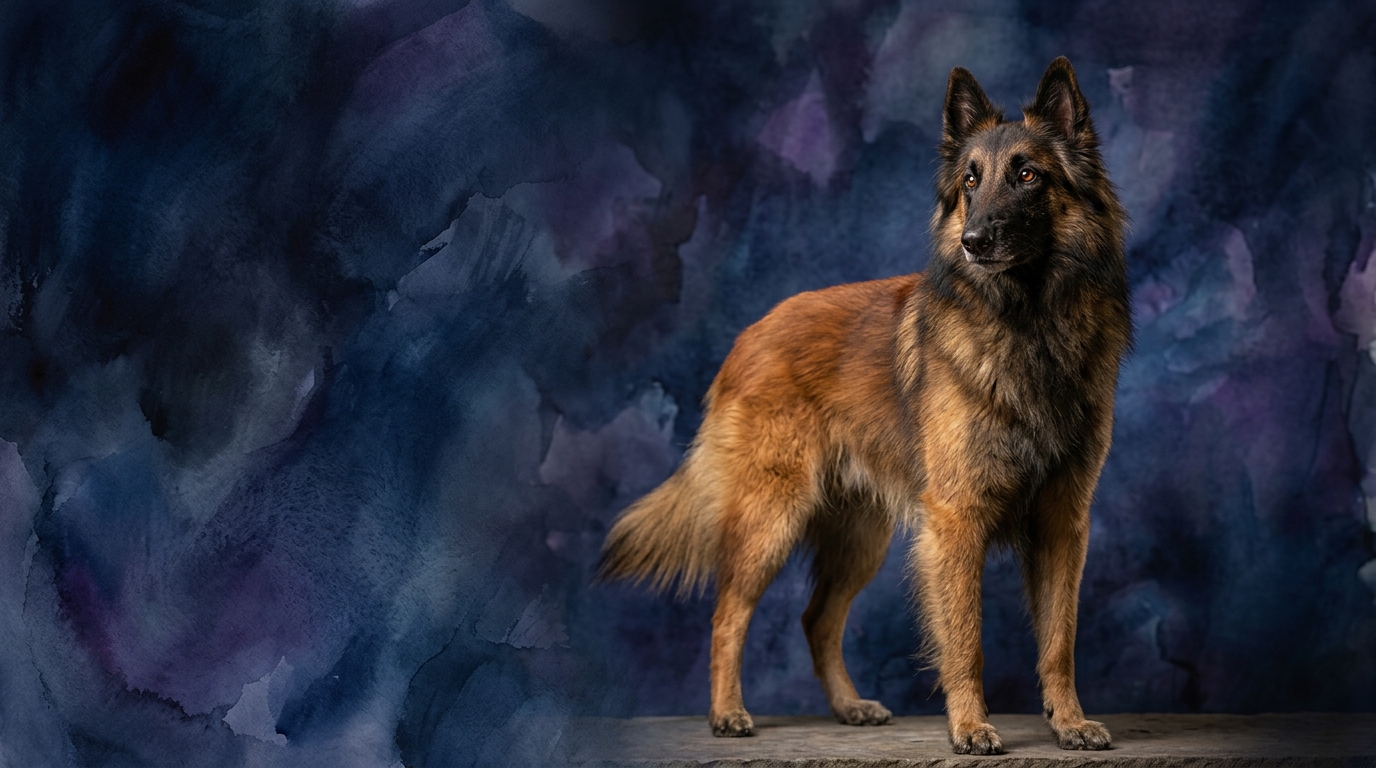
In stark contrast, the Belgian Tervuren, a Herding breed, boasts a Coren rank of #14, placing it among the most capable working dogs. Its Problem Solving score is an impressive 5/5, highlighting an innate ability to analyze situations, strategize, and overcome complex obstacles. Training Speed matches this at 5/5, meaning Tervurens grasp new concepts and commands with remarkable swiftness, often eager for mental engagement. Social Intelligence, while present, is rated 3/5; they are capable of forming strong bonds but may prioritize working directives over subtle emotional attunement compared to the French Bulldog. Their Instinctive Drive is 3/5, reflecting a moderate, inherent desire for purposeful activity, often expressed through herding or protection tasks. Finally, Memory is a robust 5/5, indicating an exceptional capacity for long-term retention of complex sequences and learned behaviors.
Where the French Bulldog Excels Cognitively
The French Bulldog's cognitive prowess centers squarely on social dynamics and emotional connection. Their 5/5 Social Intelligence score isn't just a number; it translates into a profound ability to read and respond to human emotions. A French Bulldog often seems to anticipate their owner's moods, offering comfort or initiating play at just the right moment. This makes them unparalleled emotional support animals, instinctively understanding the subtle shifts in human behavior and body language. They thrive on companionship, and their cognitive architecture appears optimized for forming deep, intuitive bonds within a family unit. This acute social awareness allows them to integrate seamlessly into diverse household environments, adapting their behavior to maintain harmony and receive affection.
While their problem-solving (3/5) might not extend to intricate puzzles, their social acumen allows them to 'solve' human emotional needs with remarkable sensitivity. They might not open a complex latch, but they will likely be the first to nuzzle a worried hand or offer a comforting presence. Their moderate training speed (3/5) means they learn household rules and basic etiquette reliably, especially when these lessons are interwoven with positive social interaction and affection, which they are acutely motivated by. This breed’s cognitive strengths are less about intricate tasks and more about the nuanced art of living harmoniously with people, making them masters of companionship.
Where the Belgian Tervuren Excels Cognitively
The Belgian Tervuren's cognitive strengths lie in its capacity for complex thought, rapid learning, and sustained mental effort. Their 5/5 Problem Solving ability means they are adept at figuring out intricate tasks, such as advanced obedience routines, agility courses, or even search and rescue scenarios. This isn't just about following commands; it's about understanding the objective and often devising efficient ways to achieve it. This breed can analyze environmental cues and make independent decisions, a trait honed by generations of herding work where they needed to manage livestock autonomously.
Coupled with their 5/5 Training Speed and 5/5 Memory, Tervurens are exceptional students. They absorb new information quickly, generalize learned behaviors to new situations, and retain complex sequences over long periods. This allows them to master a vast repertoire of commands and tricks, making them suitable for demanding roles that require precision and consistency. Their moderate Instinctive Drive (3/5) provides a solid foundation for engaging in purposeful activities, channeling their intelligence into productive outlets rather than undirected energy. This blend of cognitive attributes makes the Belgian Tervuren a formidable partner for anyone seeking a dog capable of high-level performance and continuous learning.
Which is Easier to Train and Why
When considering ease of training, the Belgian Tervuren generally presents a more straightforward path for owners willing to invest time and consistent effort, largely due to its superior cognitive profile in Problem Solving (5/5), Training Speed (5/5), and Memory (5/5). Tervurens possess an inherent drive to work and please, often exhibiting intense focus and a rapid acquisition of new commands. Their ability to generalize learned behaviors means that once a concept is understood in one context, they can often apply it to similar situations without extensive re-training. This breed thrives on mental stimulation and finds satisfaction in mastering new skills, making them highly responsive to structured training sessions.
The French Bulldog, with its 3/5 Training Speed and Problem Solving, requires a different approach. While certainly trainable, they may learn at a slower pace and often need more repetition and patience. Their training motivation often stems from their high Social Intelligence (5/5) and desire for human approval, coupled with food rewards. They are less driven by the 'task' itself and more by the positive interaction and comfort it brings. Their lower Instinctive Drive (2/5) means they aren't naturally seeking out complex jobs, and can be easily distracted by their environment or their own comfort. Therefore, training a French Bulldog is more about making the process enjoyable and rewarding, focusing on positive reinforcement and short, engaging sessions to maintain their interest, rather than relying on an innate eagerness for a 'job'.
Which Suits Active Owners vs. Relaxed Owners
The choice between these two breeds heavily depends on an owner's lifestyle and capacity for daily engagement. The French Bulldog is an ideal match for relaxed owners or those living in smaller spaces, who prioritize companionship and a calmer pace of life. Their low Instinctive Drive (2/5) means they have minimal requirements for intense physical activity or complex mental tasks. A French Bulldog is perfectly content with moderate daily walks, indoor play, and plenty of cuddle time on the sofa. Their exceptional Social Intelligence (5/5) ensures they are highly attuned to their human companions, making them wonderful emotional anchors for individuals or families seeking a devoted, low-key presence. They do not thrive on prolonged solitude and prefer being part of the family's daily rhythm, even if that rhythm is leisurely.
Conversely, the Belgian Tervuren is unequivocally suited for active owners who can commit to providing substantial mental and physical stimulation. With top scores in Problem Solving (5/5), Training Speed (5/5), and Memory (5/5), combined with a moderate Instinctive Drive (3/5), a Tervuren needs a 'job' to feel fulfilled. This could manifest as participation in dog sports like agility, obedience, flyball, or even protection work. Daily vigorous exercise, coupled with challenging training sessions that engage their formidable intellect, are non-negotiable for this breed. Without adequate outlets for their cognitive and physical energy, a Tervuren can become bored, leading to destructive behaviors or excessive barking. They thrive with owners who enjoy an active outdoor lifestyle and are eager to channel their dog's impressive capabilities into purposeful activities.
The Verdict
Choose the French Bulldog if you seek an emotionally intuitive companion for a relaxed household, valuing deep social connection over complex task engagement. This breed thrives on affection and a gentle, consistent approach to learning.
Opt for the Belgian Tervuren if you are an active individual or family looking for a highly capable, engaged partner for dog sports, advanced training, or a working role. This breed requires significant mental and physical challenge to truly flourish.
🧠 Find Your Pet's IQ Score
Our Pet IQ Lab assessment covers 25+ tests across 5 cognitive dimensions — personalized to your breed.
Take the Full IQ Test →Frequently Asked Questions
Are French Bulldogs prone to stubbornness during training?
French Bulldogs can exhibit what appears as stubbornness, which often stems from their lower instinctive drive for tasks and a preference for comfort or social interaction. Consistent, positive reinforcement with high-value rewards and making training fun is key to overcoming this.
How much exercise does a Belgian Tervuren truly need?
A Belgian Tervuren requires substantial daily exercise, typically an hour or more of vigorous activity, beyond simple walks. This should include mentally stimulating activities like training sessions, puzzle toys, or dog sports to prevent boredom and channel their energy constructively.
Which breed is generally better with children?
Both breeds can be good with children with proper socialization and training, but their approaches differ. French Bulldogs often excel due to their high social intelligence and gentle nature, while Belgian Tervurens, with their herding instincts, need careful guidance to ensure they don't try to 'herd' children, requiring structured interaction.