
Side-by-Side IQ Profile: French Bulldog vs. Norfolk Terrier
At The Cosmic Pet Pet IQ Lab, we delve into five key dimensions of canine intelligence to offer a nuanced understanding of each breed. For the French Bulldog, a member of the Non-Sporting group, their cognitive profile shows a Problem Solving score of 3/5, indicating an average capacity for navigating straightforward challenges and adapting to routine. Their Training Speed is also 3/5, meaning they learn new commands and behaviors at a moderate pace, requiring consistent reinforcement. Where they truly shine is Social Intelligence, scoring an impressive 5/5, reflecting an exceptional ability to read human emotions and cues, fostering deep companionship. Their Instinctive Drive is 2/5, suggesting a lower inherent motivation for tasks related to hunting or complex problem-solving, and their Memory stands at 3/5, allowing them to retain learned information and routines reliably.
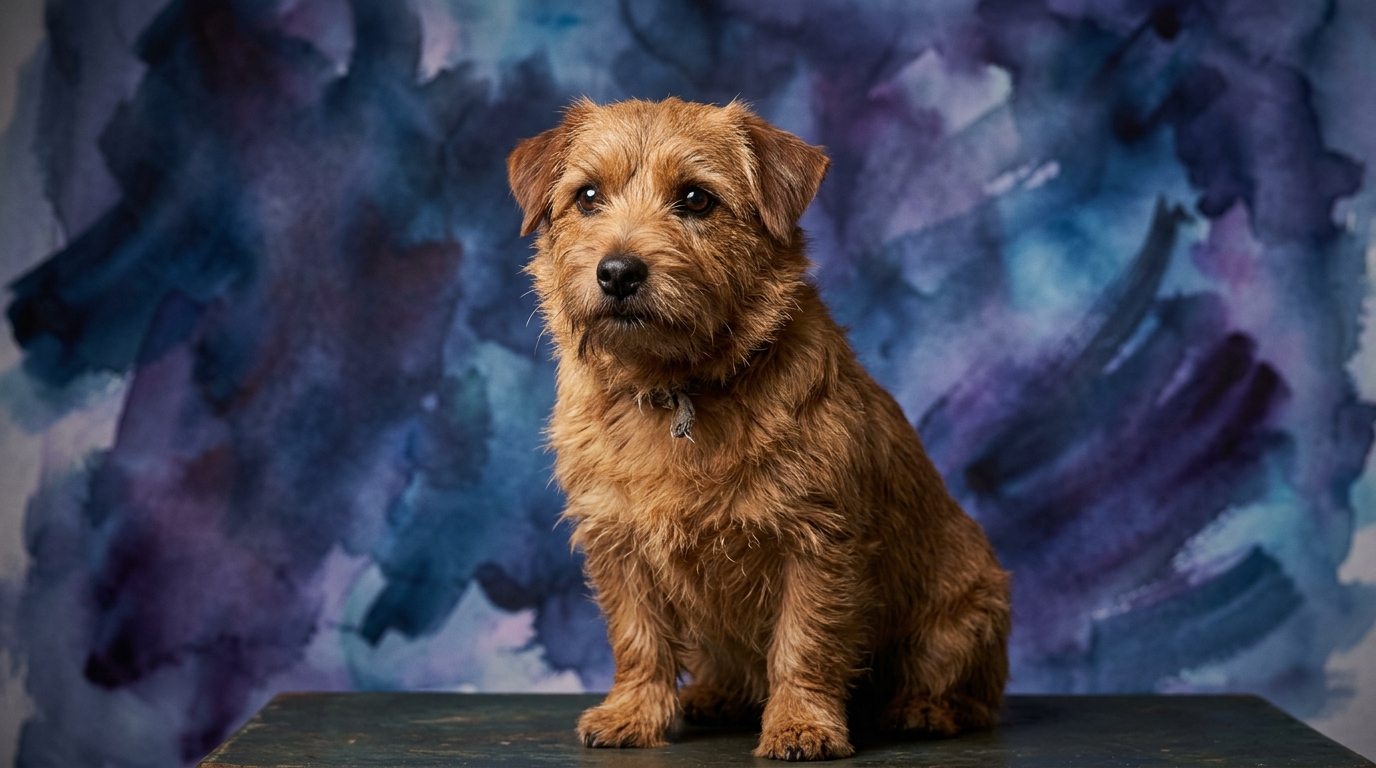
The Norfolk Terrier, a robust member of the Terrier group, presents a slightly different cognitive landscape. Their Problem Solving ability matches the French Bulldog at 3/5, indicating a similar capacity for practical, day-to-day challenges. Their Training Speed is also 3/5, meaning they acquire new skills at an average rate, though their terrier tenacity can sometimes influence the application of these skills. Their Social Intelligence is 3/5, signifying a good, but more independent, connection with humans compared to the French Bulldog. The Norfolk Terrier's Instinctive Drive is 3/5, reflecting a more pronounced natural inclination for exploration and engagement with their environment, typical of their working heritage. Finally, their Memory score is 3/5, demonstrating an average ability to recall experiences and training.
Where the French Bulldog Excels Cognitively
The French Bulldog's standout cognitive strength lies unequivocally in their Social Intelligence, rated at a perfect 5/5. This isn't merely about friendliness; it signifies an acute sensitivity to human emotional states and communication. A French Bulldog can often anticipate their owner’s mood, responding with comforting presence or playful antics seemingly on cue. This high social acumen means they are incredibly adept at forming profound, almost intuitive bonds, making them highly responsive to subtle gestures and vocal inflections from their human companions. Their world revolves around their people, and their cognitive processes are finely tuned to understanding and interacting within that human-centric sphere.
This exceptional social intelligence translates into a dog that thrives on companionship and interaction. They are masters of non-verbal communication, often using their expressive faces and body language to convey their desires or understanding. For owners, this means a French Bulldog often feels like a true conversational partner, capable of deep emotional connection and a shared understanding that goes beyond simple commands. They are particularly good at reading routines and anticipating events based on human behavior, a testament to their socially driven memory and problem-solving in a domestic context.
Where the Norfolk Terrier Shines Cognitively
The Norfolk Terrier's cognitive advantage, while less about overt social connection, lies in their Instinctive Drive, which scores a 3/5 compared to the French Bulldog's 2/5. This higher drive reflects a greater innate curiosity and a more pronounced desire to engage with their surroundings through exploration and activity. Originating as working dogs, Norfolks possess a natural inclination to investigate scents, sounds, and potential 'prey' in their environment, even if it's just a rustling leaf in the garden. This drive fuels their independent spirit and their readiness for adventure, albeit on a smaller scale.
This elevated instinctive drive means a Norfolk Terrier is often more self-motivated to explore and less dependent on constant human direction for stimulation. They possess a persistent quality when pursuing something that captures their interest, whether it's a hidden toy or a new scent trail. While their Problem Solving is 3/5, their drive often provides the impetus to apply that problem-solving ability in practical, exploratory ways, like figuring out how to get to a perceived interesting spot or unearthing a buried treasure in the yard. For owners, this translates to a dog that enjoys purposeful activity and can entertain themselves with environmental engagement.
Training Dynamics: Which is Easier to Train?
Both French Bulldogs and Norfolk Terriers share a Training Speed score of 3/5, suggesting they acquire new commands at an average pace. However, the ease of training isn't solely determined by how quickly they grasp a concept; it's also heavily influenced by their other cognitive dimensions and inherent motivations. The French Bulldog, with their exceptional 5/5 Social Intelligence, often appears easier to train for compliance-based tasks. They are inherently motivated by pleasing their owner and receiving social praise, making them eager participants in training sessions that reinforce their bond. Their desire for connection means they are generally receptive to direction, provided the training is positive, engaging, and consistent. They might, however, become bored or resistant if tasks are too complex or repetitive, as their Problem Solving and Instinctive Drive are not their strongest suits.
The Norfolk Terrier, while also scoring 3/5 for Training Speed, can present a different set of training considerations. Their 3/5 Social Intelligence means they are less driven purely by human approval, possessing a more independent streak. Coupled with their 3/5 Instinctive Drive, they can be more easily distracted by environmental stimuli—a fascinating scent or a distant sound might prove more compelling than a 'sit' command. Effective training for a Norfolk often requires more creativity, variety, and finding what truly motivates them, whether it's a high-value treat, a favorite toy, or the opportunity for a brief exploratory sniff. Their terrier tenacity means they can be persistent, but also potentially stubborn if they perceive a task as unrewarding or if their instincts pull them in another direction. Owners need patience and a firm, consistent, yet positive approach to harness their energy effectively.
Matching Canine Cognition to Owner Lifestyle
When considering which breed aligns with an owner's lifestyle, their cognitive profiles offer clear guidance. The French Bulldog, with its 5/5 Social Intelligence and lower 2/5 Instinctive Drive, is an ideal match for relaxed owners who prioritize companionship and indoor activities. They thrive in environments where they can be close to their human family, enjoying quiet evenings on the couch, short strolls, and plenty of direct interaction. Their cognitive makeup makes them perfectly suited for a less active household that values emotional connection and a calm, affectionate presence over vigorous outdoor adventures or complex training regimens. They are content to observe and participate in the domestic rhythm, often happy just to be in the same room as their people.
Conversely, the Norfolk Terrier, with its 3/5 Instinctive Drive and more independent 3/5 Social Intelligence, is better suited for moderately active owners who enjoy engaging with their dog in more purposeful ways. While not requiring marathon runs, Norfolks benefit from regular, stimulating walks where they can sniff and explore, short play sessions involving toys, and perhaps some light mental challenges like puzzle toys or scent games. Their cognitive profile suggests they appreciate opportunities to exercise their natural curiosity and drive, making them a good fit for individuals or families who can provide consistent, varied engagement to satisfy their inquisitive nature and prevent boredom-induced behaviors. They are companions who appreciate shared experiences that involve a degree of activity and exploration.
The Verdict
Choose the French Bulldog if your priority is an exceptionally social, emotionally attuned companion who thrives on close human interaction and a relaxed home life, valuing connection above all else.
Opt for the Norfolk Terrier if you appreciate an independent, curious companion with a moderate drive for exploration and engagement, and you are prepared to offer consistent, varied activity to satisfy their tenacious spirit.
🧠 Find Your Pet's IQ Score
Our Pet IQ Lab assessment covers 25+ tests across 5 cognitive dimensions — personalized to your breed.
Take the Full IQ Test →Frequently Asked Questions
Do French Bulldogs and Norfolk Terriers learn at the same speed?
Both breeds have a Training Speed score of 3/5, indicating they learn at an average pace. However, their motivation differs: French Bulldogs are driven by social connection, while Norfolk Terriers may be more influenced by their natural instincts and environmental stimuli, requiring different training approaches.
Which breed is better at understanding human emotions?
The French Bulldog excels in understanding human emotions, boasting a Social Intelligence score of 5/5. They are highly attuned to their owners' moods and cues, forming deep, intuitive bonds. The Norfolk Terrier, with a score of 3/5, is social but more independent.
Is one breed more prone to destructive behavior if not mentally stimulated?
The Norfolk Terrier's higher Instinctive Drive (3/5) means they benefit more from mental and physical engagement. Without adequate stimulation, their natural curiosity and drive for exploration could lead to behaviors like digging or excessive sniffing. French Bulldogs, with lower drive, are less prone to such issues but can become bored without social interaction.