
A Side-by-Side Cognitive Profile: French Bulldog vs. Puli
The Cosmic Pet Pet IQ Lab employs five distinct dimensions to assess canine intelligence, offering a nuanced view beyond simplistic rankings. For the French Bulldog, a breed developed primarily for companionship and comfort, these dimensions paint a picture of a dog deeply connected to its human environment. Their Problem Solving is rated 3/5, indicating an adequate ability to navigate everyday challenges but not an innate drive for complex intellectual tasks. Training Speed also sits at 3/5, suggesting they learn at a moderate pace, often requiring patient and consistent guidance. Where French Bulldogs truly shine is in Social Intelligence, scoring a perfect 5/5, reflecting their exceptional ability to read and respond to human cues and emotional states. Their Instinctive Drive is lower at 2/5, as they were not bred for specific working roles, and their Memory is a solid 3/5.
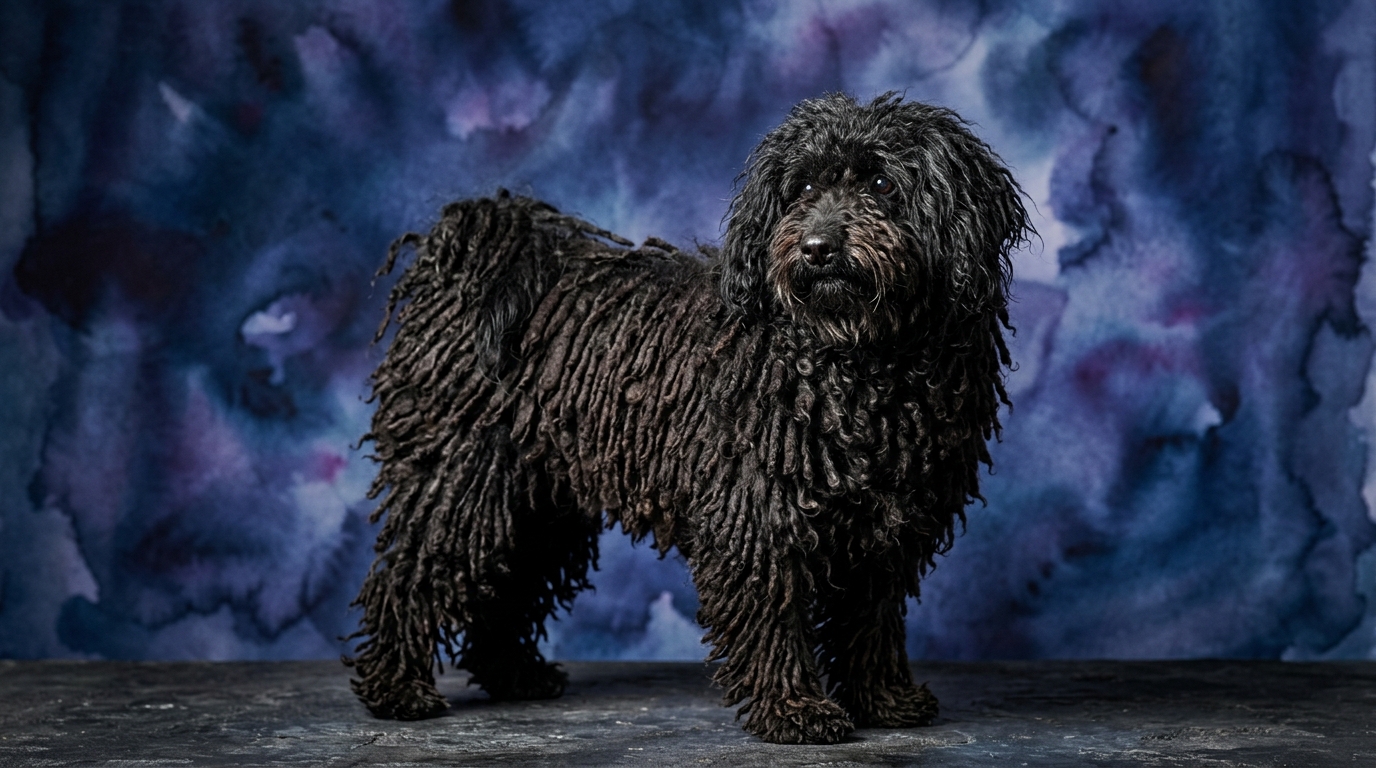
In contrast, the Puli, a Hungarian herding dog, exhibits a different cognitive makeup, honed over centuries for demanding pastoral work. Their Problem Solving ability is strong at 4/5, enabling them to devise strategies for intricate tasks. Training Speed is also rated 4/5, meaning Pulis typically grasp new commands and routines quickly. Their Social Intelligence, while respectable, is 3/5, indicating they are attuned to their owners but perhaps less overtly expressive or people-focused than the French Bulldog. The Puli's Instinctive Drive is higher at 3/5, reflecting their inherent desire to work and manage livestock, which often translates into a need for purpose. Their Memory is also robust at 4/5, allowing them to retain learned behaviors and complex sequences effectively. It's also notable that the Puli holds a Coren rank of #25, placing them among breeds recognized for high working and obedience intelligence, a classification the French Bulldog does not share, being 'Not Coren-ranked' due to their different historical purpose.
Where the French Bulldog Cognitively Excels
The French Bulldog’s standout cognitive strength lies unequivocally in their Social Intelligence, rated at a maximum 5/5. This isn't merely about being affectionate; it represents a sophisticated capacity to perceive, interpret, and respond to human emotional states and social signals. A French Bulldog can often sense a change in its owner's mood, offering comfort or seeking interaction with remarkable accuracy. This deep social attunement means they integrate seamlessly into family life, often anticipating needs or reacting to subtle non-verbal cues that other breeds might miss. Their companionship is not just physical presence but an active, responsive engagement, making them exceptional emotional support animals and deeply connected family members. This cognitive dimension allows them to build profound bonds and navigate complex household dynamics with innate grace, understanding their place within the human 'pack' through social observation rather than explicit training.
Where the Puli Demonstrates Cognitive Dominance
The Puli’s cognitive strengths are rooted in their working heritage, manifesting across several dimensions. Their Problem Solving (4/5) is significantly higher, allowing them to independently assess situations and find solutions, a critical trait for a herding dog managing livestock. This translates into an aptitude for puzzle toys, learning complex sequences, and navigating novel environments with thoughtful consideration rather than brute force. Paired with a Training Speed of 4/5 and Memory of 4/5, Pulis are quick studies, capable of mastering a wide array of commands and retaining them over long periods. This makes them highly adaptable to various dog sports like agility, obedience, or even advanced trick training, where they can apply their cognitive abilities to new challenges. Furthermore, their Instinctive Drive (3/5), while not as high as some dedicated working breeds, provides a persistent motivation for engagement and task fulfillment, giving them a 'job-oriented' mindset that fuels their learning and problem-solving endeavors. This combination of traits creates a dog that not only learns quickly but actively enjoys the mental stimulation of learning and problem-solving.
Training Aptitude: Which Breed is Easier to Teach?
When it comes to ease of training, the Puli generally holds an advantage due to their higher Training Speed (4/5), Problem Solving (4/5), and Instinctive Drive (3/5). Pulis often approach training sessions with eagerness, viewing them as engaging mental challenges. Their herding background instills a desire for purpose and a willingness to work collaboratively with a handler, making them receptive to structured lessons and consistent routines. They tend to pick up new commands with fewer repetitions and are often motivated by the opportunity to learn and perform tasks, making them excellent candidates for advanced obedience or competitive dog sports. Their good memory also ensures that once a lesson is learned, it is retained effectively, leading to reliable performance over time.
The French Bulldog, with a Training Speed of 3/5 and Problem Solving of 3/5, is certainly trainable, but their approach differs. They can be more prone to independent thought or what some might perceive as stubbornness, especially if a task doesn't immediately appeal to them or if they find a more comfortable alternative. Their motivation often stems from their strong social bond; they learn to please their beloved humans, but less so from an inherent drive for task completion. Training a French Bulldog requires patience, positive reinforcement, and making sessions fun and rewarding, often incorporating their love for companionship. While they can learn a wide range of commands, they may take more repetitions and might not always apply their knowledge in novel situations with the same independent problem-solving flair as a Puli.
Lifestyle Match: Active vs. Relaxed Owners
The cognitive profiles of these two breeds naturally align them with different owner lifestyles. The Puli, with their elevated problem-solving, training speed, memory, and instinctive drive, thrives with active, engaged owners. These dogs require consistent mental stimulation and physical activity to be content. Owners who enjoy dog sports, long hikes, daily training sessions, or even providing a 'job' like herding or advanced obedience will find a Puli a rewarding and eager partner. Their intelligence means they can become bored and potentially destructive if not adequately challenged, making them a better fit for individuals or families committed to providing a stimulating and purposeful environment.
Conversely, the French Bulldog's strengths in social intelligence and moderate activity requirements make them an ideal companion for more relaxed owners. They are content with moderate daily walks, indoor play, and plenty of cuddle time. Their cognitive focus on social interaction means they are most satisfied when close to their human family, observing and participating in household life. Owners seeking a devoted, relatively low-maintenance companion who excels at being a part of the family rather than a working partner will find the French Bulldog an excellent match. Their lower instinctive drive and moderate need for complex tasks mean they are less likely to develop behavioral issues from under-stimulation, provided they receive ample affection and social engagement.
The Verdict: When to Choose Each Breed
The Verdict
Choose the French Bulldog if you prioritize a deeply socially intelligent, emotionally attuned companion who thrives on close human interaction and requires moderate physical and mental engagement.
Opt for the Puli if you seek a highly trainable, problem-solving partner eager for mental challenges, dog sports, and a more active lifestyle where they can apply their keen cognitive abilities.
🧠 Find Your Pet's IQ Score
Our Pet IQ Lab assessment covers 25+ tests across 5 cognitive dimensions — personalized to your breed.
Take the Full IQ Test →Frequently Asked Questions
Are French Bulldogs difficult to train due to their lower IQ scores?
French Bulldogs are not difficult to train, but they learn at a moderate pace and respond best to positive reinforcement and consistency. Their social intelligence means they are motivated by pleasing their owners, though they might not have the same innate drive for complex tasks as a working breed.
Do Pulis require a lot of exercise and mental stimulation?
Yes, Pulis definitely benefit from significant exercise and mental stimulation due to their herding background and high cognitive scores in problem-solving and training speed. Daily structured activities, training sessions, and opportunities to 'work' are crucial for their well-being.
Which breed is generally better with children?
Both breeds can be good with children, but their approaches differ. French Bulldogs, with their high social intelligence, often form strong bonds and are tolerant family members. Pulis can be excellent family dogs, but their herding instincts might lead them to 'herd' children, requiring early socialization and training to manage this tendency.