
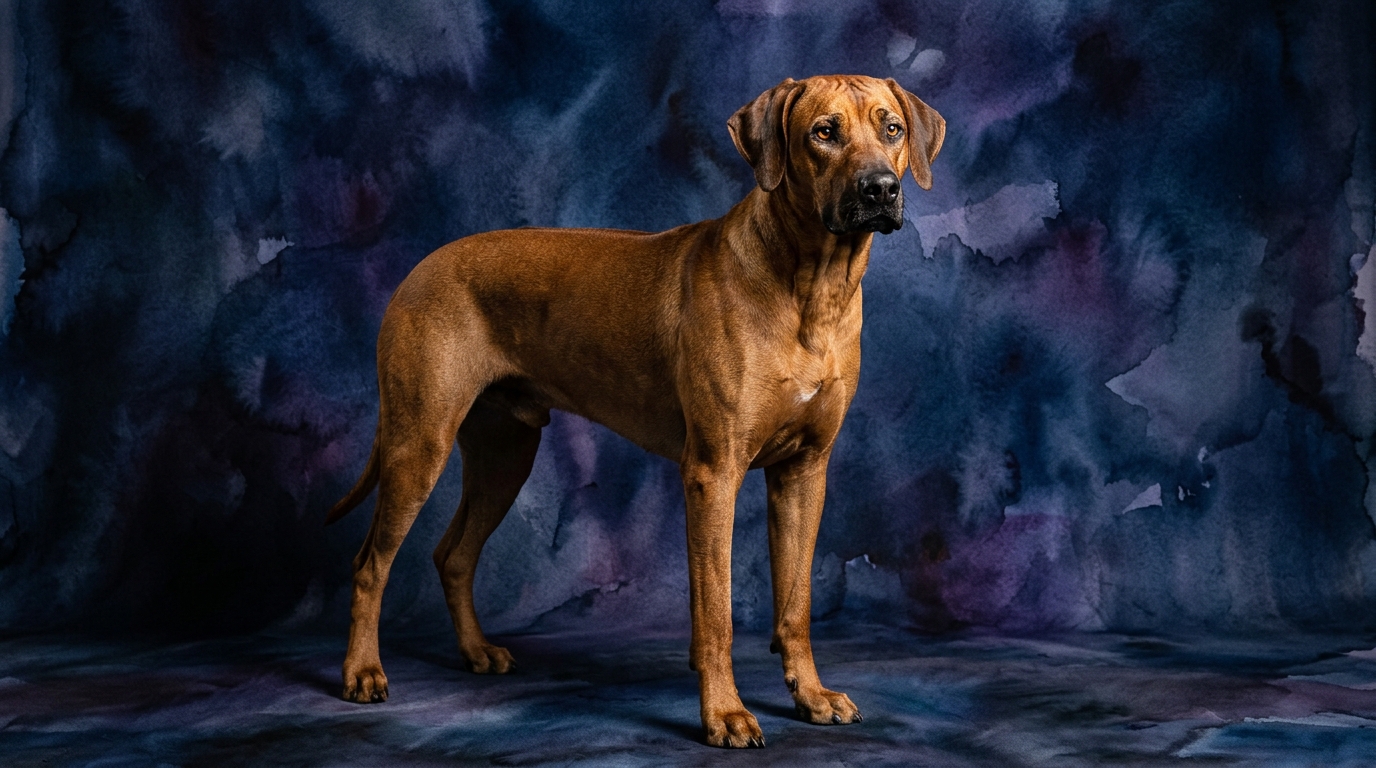
Side-by-Side IQ Profile: French Bulldog vs. Rhodesian Ridgeback
To understand the cognitive strengths and inclinations of these two distinct breeds, The Cosmic Pet Pet IQ Lab assesses five crucial dimensions of canine intelligence. While both breeds score similarly in some areas, their overall profiles paint pictures of vastly different mental architectures.
The French Bulldog, a member of the Non-Sporting Group and not Coren-ranked, presents a unique cognitive blueprint tailored for companionship. Their Problem Solving is rated at 3/5, indicating a moderate capacity to navigate novel situations. These solutions often involve engaging humans, leveraging their exceptional social acumen rather than purely independent strategizing. Their Training Speed is also 3/5; while not the quickest, they respond well to consistent, positive reinforcement, particularly when training is framed as an engaging social activity. Where the French Bulldog truly excels is in Social Intelligence, scoring a perfect 5/5. They possess an exceptional ability to read human emotions, understand social cues, and adapt their behavior for family harmony, driven by a profound desire for companionship. Their Instinctive Drive is notably low at 2/5, meaning they typically exhibit minimal prey drive or strong urges for independent hunting or guarding, keeping their focus predominantly on human interaction. Finally, their Memory is 3/5, capable of retaining learned commands, routines, and associations over time, which strengthens their bonds.
The Rhodesian Ridgeback, a Hound breed with a Coren rank of #52, showcases a cognitive profile shaped by its working heritage. Their Problem Solving is 3/5, a moderate aptitude reflecting their historical role where independent thought and strategic action were required in challenging environments. Solutions might be driven by strong will and physical prowess rather than delicate manipulation. Their Training Speed is also 3/5; like French Bulldogs, they are capable learners but can be independent thinkers, benefiting immensely from consistency, fairness, and understanding their hound nature. In Social Intelligence, Ridgebacks score 3/5. They bond deeply with their families but are often more reserved with strangers and less overtly expressive in social interactions compared to breeds bred purely for companionship. Their Instinctive Drive is 3/5, reflecting their sighthound and hunting heritage. This manifests as a discernible prey drive, a desire to patrol, and a degree of independence in decision-making that requires appropriate outlets. Lastly, their Memory is 3/5, enabling them to recall training, routines, and past experiences, including perceived injustices, emphasizing the need for positive training to build trust.
Where the French Bulldog Wins Cognitively
The French Bulldog's primary cognitive advantage lies in its unparalleled Social Intelligence, scoring a perfect 5/5. This means they are exceptionally adept at understanding human social cues, emotional states, and communication nuances, making them profoundly empathetic and responsive companions. Their cognitive architecture is finely tuned to the subtleties of human interaction, allowing them to anticipate needs and offer comfort with remarkable precision. This translates into a dog that is highly attuned to its owner's mood, often seeking to alleviate stress or provide affection without direct prompting. Furthermore, their lower Instinctive Drive (2/5) means they are less prone to being distracted by environmental stimuli like chasing small animals or independent exploration. This keeps their focus squarely on their human family, requiring less external mental stimulation from complex tasks or hunting simulations, making them supremely present and engaged in human-centric activities.
Where the Rhodesian Ridgeback Wins Cognitively
The Rhodesian Ridgeback's cognitive strengths are rooted in its working heritage, particularly evident in its moderate Instinctive Drive (3/5). This drive, while requiring management, equips them with a natural inclination towards purpose-driven activities, independent decision-making, and a keen awareness of their surroundings. Their Coren rank of #52, while not top-tier, places them above many breeds in terms of working and obedience intelligence, suggesting an aptitude for complex tasks and a capacity for understanding and executing multi-step commands. This independence, stemming from their hunting background, translates into a problem-solving approach that can be more self-directed, relying on their own observations and physical capabilities rather than solely on human prompting. Their memory, rated similarly to the French Bulldog, often includes a strong recall for territory and past experiences related to their environment, which is crucial for a breed historically tasked with patrolling and tracking and contributes to their confident self-reliance.
Which is Easier to Train and Why
Both breeds score a 3/5 in Training Speed, suggesting they learn new commands at a similar moderate pace. However, the *ease* of training can differ significantly due to their other cognitive profiles. The French Bulldog's exceptional Social Intelligence (5/5) makes them highly motivated to please their human companions and deeply attuned to their owner's feedback. This strong desire for social connection often translates into a more cooperative attitude during training sessions, as they are intrinsically rewarded by positive human interaction and approval. Their lower Instinctive Drive (2/5) also means fewer distractions from prey or environmental curiosities, allowing them to maintain focus on the task at hand.
In contrast, the Rhodesian Ridgeback's moderate Social Intelligence (3/5) and higher Instinctive Drive (3/5) can present more challenges. While capable of learning, their independent nature and propensity for following their nose or instincts might mean they require more consistent, firm, and engaging training methods to maintain their attention and compliance, particularly in distracting environments. Their training often benefits from making the owner's commands more appealing than the environmental stimuli, appealing to their drive for purpose and structure. Ultimately, while both can be trained effectively, the French Bulldog's inherent desire to connect socially often makes the training process feel more intuitive and less demanding for the average owner.
Which Suits Active Owners vs. Relaxed Owners
The cognitive profiles of these two breeds clearly delineate their suitability for different lifestyles. For relaxed owners seeking a devoted and low-maintenance companion, the French Bulldog is an ideal match. Their low Instinctive Drive (2/5) means they are content with shorter, less intense periods of activity and are primarily motivated by social engagement within the home. Their high Social Intelligence makes them excellent couch companions, always ready to snuggle and be involved in quiet family life. They thrive on companionship and do not demand extensive physical or mental exertion to prevent behavioral issues, making them perfect for apartment living or less active households.
Conversely, active owners who enjoy outdoor adventures and structured activities will find the Rhodesian Ridgeback a more fitting partner. Their moderate Instinctive Drive (3/5) and history as working dogs mean they require significant mental and physical stimulation to be content. They excel in activities like hiking, jogging, and dog sports that engage both their body and their mind. Owners who can provide consistent training, ample exercise, and a clear sense of purpose will find the Ridgeback a loyal and robust companion. Neglecting these needs can lead to boredom and potential behavioral challenges rooted in their unfulfilled drives, as their minds and bodies are built for more demanding tasks than simple lounging.
The Verdict
Choose the French Bulldog if your lifestyle prioritizes an exceptionally empathetic, low-maintenance companion who thrives on close social connection and requires minimal independent mental or physical exertion.
Opt for the Rhodesian Ridgeback if you are an active individual or family prepared to provide consistent training, ample physical activity, and mental engagement for an independent, purpose-driven dog.
🧠 Find Your Pet's IQ Score
Our Pet IQ Lab assessment covers 25+ tests across 5 cognitive dimensions — personalized to your breed.
Take the Full IQ Test →Frequently Asked Questions
Do French Bulldogs have trouble learning tricks?
French Bulldogs have a moderate training speed (3/5), meaning they are capable of learning tricks and commands. Their exceptional social intelligence makes them eager to please, so consistent, positive reinforcement and making training a fun, interactive experience will yield good results. Patience is key, as they may not pick up new behaviors as quickly as some working breeds.
How does a Rhodesian Ridgeback's hunting background affect its behavior?
The Rhodesian Ridgeback's moderate instinctive drive (3/5) from its hunting background translates into a natural curiosity, a potential prey drive, and a degree of independent decision-making. This means they often enjoy purposeful activities, exploring their environment, and may require secure fencing and leashed walks to manage their instinct to chase. Early socialization and consistent training are crucial to channel these instincts positively.
Are French Bulldogs good with other pets?
With their high social intelligence (5/5) and low instinctive drive (2/5), French Bulldogs generally adapt well to living with other pets, provided they are properly socialized from a young age. Their focus is primarily on human companionship, and they typically lack the strong prey drive that might cause issues with smaller animals, making them suitable for multi-pet households.