
Side-by-Side IQ Profile
The Cosmic Pet Pet IQ Lab assesses canine intelligence across five distinct dimensions, offering a nuanced view of each breed's cognitive strengths. For the French Bulldog, a member of the Non-Sporting Group, its profile includes Problem Solving at 3/5, Training Speed at 3/5, a notable Social Intelligence at 5/5, Instinctive Drive at 2/5, and Memory at 3/5. This suggests a dog with moderate cognitive agility in most areas, but a profound capacity for social connection.
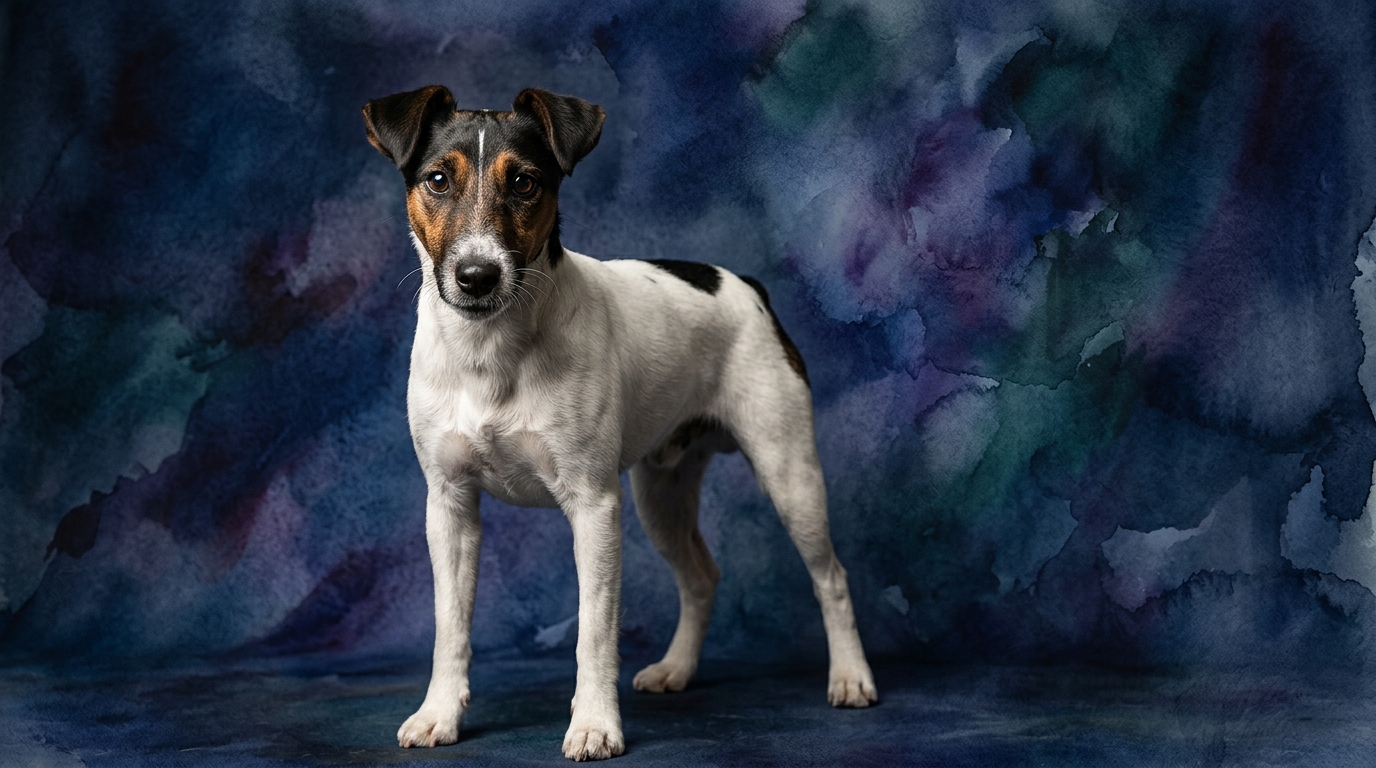
In contrast, the Smooth Fox Terrier, from the Terrier Group, presents a slightly different yet in some areas similar, cognitive makeup. Its Problem Solving is rated at 3/5, Training Speed also at 3/5, Social Intelligence at 3/5, Instinctive Drive at 3/5, and Memory at 3/5. This profile indicates a dog with average cognitive abilities across many dimensions, with a more pronounced drive for independent action compared to the French Bulldog.
French Bulldog: Where it Wins Cognitively
The French Bulldog's clear cognitive advantage lies in its exceptional Social Intelligence, scoring a perfect 5/5 compared to the Smooth Fox Terrier's 3/5. This isn't merely about general friendliness; it signifies a profound capacity for understanding and responding to human social cues, emotions, and household dynamics. French Bulldogs often act as emotional barometers, sensing shifts in their owner's mood and adjusting their behavior accordingly, offering comfort or seeking interaction when appropriate. This heightened social awareness means they are often more intuitive companions, able to anticipate needs or react to subtle non-verbal signals, making them feel incredibly connected to their human families. Their strong desire to be an integrated part of the family unit stems directly from this social acumen, often translating into a greater willingness to adhere to household rules and routines simply to maintain harmony and closeness. This cognitive strength makes them deeply empathetic and highly adaptable to human social environments.
Smooth Fox Terrier: Where it Wins Cognitively
The Smooth Fox Terrier edges out the French Bulldog in Instinctive Drive, scoring 3/5 against the Frenchie's 2/5. While this difference might appear slight, its implications for behavior and cognitive application are substantial. This higher instinctive drive translates into a more pronounced inclination towards their ancestral working traits, particularly those related to hunting and exploration. Smooth Fox Terriers often exhibit a more persistent curiosity about their surroundings, a greater drive to investigate smells, and a stronger desire to engage in activities like chasing small objects or digging. This isn't about raw intellect but about the innate cognitive programming that fuels their engagement with the world; they are more independently motivated to pursue sensory stimuli and fulfill their inherent predisposition for action and discovery. This drive can make them incredibly engaging for owners who enjoy interactive, "work-oriented" play and value a dog with a strong sense of purpose in its environment.
Which is Easier to Train and Why
On paper, both breeds share an identical Training Speed score of 3/5, suggesting they grasp new commands at an average pace. However, real-world trainability extends beyond mere learning speed and is heavily influenced by other cognitive dimensions. The French Bulldog's superior Social Intelligence (5/5) provides a significant advantage here. Their strong desire to please and their innate understanding of human social structures mean they are often more cooperative and intrinsically motivated to work with their owner. They tend to be highly responsive to praise and affection, viewing training as a shared activity that strengthens their bond. Their focus is often on the human interaction, making them generally more eager to comply and integrate learned behaviors smoothly into daily life.
In contrast, while the Smooth Fox Terrier also learns at an average speed, its higher Instinctive Drive (3/5) and average Social Intelligence (3/5) can sometimes lead to a more independent and less consistently compliant training experience. Their drive to follow a scent, pursue an interesting sight, or investigate a novel sound can easily override a learned command, requiring more consistent, engaging, and often more rigorous motivation to keep their focus. While capable of learning, their attention may be more divided, demanding an owner who can make training highly rewarding and consistently more appealing than environmental distractions.
Which Suits Active Owners vs Relaxed Owners
Considering their distinct cognitive profiles, the choice between these two breeds often aligns with an owner's lifestyle. The French Bulldog, with its lower Instinctive Drive (2/5) and exceptional Social Intelligence (5/5), is generally better suited for more relaxed owners. Their subdued drive for independent exploration and their profound desire for companionship mean they are typically content with moderate exercise, preferring to spend quality time with their human family. They thrive in environments where they are central to household activities, enjoying quiet evenings on the couch as much as a leisurely stroll around the block. Their social acumen makes them adaptable to various home settings, provided they receive ample attention and connection, making them ideal for those seeking a devoted, low-key companion.
Conversely, the Smooth Fox Terrier, possessing a higher Instinctive Drive (3/5), aligns well with active owners who can channel this innate energy and curiosity. This breed thrives on engagement, requiring consistent opportunities for physical activity, mental stimulation, and outlets for their natural desires to chase, dig, and explore. Owners who enjoy long walks, interactive play, agility sports, or even earthdog trials will find a willing and enthusiastic partner in a Smooth Fox Terrier. Their independent streak means they appreciate challenges and varied activities that satisfy their drive for discovery, making them less suited for purely sedentary lifestyles and more appropriate for those who can provide structured, stimulating adventures that engage both their body and their curious mind.
The Verdict
Choose a French Bulldog if you prioritize an emotionally attuned, deeply connected companion who thrives on social interaction and a more relaxed pace of life.
Opt for a Smooth Fox Terrier if you are an active individual seeking a spirited, curious partner keen on exploration and engagement, capable of independent thinking during activities.
🧠 Find Your Pet's IQ Score
Our Pet IQ Lab assessment covers 25+ tests across 5 cognitive dimensions — personalized to your breed.
Take the Full IQ Test →Frequently Asked Questions
Do French Bulldogs need a lot of mental stimulation?
While their instinctive drive is lower, French Bulldogs benefit from moderate mental engagement to keep their social minds active. Puzzle toys and interactive games that involve their family are excellent choices to satisfy their need for connection and mild cognitive challenge.
Are Smooth Fox Terriers good for first-time dog owners?
Smooth Fox Terriers can be a rewarding choice for first-time owners who are prepared for their energetic and independent nature. They require consistent training, early socialization, and an owner committed to providing ample mental and physical outlets for their instinctive drives.
How do their memories compare for training purposes?
Both breeds share an average memory score of 3/5, meaning they can recall commands and routines effectively. However, the French Bulldog's higher social intelligence often makes them more consistently willing to apply their memory to comply with learned behaviors, while the Smooth Fox Terrier's drive might lead to selective recall if distractions are present.