
Side-by-Side IQ Profile: Unpacking Cognitive Strengths
The German Shorthaired Pointer (GSP), ranked #17 by Coren, demonstrates a formidable cognitive toolkit. Their problem-solving ability is rated 5/5, indicating a sharp mind capable of navigating complex situations and adapting strategies. Training speed, at 4/5, suggests they pick up new commands and routines with efficiency, often eager to engage in structured learning. Their social intelligence, also 4/5, points to a breed that is generally attuned to human cues and capable of forming strong, responsive bonds within a family unit, making them receptive to collaborative tasks.
The GSP's instinctive drive is a powerful 5/5, deeply rooted in their heritage as versatile hunting dogs. This drive manifests as an intense focus and persistence when pursuing tasks related to scent work, retrieving, or tracking, channeling their innate predispositions into purposeful action. Memory, rated 4/5, underpins their capacity to recall past training, learned behaviors, and even specific locations or scents, contributing significantly to their reliability in repetitive tasks and field work.
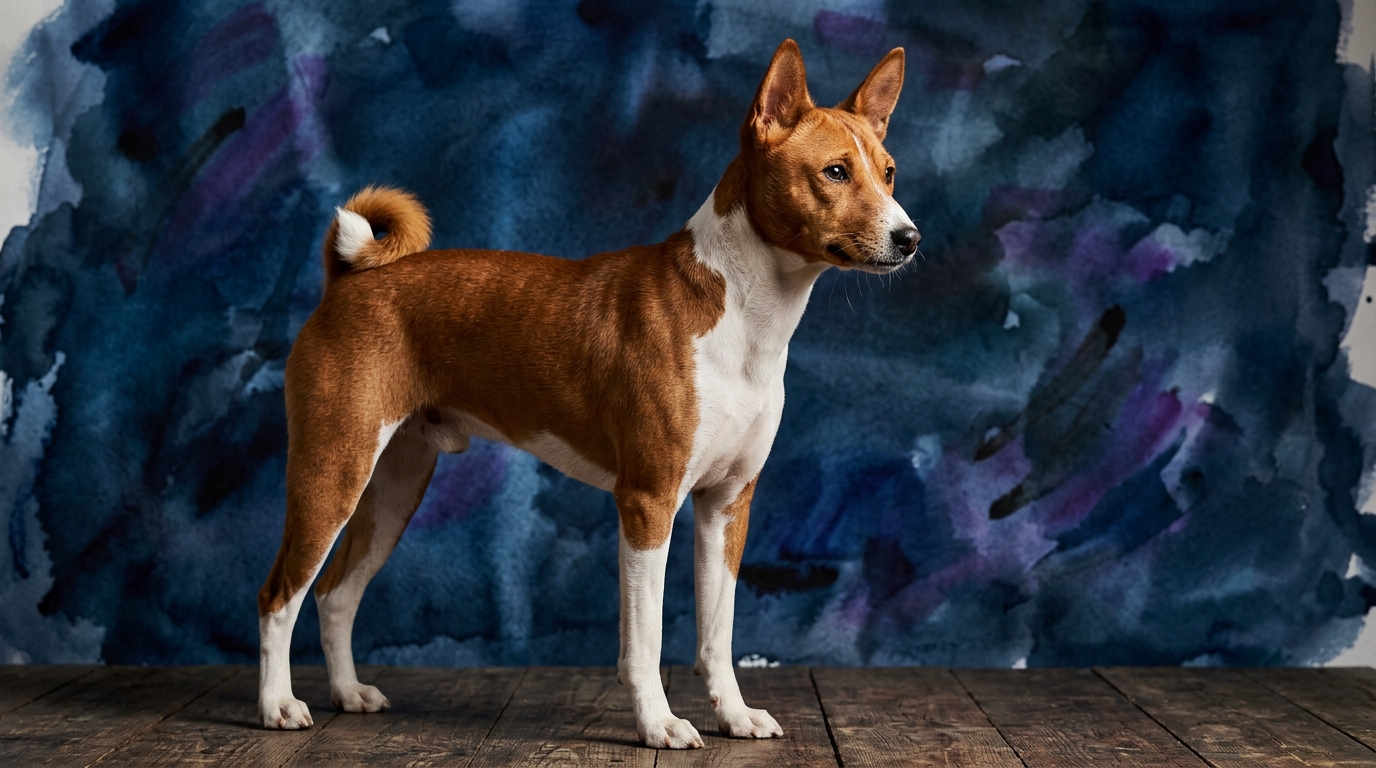
In contrast, the Basenji, with a Coren rank of #78, presents a distinct cognitive profile. Interestingly, their problem-solving ability matches the GSP at 5/5, revealing a clever and resourceful mind adept at figuring things out, often independently. However, their training speed is a notable 1/5, indicating a strong independent streak and a selective approach to accepting instruction, rather than a lack of understanding. Social intelligence, at 3/5, suggests they are observant but often more reserved, forming deep bonds but sometimes preferring to observe rather than actively participate in every human interaction.
The Basenji's instinctive drive is also a commanding 5/5, reflecting their ancient lineage as African hunting dogs. This drive is often expressed through an intense curiosity, a propensity for tracking by scent and sight, and a strong prey drive, leading them to explore their environment with keen focus. Their memory, like the GSP, is rated 4/5, allowing them to retain learned experiences, remember routes, and recall the consequences of their actions, a crucial trait for a breed that often operates with a degree of self-sufficiency.
Where the German Shorthaired Pointer Wins Cognitively
The GSP's cognitive advantage is most pronounced in areas demanding consistent cooperation and rapid assimilation of new information. Their 4/5 training speed, compared to the Basenji's 1/5, means they generally require fewer repetitions to grasp new commands and are more amenable to structured training sessions. This difference is not about intrinsic understanding, but about their willingness and eagerness to engage in a collaborative learning process, often driven by a desire to please their handler.
Furthermore, the GSP's 4/5 social intelligence, coupled with its powerful instinctive drive, allows for a more direct and readily channeled application of its natural abilities. Their strong drive can be purposefully directed into complex tasks like retrieving, pointing, or agility, where their responsiveness to human direction enhances their performance. They are typically more attuned to subtle human cues, making them highly effective partners in activities requiring synchronized effort and nuanced communication.
Where the Basenji Wins Cognitively
The Basenji truly shines in independent problem-solving and self-sufficiency, both rated 5/5. While the GSP also possesses excellent problem-solving skills, the Basenji often applies this intellect in a more self-directed manner, figuring out how to achieve its own goals without constant human intervention. This might manifest as opening latches, escaping enclosures, or devising clever ways to reach desired objects, showcasing a remarkable resourcefulness born from centuries of independent hunting.
Their cognitive strength also lies in their acute environmental awareness and adaptability within their own terms. A Basenji's keen senses and memory (4/5) contribute to a detailed understanding of their surroundings, allowing them to navigate complex territories and remember pathways with precision. This self-reliant cognitive style means they excel in situations where they are expected to make independent decisions based on their observations, rather than strictly following commands.
Which is Easier to Train and Why
Without question, the German Shorthaired Pointer is generally considered easier to train for conventional obedience and task-oriented activities. Their higher training speed (4/5) is a direct indicator of their inclination to learn from and work with humans. GSPs typically exhibit a strong desire to please and respond well to positive reinforcement, quickly associating actions with rewards and handler satisfaction. This makes them highly receptive to mastering basic commands, advanced obedience, and specialized skills like scent work or retrieving with relative ease and speed.
The Basenji's 1/5 training speed, however, doesn't imply a lack of intelligence, but rather a profoundly different approach to instruction. Basenjis possess a strong independent spirit and a "what's in it for me?" attitude. They are clever and understand commands, but they often choose whether or not to comply based on their own assessment of the situation or their immediate motivation. This means training a Basenji requires immense patience, creativity, and a deep understanding of their unique motivations, often feeling more like negotiation than instruction.
Real behavioral differences underscore this. A GSP might enthusiastically perform a recall even from a distance, driven by their desire to collaborate and retrieve. A Basenji, on the other hand, might acknowledge the recall but then decide to finish investigating an interesting scent before returning, demonstrating their autonomous decision-making. Their vocalization, or lack thereof (the "barkless" dog), also means they don't communicate distress or excitement in typical canine ways, requiring owners to interpret more subtle cues in training and daily life.
Which Suits Active Owners vs. Relaxed Owners
For active owners seeking a true partner in sport and adventure, the German Shorthaired Pointer is an ideal match. Their powerful instinctive drive (5/5) and high energy levels demand substantial physical and mental engagement. They thrive on activities like running, hiking, swimming, and especially dog sports such as agility, flyball, or field trials. An owner who can channel the GSP's boundless energy and sharp mind into purposeful activities will find an incredibly devoted and capable companion, one who excels when given a "job" to do.
The Basenji, while not a couch potato, is generally better suited for owners who appreciate a more independent and less overtly demanding companion, though "relaxed" must be carefully qualified. While they don't require the same intensity of structured exercise as a GSP, their potent instinctive drive (5/5) means they still need regular opportunities to explore and satisfy their curiosity, often through walks, secure off-leash areas, or puzzle toys that engage their problem-solving skills (5/5). They are not a breed for passive ownership; rather, they suit owners who enjoy observing and interacting with a clever, sometimes aloof, but always engaging canine presence without the constant need for directed activity. Their ability to entertain themselves, combined with a lower demand for constant human interaction compared to a GSP, can appeal to those who value a dog's self-sufficiency.
The Verdict
Choose the German Shorthaired Pointer if you desire a highly trainable, collaborative, and energetic companion eager to engage in structured activities and form a deeply responsive partnership. They thrive with owners who can provide consistent training, ample physical exercise, and opportunities to utilize their strong working drives.
Opt for the Basenji if you appreciate a clever, independent, and self-sufficient canine that excels at independent problem-solving and offers a unique, sometimes challenging, but always rewarding companionship. They suit patient owners who value a dog with a distinct personality and are prepared for a less conventional training journey.
🧠 Find Your Pet's IQ Score
Our Pet IQ Lab assessment covers 25+ tests across 5 cognitive dimensions — personalized to your breed.
Take the Full IQ Test →Frequently Asked Questions
Is the Basenji less intelligent than the German Shorthaired Pointer due to its Coren rank?
Not necessarily. While the Basenji's Coren rank is lower, indicating a different approach to obedience, its problem-solving ability is rated equally high at 5/5. This suggests exceptional cognitive capacity, but applied with more independence rather than a direct willingness to please.
Can a Basenji be trained to a high level of obedience?
Yes, a Basenji can learn many commands, but it requires significant patience, consistency, and creative motivation due to their 1/5 training speed and independent nature. Success often comes from understanding their motivations and making training a rewarding game for them.
Which breed is better for a first-time dog owner?
The German Shorthaired Pointer is generally a better fit for a first-time owner due to its higher trainability and eagerness to please, making the learning curve for both dog and owner smoother. The Basenji's independent nature and specific training needs can be more challenging for those new to dog ownership.