
Side-by-Side IQ Profile: A Deeper Look
German Shorthaired Pointer (GSP): With a Coren rank of #17, the GSP demonstrates a remarkable cognitive toolkit. Its Problem Solving score of 5/5 indicates an exceptional capacity to navigate complex situations, devise strategies, and learn from experience, often without direct human intervention. Training Speed at 4/5 reflects their readiness to grasp new commands and routines quickly, a testament to their attentiveness and desire for cooperative work. Their Social Intelligence of 4/5 suggests a strong aptitude for understanding human cues, adjusting behavior in social settings, and forming cooperative bonds. An Instinctive Drive of 5/5 highlights their profound inherent motivations, particularly for hunting and tracking, which are deeply ingrained. Finally, a Memory score of 4/5 means they retain learned information and past experiences effectively, aiding in both complex tasks and recalling previous training.
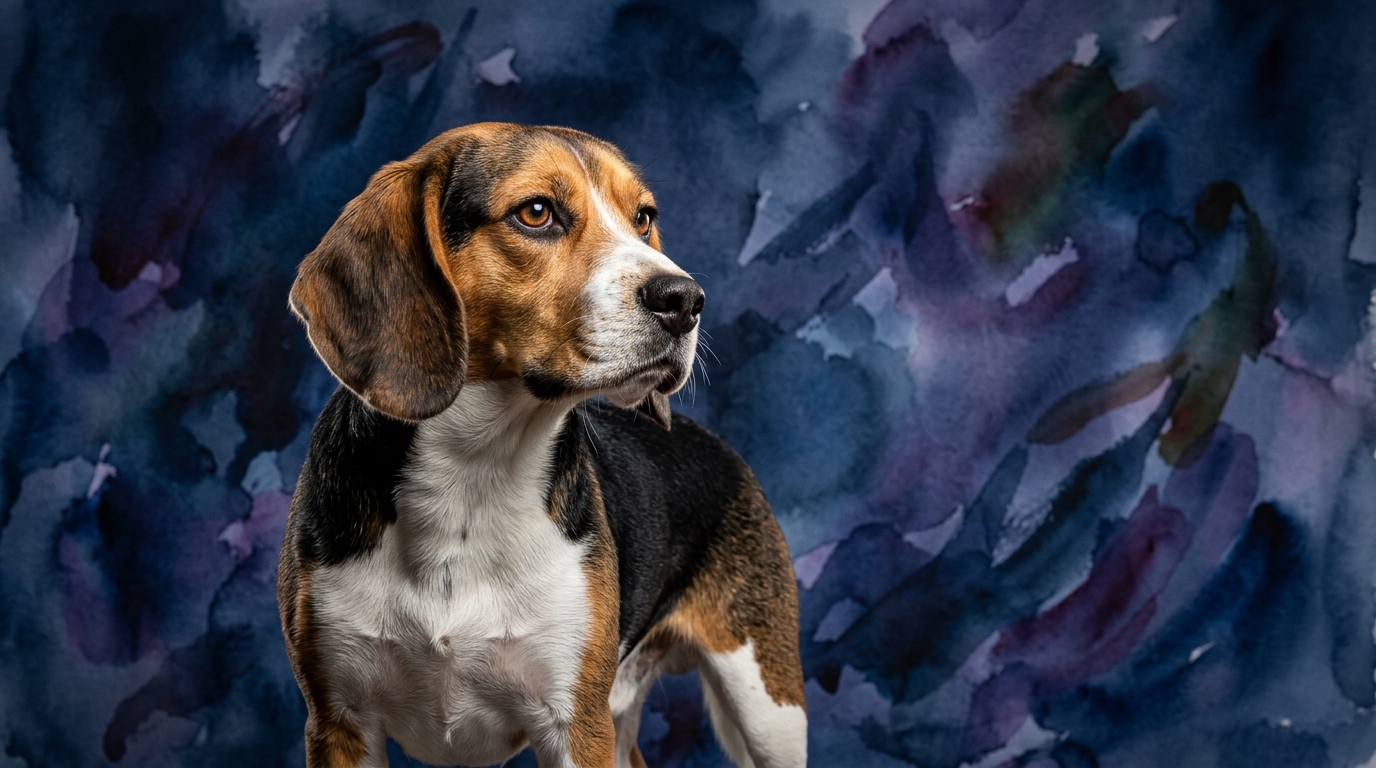
Beagle: Ranked #72 by Coren, the Beagle possesses a distinct set of cognitive strengths. Their Problem Solving ability, rated 4/5, shows they can work through challenges, though perhaps with a more persistent, trial-and-error approach compared to the GSP's more analytical method. A Training Speed of 2/5 indicates that Beagles require more repetition and patience to solidify new commands, often due to their primary focus on scent rather than human direction. Social Intelligence at 3/5 suggests they are generally amicable and can integrate into social structures, but might be less attuned to subtle human emotional shifts than the GSP. Like the GSP, their Instinctive Drive is a powerful 5/5, overwhelmingly centered around their olfactory capabilities, making them relentless scent hounds. Their Memory score of 4/5 is particularly evident in their ability to recall complex scent trails, remembering where specific odors were encountered or where a hunt led them.
Where the German Shorthaired Pointer Excels Cognitively
The GSP's cognitive advantages are most apparent in its superior problem-solving and training responsiveness. A GSP often approaches novel situations with a strategic mindset, quickly assessing variables and adapting its behavior to achieve a desired outcome, whether it's figuring out a complex puzzle toy or navigating a new hunting field. This is directly supported by its 5/5 problem-solving score. Their 4/5 training speed means they quickly form associations between commands and actions, making them highly receptive to intricate training sequences for fieldwork or competitive sports. Furthermore, their 4/5 social intelligence allows them to readily interpret human body language and vocal tones, fostering a more fluid and intuitive partnership during collaborative activities. This keen social awareness translates into a dog that often anticipates its owner's next move, making for a highly synchronized team.
Where the Beagle Shines Cognitively
The Beagle's cognitive strengths are profoundly rooted in its specialized sensory world and an unwavering persistence. While both breeds share a 5/5 instinctive drive, the Beagle's manifests almost exclusively through its olfactory prowess, making it a master of scent detection. Their 4/5 problem-solving, while slightly lower than the GSP's, is acutely focused on following and deciphering complex scent trails, overcoming obstacles, and employing persistent exploration to locate a source. This isn't about elegant strategy but tenacious dedication. Their 4/5 memory is particularly robust for scent-related information; a Beagle can recall a specific scent from days ago and track it over vast distances, indicating an intricate mental map built on olfactory cues. This specialized memory and drive mean a Beagle excels in tasks where an unyielding focus on scent is paramount, often outperforming breeds with broader cognitive applications in this specific domain.
Which is Easier to Train and Why
Based on our metrics, the German Shorthaired Pointer is generally easier to train for a wide range of commands and behaviors. Their 4/5 training speed means they pick up new instructions rapidly, requiring fewer repetitions to solidify a behavior. This is further enhanced by their 5/5 problem-solving ability, allowing them to quickly understand the desired outcome of a command and adjust their actions accordingly. Their 4/5 social intelligence also makes them highly attuned to human direction and eager to please, translating into a more cooperative learning experience. In contrast, the Beagle's 2/5 training speed suggests a more prolonged and patient training process. While capable of learning, their powerful 5/5 instinctive drive, primarily focused on scent, can be a significant distraction. A Beagle engrossed in a compelling smell may seem to “tune out” human commands, not out of defiance, but because their olfactory world demands their complete attention. This requires owners to be exceptionally consistent, use high-value rewards, and often train in environments with minimal scent distractions to establish reliable responses.
Which Suits Active Owners vs. Relaxed Owners
The German Shorthaired Pointer is a natural fit for active owners who can provide consistent, high-intensity physical activity and mental engagement. Their combination of a 5/5 instinctive drive for activity, 5/5 problem-solving, and 4/5 training speed means they thrive when given a “job” to do, whether it's field trials, agility, long runs, or complex obedience. Owners who enjoy outdoor pursuits like hiking, running, or hunting will find a GSP an enthusiastic and capable companion. For more relaxed owners, a Beagle might be a more suitable choice, provided their specific needs are met. While their 5/5 instinctive drive means they still require regular exercise, it often manifests as a desire for scent-driven exploration rather than sustained high-speed activity. A relaxed owner who enjoys leisurely walks where the Beagle can thoroughly investigate scents, or who is willing to engage in scent work games, will find a happy companion. Beagles are generally content with moderate daily exercise and mental stimulation that taps into their powerful nose, making them less demanding of structured, high-impact physical routines than the GSP.
The Verdict
Opt for a GSP if you seek a highly trainable, versatile, and cooperative partner for active sports, hunting, or complex obedience challenges, valuing a dog that anticipates your cues.
Select a Beagle if you appreciate an independent, persistent scent hound for casual exploration and scent games, and are prepared for a more patient, reward-based training approach.
🧠 Find Your Pet's IQ Score
Our Pet IQ Lab assessment covers 25+ tests across 5 cognitive dimensions — personalized to your breed.
Take the Full IQ Test →Frequently Asked Questions
Are German Shorthaired Pointers good family dogs, considering their high drive?
Yes, GSPs can be excellent family dogs, especially with active families. Their 4/5 social intelligence means they bond well and are generally good with children, provided their significant exercise and mental stimulation needs are consistently met to prevent boredom-related behaviors.
Why do Beagles seem so focused on sniffing during walks, even when called?
Beagles possess an extraordinary 5/5 instinctive drive for scent, meaning their olfactory world is incredibly compelling. When they encounter an interesting smell, their brain is hardwired to investigate it thoroughly, often overriding other commands due to this powerful, innate motivation.
Does a Beagle's 4/5 memory score primarily apply to scent information?
While a Beagle's memory is generally good (4/5), it is exceptionally strong and specialized when it comes to scent. They can recall complex scent trails and locations with remarkable accuracy, demonstrating how their cognitive abilities are finely tuned to their primary function as scent hounds.