
A Side-by-Side Cognitive Profile
The Cosmic Pet Pet IQ Lab employs a multi-dimensional approach to assess canine cognition, moving beyond simple obedience to explore the nuanced workings of a dog's mind. For the German Shorthaired Pointer (GSP), we observe a robust and well-rounded cognitive toolkit: Problem Solving 5/5, Training Speed 4/5, Social Intelligence 4/5, Instinctive Drive 5/5, and Memory 4/5. This breed's high Coren rank (#17) reflects a mind adept at processing complex information and adapting to varied tasks, a hallmark of its versatile hunting heritage.
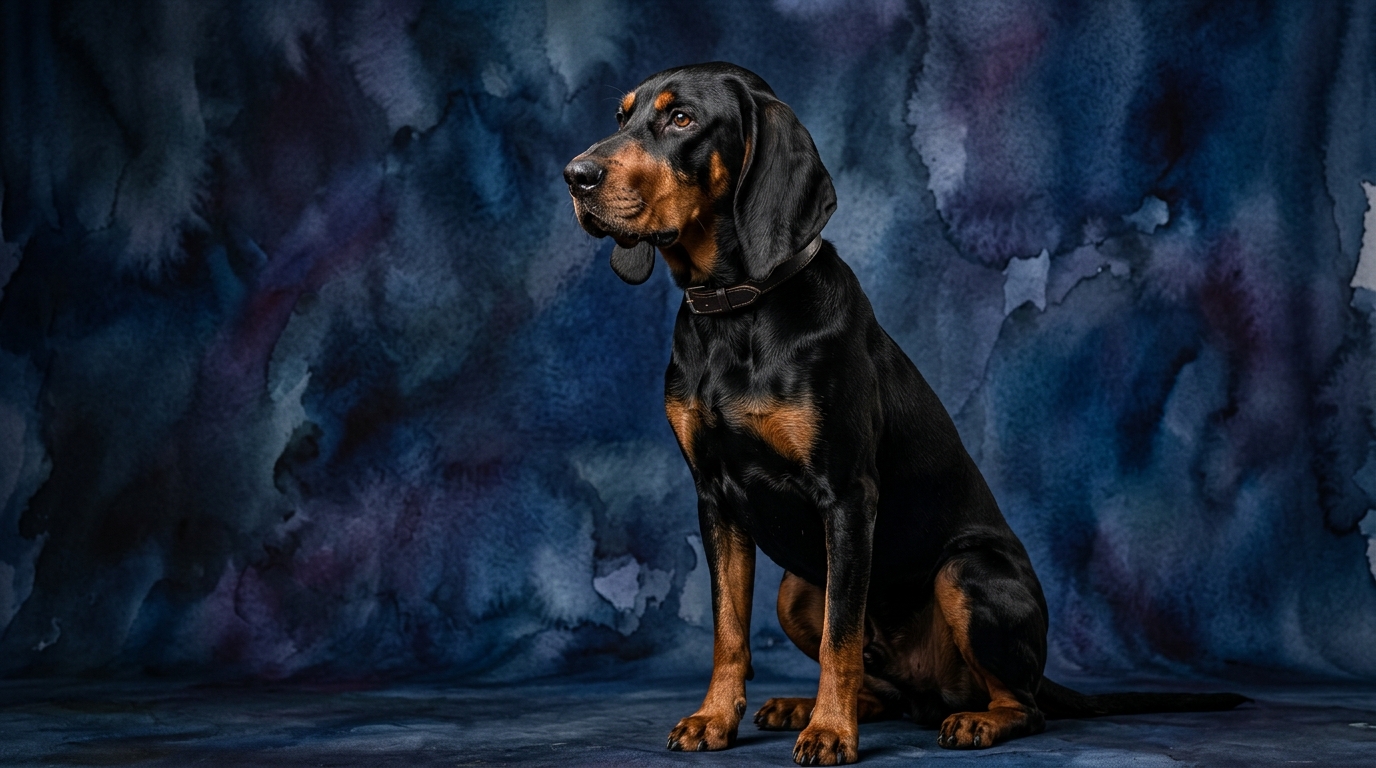
In contrast, the Black and Tan Coonhound (BTCH), while not Coren-ranked, presents a specialized cognitive blueprint optimized for its unique role. Its scores are Problem Solving 3/5, Training Speed 3/5, Social Intelligence 3/5, Instinctive Drive 3/5, and Memory 3/5. These figures do not suggest a lack of mental capacity, but rather a focus of its cognitive resources towards a singular, demanding pursuit: tracking scent over challenging terrains, often with minimal human direction. Its intelligence is deeply rooted in persistence and sensory interpretation rather than broad adaptability.
Where the German Shorthaired Pointer's Cognition Excels
The GSP's cognitive strengths are evident across nearly all measured dimensions. Its 5/5 Problem Solving score means it can quickly interpret novel situations and devise effective strategies, whether it's navigating dense cover to flush game or figuring out a complex puzzle toy. This high aptitude for problem-solving translates into a dog that can learn intricate sequences of commands and apply them flexibly.
With a Training Speed of 4/5, the GSP typically grasps new cues and behaviors with impressive efficiency, eager to engage with its human companion. This mental agility is coupled with a 4/5 Social Intelligence, indicating a keen awareness of human intentions and moods, making it highly responsive to subtle cues and forming strong, cooperative bonds. Its Instinctive Drive of 5/5 isn't just about raw energy; it's a drive to work *with* a handler, to point, retrieve, and methodically cover ground, making it a highly biddable partner in the field or in active sports. Finally, a Memory score of 4/5 ensures it retains learned behaviors and routines, contributing to its consistency and reliability in performance.
The Black and Tan Coonhound's Specialized Cognitive Strengths
While the Black and Tan Coonhound's numerical scores are generally lower, it's crucial to understand these reflect a specialized cognitive architecture, not a deficit. Its 3/5 Problem Solving capacity is acutely focused on the challenge of tracking: deciphering faint scent trails, distinguishing target odors amidst environmental distractions, and navigating varied terrain using olfactory input. This isn't about abstract puzzle-solving but an intense, practical application of problem-solving specific to its hunting heritage.
The BTCH's Instinctive Drive, rated 3/5, represents an unwavering, singular focus on scent. Once a trail is engaged, this drive becomes a powerful engine for endurance and persistence, allowing it to follow a scent for hours, often ignoring distractions that would deter other breeds. Its Memory (3/5) is particularly potent for recalling scent patterns and mapping out complex olfactory landscapes over time, crucial for successful tracking. The BTCH's cognitive toolkit is a testament to deep specialization, where sustained focus on a primary instinct overrides the need for broad adaptability, making it a master of its specific domain.
Ease of Training: GSP's Cooperation vs. BTCH's Independence
When it comes to trainability, the German Shorthaired Pointer generally presents a more straightforward experience for most owners. Its Training Speed of 4/5, combined with its high Social Intelligence and a strong desire to work cooperatively, means GSPs tend to pick up commands quickly and enjoy the interaction of training sessions. They are often eager to please and respond well to positive reinforcement, making them adaptable to various disciplines from obedience to agility and field work. Their high instinctive drive is often channeled towards human-directed tasks, facilitating a responsive learning process.
The Black and Tan Coonhound, with a Training Speed of 3/5, requires a different approach. Their cognitive focus on independent scent work means they can sometimes appear less interested in human commands if a compelling scent is present. Their instinctive drive, while potent, is often directed outward, following their nose rather than seeking human direction. Training a BTCH demands patience, consistency, and an understanding of their hound nature; engaging their powerful sense of smell in training games can be highly effective, but owners must be prepared for moments where their nose takes precedence over their ears. Establishing a strong recall is particularly vital, given their propensity to follow a captivating scent over great distances.
Matching Canine Cognition to Owner Lifestyles
For the highly active owner seeking a versatile, engaged canine partner, the German Shorthaired Pointer's cognitive profile is an excellent match. Their 5/5 Problem Solving and 5/5 Instinctive Drive mean they thrive on constant mental and physical stimulation, excelling in activities like hunting, competitive dog sports, or long, varied outdoor adventures. Owners who can provide consistent training, varied challenges, and ample exercise will find the GSP to be an exceptionally cooperative and fulfilling companion. They are not content with a sedentary lifestyle; their minds and bodies demand a job and purpose.
The Black and Tan Coonhound suits owners who appreciate a dog with a deep, singular passion and the patience to work with a more independent spirit. While they possess significant stamina for tracking, their cognitive demand isn't necessarily for constant, varied mental puzzles, but rather for purposeful scent work. A 'relaxed' owner for a BTCH isn't one who avoids exercise, but one who understands and respects the breed's intrinsic drive for scenting, providing opportunities for long, leashed walks where they can explore odors, or engaging in scent-based games. They can be calm indoors once their primary needs are met, but their independent problem-solving around scent means they require secure environments and dedicated outlets for their nose.
The Verdict: When to Choose Each Breed
The Verdict
Choose the German Shorthaired Pointer if you seek a highly cooperative, versatile, and mentally agile companion for active sports, hunting, and a dynamic family life, ready to engage in diverse cognitive challenges. Its robust cognitive profile makes it a rewarding partner for owners able to provide consistent stimulation and training.
Opt for the Black and Tan Coonhound if you are drawn to a dog with a profound, specialized intellect for scent work, valuing independence and perseverance, and are prepared to patiently guide a companion whose primary drive is rooted in olfactory exploration. This breed thrives with owners who respect its unique tracking abilities and provide ample opportunities to engage its powerful nose.
🧠 Find Your Pet's IQ Score
Our Pet IQ Lab assessment covers 25+ tests across 5 cognitive dimensions — personalized to your breed.
Take the Full IQ Test →Frequently Asked Questions
Are Black and Tan Coonhounds difficult to train?
Black and Tan Coonhounds are not 'difficult' but require a specific training approach due to their independent, scent-driven nature. Their 3/5 Training Speed means they benefit from patience, consistency, and motivation that leverages their powerful sense of smell, making scent games and positive reinforcement particularly effective.
What kind of exercise does a German Shorthaired Pointer need?
German Shorthaired Pointers require substantial daily exercise that engages both their physical stamina and their sharp minds. This includes long runs, vigorous fetching, swimming, or participation in dog sports, as their 5/5 Instinctive Drive and Problem Solving capacities thrive on purposeful activity.
How do their social intelligence scores impact their family life?
The GSP's 4/5 Social Intelligence means they are typically highly attuned to human emotions and intentions, making them cooperative and affectionate family members who enjoy participation in household activities. The BTCH's 3/5 Social Intelligence indicates they can be devoted to their family but may display more independence, sometimes appearing less outwardly demonstrative or more focused on their environment than human interactions.