
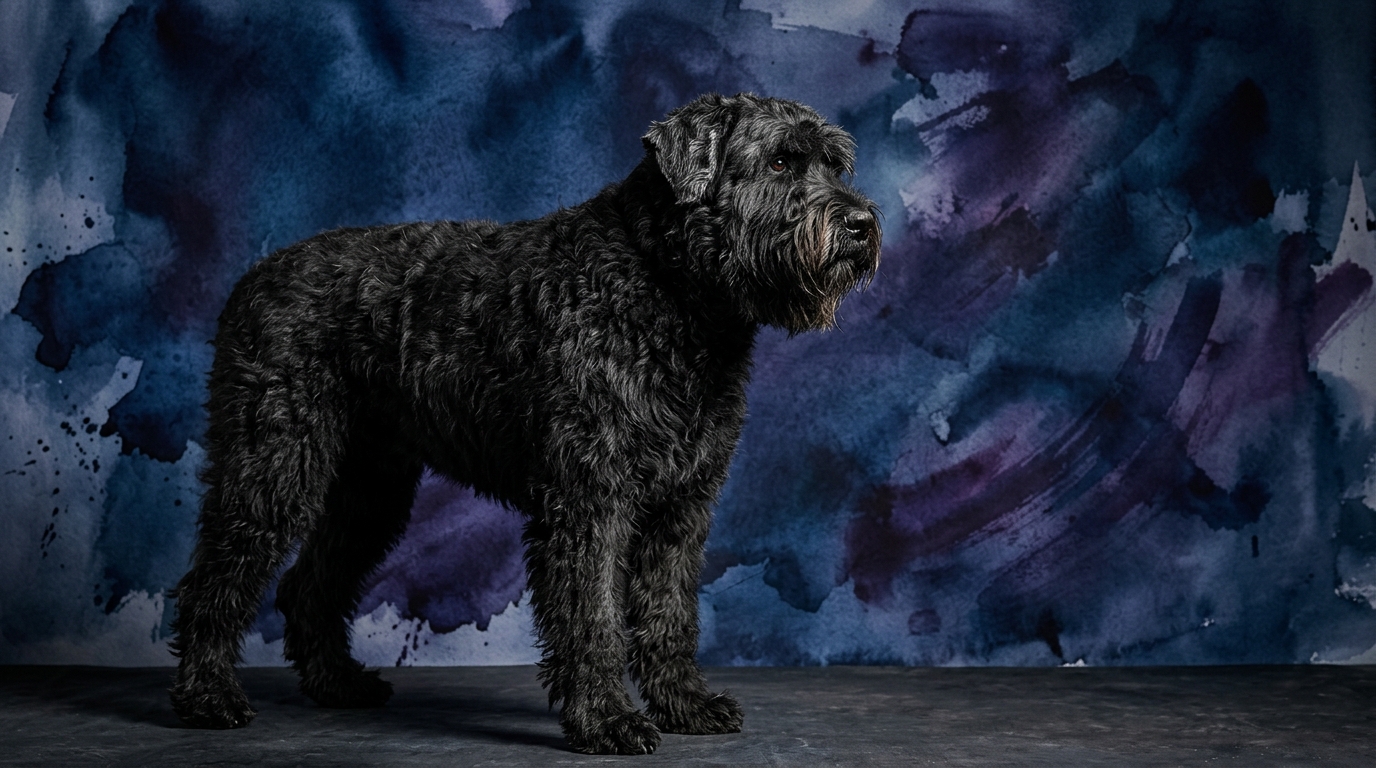
Side-by-Side IQ Profile: GSP vs. Bouvier
The Cosmic Pet Pet IQ Lab's assessment offers a granular view of these differences. The German Shorthaired Pointer (GSP), a Sporting group member, exhibits exceptional cognitive agility. Their Problem Solving is rated 5/5, indicating a remarkable capacity to quickly assess and navigate complex situations, a trait invaluable for tracking and retrieving in varied terrain. Training Speed stands at 4/5, underscoring their eagerness and aptitude for learning new commands and routines with efficiency. Social Intelligence, also 4/5, highlights their strong connection to human handlers, enabling seamless cooperative work. An Instinctive Drive of 5/5 speaks to their powerful innate urges for pointing, flushing, and retrieving, while their Memory, rated 4/5, allows them to retain intricate learned behaviors and environmental cues over time.
In contrast, the Bouvier des Flandres, a robust member of the Herding group, presents a different cognitive signature, tailored for independent and deliberate work. Their Problem Solving is assessed at 3/5, suggesting a more methodical approach to challenges, often requiring careful consideration rather than rapid improvisation. Training Speed is likewise 3/5, indicating that while capable learners, they may require more consistent repetition and patience to master new skills. A Social Intelligence of 3/5 reflects their often reserved nature; they form deep bonds but are less overtly demonstrative and more independent in their decision-making. Their Instinctive Drive, also 3/5, is geared towards herding and guarding livestock, a role demanding different cognitive priorities than a GSP's prey drive. Finally, their Memory, at 3/5, allows for solid retention of learned tasks but may not be as immediately recallable or adaptable as a GSP's.
Where the German Shorthaired Pointer Wins Cognitively
The GSP's cognitive strengths shine brightest in scenarios demanding rapid processing, adaptability, and keen cooperation. Their 5/5 Problem Solving score means they excel at quickly analyzing dynamic environments, such as locating hidden game or navigating obstacles in pursuit, making instantaneous decisions without handler input. This swift analysis, combined with their 4/5 Training Speed, allows them to absorb complex multi-step commands and intricate field routines with remarkable efficiency, often requiring fewer repetitions than many other breeds. Furthermore, their 4/5 Social Intelligence makes them exceptionally attuned to subtle human cues and body language, translating into a seamless partnership during tasks. This cognitive synergy allows them to anticipate handler intentions and work collaboratively, a crucial advantage in fast-paced sporting activities where hesitation can mean failure. Their 5/5 Instinctive Drive isn't just about raw prey instinct; it's about the sophisticated cognitive overlay that directs that drive into purposeful actions like precise pointing and gentle retrieving, demonstrating a controlled and focused application of their natural inclinations.
Where the Bouvier des Flandres Wins Cognitively
While the Bouvier des Flandres may not exhibit the same rapid-fire cognitive processing as the GSP, their strengths lie in a different, equally valuable set of attributes: deliberate thought, independence, and unwavering resolve. Their 3/5 Problem Solving, though lower numerically, signifies a methodical approach, allowing them to assess situations thoroughly rather than reacting impulsively. This can be a significant advantage in tasks requiring careful judgment, such as deciding when and how to move a flock without causing panic, or evaluating a potential threat. Their 3/5 Social Intelligence means they are less reliant on constant human direction, fostering a degree of self-sufficiency that was vital for their historical role as livestock guardians and drovers, often working autonomously for extended periods. This independence translates into a robust mental fortitude, where they are less likely to be swayed by distractions once a course of action is determined. Their 3/5 Instinctive Drive, while not as intensely predatory as a GSP's, is deeply rooted in protective and herding behaviors, requiring a cognitive framework that prioritizes vigilance, territorial awareness, and the ability to manage livestock through presence and subtle guidance rather than chase. This deliberate, self-assured cognitive style makes them exceptional at tasks requiring steadfastness and independent decision-making in the absence of immediate human command.
Which is Easier to Train and Why
When it comes to ease of training, the German Shorthaired Pointer holds a clear advantage due to their higher scores across several cognitive dimensions. Their 4/5 Training Speed means they typically grasp new commands and concepts with fewer repetitions, showing a strong eagerness to learn and please their human partners. This is further bolstered by their 5/5 Problem Solving, which allows them to quickly understand the desired outcome of a training exercise and adapt their behavior accordingly. For instance, a GSP might quickly generalize a “fetch” command to various objects and environments after just a few successful repetitions. Their 4/5 Social Intelligence also plays a significant role, making them highly responsive to verbal cues, hand signals, and even subtle changes in handler tone, facilitating a smoother and more rewarding training experience.
The Bouvier des Flandres, with a 3/5 Training Speed, requires a more patient and consistent approach. While capable of learning, their independent nature and methodical problem-solving mean they might take longer to internalize commands and may test boundaries more often. For example, a Bouvier might understand a “sit” command but choose to ponder the request before complying, especially if they perceive no immediate benefit or if their independent judgment suggests otherwise. Their 3/5 Social Intelligence means they are less overtly people-pleasing; they respect and bond deeply with their owners, but their compliance is often rooted in established trust and understanding rather than an innate desire to impress. Successful training with a Bouvier hinges on clear, fair, and consistent leadership, utilizing positive reinforcement and an understanding of their inherent self-reliance.
Which Suits Active Owners vs. Relaxed Owners
For owners seeking a highly active and engaged canine companion, the German Shorthaired Pointer is the unequivocal choice. Their 5/5 Instinctive Drive translates into a boundless energy reserve and an innate need for purposeful activity that goes beyond simple walks. These dogs thrive on rigorous exercise such as running, hiking, swimming, and especially mentally stimulating activities like scent work, field trials, or advanced obedience. An owner who can dedicate several hours daily to physical and mental engagement will find a GSP to be an exceptionally rewarding partner, channeling their high problem-solving and training speed into complex tasks. A relaxed owner, or one unable to meet these substantial exercise requirements, would likely find a GSP to be a handful, potentially leading to boredom-induced destructive behaviors.
The Bouvier des Flandres, while certainly not a couch potato, might appeal to active owners who appreciate a more deliberate pace and a dog with a strong, self-assured presence, rather than frantic energy. Their 3/5 Instinctive Drive still requires regular, substantial exercise and mental challenges, but it's often expressed through focused walks, structured training, or activities that engage their herding or guarding instincts, such as carting or protection sports. They are less about endless, high-speed repetitions and more about purposeful engagement. An owner who enjoys long, thoughtful hikes, consistent training sessions that build on trust, and who appreciates a dog that can work independently but also enjoys companionship, would find a Bouvier fulfilling. While they need activity, their cognitive makeup makes them less prone to the high-strung restlessness of a GSP if their needs are met, making them potentially more suitable for an owner whose “active” lifestyle leans towards consistent, quality engagement rather than sheer quantity of high-intensity movement.
The Verdict
Opt for the German Shorthaired Pointer if you seek a highly energetic, cooperative partner eager for fast-paced learning and intense physical activity, thriving on complex tasks and close human partnership. They are ideal for active individuals or families committed to extensive training, field sports, or outdoor adventures.
Select the Bouvier des Flandres if you appreciate a self-reliant, methodical canine with a strong sense of purpose, valuing independent judgment and a more deliberate approach to training and problem-solving. They suit patient owners who can provide consistent leadership, structured engagement, and respect their robust, watchful nature.
🧠 Find Your Pet's IQ Score
Our Pet IQ Lab assessment covers 25+ tests across 5 cognitive dimensions — personalized to your breed.
Take the Full IQ Test →Frequently Asked Questions
Are German Shorthaired Pointers good with children?
GSPs, with their 4/5 Social Intelligence and generally friendly disposition, can be excellent with children, especially if raised with them. However, their high energy and enthusiastic nature mean they might inadvertently knock over small children, so supervised interactions are crucial. They thrive in active family environments that can meet their considerable exercise needs.
Do Bouvier des Flandres make good guard dogs?
Yes, Bouviers are inherently protective, a trait stemming from their 3/5 Instinctive Drive for herding and guarding livestock. Their methodical problem-solving and reserved social intelligence mean they are watchful and discerning, often assessing situations before reacting. They form strong bonds with their families and can be formidable protectors, though proper socialization and training are essential to channel this instinct appropriately.
What kind of mental stimulation do Bouvier des Flandres need to stay happy?
Bouviers require consistent mental engagement that respects their methodical problem-solving and independent nature. This includes structured obedience training, puzzle toys, scent work, and activities that tap into their herding or guarding instincts, like carting or protection sports. Regular challenges that encourage thoughtful decision-making, rather than just speed, will keep their minds sharp and satisfied.