
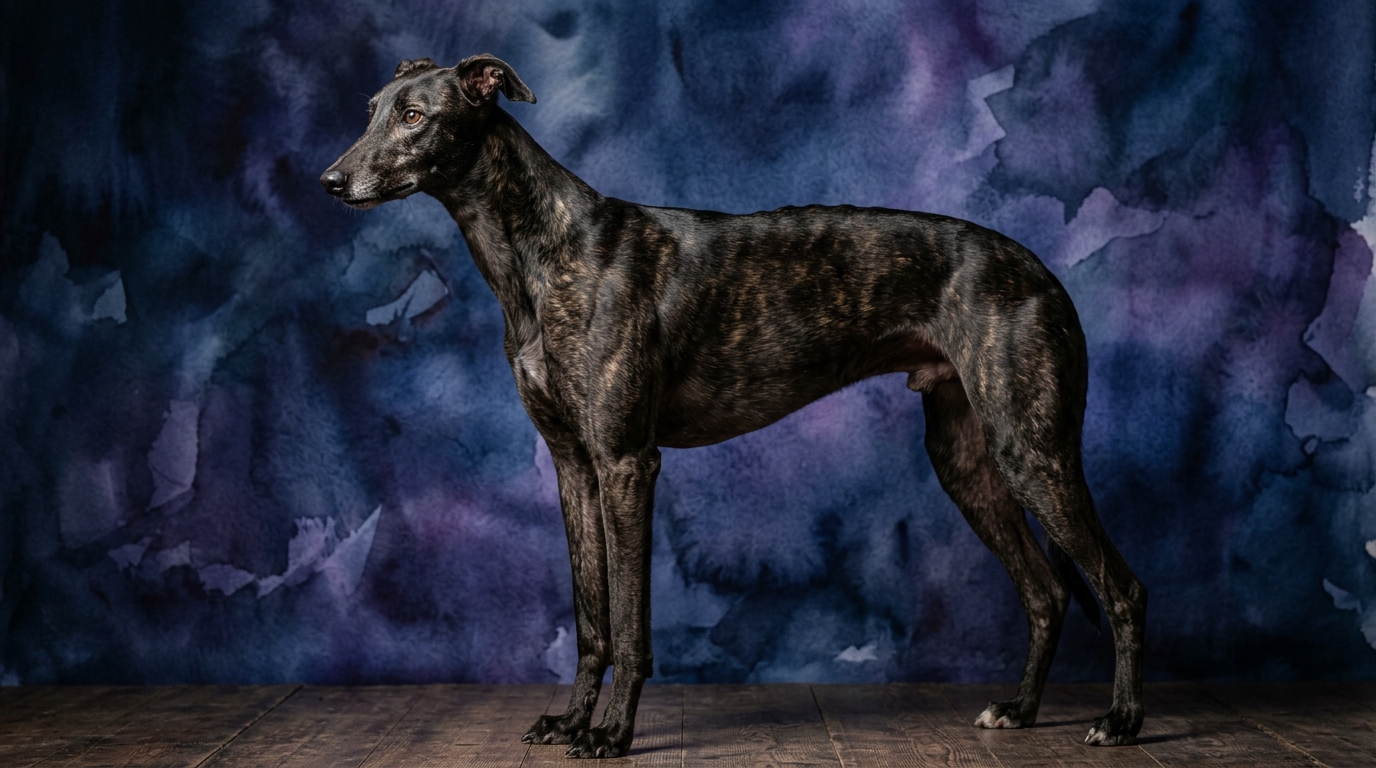
Side-by-Side IQ Profile: Precision Hunter vs. Swift Pursuer
The Cosmic Pet Pet IQ Lab employs a multi-dimensional approach to assess canine cognition, moving beyond simple obedience to delve into the nuances of how breeds think and interact. For the German Shorthaired Pointer (GSP), ranked #17 by Coren, its profile shows a remarkably balanced and capable mind. Problem Solving is rated 5/5, indicating a breed that excels at independent thought, strategizing in dynamic environments, and figuring out complex tasks. Training Speed stands at 4/5, reflecting their quick grasp of new commands and an eagerness to engage in learning. Social Intelligence is also strong at 4/5, suggesting a keen ability to read human cues and form deep, communicative bonds. Their Instinctive Drive is a perfect 5/5, rooted in their heritage as a multi-purpose hunting dog, constantly processing scents and movements. Memory is rated 4/5, allowing them to retain complex sequences and recall lessons effectively.
In contrast, the Greyhound, Coren ranked #46, presents a cognitive profile optimized for its specific ancestral role: the chase. Their Problem Solving score is 3/5, suggesting they are less inclined toward complex, novel solutions and more reliant on ingrained behavioral patterns. Training Speed is 2/5, indicating that while trainable, they may require more repetition and motivation tailored to their independent nature. Social Intelligence is 3/5, meaning they can form bonds and understand basic social cues, but might be less overtly communicative or eager to please than some other breeds. Crucially, their Instinctive Drive is a powerful 5/5, almost exclusively focused on sight-hunting and the thrill of the pursuit. Memory is rated 3/5, sufficient for routines and basic commands, but perhaps less for intricate, multi-step tasks without consistent reinforcement.
Where the German Shorthaired Pointer Wins Cognitively
The GSP's cognitive strengths lie in its adaptability and multi-faceted intelligence, particularly its superior Problem Solving (5/5) and Training Speed (4/5). This breed excels at navigating complex scenarios, such as tracking game through varied terrain or figuring out how to retrieve a toy from an unusual spot. Their ability to process multiple stimuli simultaneously – scent, sight, sound – and make quick, effective decisions in the field demonstrates a high level of executive function. This cognitive flexibility translates directly into their training aptitude; they not only learn commands rapidly but also understand the context in which to apply them, making them exceptional partners for advanced obedience, agility, or field work. Their strong Social Intelligence (4/5) also means they are highly attuned to their human companions, making them more responsive to nuanced communication and eager to collaborate on tasks, seeking to understand and fulfill expectations.
Where the Greyhound Wins Cognitively
While the Greyhound's cognitive profile might appear less versatile than the GSP's, it represents an extreme specialization that is a clear win in its own right. Their 5/5 Instinctive Drive is not just about raw power, but an unparalleled cognitive focus on a single, compelling task: the chase. This means an acute visual processing system that can detect the slightest movement at incredible distances and instantaneously calculate trajectories for pursuit. Their cognitive architecture is streamlined for efficiency in speed and sight-hunting, allowing them to react with astonishing swiftness and precision when their prey drive is engaged. This specialized intelligence also contributes to their remarkable ability to relax deeply when not stimulated, a cognitive 'off-switch' that allows for conservation of energy and mental peace in a home environment. While their Problem Solving isn't about complex puzzles, it's about optimizing for speed and direct action when their primary instinct is triggered.
Which is Easier to Train and Why
Based on their respective IQ profiles, the German Shorthaired Pointer is generally easier to train than the Greyhound. The GSP's 4/5 Training Speed combined with its 5/5 Problem Solving and 4/5 Social Intelligence creates a dog that is eager to learn, quick to understand, and highly motivated to work alongside its human. They thrive on mental engagement and respond well to varied training methods, quickly generalizing commands to new situations. Their innate desire to please and their strong focus make them highly receptive to positive reinforcement, often picking up new behaviors in just a few repetitions. A GSP typically approaches training as a collaborative effort, actively seeking to understand what is expected.
The Greyhound, with its 2/5 Training Speed and 3/5 Social Intelligence, requires a more patient, understanding, and consistent approach. They are not inherently driven to please in the same way a GSP is, and their independent nature means they need compelling reasons to engage in training. While they can learn commands, the process often requires more repetition and very high-value rewards. Their profound Instinctive Drive (5/5), particularly for chasing, can override learned commands in high-stimulus environments, meaning recall and impulse control require extensive, ongoing work. Training a Greyhound often means understanding their sighthound instincts and working *with* them, rather than expecting eager compliance in all situations. They are trainable, but the training journey demands more creativity and a different understanding of canine motivation.
Which Suits Active Owners vs. Relaxed Owners
For owners seeking an active, engaged companion, the German Shorthaired Pointer is an ideal match. Their boundless energy and 5/5 Instinctive Drive mean they require significant physical exercise and mental stimulation daily. They excel in activities like running, hiking, swimming, and especially dog sports such as agility, flyball, or advanced obedience. Their high Problem Solving and Training Speed ensure they thrive on learning new tricks and commands, making them perfect for owners who enjoy consistent training sessions and collaborative activities. A GSP will not be content with short walks; they need an owner who embraces an active outdoor lifestyle and is prepared to channel their formidable drive into productive outlets.
The Greyhound, despite its incredible speed, often surprises people with its suitability for more relaxed owners. While they absolutely need opportunities for short, intense bursts of running in a secure area to satisfy their 5/5 Instinctive Drive, they are famously calm and quiet indoors, often referred to as '45 mph couch potatoes.' Their lower scores in Problem Solving and Training Speed, combined with their specialized drive, mean they don't typically demand constant mental stimulation or complex training sessions in the same way a GSP does. They are content with comfortable lounging, short walks, and the occasional opportunity to stretch their legs. This makes them a surprisingly good fit for owners who appreciate a quiet, gentle companion and can provide secure, fenced spaces for their sprinting needs without requiring hours of daily structured activity.
The Verdict: Choosing Your Canine Companion
The Verdict
Choose a German Shorthaired Pointer if you seek a highly trainable, versatile, and active partner eager for collaborative work, outdoor adventures, and consistent mental engagement. They thrive with owners who can match their energy and desire for purpose.
Choose a Greyhound if you appreciate a gentle, calm, and independent companion who enjoys deep relaxation indoors but requires dedicated space for short, exhilarating sprints. They are ideal for owners who value quiet companionship and understand their unique sighthound nature.
🧠 Find Your Pet's IQ Score
Our Pet IQ Lab assessment covers 25+ tests across 5 cognitive dimensions — personalized to your breed.
Take the Full IQ Test →Frequently Asked Questions
Are Greyhounds truly 'couch potatoes' despite their speed?
Yes, Greyhounds are often called '45 mph couch potatoes' because while they possess incredible speed and need opportunities to run, they are surprisingly calm and enjoy lounging indoors. Their high instinctive drive is typically satisfied by short bursts of activity, after which they are content to relax for long periods.
Can a German Shorthaired Pointer live happily in an apartment?
A German Shorthaired Pointer can adapt to apartment living, but it requires an owner dedicated to providing substantial daily exercise and mental stimulation outside the home. Their high energy and instinctive drive mean they need more than just short walks; access to large, secure areas for running, hiking, or dog sports is crucial for their well-being.
Do Greyhounds get along with other pets, especially smaller ones?
Greyhounds can live peaceably with other pets, but their strong 5/5 instinctive prey drive, especially towards small, fast-moving animals, necessitates careful introductions and supervision around cats or very small dogs. Many Greyhounds can be successfully integrated into multi-pet households with patience and proper management.