
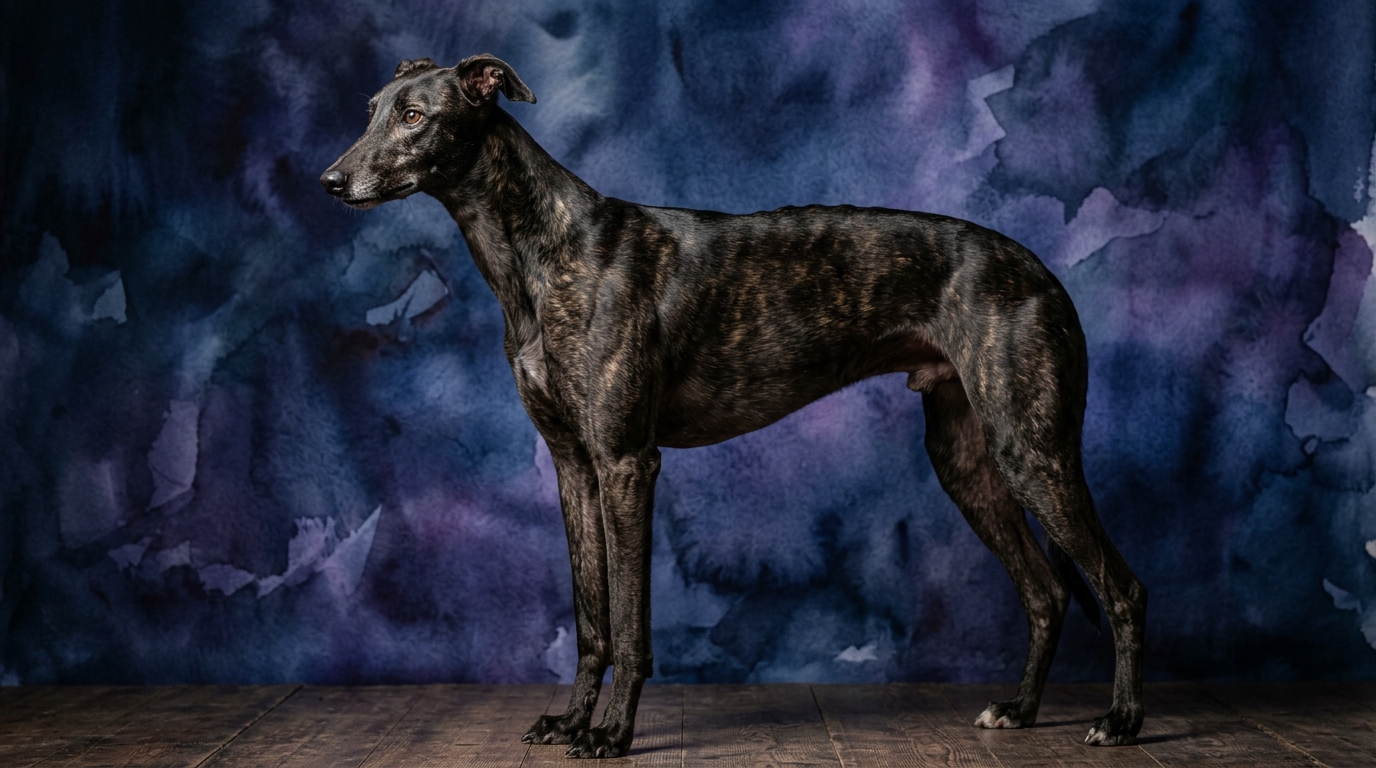
Side-by-Side IQ Profile
**Problem Solving:** This dimension measures a dog's capacity to independently figure out novel situations or overcome obstacles to achieve a goal. The German Shepherd earns a top score of 5/5, indicating a profound ability to analyze and strategize, whether it's navigating complex search patterns or understanding multi-step commands. Their minds are wired to break down challenges and devise solutions, a trait crucial for their historical roles in herding and protection. In contrast, the Greyhound scores 3/5, suggesting a moderate aptitude for problem-solving; while capable of learning and adapting, their primary cognitive strength often lies in direct action or relying on learned routines rather than intricate intellectual deduction in unfamiliar contexts.
**Training Speed:** This metric reflects how quickly a dog grasps and retains new commands or behaviors. A German Shepherd's 5/5 rating here is a testament to their exceptional biddability and focus, allowing them to absorb complex training protocols with remarkable efficiency. They exhibit a strong desire to understand and comply, making them highly responsive to instruction. The Greyhound, with a 2/5 score, presents a different training dynamic; their learning curve is typically slower, requiring more repetition and patience, often due to an independent nature and a cognitive architecture less geared towards immediate human-directed compliance, favoring instead a more self-directed learning approach.
**Social Intelligence:** This dimension assesses a dog's ability to interpret and respond to human cues, understand social hierarchies, and adapt their behavior within a social group. The German Shepherd's perfect 5/5 in social intelligence highlights their deep connection to human partners, their sensitivity to subtle body language, and their capacity for intricate communication. They are acutely aware of their handler's intentions and emotions, making them superb partners in complex tasks. The Greyhound's 3/5 score indicates a respectable level of social awareness, though perhaps less intensely focused on human interaction than the Shepherd; they are observant and can form strong bonds, but their social interactions might be characterized by a more reserved or independent demeanor, not always seeking to anticipate human desires with the same fervor.
**Instinctive Drive:** This measures the innate, genetically programmed behaviors that motivate a breed, such as herding, hunting, guarding, or retrieving. Both the German Shepherd and the Greyhound score a robust 5/5 in instinctive drive, but the *nature* of these drives differs significantly. For the German Shepherd, this drive manifests as a powerful urge to herd, protect, and work, channeling their energy into purposeful tasks that benefit their human companions; their instincts are often about control, vigilance, and cooperation within a defined role. For the Greyhound, the 5/5 drive is almost entirely centered on prey drive and the pursuit of speed; their cognitive wiring is optimized for spotting movement, initiating a chase, and executing at top velocity, making their instinctive drive a potent force for independent action rather than collaborative work.
**Memory:** This dimension evaluates a dog's ability to recall learned commands, experiences, and associations over time. The German Shepherd's 5/5 memory score underscores their capacity for long-term retention of vast amounts of information, from intricate training sequences to complex environmental layouts. This robust memory is foundational to their reliability in repetitive tasks and their ability to build extensive behavioral repertoires. The Greyhound, with a 3/5 memory score, possesses a functional memory but may not retain as many discrete facts or commands with the same enduring clarity as the Shepherd; their memory might be more selectively engaged, prioritizing experiences relevant to their primary drives or immediate comfort rather than a broad spectrum of learned behaviors.
Where German Shepherd Wins Cognitively
The German Shepherd's cognitive architecture presents a clear advantage in scenarios demanding intricate mental engagement and cooperative problem-solving. Their superior problem-solving ability (5/5) means they are not just capable of following instructions, but of interpreting situations and formulating solutions independently. This manifests in tasks like navigating obstacle courses, tracking complex scents, or understanding abstract concepts in advanced obedience. For instance, a Shepherd might learn to open a series of latches to access a reward, demonstrating an understanding of cause and effect beyond simple trial and error. Their exceptional training speed (5/5) allows them to master new commands and routines at an accelerated pace, often requiring fewer repetitions than many other breeds. This rapid assimilation of information is coupled with a profound social intelligence (5/5), enabling them to read human intentions and emotions with remarkable accuracy, fostering a deep, almost telepathic working relationship. This cognitive package makes them unparalleled in roles requiring adaptability, quick learning, and a strong partnership.
Where Greyhound Wins Cognitively
While the Greyhound's cognitive profile differs from the Shepherd's, it shines brightly in areas demanding swift, decisive, and independent action driven by instinct. Their perfect 5/5 in instinctive drive is their crowning cognitive strength. This isn't just about speed; it's about a highly specialized predatory sequence — spotting, focusing, chasing, and capturing — executed with incredible efficiency and minimal hesitation. Their cognitive resources are heavily allocated to processing visual stimuli at high speeds and initiating a powerful, sustained pursuit. In a field, a Greyhound's mind processes environmental cues, calculates trajectories, and commits to a chase with an unwavering, singular focus that few breeds can match. This intense, specialized focus, while perhaps less adaptable to diverse human-directed tasks, represents a peak of evolutionary cognitive specialization for their specific purpose. Their problem-solving (3/5) and memory (3/5) might be geared towards recognizing familiar patterns in their environment and reacting instinctively, rather than deducing complex solutions from scratch.
Which is Easier to Train and Why
When comparing trainability, the German Shepherd unequivocally presents as the easier dog to train, primarily due to their exceptional scores in Training Speed (5/5) and Social Intelligence (5/5). A Shepherd’s inherent biddability and eagerness to please mean they actively seek to understand and comply with human commands. They thrive on structure and mental engagement, quickly forming associations between actions and consequences. For example, a Shepherd can learn a multi-step retrieve on the first few attempts, driven by their desire to work cooperatively. Their robust memory also ensures that once a behavior is learned, it is retained for the long term. In contrast, the Greyhound's lower Training Speed (2/5) often requires a more patient and repetitive approach. They are not typically driven by a strong desire to please in the same way; instead, their training often relies on high-value rewards and positive reinforcement to capture their attention. Their independent nature and strong instinctive drive (5/5) mean that in the presence of stimulating environmental cues, like a squirrel, their focus on human commands can quickly dissipate. Training a Greyhound often involves carefully managing their environment and understanding that their primary motivation is not always human approval, but rather comfort, routine, or the thrill of the chase. This means while a Shepherd is often looking *to you* for direction, a Greyhound is more often looking *around them* for interesting stimuli, making consistency and clear, concise communication paramount.
Which Suits Active Owners vs Relaxed Owners
The cognitive profiles of these two breeds offer distinct matches for owner lifestyles. The German Shepherd, with its high problem-solving, social intelligence, and intense instinctive drive for work, is ideally suited for active owners who relish mental engagement and structured activities. These dogs thrive when given a job, whether it's advanced obedience, agility, protection work, or even complex puzzle toys. Their minds need constant stimulation, and an owner who can provide consistent training, varied challenges, and ample opportunities for cooperative tasks will find an incredibly fulfilling partnership. A relaxed owner might struggle to meet the Shepherd's profound need for mental exercise, potentially leading to boredom-induced behaviors. The Greyhound, while possessing a powerful instinctive drive for short bursts of speed, is surprisingly well-suited for more relaxed owners once their daily exercise needs are met. Despite their athletic prowess, Greyhounds are often described as '45 mph couch potatoes.' Their problem-solving and social intelligence scores suggest they are less prone to constantly seeking out complex mental challenges or intricate human interaction, preferring comfort and routine. A relaxed owner who enjoys quiet companionship, provides regular opportunities for safe, off-leash running in a fenced area, and appreciates an independent spirit will find a Greyhound to be a calm and undemanding companion indoors. They don't require the same level of constant mental 'work' as a Shepherd, making them a good fit for those who prefer a less intense cognitive partnership.
The Verdict
Choose a German Shepherd if you seek an intensely cooperative, highly trainable partner for complex tasks, protection, or competitive dog sports, and you are prepared to provide consistent mental and physical challenges.
Opt for a Greyhound if you appreciate an independent, calm companion who enjoys short bursts of intense exercise followed by long periods of rest, and you value a less demanding cognitive partnership.
🧠 Find Your Pet's IQ Score
Our Pet IQ Lab assessment covers 25+ tests across 5 cognitive dimensions — personalized to your breed.
Take the Full IQ Test →Frequently Asked Questions
Are German Shepherds inherently more "obedient" than Greyhounds?
German Shepherds generally exhibit higher biddability and a stronger desire to please, making them more inclined to follow commands readily. Greyhounds, while capable of learning, often possess a more independent streak and may require more motivation and patience in training due to their different cognitive priorities.
Does a Greyhound's lower problem-solving score mean they aren't smart?
Not at all. A Greyhound's intelligence is specialized for their evolutionary purpose – speed and pursuit. While they may not excel at complex, abstract problem-solving in human-designed tasks, their cognitive abilities are precisely tuned for their instinctive drives, making them incredibly effective at what they were bred to do.
Can a Greyhound be trained for complex tasks like a German Shepherd?
While a Greyhound can certainly learn various commands and tricks, their cognitive wiring and lower training speed and social intelligence scores mean they are less naturally inclined or efficient at mastering the highly intricate, cooperative tasks that German Shepherds excel in, such as advanced protection work or complex scent tracking.