
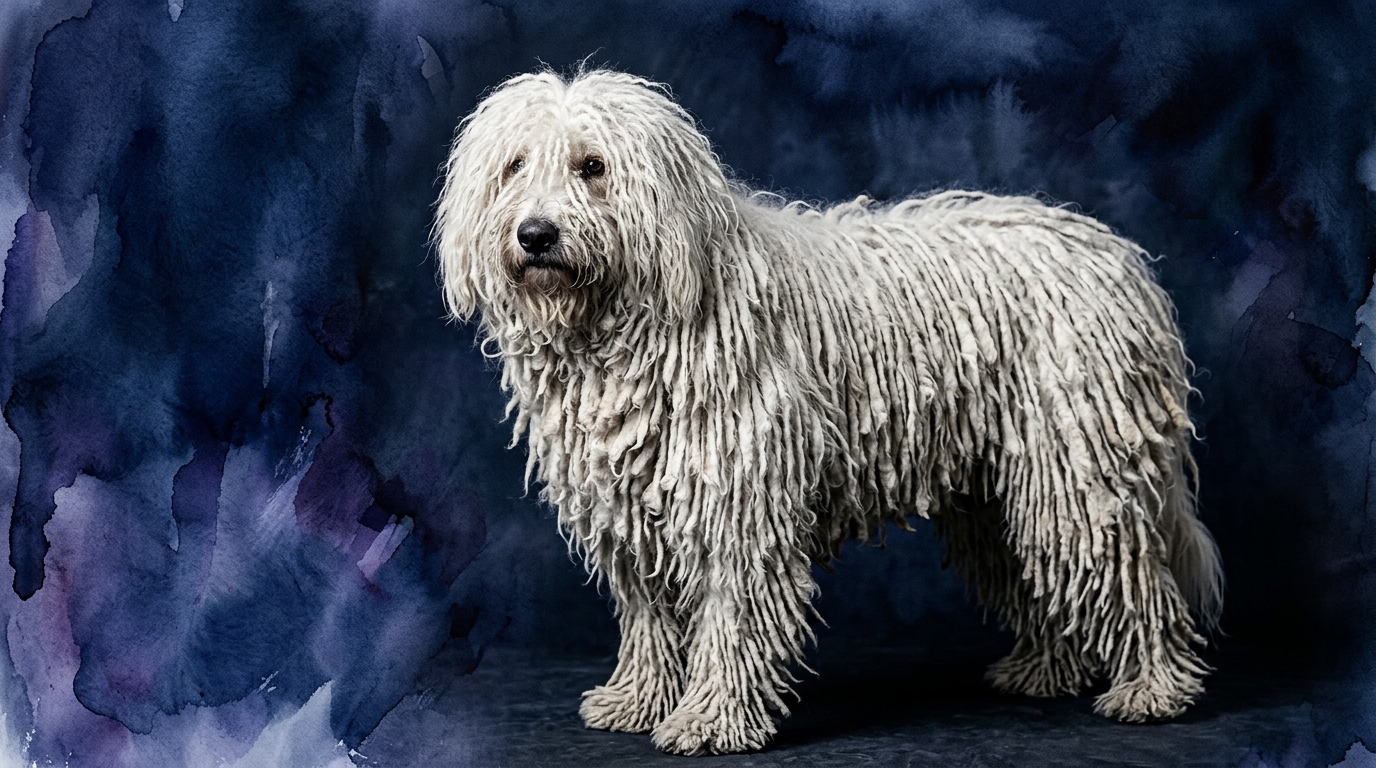
Side-by-Side Cognitive Profiles: GSP vs. Komondor
The Cosmic Pet Pet IQ Lab's framework allows us to dissect the cognitive blueprints of these two distinct breeds. The German Shorthaired Pointer (GSP), a Sporting group member with a Coren rank of #17, exhibits a cognitive profile geared towards active partnership and dynamic problem-solving. Their Problem Solving is rated 5/5, indicating an exceptional capacity to navigate complex scenarios and devise effective solutions quickly. Training Speed stands at 4/5, reflecting their eagerness and aptitude for learning new commands and routines with relative ease. Social Intelligence, also 4/5, highlights their attunement to human cues and a strong desire for cooperative interaction. An Instinctive Drive of 5/5 underscores their powerful hunting and retrieving impulses, demanding outlets for these innate behaviors. Finally, their Memory is 4/5, allowing them to retain learned skills and experiences effectively over time.
In stark contrast, the Komondor, a Working group member and livestock guardian with a Coren rank of #67, presents a cognitive makeup optimized for self-reliance and vigilant protection. Their Problem Solving is 3/5, suggesting a more deliberate approach to novel challenges, often preferring established routines. Training Speed is 3/5, meaning they are capable of learning but may require more patience, repetition, and a clear understanding of the 'why' behind a command. Social Intelligence is also 3/5, reflecting their reserved nature with strangers and a deep, but often independent, bond with their immediate family. Their Instinctive Drive is 3/5, primarily focused on guarding and territorial defense rather than cooperative tasks. Their Memory, rated 3/5, is sufficient for their duties, allowing them to remember their charges and territory, though perhaps not as quickly absorbing new information as a GSP.
Where the German Shorthaired Pointer Excels Cognitively
The German Shorthaired Pointer's cognitive strengths lie in their unparalleled adaptability and collaborative spirit. Their 5/5 Problem Solving means they don't just follow commands; they understand the objective and can adjust their approach if obstacles arise. For instance, a GSP in a complex scent work trial can strategize the most efficient path to a hidden article, or quickly learn a new sequence of obstacles in agility without extensive repetition. This cognitive flexibility makes them outstanding candidates for intricate dog sports and demanding working roles where quick thinking is paramount.
Furthermore, the GSP's high Training Speed (4/5) combined with their Social Intelligence (4/5) creates a highly receptive and engaging learner. They actively seek to understand their human partners, often anticipating commands or offering behaviors that might be desired. This strong desire for cooperative interaction means they view training as a partnership, making them exceptionally responsive to positive reinforcement and eager to master new skills. Their memory (4/5) ensures that once a concept is grasped, it is retained, allowing for the rapid building of a complex behavioral repertoire.
Where the Komondor's Cognitive Strengths Lie
While the Komondor's scores might appear lower across the board, their cognitive profile represents a specialized form of intelligence perfectly suited for their ancient role as a livestock guardian. Their 3/5 Social Intelligence, for example, is not a deficit but a feature; it underpins their capacity for independent judgment. A Komondor is not bred to constantly check in with a human for instructions but to autonomously assess threats and react decisively to protect their flock, often without direct human oversight. This self-reliant decision-making is a profound cognitive strength in their specific context.
The Komondor's Problem Solving (3/5) manifests as a methodical, persistent vigilance rather than rapid adaptation to novel human-imposed tasks. They excel at identifying subtle shifts in their environment that could signal danger, such as an unusual shadow or a faint scent, and then formulating a protective response. Their memory (3/5) is highly tuned to remembering their territory, their charges, and recurring patterns of behavior that indicate safety or potential threats. This steadfast, unwavering commitment to their guarding duties, rooted in their instinctive drive, is a testament to their unique cognitive optimization for long-term, independent protection.
Training Dynamics: GSP's Eagerness vs. Komondor's Independence
When it comes to trainability, the German Shorthaired Pointer is undeniably the more straightforward and rewarding partner for most owners. Their 4/5 Training Speed, coupled with a 4/5 Social Intelligence, means they are often eager to please and quick to grasp new concepts. They thrive on the interaction and mental stimulation that training provides, viewing it as a collaborative game. GSPs respond exceptionally well to positive reinforcement, quickly associating actions with rewards and exhibiting a strong desire to repeat successful behaviors. Their high problem-solving capacity also means they can generalize learned commands to new environments and situations with minimal difficulty.
In contrast, training a Komondor requires a different approach, characterized by immense patience, consistency, and a deep understanding of their independent nature. Their 3/5 Training Speed indicates that while they are capable of learning, they are not inherently driven by the same eagerness to please. A Komondor needs to understand the *purpose* behind a command, often weighing it against their primary guardian instincts. They may comply if they perceive the command as relevant or beneficial, but resist if it seems arbitrary or interferes with their perceived duties. Their independence means they are less likely to offer behaviors proactively; instead, owners must be clear, firm, and consistent, establishing trust and respect without resorting to harsh methods that could backfire with such a self-possessed breed.
Matching Breeds to Lifestyles: Active Engagement vs. Watchful Presence
The German Shorthaired Pointer is a perfect match for active owners who can meet their substantial physical and mental demands. Their 5/5 Instinctive Drive means they are not content with short walks; they require vigorous daily exercise, whether it's running, swimming, or engaging in demanding field work. Their 5/5 Problem Solving and 4/5 Training Speed also necessitate consistent mental stimulation through training, puzzle toys, or dog sports like agility, obedience, or scent work. A GSP in a relaxed, sedentary household would quickly become bored, potentially leading to destructive behaviors, excessive barking, or anxiety. They thrive when they have a job to do and an owner who actively engages them in their world.
The Komondor, while requiring a different kind of commitment, can suit owners seeking a more watchful, self-sufficient companion, though 'relaxed' must be qualified. Their moderate exercise needs (relative to a GSP) mean they are content with patrolling their territory and observing their surroundings. They don't demand constant human-directed activity or elaborate games. However, their 3/5 Social Intelligence and strong guardian instincts mean owners cannot be 'relaxed' about socialization or consistent leadership. They need early, broad exposure to people and environments to develop appropriate social boundaries, and a confident, consistent owner to guide their protective nature. They are ideal for owners who value independence and a steadfast, albeit sometimes aloof, presence, and who understand the nuances of managing a powerful guardian breed.
The Verdict: Choosing Your Canine Companion
The choice between a German Shorthaired Pointer and a Komondor hinges entirely on an owner's lifestyle, experience, and expectations of a canine partner. The GSP is a vibrant, engaged collaborator, while the Komondor is a stoic, independent guardian, each offering a distinct and profound companionship.
Understanding their inherent cognitive strengths and predispositions is key to ensuring a harmonious relationship. Neither breed is 'better' than the other; they are simply designed for different purposes, and their cognitive profiles reflect these specialized roles. Responsible ownership means selecting a breed whose mental and physical needs align perfectly with what you can genuinely provide.
The Verdict
Choose a German Shorthaired Pointer if you seek an energetic, highly trainable, and cooperative partner for an active lifestyle, dog sports, or complex obedience, and can provide ample physical and mental stimulation.
Choose a Komondor if you are an experienced owner seeking a steadfast, independent guardian for property or livestock, who appreciates self-reliance, and are prepared for a long-term commitment to consistent, patient training and socialization.
🧠 Find Your Pet's IQ Score
Our Pet IQ Lab assessment covers 25+ tests across 5 cognitive dimensions — personalized to your breed.
Take the Full IQ Test →Frequently Asked Questions
Are Komondors trainable despite their lower scores?
Yes, Komondors are trainable, but require immense patience, consistency, and a deep understanding of their independent, guardian temperament. They respond best to training that makes sense to them and reinforces their protective nature, rather than rote obedience, often needing to perceive the command as relevant to their duties.
Do German Shorthaired Pointers need a lot of mental stimulation?
Absolutely. With 5/5 problem-solving and 5/5 instinctive drive, GSPs thrive on mental challenges and purposeful activities. Without puzzles, consistent training, or engaging 'work,' they can quickly become bored, potentially leading to undesirable behaviors like excessive chewing, digging, or barking.
Can a Komondor be a family pet without a guarding role?
While Komondors bond deeply with their families, their innate guardian instincts are strong and ever-present. They can be family pets, but require extensive early socialization and consistent training to ensure they appropriately differentiate between perceived threats and normal visitors, making them better suited for experienced owners who can manage these natural tendencies effectively.