
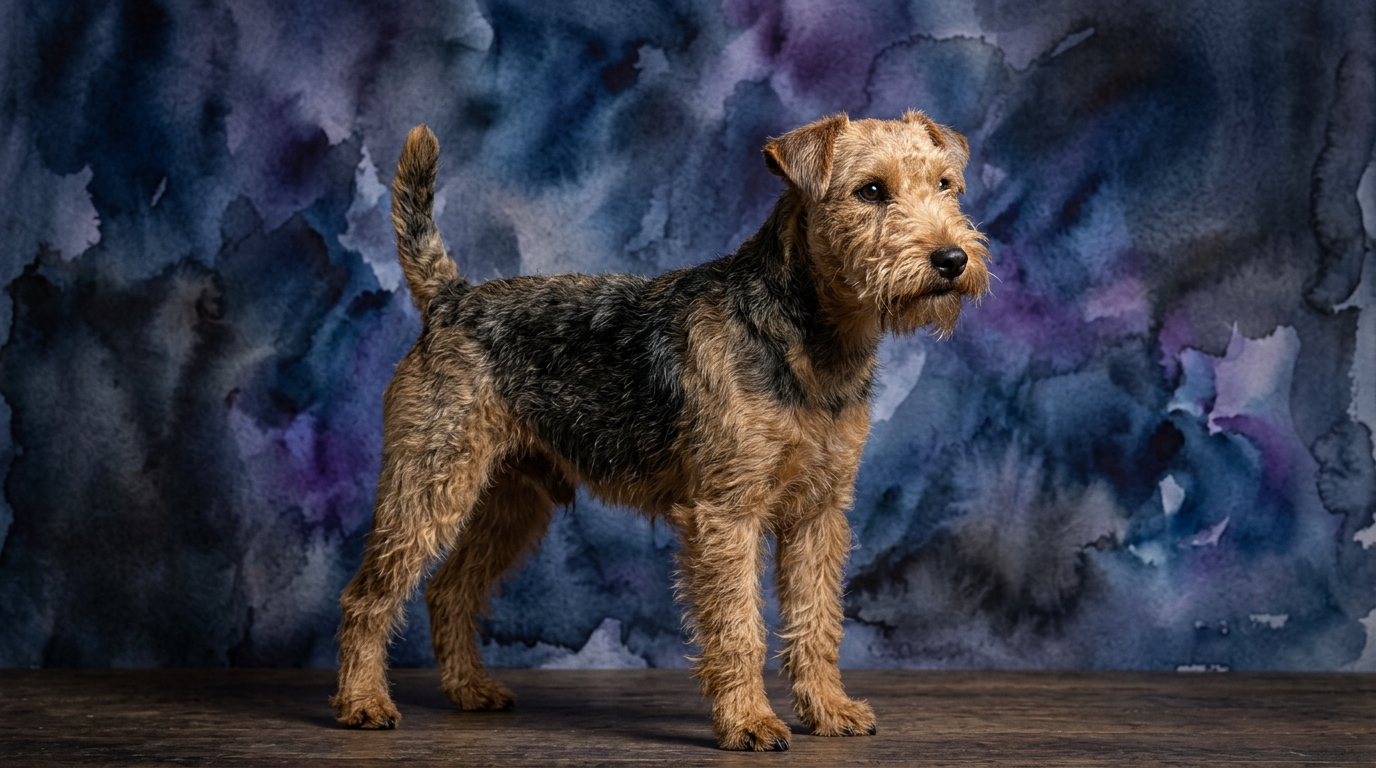
Side-by-Side IQ Profile: German Shorthaired Pointer vs. Lakeland Terrier
The German Shorthaired Pointer presents a robust cognitive profile, marked by exceptional problem-solving abilities (5/5), indicating a keen aptitude for complex tasks and novel situations. Its instinctive drive (5/5) is profoundly high, reflecting a powerful innate desire for hunting, tracking, and retrieving, which fuels its engagement with the environment.
In terms of training speed (4/5) and social intelligence (4/5), the GSP learns new commands and interprets human cues with considerable efficiency, making it highly responsive to guidance. Its memory (4/5) is also strong, allowing it to retain learned behaviors and recall complex sequences, contributing to its versatility as a working companion.
The Lakeland Terrier exhibits a consistent cognitive profile, scoring 3/5 across all five dimensions measured by The Cosmic Pet Pet IQ Lab. This indicates a moderate capacity for problem-solving, where it approaches challenges with tenacity but may require more time or repetition to grasp intricate solutions compared to breeds with higher scores.
Its instinctive drive (3/5) is present but more focused on specific terrier tasks like digging and chasing small prey, rather than the broad-spectrum drive seen in sporting dogs. Training speed (3/5), social intelligence (3/5), and memory (3/5) suggest a dog that learns steadily, can understand basic human communication, and retains information, though perhaps not with the rapid assimilation of more highly-scoring breeds.
Where the German Shorthaired Pointer Wins Cognitively
The German Shorthaired Pointer's cognitive strengths shine brightest in its superior problem-solving (5/5) and profound instinctive drive (5/5). This combination means a GSP is not only adept at figuring out complex puzzles or navigating challenging terrains but is also intensely driven to engage with these activities, making it an exceptional partner for advanced field work, agility, or competitive obedience.
Its higher training speed (4/5) and social intelligence (4/5) also give the GSP an edge in adaptability and responsiveness. A GSP quickly processes commands and understands nuanced human body language, enabling seamless communication and a willingness to collaborate on intricate tasks. This cognitive framework allows the GSP to excel in dynamic, multi-faceted roles that demand both independent thought and cooperative execution.
The GSP's stronger memory (4/5) further solidifies its advantage, allowing it to recall extensive repertoires of commands, scent trails, or learned patterns. This robust memory is crucial for consistency in performance, whether tracking game over varied landscapes or executing complex agility obstacles.
Where the Lakeland Terrier Wins Cognitively
While the Lakeland Terrier's scores are consistently moderate (3/5), its cognitive profile is uniquely suited for its historical role, where a degree of independent thought and singular focus are assets. Its problem-solving, though not as broad as a GSP's, is highly effective for its specific terrier tasks, enabling it to tenaciously pursue solutions related to burrowing and vermin control without constant human intervention.
The Lakeland's instinctive drive (3/5), while lower than the GSP's, is intensely channeled towards its prey drive. This focused, persistent determination, rather than a wide-ranging versatility, means a Lakeland can be exceptionally single-minded when engaging with its core instincts, which is a cognitive 'win' for owners seeking a dedicated, self-sufficient hunter of small game.
Its moderate social intelligence (3/5) can translate into a charming independence; Lakelands are capable of understanding cues but often prefer to make their own decisions. This self-reliance, while sometimes perceived as stubbornness, is a cognitive trait fostering resilience and a distinct personality, appealing to owners who appreciate a dog with strong individual character.
Which is Easier to Train and Why
Considering their IQ profiles, the German Shorthaired Pointer is unequivocally easier to train than the Lakeland Terrier. The GSP's superior training speed (4/5) means it grasps new commands and concepts rapidly, often requiring fewer repetitions to achieve mastery. Its higher social intelligence (4/5) allows it to read and respond to human cues with greater nuance, fostering a strong desire to please and cooperate.
A GSP's robust memory (4/5) ensures that once a behavior is learned, it is retained consistently, reducing the need for frequent refreshers. Furthermore, its high problem-solving ability (5/5) allows GSPs to generalize learned behaviors, making them adaptable learners across various training scenarios.
In contrast, the Lakeland Terrier's moderate training speed (3/5) and social intelligence (3/5) mean training requires more patience, consistency, and a deeper understanding of terrier motivations. While they can learn, Lakelands often require more repetitions and may exhibit an independent streak rooted in their historical role, where self-reliance was paramount. Their problem-solving (3/5) is effective for specific tasks, but less geared towards generalizing human-directed obedience, making complex training a more deliberate process.
Which Suits Active Owners vs. Relaxed Owners
The German Shorthaired Pointer is ideally suited for highly active owners who can match its profound instinctive drive (5/5) and robust cognitive energy. Their need for physical and mental stimulation is immense, thriving on activities like running, hiking, hunting, competitive dog sports, or extensive training sessions that engage their problem-solving (5/5) and memory (4/5). A GSP without sufficient outlets for its cognitive and physical capacities can become bored and potentially destructive, making them a poor fit for relaxed, sedentary lifestyles.
The Lakeland Terrier, while still requiring regular exercise, is a better match for owners who appreciate a dog with a more contained, though still present, energy level and a focused drive (3/5). They enjoy walks, playtime, and opportunities to explore, but their needs are generally less demanding than a GSP's. Their moderate cognitive scores mean they can engage in training and enrichment, but don't typically demand the same intensity or volume of complex mental work, making them suitable for active but not necessarily extreme-sport-level owners.
For truly relaxed or first-time dog owners, neither breed is entirely 'relaxed' in the sense of being a couch potato. However, the Lakeland Terrier's overall lower intensity in drive and cognitive demands makes it a comparatively more manageable option than the perpetually 'on' German Shorthaired Pointer, provided their independent nature and terrier instincts are understood.
The Verdict
Choose the German Shorthaired Pointer if you are an experienced, highly active individual or family seeking a versatile, intensely driven, and cooperative canine partner for advanced training, outdoor adventures, or competitive dog sports.
Opt for the Lakeland Terrier if you appreciate an independent, spirited companion with a moderate activity level, a tenacious personality, and are prepared for consistent, patient training to channel its focused terrier instincts.
🧠 Find Your Pet's IQ Score
Our Pet IQ Lab assessment covers 25+ tests across 5 cognitive dimensions — personalized to your breed.
Take the Full IQ Test →Frequently Asked Questions
Are German Shorthaired Pointers good family dogs, considering their high intelligence?
German Shorthaired Pointers can be excellent family dogs, especially for active families who provide ample physical and mental engagement. Their high social intelligence and desire to please mean they typically bond well with all family members, but their intense energy requires consistent outlets to prevent boredom.
How does a Lakeland Terrier's problem-solving compare in practical terms for an owner?
A Lakeland Terrier's problem-solving (3/5) often manifests as tenacious, independent thought, particularly when focused on tasks like digging or finding small prey. For an owner, this means they might be less inclined to solve complex human-assigned puzzles quickly, but will persist tenaciously at tasks that align with their innate terrier instincts.
Which breed is better for apartment living?
Neither breed is ideally suited for apartment living without significant commitment to daily outdoor activity and mental stimulation. However, the Lakeland Terrier, with its more contained energy and focused drive compared to the German Shorthaired Pointer's expansive needs, might be a more manageable choice for apartment dwellers who can still provide regular, vigorous exercise.