
Side-by-Side IQ Profile: GSP vs. Maltese
The German Shorthaired Pointer (GSP), ranking #17 on the Coren scale, presents a formidable cognitive blueprint. Their Problem Solving score is an impressive 5/5, indicating an exceptional aptitude for navigating complex tasks and overcoming obstacles, a testament to their independent working heritage where finding game requires strategic thinking. Training Speed is rated 4/5, as these dogs grasp new commands rapidly, often requiring fewer repetitions than many other breeds, reflecting a strong desire to cooperate and a quick uptake of instructions. Social Intelligence stands at 4/5, meaning GSPs exhibit a robust understanding of human cues and pack dynamics, readily forming strong bonds and adapting their behavior to social contexts, though perhaps less overtly 'charming' than some companion breeds. Their Instinctive Drive is a perfect 5/5, with powerful hunting instincts ever-present, manifesting as an intense drive to pursue, point, and retrieve, making them highly motivated by scent and movement. Finally, Memory is 4/5, as GSPs retain learned behaviors and spatial information effectively, remembering training cues and routines over long periods, which aids in consistent performance in field work and obedience.
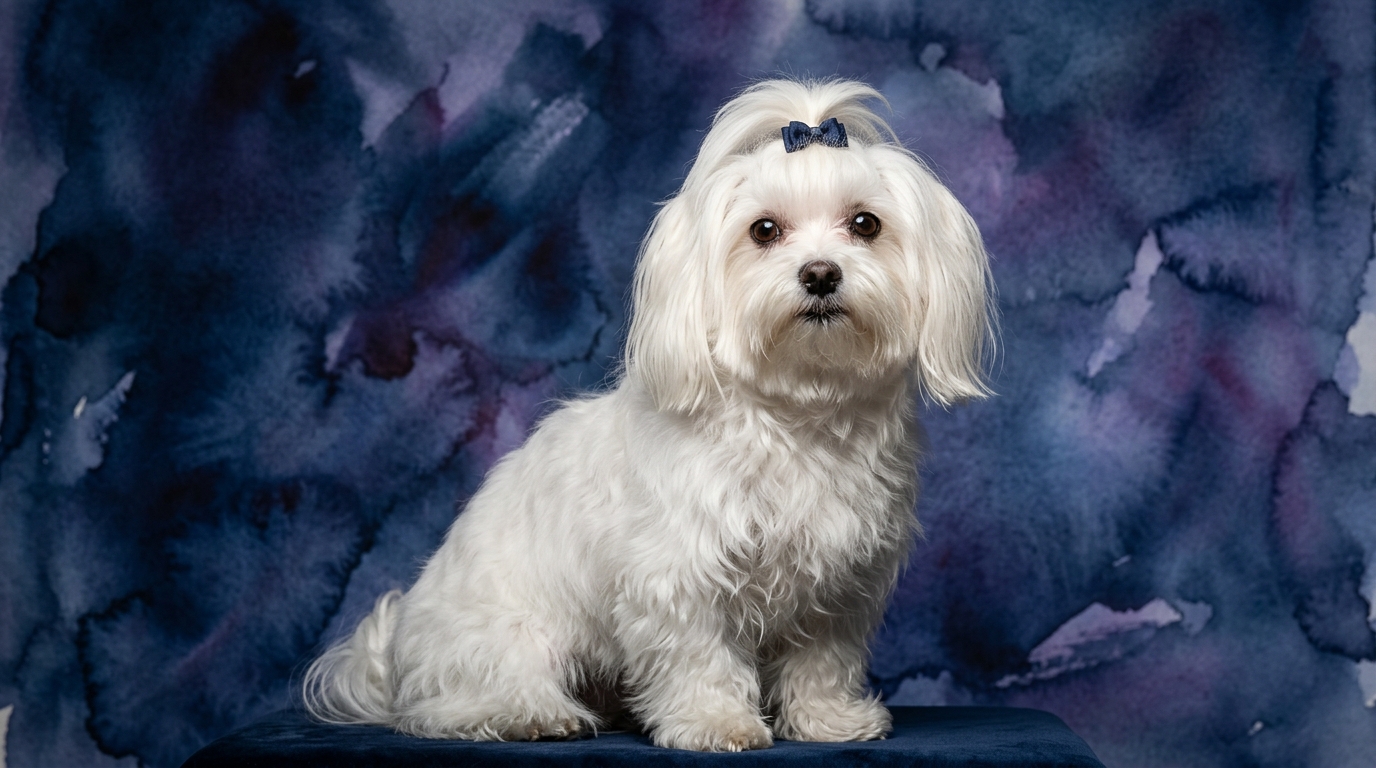
In contrast, the Maltese, with a Coren rank of #59, offers a different set of cognitive strengths tailored for companionship. Their Problem Solving score is 3/5, indicating they typically approach novel situations with a moderate capacity for independent problem-solving, often relying on learned patterns or seeking human assistance rather than intricate strategic thought. Training Speed is 3/5; while capable of learning, the Maltese may require more consistent repetition and motivation during training sessions, preferring engagement over rigorous drills. Where the Maltese truly shines is in Social Intelligence, earning a perfect 5/5. This breed displays an extraordinary ability to read human emotions, solicit attention, and adapt their behavior to maintain harmonious interactions, embodying the essence of a devoted companion. Their Instinctive Drive is low at 2/5, with natural instincts primarily geared towards companionship rather than specific tasks, showing a minimal drive for hunting or intense physical work, making them less prone to independent exploratory behaviors. Memory is 3/5, meaning Maltese dogs possess a functional memory for daily routines and familiar people, but may not retain complex sequences or extensive vocabularies with the same tenacity as working breeds.
Where the German Shorthaired Pointer Wins Cognitively
The German Shorthaired Pointer's cognitive edge is most apparent in its profound capacity for practical application and independent action. Their 5/5 Problem Solving score means they are adept at figuring out how to flush game from cover or navigate a complex agility course without constant human direction, demonstrating impressive cognitive flexibility and strategic thinking. This is intrinsically linked to their 5/5 Instinctive Drive, which isn't just about chasing, but about the entire sequence of finding, tracking, and retrieving—a complex chain of behaviors requiring mental mapping and persistent focus. A GSP's 4/5 Training Speed and Memory ensure that once a task or command is learned, it sticks, making them reliable partners in demanding environments where precision and recall are paramount, from the field to competitive obedience.
Where the Maltese Wins Cognitively
The Maltese, while not built for the field, shines brilliantly in the realm of social cognition, earning a perfect 5/5. This breed possesses an exceptional ability to interpret subtle human cues, anticipate emotional states, and adapt their behavior to foster deep, reciprocal bonds. A Maltese can sense when its owner needs comforting or when a playful interaction is desired, often initiating contact or offering companionship at precisely the right moment. Their cognitive strength lies in understanding and navigating the intricate landscape of human-canine relationships, making them masters of emotional connection and domestic harmony, a skill far more valuable in a companion than tracking game. This profound social understanding allows them to integrate seamlessly into family life, often becoming the emotional barometer of the household.
Training Dynamics: Which Is Easier and Why?
Assessing ease of training requires understanding both a breed's cognitive architecture and its motivational drivers. The German Shorthaired Pointer, with its 4/5 Training Speed and powerful 5/5 Instinctive Drive, generally proves easier to train for obedience and task-oriented commands. Their inherent desire to work alongside a human, combined with their rapid grasp of instructions and strong memory, means they often pick up complex sequences quickly. A GSP learns 'stay' or 'retrieve' not just for a reward, but because these commands align with their internal drive to perform a function. They find satisfaction in completing a task, making them highly receptive to structured training that provides a clear purpose. For example, teaching a GSP a multi-step retrieve often taps into their natural inclination to fulfill a specific hunting sequence, leading to rapid mastery.
Conversely, the Maltese, with a 3/5 Training Speed, might require more patience and creative motivation. While they are certainly trainable, their lower Instinctive Drive (2/5) means they aren't inherently driven by a 'job' in the same way. Training a Maltese often leverages their 5/5 Social Intelligence; they learn best when the interaction is fun, positive, and reinforces their bond with their human, rather than being a rigorous drill. For instance, a GSP might perfect a retrieve command through repetition and scent work, finding the process its own reward, while a Maltese might learn 'fetch' more effectively if it's framed as a playful game that earns them enthusiastic praise and cuddles, reinforcing their social connection. Their motivation stems more from pleasing their human and receiving affection than from the task itself.
Matching Breeds to Lifestyles: Active vs. Relaxed Owners
The choice between a German Shorthaired Pointer and a Maltese is starkly defined by an owner's lifestyle and capacity for engagement. The GSP is unequivocally suited for active owners who can provide ample outlets for its formidable physical energy and profound cognitive demands. Their 5/5 Instinctive Drive means they thrive on structured activities like hunting, agility, or long, vigorous runs, requiring hours of daily exercise. An owner who understands and can channel this drive into collaborative work or sport will find a GSP to be an engaged, tireless partner. Without sufficient mental and physical engagement, a GSP's problem-solving skills might be redirected towards undesirable behaviors out of boredom, such as destructive chewing or excessive barking, as they attempt to create their own 'work'.
In contrast, the Maltese is an ideal companion for relaxed owners. Their low 2/5 Instinctive Drive means they are content with moderate exercise—daily walks, indoor play, and plenty of lap time. Their 5/5 Social Intelligence ensures they are perfectly happy to be a constant, affectionate presence, thriving on close human interaction rather than demanding outdoor adventures. An owner seeking a serene, devoted companion who requires less intensive physical management will find the Maltese a perfect match, as their primary need is companionship and gentle engagement. They are content to be part of the daily rhythm of a home, offering quiet affection and a watchful eye.
The Verdict
For individuals seeking a vigorous, task-oriented partner who excels in problem-solving and retains complex commands for demanding activities, the German Shorthaired Pointer stands out. They are best for active households eager to channel a powerful drive into collaborative work or sport.
Conversely, if your lifestyle prioritizes deep emotional connection and a calm, affectionate presence over high-octane activities, the Maltese is the quintessential choice. They are perfectly suited for owners desiring a devoted lap companion whose cognitive strengths lie in social harmony and emotional responsiveness.
🧠 Find Your Pet's IQ Score
Our Pet IQ Lab assessment covers 25+ tests across 5 cognitive dimensions — personalized to your breed.
Take the Full IQ Test →Frequently Asked Questions
Can a Maltese be trained for complex tricks like a GSP?
While a Maltese may not possess the same inherent drive or problem-solving score as a GSP, they can certainly learn a wide array of tricks. Their high social intelligence means they respond well to positive reinforcement and enjoy the interactive engagement training provides, though they might take more repetitions to master intricate sequences.
How does a GSP's problem-solving ability manifest in a family home?
A German Shorthaired Pointer's 5/5 problem-solving skill might appear as figuring out how to open a child-proof gate, retrieving a dropped item from an inaccessible spot, or even devising strategies to 'herd' family members during playtime. This cognitive strength requires consistent mental enrichment to prevent boredom-driven ingenuity from becoming mischievous.
Is a Maltese prone to separation anxiety due to its high social intelligence?
A Maltese's exceptional social intelligence and strong bond with its owners can indeed make them more susceptible to separation anxiety if not properly socialized and accustomed to alone time from a young age. Their entire cognitive framework is geared towards companionship, making prolonged isolation particularly challenging for them without careful preparation.