
Side-by-Side Cognitive Profiles: German Shepherd vs. Maltese
The German Shepherd, ranked #3 by Coren, demonstrates a formidable cognitive architecture. Their Problem Solving ability is rated 5/5, indicating an exceptional capacity to analyze complex scenarios and independently devise solutions. Training Speed also stands at 5/5, reflecting their rapid assimilation of new commands and routines, often requiring minimal repetition. Social Intelligence, at 5/5, highlights their profound ability to understand human communication and intentions, crucial for their roles in service and protection. Their Instinctive Drive, also 5/5, signifies a powerful intrinsic motivation for tasks and a strong work ethic. Finally, Memory at 5/5 ensures they retain complex learned behaviors and experiences over time with remarkable accuracy.
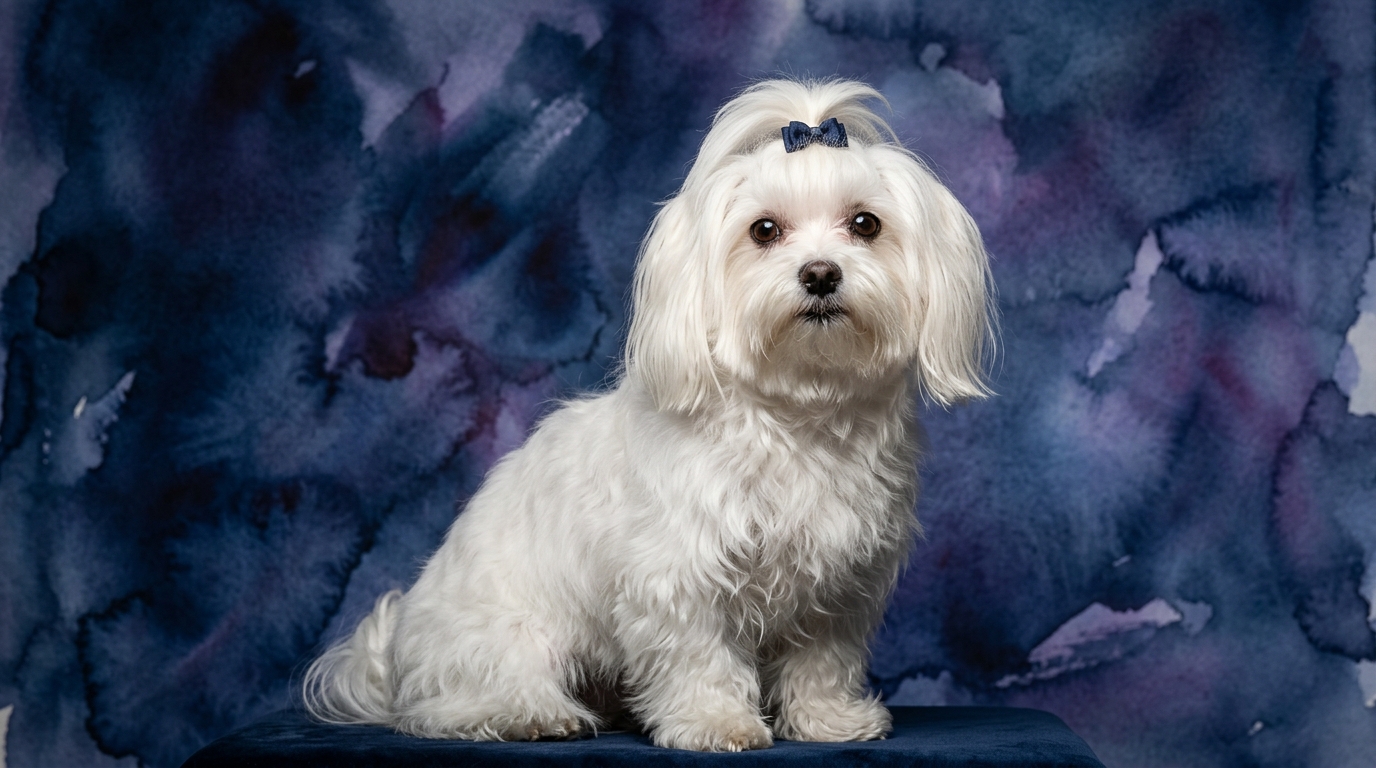
In contrast, the Maltese, ranked #59, presents a different cognitive emphasis. Their Problem Solving ability is rated 3/5, suggesting they can grasp simpler puzzles and routines but may require more guidance for intricate challenges. Training Speed is 3/5, meaning they learn at a moderate pace, often thriving with consistent, positive reinforcement methods. Crucially, their Social Intelligence is 5/5, mirroring the German Shepherd's capacity to form deep bonds and interpret human emotional states, making them highly attuned companions. However, their Instinctive Drive is 2/5, indicating a lower inherent motivation for task-oriented work and a preference for comfort and companionship. Memory at 3/5 suggests they retain information adequately but may not recall complex sequences with the same precision as a German Shepherd.
Where the German Shepherd Excels Cognitively
The German Shepherd's cognitive strengths are deeply rooted in their working heritage. Their 5/5 Problem Solving and Instinctive Drive allow them to excel in tasks demanding independent thought and sustained effort, such as scent detection, search and rescue operations, or complex obedience trials where they must navigate novel situations. A German Shepherd might quickly learn to unlatch a complicated gate or figure out how to retrieve a toy from an inaccessible spot using tools or clever manipulation, demonstrating a proactive approach to environmental challenges.
Their superior Training Speed and Memory (both 5/5) mean they can master an extensive repertoire of commands and skills, including multi-step sequences and nuanced behavioral cues, with remarkable efficiency. This makes them adept at precision tasks like advanced agility courses or intricate protection work, where specific actions must be executed flawlessly under varying conditions. They remember these lessons long-term, requiring less refresher training even after extended breaks.
Where the Maltese Shines Cognitively
The Maltese's primary cognitive triumph lies in their exceptional Social Intelligence (5/5). While not a working breed in the traditional sense, their ability to read and respond to human emotions is unparalleled. A Maltese can often sense changes in an owner's mood, offering comfort or initiating play at just the right moment. This profound social attunement allows them to integrate seamlessly into family dynamics, becoming intuitive emotional anchors.
Their cognitive strengths are geared towards companionship and interaction rather than utility. A Maltese might not excel at complex problem-solving, but they are masters of social engagement, using their understanding of human behavior to elicit affection, attention, or comfort. This manifests in their ability to adapt their demeanor to different family members, remembering who prefers quiet cuddles versus playful antics, showcasing a sophisticated grasp of social dynamics within their human pack.
Training Dynamics: German Shepherd vs. Maltese
Training a German Shepherd is typically a rapid and rewarding process due to their 5/5 Training Speed and potent Instinctive Drive. They possess a strong desire to work and please their handler, viewing training as an engaging mental and physical activity. They learn complex commands and routines quickly, often generalizing lessons to new environments with ease. Their high memory ensures that once a command is learned, it is retained, allowing for the progressive build-up of skills without extensive review.
The Maltese, with a 3/5 Training Speed and 2/5 Instinctive Drive, requires a different approach. While capable of learning, they may not possess the same inherent eagerness for task-oriented training. Sessions need to be shorter, highly positive, and often centered around play or social interaction to maintain their engagement. They might be more easily distracted by environmental stimuli if the training isn't intrinsically rewarding or linked to a social connection. Consistency and patience are key, focusing on positive reinforcement to build good habits rather than relying on a strong innate drive to work.
Suitability for Active vs. Relaxed Owners
The German Shepherd's cognitive profile strongly aligns with active owners who can provide ample mental and physical stimulation. Their 5/5 Problem Solving, Training Speed, and Instinctive Drive mean they thrive on structured activities like obedience training, agility, protection sports, or even service work. Owners who enjoy long hikes, puzzle toys, and consistent training will find a German Shepherd a highly engaged and fulfilling partner, as their minds and bodies require significant outlets to prevent boredom and destructive behaviors.
Conversely, the Maltese is better suited for relaxed owners seeking a devoted companion. Their 5/5 Social Intelligence makes them exceptional lapdogs and family members who primarily seek affection and interaction. While they enjoy short walks and playful romps, their lower Instinctive Drive and Problem Solving scores mean they don't demand intense physical or mental exertion. They are content to be close to their humans, observing and participating in daily life at a more leisurely pace, making them ideal for individuals or families with a less demanding lifestyle.
The Verdict: Choosing Your Canine Companion
The Verdict
Choose a German Shepherd if you seek a highly trainable, driven partner for complex tasks, protection, or an active lifestyle that includes consistent mental and physical challenges.
Opt for a Maltese if your priority is a devoted, socially attuned companion who excels at emotional support and thrives in a more relaxed, affectionate home environment.
🧠 Find Your Pet's IQ Score
Our Pet IQ Lab assessment covers 25+ tests across 5 cognitive dimensions — personalized to your breed.
Take the Full IQ Test →Frequently Asked Questions
Do German Shepherds require more mental exercise than Maltese dogs?
Yes, German Shepherds, with their 5/5 Problem Solving and Instinctive Drive, require significantly more mental stimulation than Maltese dogs. They thrive on challenging tasks, advanced training, and puzzle toys to keep their minds engaged and prevent boredom.
Can a Maltese be trained for complex obedience routines?
While a Maltese can learn basic obedience and some tricks, their 3/5 Training Speed and lower Instinctive Drive mean they are less inclined towards complex, high-precision obedience routines. They respond best to positive reinforcement and shorter, fun training sessions.
How does social intelligence differ between these two breeds?
Both breeds share a 5/5 Social Intelligence score, but its application differs. German Shepherds use it for understanding commands and partnership in tasks, while Maltese dogs primarily use it for profound emotional bonding and adapting to human social cues for companionship.