
Side-by-Side Cognitive Profiles: GSP vs. Swedish Vallhund
The German Shorthaired Pointer (GSP), ranked #17 by Stanley Coren for working and obedience intelligence, showcases a remarkable aptitude across several cognitive dimensions. Their Problem Solving is rated 5/5, indicating an exceptional capacity to navigate complex scenarios and devise strategies, particularly in field environments. Training Speed is a robust 4/5, meaning they grasp new commands and concepts with impressive rapidity, though their enthusiasm demands consistent engagement. Social Intelligence stands at 4/5, reflecting their ability to read human cues and cooperate effectively in partnership, crucial for a hunting companion. An Instinctive Drive of 5/5 highlights their profound prey drive and tireless work ethic, while their Memory, at 4/5, ensures they retain learned behaviors and recall specific locations or individuals with efficiency.
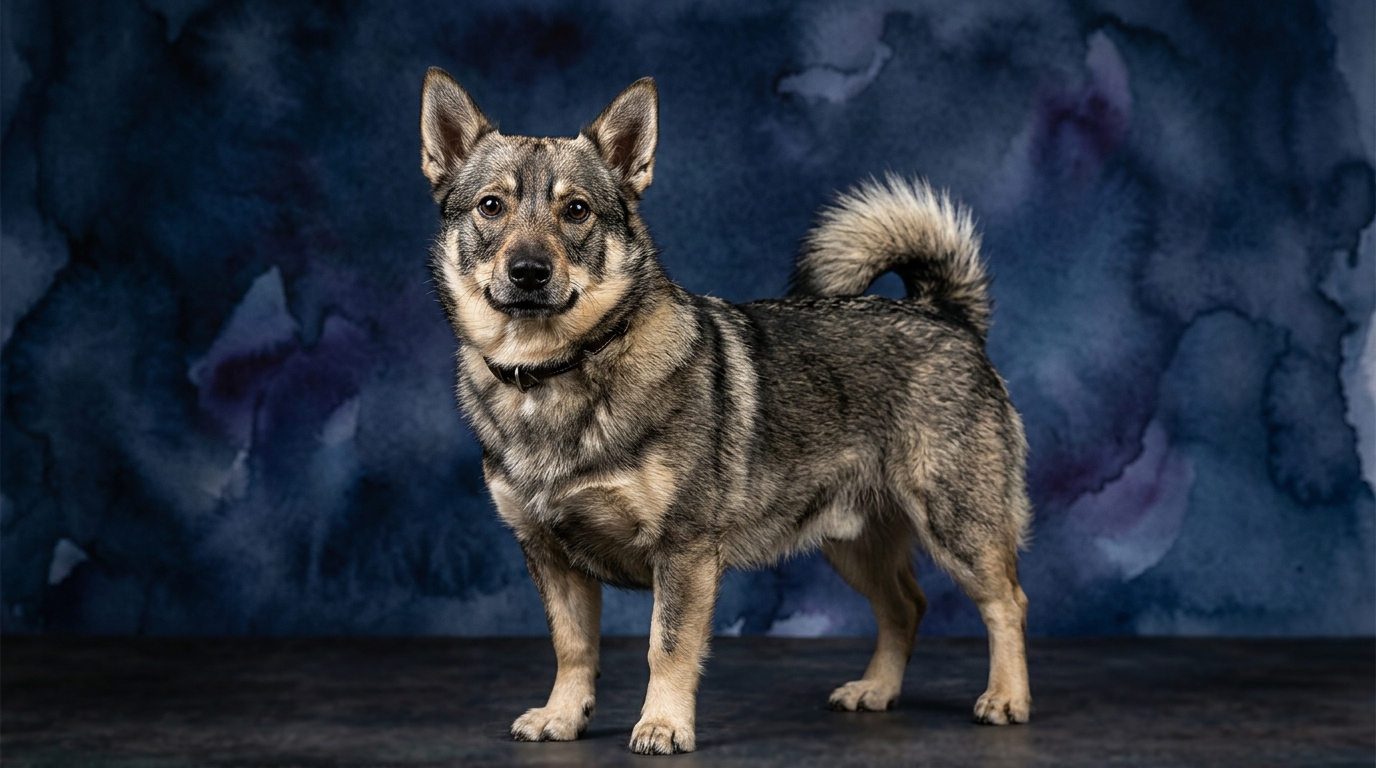
In contrast, the Swedish Vallhund, a resilient herding breed not individually ranked by Coren, presents a different cognitive blueprint. Their Problem Solving is rated 3/5, suggesting a practical, hands-on approach to challenges rather than abstract strategizing; they excel at finding direct solutions within familiar contexts. Training Speed is 3/5, meaning they learn steadily and reliably, benefiting greatly from clear, consistent repetition. Social Intelligence is also 3/5, indicating a strong bond with their family unit and a watchful nature, though perhaps less outwardly demonstrative or cooperatively intricate than a GSP. An Instinctive Drive of 3/5 denotes their inherent herding tendencies, particularly 'low-heeling' and alert barking, without the intense, wide-ranging pursuit seen in sporting breeds. Their Memory, at 3/5, is reliable for daily routines and established commands, less so for rapidly chaining novel, complex sequences.
Where the German Shorthaired Pointer's Mind Shines Brightest
The German Shorthaired Pointer's cognitive prowess is most evident in its ability to process and react to dynamic, unpredictable environments. Their 5/5 Problem Solving isn't just about figuring out a puzzle; it's about making split-second decisions in the field, like navigating dense cover to retrieve a bird, adjusting a search pattern based on scent, or understanding multi-stage commands during a complex retrieve. This breed thrives on intellectual challenge, often anticipating handler cues and developing efficient strategies for tasks.
Furthermore, their 5/5 Instinctive Drive fuels their cognitive engagement. This isn't merely physical energy; it's a profound mental focus on a task, whether it's tracking a scent or working alongside a hunter. This drive, combined with a 4/5 Training Speed, allows GSPs to quickly assimilate new information and apply it in demanding situations, making them exceptionally adept at advanced obedience, competitive field trials, and intricate scent work where rapid learning and adaptive thinking are paramount.
The Unique Cognitive Edge of the Swedish Vallhund
While the Swedish Vallhund's cognitive scores are moderate compared to the GSP, their intelligence is uniquely tailored to their historical role and excels in specific, practical applications. Their 3/5 Problem Solving manifests as robust common sense and resourcefulness within their established territory. They may not devise complex strategies for novel challenges as quickly as a GSP, but they are exceptionally adept at managing their environment, understanding household routines, and navigating familiar situations with quiet competence.
The Vallhund's 3/5 Social Intelligence is centered on their family unit, making them keen observers of their human companions and excellent watchdogs. They may not seek the same intricate cooperative bond as a GSP, but they possess a deep understanding of family dynamics and boundaries, often acting as a watchful, reliable presence. Their 3/5 Memory ensures consistency in daily life, recalling established rules, routines, and the specific patterns of their 'flock' with dependable accuracy. This combination of practical intelligence and social awareness makes them adaptable and steadfast companions in a home setting.
Training Dynamics: GSP's Eagerness vs. Vallhund's Steadfastness
Training a German Shorthaired Pointer is often a high-energy, mentally stimulating endeavor. Their 4/5 Training Speed means they pick up commands quickly, often with just a few repetitions, and their 5/5 Problem Solving encourages them to figure things out independently. However, their intense 5/5 Instinctive Drive can also be a double-edged sword; while it fuels their work ethic, it also means strong distractions like wildlife scents can easily pull their focus. Successful GSP training requires varied, engaging sessions to prevent boredom, consistent boundaries, and ample physical and mental outlets to channel their drive.
The Swedish Vallhund, with a 3/5 Training Speed, learns at a more measured pace. They benefit significantly from clear, consistent positive reinforcement and repetition. Unlike the GSP, they are less likely to be overwhelmed by intense prey drive, but can exhibit a stubborn streak if they don't understand the expectation or perceive a lack of motivation. Their 3/5 Problem Solving suggests they learn best through direct instruction and practice, rather than being expected to generalize rapidly from minimal cues. Training a Vallhund is about building reliable habits and strong communication through patience and positive reinforcement, fostering their natural inclination towards steadfastness rather than rapid, complex cognitive leaps.
Matching Minds to Lifestyles: Active Pursuit vs. Adaptable Companionship
For owners with an active lifestyle and a passion for outdoor pursuits, the German Shorthaired Pointer is an ideal cognitive match. Their 5/5 Instinctive Drive combined with 5/5 Problem Solving means they require substantial physical exercise and complex mental tasks daily to be content. They thrive when given a 'job' to do, whether it's hunting, participating in competitive dog sports like agility or dock diving, or accompanying their owners on long hikes and runs. A relaxed or sedentary owner would likely find a GSP's unmet cognitive and physical needs manifesting as destructive behaviors or anxious energy. They need a partner who can match their mental and physical intensity.
The Swedish Vallhund, while active, is better suited to moderately active owners seeking an adaptable companion. Their 3/5 Instinctive Drive and 3/5 Problem Solving mean they enjoy regular walks, playtime, and engaging family activities, but their demands are less intense than a GSP's. They are content with a good daily routine that includes physical activity and some mental enrichment, such as puzzle toys or basic obedience refreshers. They adapt well to various home environments, valuing companionship and watchfulness. While they enjoy activity, they are less likely to become frustrated or destructive if they miss a day of intense mental or physical exertion, making them a more forgiving choice for owners seeking a balanced, family-oriented dog.
The Verdict
For owners seeking a highly engaged partner for complex outdoor activities, field sports, or intricate obedience challenges, the German Shorthaired Pointer's profound problem-solving abilities and intense drive make it an unparalleled choice.
If you value a steadfast, adaptable companion with a practical, common-sense approach to life and a moderate need for mental stimulation, the Swedish Vallhund offers a delightful balance for a family-oriented lifestyle.
🧠 Find Your Pet's IQ Score
Our Pet IQ Lab assessment covers 25+ tests across 5 cognitive dimensions — personalized to your breed.
Take the Full IQ Test →Frequently Asked Questions
Is a German Shorthaired Pointer a good choice for a first-time dog owner?
A GSP's intense drive and significant cognitive needs can be challenging for novice owners. Their high energy and demand for mental engagement require a dedicated commitment to training and exercise, which might overwhelm someone new to dog ownership.
Do Swedish Vallhunds bark a lot?
Swedish Vallhunds, with their moderate social intelligence and herding background, can be vocal, often using barks to alert their families to perceived threats or novelties. Consistent training from a young age can help manage their natural inclination to communicate vocally.
How do these breeds perform in dog sports like agility?
German Shorthaired Pointers often excel in agility due to their exceptional training speed, problem-solving skills, and athleticism, quickly mastering complex courses. Swedish Vallhunds can also enjoy agility, though their performance might be more about consistent effort and enthusiasm rather than rapid, instinctual mastery of novel sequences.