
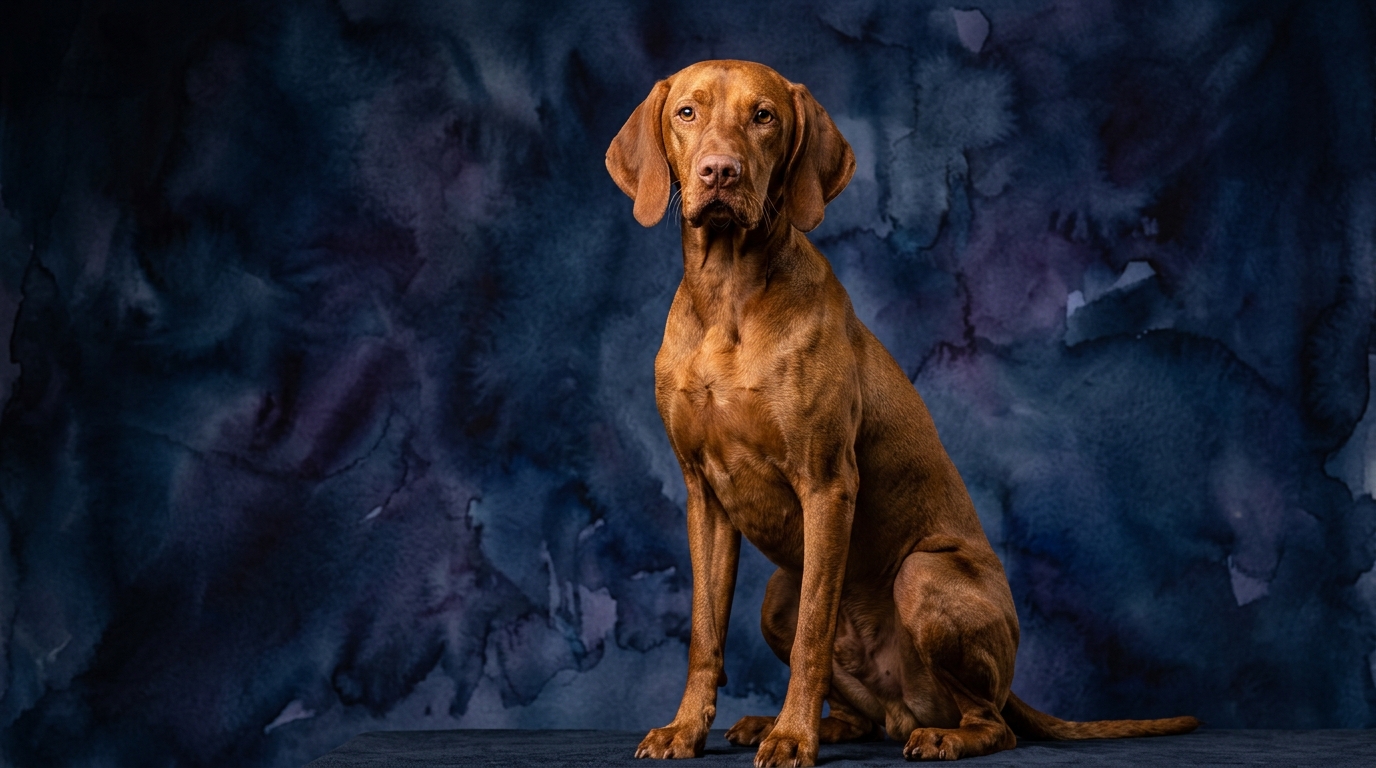
Side-by-Side Cognitive Profiles
The German Shorthaired Pointer (GSP), ranking #17 on the Coren scale, presents a formidable cognitive profile. Its Problem Solving score of 5/5 indicates an exceptional capacity for independent thought, complex reasoning, and figuring out novel situations without direct guidance. Training Speed is rated at 4/5, suggesting a quick grasp of new commands and routines. Social Intelligence, at 4/5, denotes a good understanding of human cues and emotional states, though not as pronounced as some breeds. An Instinctive Drive of 5/5 underscores their powerful genetic predisposition for hunting, tracking, and retrieving, making these behaviors deeply ingrained. Memory, at 4/5, ensures they retain learned information and past experiences effectively.
The Vizsla, with a Coren ranking of #31, offers a slightly different, yet equally impressive, cognitive makeup. Their Problem Solving is rated 4/5, indicating strong intelligence in this area, though perhaps a preference for guidance in intricate tasks compared to the GSP. Like the GSP, their Training Speed is 4/5, pointing to a similar rate of command acquisition. Where the Vizsla truly shines is in Social Intelligence, scoring a perfect 5/5. This reflects an extraordinary ability to read human emotions, intentions, and subtle body language, fostering deep, empathetic bonds. An Instinctive Drive of 5/5 mirrors the GSP’s innate drive for fieldwork and companionship. Memory, also at 4/5, means they recall experiences and lessons with efficiency.
Where the German Shorthaired Pointer Wins Cognitively
The German Shorthaired Pointer’s distinct cognitive advantage lies squarely in its Problem Solving capacity, rated at 5/5. This superior score suggests GSPs possess a more pronounced ability to independently analyze, strategize, and execute solutions to unfamiliar challenges. For instance, a GSP might more readily figure out how to open a complex puzzle toy or navigate an intricate obstacle course on its own, demonstrating a higher level of cognitive ingenuity when faced with novel circumstances. Their minds are wired to actively engage with and manipulate their environment to achieve desired outcomes, rather than primarily relying on human cues or established routines.
This elevated problem-solving acumen also contributes to their higher Coren rank of #17. While Coren's metric primarily measures the number of repetitions needed to learn a new command, a dog with stronger problem-solving skills often requires fewer trials because they are more adept at understanding the underlying logic or sequence of a new task. This means a GSP is likely to 'put the pieces together' faster when presented with a new, multi-step command or a unique training scenario, interpreting cause-and-effect relationships with greater speed and independence.
Where the Vizsla Wins Cognitively
The Vizsla's unique cognitive strength is unequivocally in its Social Intelligence, earning a top score of 5/5. This dimension signifies an unparalleled attunement to human emotional states, intentions, and subtle non-verbal cues. A Vizsla isn't just listening to commands; it's keenly observing your facial expressions, body language, and tone of voice, often anticipating your desires before they are verbally expressed. This exceptional social radar allows them to form incredibly deep, reciprocal bonds, translating into a dog that feels intensely connected and responsive to its human companion's mood and presence.
This pronounced social intelligence means Vizslas excel in roles where partnership and mutual understanding are paramount. They might seem to 'know' what you want through a glance or a shift in posture, making them remarkably intuitive companions. While their Problem Solving score of 4/5 is robust, their inclination is often to seek guidance and collaborate with their human partners rather than always attempting independent solutions. Their cognitive framework is optimized for profound interpersonal engagement, making them masters of co-regulation and emotional resonance within a family unit. This intense social wiring also manifests as a strong desire for constant proximity and interaction, famously earning them the 'Velcro dog' moniker.
Which is Easier to Train and Why
Both the German Shorthaired Pointer and the Vizsla share an impressive Training Speed of 4/5, suggesting they both learn new commands and routines at a commendable pace. However, the 'ease' of training can manifest differently due to their distinct cognitive strengths. The GSP's 5/5 Problem Solving capability means they are likely to grasp the *concept* behind complex commands or chained behaviors faster. They might quickly figure out the sequence of actions required to retrieve a specific object from a group or navigate a tricky agility course, understanding the 'why' and 'how' with fewer repetitions from a purely logical standpoint.
Conversely, the Vizsla's 5/5 Social Intelligence can make them *appear* easier to train for many owners, even with a 4/5 Problem Solving score. Their intense desire to please and their profound attunement to their trainer's emotions and body language often translates into exceptional cooperativeness and eagerness. A Vizsla might be more inherently motivated by positive affirmation and the joy of mutual engagement, readily offering behaviors they perceive will earn your approval, even if the conceptual understanding of a new task takes a fraction longer. This high social drive often makes them remarkably biddable and a pleasure to work with, fostering a strong training partnership built on rapport. The shared 5/5 Instinctive Drive in both breeds means training for impulse control and channeling their natural hunting behaviors will be a consistent, vital component for either.
Family Pet for Active vs. Relaxed Owners
For active owners, both the German Shorthaired Pointer and the Vizsla are exceptional choices, given their shared 5/5 Instinctive Drive. This means both breeds require substantial daily exercise, mental engagement, and opportunities to utilize their natural sporting abilities. An active family that enjoys hiking, running, hunting, or dog sports will find either breed thrives in such an environment. The GSP's superior Problem Solving (5/5) means they will particularly benefit from mentally stimulating activities like advanced obedience, scent work, or complex puzzle games that challenge their intellect as much as their bodies. They are often independent thinkers who appreciate tasks that allow them to deduce and achieve.
The Vizsla, with its 5/5 Social Intelligence, makes an outstanding companion for active owners who also desire a deeply connected 'velcro' dog. They flourish when integrated into all family activities, craving constant physical proximity and interaction. While they need the same physical exertion as a GSP, a Vizsla's happiness is intrinsically tied to being with their people. For owners seeking a partner in every adventure, one who will shadow their every move and offer constant affectionate presence, the Vizsla's cognitive design makes them supremely suited. Neither breed is suitable for truly relaxed, sedentary owners; their powerful instinctive drives and energetic natures demand significant daily commitment to physical activity and mental stimulation. Ignoring these needs in either breed can lead to boredom-induced behavioral issues.
The Verdict
Choose the German Shorthaired Pointer if you seek a highly independent problem-solver capable of exceptional self-direction and thrive on providing complex mental challenges alongside robust physical activity.
Opt for the Vizsla if you desire an incredibly socially attuned companion who forms deep, empathetic bonds, excels in cooperative tasks, and will thrive as an integrated 'velcro' partner in all your active endeavors.
🧠 Find Your Pet's IQ Score
Our Pet IQ Lab assessment covers 25+ tests across 5 cognitive dimensions — personalized to your breed.
Take the Full IQ Test →Frequently Asked Questions
Which breed requires more mental stimulation?
Based on its 5/5 Problem Solving score, the German Shorthaired Pointer generally requires more complex mental stimulation to keep its active mind engaged. They thrive on challenges that allow them to figure things out independently, such as intricate puzzle toys or advanced training scenarios, in addition to physical exercise.
Are Vizslas truly 'velcro dogs' due to their intelligence?
Yes, the Vizsla's 5/5 Social Intelligence is a direct cognitive driver behind their 'velcro dog' reputation. This high score indicates an exceptional capacity for reading human cues and forming deep, empathetic bonds, leading them to crave constant proximity and interaction with their human companions.
Which breed might be better for a first-time active dog owner?
For a first-time active owner, the Vizsla's superior Social Intelligence (5/5) might make the training process feel more cooperative and rewarding due to their intense desire to please and strong bond with their human. While both are energetic, the Vizsla's biddability rooted in social connection can be slightly more forgiving than the GSP's more independent problem-solving approach.