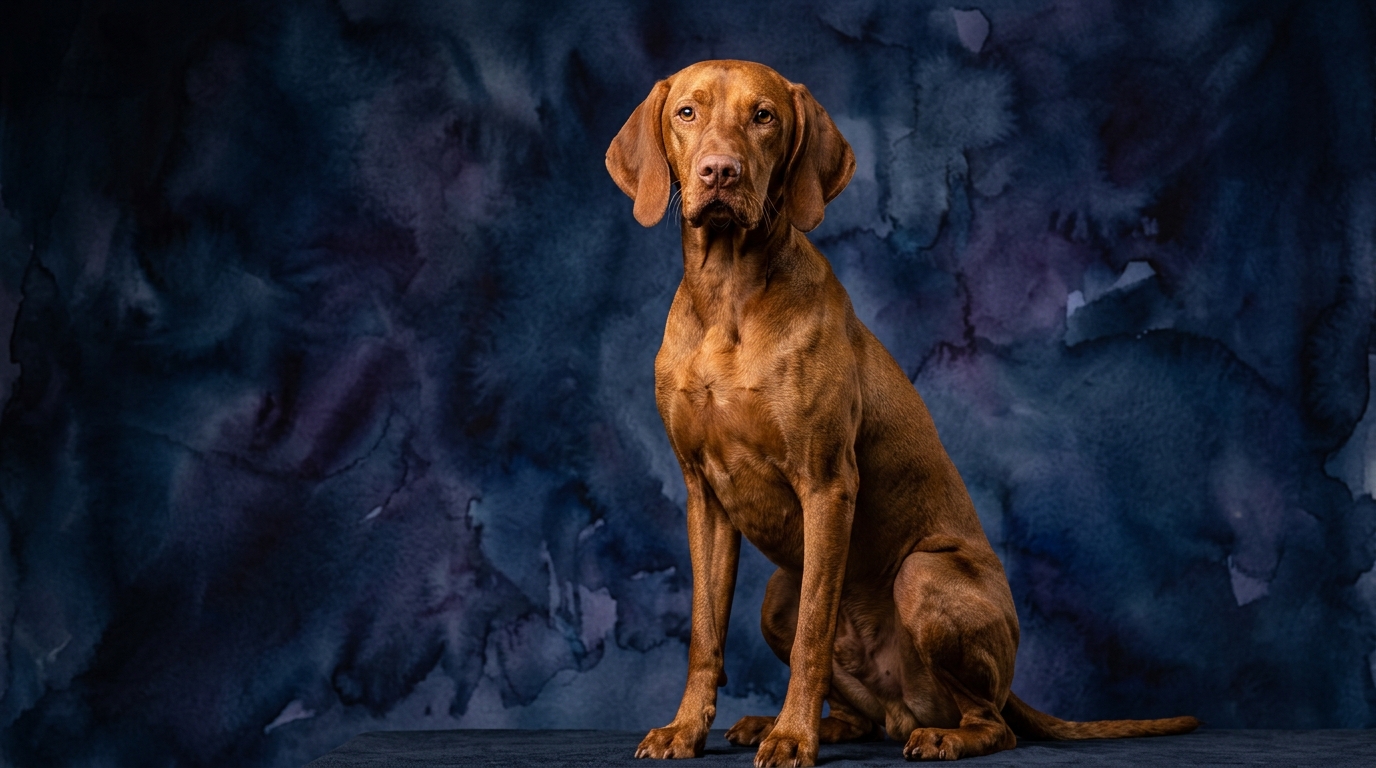
Vizsla at a glance
| IQ Rank / Score | #31 |
|---|---|
| Trainability | ★★★★☆ (4/5) |
| Social Intelligence | ★★★★★ (5/5) |
| Lifespan | 11-14 years |
| Shedding | Low to moderate |
| Exercise Needs | High (60+ min/day + training) |
| Origin | Hungary |
Meet the Vizsla: Hungary's Golden Companion
Originating from Hungary, the Vizsla is a medium-sized sporting dog celebrated for its distinctive golden rust coat and elegant, athletic build. Bred for hunting, these dogs possess a remarkable natural aptitude for pointing and retrieving, a skill refined over centuries. But beyond their prowess in the field, Vizslas are perhaps best known for their profound connection with their human families, leading to their affectionate "velcro dog" nickname.
As a member of the Sporting Group, the Vizsla's historical role involved working closely with hunters, covering diverse terrains from open fields to dense brush. This partnership required not only keen senses and physical endurance but also a significant capacity for cooperation and responsiveness. They are a true testament to selective breeding for both physical capabilities and cognitive traits that foster strong human-animal bonds.
Stanley Coren's obedience ranking places the Vizsla at a respectable #31 out of 138 breeds, reflecting their readiness and capability to learn and follow commands. This position hints at a dog that is not only biddable but also eager to engage in structured activities, making them amenable to various forms of training, from competitive sports to complex tasks around the home.
Unpacking the Vizsla Intelligence Profile
The Cosmic Pet's Pet IQ Lab assesses canine intelligence across several key dimensions, and the Vizsla shines in many areas, particularly where human interaction is paramount. Their profile reveals a dog with significant cognitive strengths: Problem Solving: 4/5, Training Speed: 4/5, Social Intelligence: 5/5, Instinctive Drive: 5/5, and Memory: 4/5. This unique combination paints a picture of a dog that is both an adept worker and a deeply connected companion.
The high scores in Problem Solving and Training Speed highlight the Vizsla's mental agility and eagerness to learn. They quickly grasp new concepts and enjoy the challenge of figuring things out, whether it's navigating an agility course or understanding a complex multi-step command. This makes them highly responsive to consistent, positive reinforcement training methods.
However, it's their Social Intelligence and Instinctive Drive, both scoring a perfect 5/5, that truly define the Vizsla's "velcro intelligence." This breed possesses an exceptional ability to read human cues, understand intentions, and form incredibly strong emotional attachments. Their instinctive drive isn't just about hunting; it's about channeling that intense focus and energy into cooperative tasks, often centered around their human partner. Their impressive memory further solidifies their ability to recall learned behaviors and past experiences, reinforcing their bond and making them reliable companions.
A Near-Extinction Story: The Vizsla's Resilience
The Vizsla's remarkable traits and unwavering loyalty are even more profound when considering their tumultuous history. This cherished breed nearly went extinct after WWII, a period of immense upheaval that devastated many European canine populations. The entire modern Vizsla population descends from fewer than a dozen dogs saved by Hungarian breeders who bravely escaped to Austria, safeguarding the future of this unique lineage.
This incredible story of survival underscores the enduring value of the Vizsla's characteristics. The dedication of those breeders, risking everything to preserve the breed, speaks volumes about the Vizsla's irreplaceable qualities—their intelligence, their gentle nature, and their unparalleled companionship. It's a testament to the fact that their 'velcro' bond is not just a preference but an intrinsic part of their identity that has resonated with humans for centuries.
Nurturing Your Vizsla's Brain: Training and Enrichment
Engaging a Vizsla's cognitive abilities is key to a well-adjusted and happy dog. Given their high scores in Problem Solving and Training Speed, they thrive on consistent mental stimulation. Early socialization and reward-based training are crucial, not just for obedience but for channeling their significant instinctive drive into productive activities. Field trials, obedience competitions, agility, and even scent work are excellent outlets that tap into their natural talents.
Their strong memory and social intelligence mean they learn quickly from both positive and negative experiences, emphasizing the need for gentle, consistent handling. Activities that involve working collaboratively with their human, such as retrieving games or tracking, will reinforce their bond and fulfill their innate desire for partnership. Providing ample physical exercise is also paramount, as a physically tired Vizsla is often a mentally calmer one, more receptive to cognitive challenges.
3 At-Home Tests to Measure Your Vizsla's IQ
These tests are adapted from peer-reviewed ethology research. No equipment is needed beyond items you have at home. Run each test 5–10 times for reliable results.
The Myth: "Vizslas are too dependent to be effective working dogs"
✅ In reality, a Vizsla's profound connection to its human partner is precisely what makes them exceptional working dogs. Their desire to be close and please their handler translates into incredible focus and cooperation in the field, making them highly responsive and trainable. This deep bond allows for seamless communication and an unwavering commitment to working alongside their human, enhancing their effectiveness in everything from hunting to competitive dog sports.
Vizsla vs. Similar Breeds
🧠 What's Your Dog's IQ Score?
Our full Pet IQ Lab assessment includes 12+ tests across 5 cognitive dimensions, calibrated for Vizslas specifically.
Take the Full IQ Test →Frequently Asked Questions
How smart is a Vizsla?
Our Pet IQ Lab framework scores cognition across five dimensions (max 25). The Vizsla totals 22/25 — exceptionally high for a domestic dog. The full article breaks down each dimension with at-home tests.
Are Vizslas easy to train?
Vizslas are generally easy to train when you use consistent, reward-based sessions. They score 4/5 on Training Speed in our breed profile.
Are Vizslas good with children and other pets?
Yes — their Social Intelligence rates 5/5 in our Pet IQ Lab framework. With early socialization and supervised play, most Vizslas integrate well into families with respectful children and other pets.
Do Vizslas need a lot of mental stimulation?
Absolutely. With Problem Solving 4/5 and Instinctive Drive 5/5, Vizslas need daily mental work — puzzle feeders, scent games, training sessions, or nose-work — to avoid boredom.
How much exercise does a Vizsla need?
Vizslas need active engagement. Plan for 45-60 minutes of exercise and training per day, plus mental stimulation.
How good is a Vizsla's memory?
Vizslas score 4/5 on memory. They remember routines, hiding spots, and learned cues for months, sometimes years.
What is the typical lifespan of a Vizsla?
Expect a lifespan of 11-14 years for a healthy Vizsla.
The Vizsla stands as a testament to the unique interplay of instinctive brilliance and profound social connection, embodying what we call "velcro intelligence." Understanding their specific cognitive strengths allows us to appreciate not just their capabilities in the field, but the depth of their loyalty and the unparalleled bond they forge with their human family.