
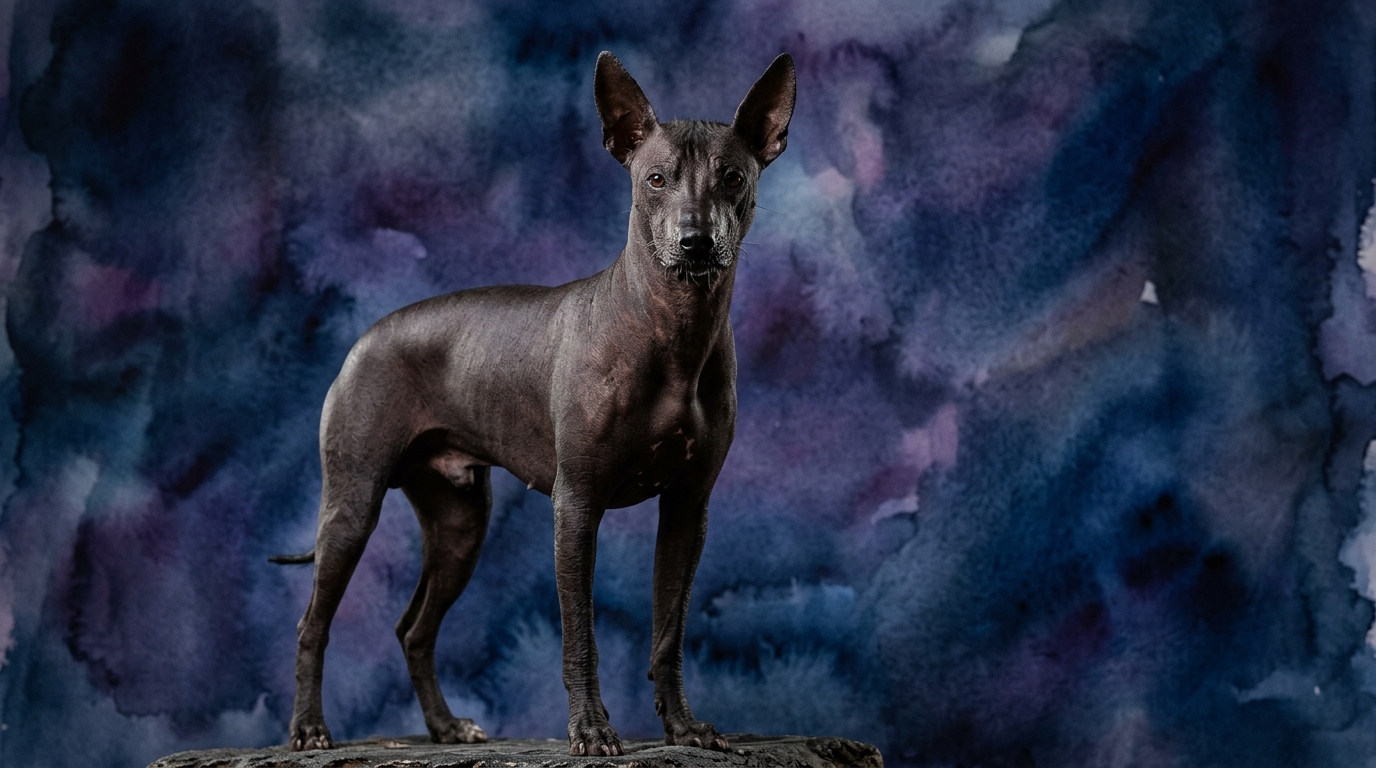
Side-by-Side Cognitive Profiles: GSP vs. Xoloitzcuintli
Our Cosmic Pet Pet IQ Lab provides a unique lens through which to examine breed-specific cognitive traits. The German Shorthaired Pointer (GSP), a member of the Sporting group, consistently earns high marks, reflecting its heritage as a versatile hunting companion. Its Problem Solving is rated 5/5, indicating an exceptional capacity for figuring out complex tasks and adapting strategies. Training Speed stands at 4/5, showcasing a rapid uptake of new commands and routines, while Social Intelligence, also 4/5, highlights their adeptness at reading human cues and forming strong bonds. A dominant characteristic is their Instinctive Drive, a perfect 5/5, reflecting their powerful prey drive and unwavering focus on scent and retrieve. Finally, their Memory is strong at 4/5, allowing them to retain complex sequences and associations over time.
In contrast, the Xoloitzcuintli, or Xolo, from the Non-Sporting group, presents a different cognitive landscape, shaped by centuries as a loyal companion rather than a working specialist. Across all five dimensions, the Xolo is rated 3/5. This means their Problem Solving is capable of navigating routine challenges and learning from experience, though perhaps without the same strategic depth as a GSP. Their Training Speed suggests they learn at a moderate pace, requiring consistent and patient instruction. Social Intelligence at 3/5 indicates they form deep, sensitive bonds with their immediate family, though they can be reserved with strangers. Instinctive Drive, also 3/5, points to a general curiosity and moderate prey drive, not the intense specialization of a hunter. Their Memory at 3/5 is good for familiar routines and family members, but may not encompass the extensive recall for complex, multi-layered tasks.
Where the German Shorthaired Pointer Shines Cognitively
The GSP's cognitive architecture is a testament to its purpose-bred history. Their 5/5 Problem Solving isn't just about figuring things out; it's about devising effective strategies in dynamic environments. For instance, a GSP might not merely try every solution to open a complex puzzle toy; it might analyze the mechanism, understanding how to manipulate parts to achieve its goal, demonstrating a higher-order cognitive process. This translates into their ability to navigate dense cover or intricate scent trails, adapting their approach based on real-time feedback from their senses and their environment.
Coupled with a 4/5 Training Speed and 4/5 Memory, GSPs excel at quickly internalizing multi-step commands and performing them with precision. They can learn an entire agility course sequence after just a few repetitions, remembering the order and execution of each obstacle. Their unparalleled 5/5 Instinctive Drive further enhances these capabilities, providing an intrinsic motivation to engage with tasks that mimic their hunting heritage. This isn't just physical energy; it's a cognitive commitment, allowing them to maintain intense focus on a scent, ignoring distractions, for extended periods. This sustained cognitive engagement makes them exceptional partners for demanding activities where mental stamina is as crucial as physical endurance.
The Unique Cognitive Strengths of the Xoloitzcuintli
While the Xoloitzcuintli's cognitive scores are generally moderate, their strengths lie in a different, more nuanced realm. Their 3/5 Social Intelligence, though not broadly applied, is profoundly deep within their core family unit. Xolos are often described as exceptionally sensitive and attuned to their owners' emotional states, demonstrating a specialized form of social processing. They might anticipate a need for comfort or a change in mood, offering quiet companionship without explicit cues. This ability to read subtle human emotional shifts and respond appropriately is a significant cognitive asset for a companion animal, fostering powerful, intimate bonds.
Furthermore, their moderate 3/5 Instinctive Drive often translates into a keen environmental awareness without the overwhelming urge to constantly pursue external stimuli. Xolos are observant, often taking in their surroundings with a thoughtful, cautious demeanor. This can manifest as a practical intelligence focused on self-preservation and comfort within their familiar territory, rather than an outward-directed drive to conquer. Their independence, sometimes perceived as a training challenge, can also be a cognitive strength; they might evaluate situations and decide if a command aligns with their perceived safety or comfort, rather than blindly obeying, showcasing a form of discerning judgment specific to their personal well-being. This creates a companion who is not just present, but thoughtfully engaged with their immediate, familiar world.
Training Dynamics: GSP's Eagerness vs. Xolo's Independent Spirit
When it comes to training, the German Shorthaired Pointer generally presents a more straightforward path for structured learning. Their 4/5 Training Speed and 5/5 Problem Solving mean they not only grasp new commands quickly but also understand the underlying objective of the task. They are eager to work alongside their handler, viewing training as a collaborative problem-solving exercise, especially when it taps into their 5/5 Instinctive Drive. This means incorporating scent work, retrieving, or complex sequences into training will be met with enthusiasm and rapid progression. GSPs thrive on clear, consistent direction and a sense of purpose, often anticipating the next step in a routine due to their strong memory.
The Xoloitzcuintli, with its uniform 3/5 scores, requires a more nuanced approach. They are not 'difficult' to train, but rather learn at a more deliberate pace and respond best to methods built on trust, patience, and positive reinforcement. Their independence and selective social intelligence mean they might not always be universally eager to please; instead, they need to understand the 'why' or find inherent value in the command. Expecting immediate, complex obedience can be frustrating. Training sessions should be engaging, relatively short, and consistently rewarding, focusing on building a strong relationship rather than demanding rote compliance. Their keen social sensitivity means harsh corrections are counterproductive, potentially leading to withdrawal or a refusal to engage.
Matching Breeds to Lifestyles: Active Explorers vs. Calm Companions
The cognitive profiles of these two breeds offer clear indicators for owner suitability. The German Shorthaired Pointer, with its dominant 5/5 Instinctive Drive and high Problem Solving, is undeniably suited for active owners. These dogs possess boundless physical and mental energy that demands an outlet. Owners who enjoy rigorous outdoor activities like running, hiking, biking, or participating in dog sports such as agility, field trials, or dock diving will find a GSP to be an unparalleled partner. A GSP thrives on having a job, a purpose that engages their sharp mind and powerful body. A lack of consistent mental and physical challenges can lead to boredom, manifesting as destructive behaviors or excessive vocalization, as their problem-solving mind seeks its own entertainment.
Conversely, the Xoloitzcuintli, with its moderate cognitive drives and deep social sensitivity within its family, is a better match for owners seeking a calmer, more companion-oriented lifestyle. While Xolos still require regular exercise and mental engagement, their needs are less intense and more focused on companionship. They are generally content with moderate daily walks and enjoy quiet time spent relaxing with their family. Their specialized social intelligence makes them excellent, comforting house companions, less prone to demanding constant high-octane activity. They appreciate comfort, routine, and close proximity to their loved ones, making them ideal for individuals or families who prioritize a serene home environment and deep, quiet bonds over constant adventure.
The Verdict
Choose a German Shorthaired Pointer if you are an active individual or family seeking a highly trainable, energetic partner for demanding outdoor pursuits, competitive dog sports, or a working role, who can provide consistent mental and physical challenges.
Opt for a Xoloitzcuintli if you desire a sensitive, loyal, and relatively calm companion who thrives on close family bonds and enjoys a more relaxed pace of life, with an understanding for their independent spirit and nuanced emotional intelligence.
🧠 Find Your Pet's IQ Score
Our Pet IQ Lab assessment covers 25+ tests across 5 cognitive dimensions — personalized to your breed.
Take the Full IQ Test →Frequently Asked Questions
Are Xoloitzcuintli difficult to train?
Xolos are not inherently difficult, but they learn at a moderate pace and respond best to patient, positive reinforcement training built on trust. Their independent nature means they might not always be universally eager to please, requiring owners to make training engaging and rewarding.
Do German Shorthaired Pointers need a lot of mental stimulation?
Absolutely. GSPs possess exceptional problem-solving abilities and a strong instinctive drive, meaning they require significant mental stimulation in addition to physical exercise. Without engaging tasks or training, they can become bored and potentially destructive.
Which breed is better for first-time dog owners?
Neither breed is typically recommended as an 'easy' first dog. GSPs require experienced owners who can manage their high energy and strong drives, while Xolos benefit from owners who understand their sensitive, independent nature and can commit to patient, consistent training and socialization.