Side-by-Side IQ Profile: GWP vs. IRWS
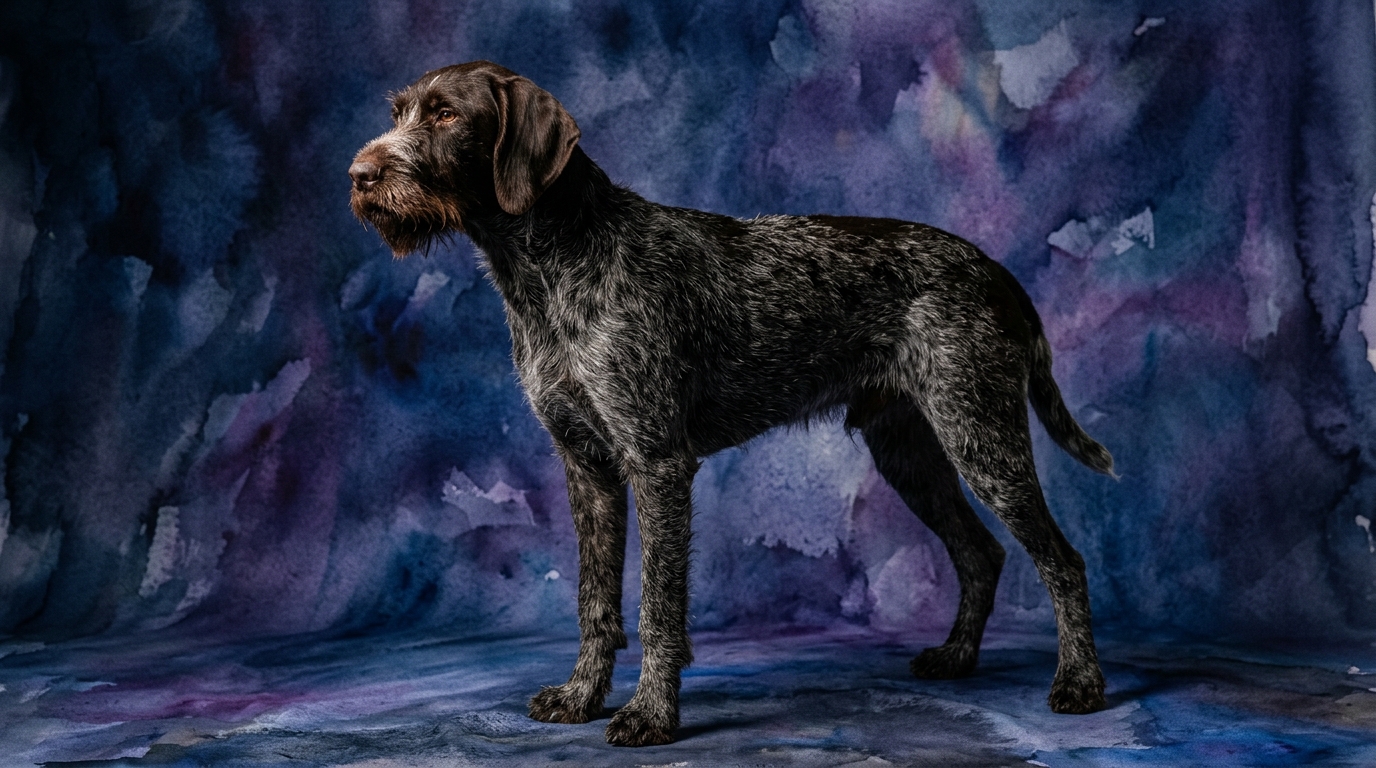
The Cosmic Pet Pet IQ Lab employs a five-dimensional framework to assess canine cognition, offering a granular view beyond general perceptions. For the German Wirehaired Pointer (GWP), a breed recognized for its working prowess, its cognitive scores paint a picture of a focused and efficient learner. The GWP holds a Coren rank of #28, indicating a strong capacity for obedience learning and a notable place among breeds that respond well to structured training. Its Problem Solving is rated at 4/5, demonstrating a robust ability to navigate complex situations and independently figure out solutions, whether it's understanding how to manipulate a puzzle or retrieve a hidden object. Training Speed also scores 4/5, meaning these dogs grasp new commands and routines with impressive alacrity, often requiring fewer repetitions to solidify a behavior. Their Social Intelligence stands at 3/5; while capable of forming strong bonds, their interactions are often purpose-driven, understanding human cues but prioritizing task-oriented engagement. Instinctive Drive is 3/5, reflecting pronounced hunting instincts that propel them to scent, point, and retrieve, a powerful motivator shaping much of their behavior. Finally, Memory is 4/5, indicating a commendable capacity for recall, aiding consistent performance over time.
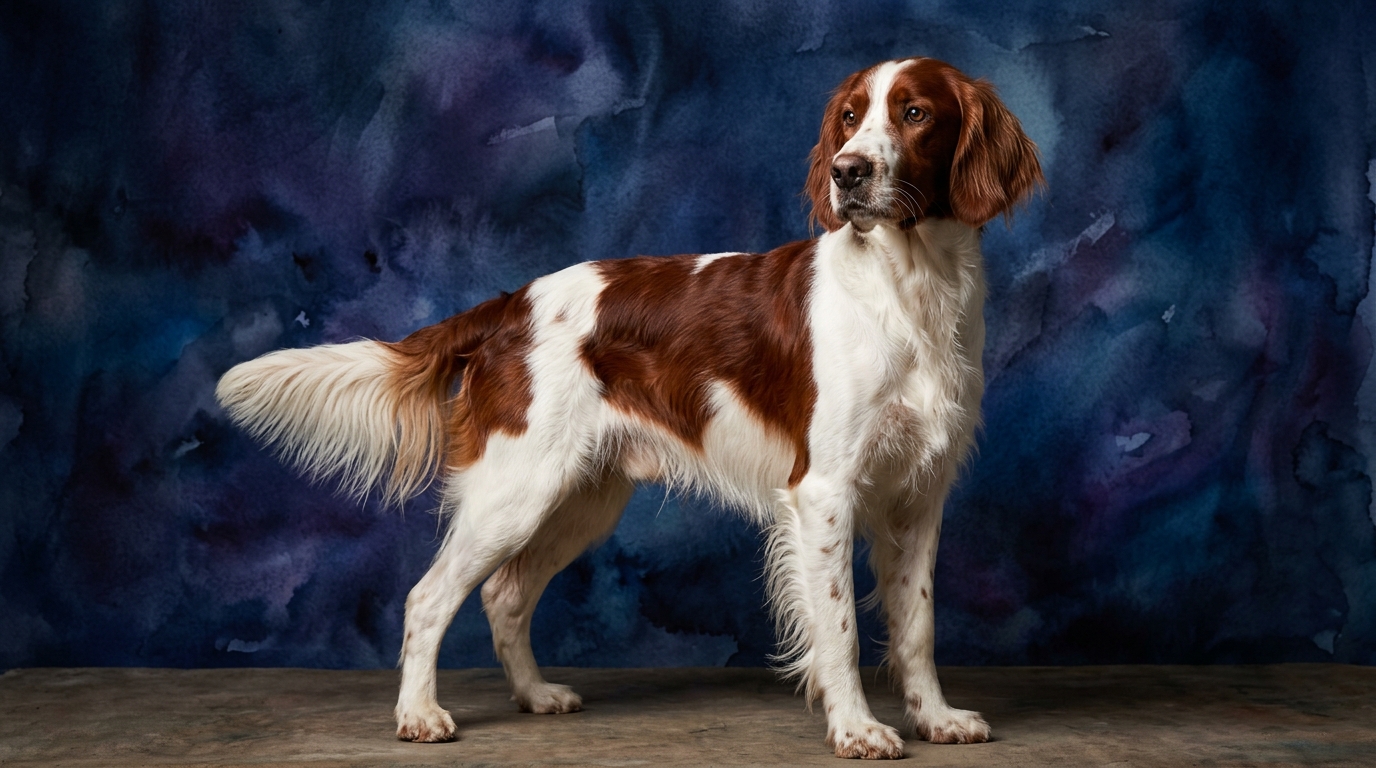
In contrast, the Irish Red and White Setter (IRWS), while sharing a sporting heritage, presents a slightly different cognitive profile. This breed is not specifically Coren-ranked, which might suggest their cognitive strengths lie outside the specific metrics of obedience-focused studies or simply reflect a less common breed in general obedience trials. Their Problem Solving is rated 3/5, showing a moderate capacity to work through straightforward challenges but potentially requiring more guidance than a GWP to crack new puzzles. Training Speed also comes in at 3/5, meaning they learn at a steady, respectable pace, capable of mastering commands with consistent reinforcement, though perhaps not as rapidly as some other sporting breeds. Social Intelligence is 3/5, similar to the GWP, but often manifests as a more overtly amiable and engaging warmth, fostering strong emotional connections within their family. Their Instinctive Drive is 3/5, characteristic of their heritage, demonstrating a strong, innate drive for pointing and bird work that is persistent and requires appropriate outlets. Memory is 3/5, indicating a solid ability to retain learned behaviors and recognize familiar people and places, though they might benefit from more regular refreshers than a breed with a higher memory score.
Where the German Wirehaired Pointer Wins Cognitively
The German Wirehaired Pointer's cognitive strengths distinctly shine in areas demanding quick uptake and independent thought. Their problem-solving score of 4/5 indicates a dog that can more readily assess a novel situation and devise a solution, whether it's navigating a complex scent trail or figuring out how to manipulate a puzzle toy. This translates into a dog that often requires less explicit guidance in new scenarios, capable of making effective decisions on its own. Furthermore, their training speed (4/5) means they typically consolidate new commands and behaviors with fewer repetitions. This efficiency in learning makes them particularly responsive to advanced training regimens and complex multi-step tasks, where processing information and executing actions rapidly is paramount. Their memory (4/5) complements this, ensuring that once a lesson is learned, it tends to stick, contributing to a reliable and consistent working partner over the long term. For tasks requiring precision and rapid learning in dynamic environments, the GWP holds a clear cognitive edge, making them highly suitable for competitive dog sports or demanding field work.
Where the Irish Red and White Setter Wins Cognitively
While the Irish Red and White Setter may not exhibit the same rapid problem-solving or training speed as the GWP, their cognitive profile offers different advantages, particularly in their approach to learning and interaction. Their social intelligence (3/5) is on par with the GWP, but often manifests with a more effusive and engaged warmth, fostering strong emotional connections within a family. This subtle difference can make them feel more 'tuned in' to the emotional landscape of their human companions, potentially making them more responsive to praise and positive reinforcement rooted in affection rather than pure task completion. Their steady learning pace (3/5) means they are less likely to become overwhelmed by training and can develop a deep understanding of commands through consistent, patient teaching. While their problem-solving (3/5) is moderate, their persistence and amiable nature can lead them to eventually crack challenges, often with a cheerful disposition. The IRWS's cognitive strengths lie in their balanced approach, offering a companion that learns reliably and engages warmly, without necessarily needing to be the fastest learner in every scenario, focusing instead on a harmonious partnership.
Which is Easier to Train and Why
Based on their respective scores, the German Wirehaired Pointer presents as the breed that is generally easier to train, especially concerning the acquisition of new commands and skills. The GWP’s training speed of 4/5 indicates they pick up new concepts and cues with greater alacrity, often requiring fewer repetitions to achieve proficiency. This efficiency stems from a combination of their focused attention, desire to work, and their solid memory (4/5) which helps them retain lessons. For instance, teaching a GWP a complex retrieve pattern or a sequence of obedience commands might progress more quickly due to their capacity for rapid information processing and recall. In contrast, the Irish Red and White Setter's training speed (3/5) suggests a more moderate learning pace. While certainly trainable, an IRWS might require more consistent, patient repetition and a slightly longer period to fully grasp and reliably execute new behaviors. Their amiable nature ensures they are willing participants, but their learning curve is simply not as steep as the GWP's, meaning an owner might dedicate more time to solidify each new skill. The GWP's higher problem-solving score also means they might independently figure out how to perform certain tasks more readily, reducing the need for extensive training on every single step.
Which Suits Active Owners vs. Relaxed Owners
Both breeds are sporting dogs, implying a need for activity, yet their cognitive profiles and energy levels suggest nuances in suitability for different owner lifestyles. The German Wirehaired Pointer, with its strong instinctive drive (3/5) and high problem-solving capacity (4/5), thrives with active owners who enjoy engaging in structured activities like hunting, field trials, agility, or advanced obedience. Their mental acuity and physical stamina mean they require substantial physical exercise coupled with consistent mental challenges to prevent boredom and destructive behaviors. An owner who can provide daily vigorous exercise, consistent training, and opportunities for their dog to utilize its problem-solving abilities will find the GWP an incredibly rewarding and well-adjusted companion. For more relaxed owners, a GWP might become restless and channel its intelligence and drive into less desirable outlets, indicating they are not a match for a sedentary lifestyle.
The Irish Red and White Setter, while also an active sporting breed with an instinctive drive (3/5), often exhibits a slightly more biddable and less intensely focused demeanor when not in the field. They still require daily exercise and mental engagement, but their moderate problem-solving and training speed might make them a better fit for active owners who prefer more relaxed, consistent training sessions rather than high-intensity, rapid-fire learning. They integrate well into family life and enjoy being involved in activities, but might be slightly more forgiving of an occasional missed intense training session compared to a GWP. Neither breed is suited for truly 'relaxed' or sedentary owners, as both possess significant energy and working instincts that need appropriate outlets. However, the IRWS might be a touch more adaptable to an active family life that isn't exclusively focused on rigorous working dog pursuits, while the GWP demands a more dedicated, structured engagement of its formidable cognitive and physical capacities.
The Verdict
Choose the German Wirehaired Pointer if you are an experienced, active owner seeking a highly trainable, versatile working partner for advanced field work, dog sports, or complex obedience, appreciating a dog that learns quickly and solves problems independently.
Choose the Irish Red and White Setter if you are an active family seeking a warm, amiable companion for consistent field work or active family adventures, valuing a dog that learns steadily and forms strong emotional bonds.
🧠 Find Your Pet's IQ Score
Our Pet IQ Lab assessment covers 25+ tests across 5 cognitive dimensions — personalized to your breed.
Take the Full IQ Test →Frequently Asked Questions
Do German Wirehaired Pointers make good family pets?
German Wirehaired Pointers can be excellent family pets for active households that understand their need for physical exercise and mental stimulation. They tend to bond closely with their family but may require consistent training and socialization to manage their strong working instincts effectively.
How much exercise do Irish Red and White Setters need daily?
Irish Red and White Setters require a significant amount of daily exercise, typically an hour or two of vigorous activity like running, hiking, or field work. Their sporting heritage means they thrive on activities that engage both their bodies and their minds consistently.
Are Irish Red and White Setters prone to separation anxiety?
While individual temperament varies, Irish Red and White Setters are generally social dogs that enjoy companionship and can be prone to separation anxiety if left alone for excessive periods without proper training and engagement. Their amiable nature means they thrive on human interaction and can become distressed without it.