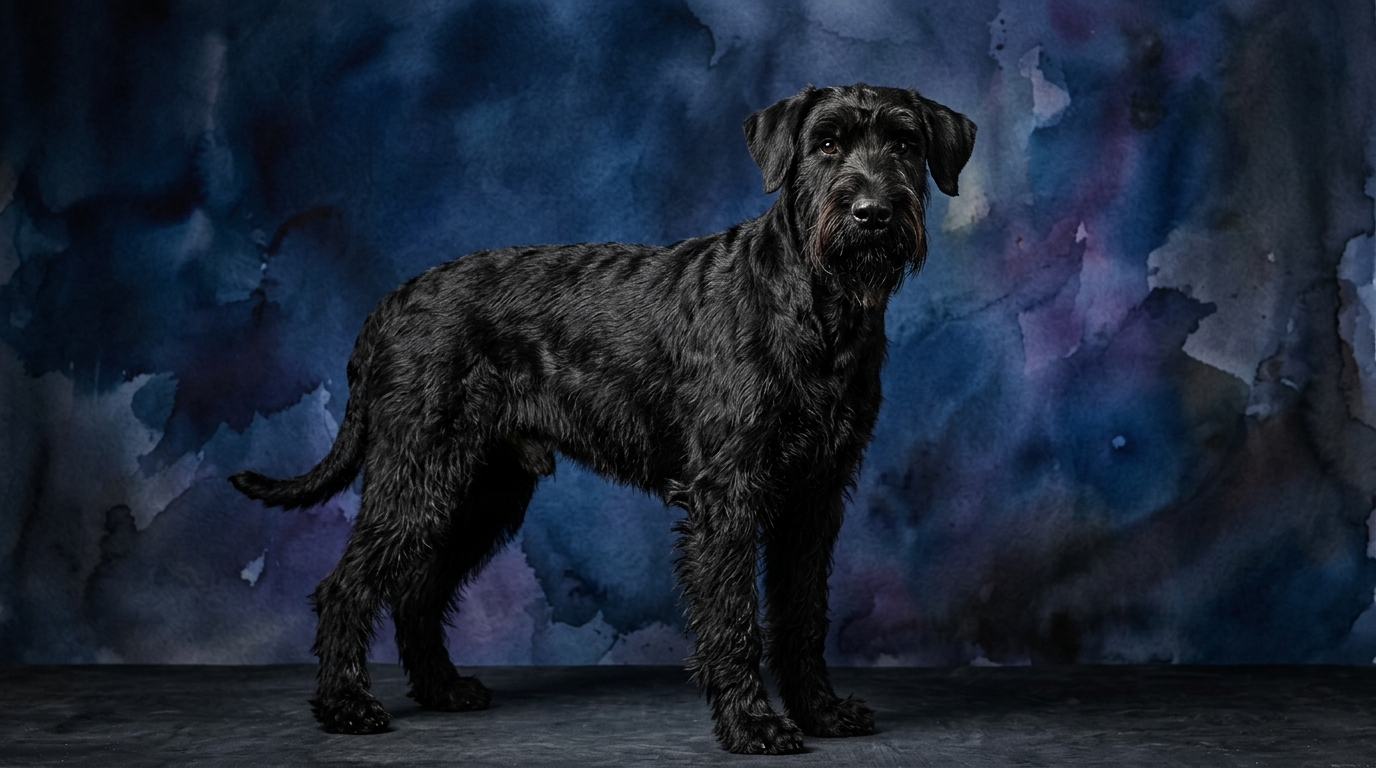

Side-by-Side Cognitive Profile
**Giant Schnauzer:** Problem Solving (4/5): These dogs exhibit a strong capacity for figuring out complex tasks, often demonstrating creative solutions beyond simple repetition, understanding objectives rather than just following commands. Training Speed (4/5): Their ability to grasp new concepts quickly is notable, making them fast learners in obedience and specialized tasks, forming associations between actions and outcomes efficiently. Social Intelligence (3/5): While capable of deep bonds with family, Giant Schnauzers can be reserved or discerning with strangers; their social understanding leans towards loyalty within a defined pack. Instinctive Drive (3/5): Bred for guarding and herding, their drive manifests as a strong protective instinct and a desire for purpose, a focused, task-oriented energy. Memory (4/5): Giant Schnauzers retain learned behaviors and experiences over long periods, making their training durable and their understanding of routines robust.
**Boerboel:** Problem Solving (3/5): Boerboels are capable problem-solvers, approaching challenges with steady, pragmatic intelligence; they are persistent and effective, if not always quick to innovate. Training Speed (3/5): They learn at a moderate pace, requiring consistent, clear instruction and positive reinforcement, though once learned, concepts tend to stick. Social Intelligence (3/5): Boerboels display strong loyalty to family and can be wary of outsiders, with interactions characterized by a watchful, protective demeanor. Instinctive Drive (3/5): Their drive is primarily rooted in their historical role as farm guardians, resulting in a strong territorial and protective instinct, a calm, resolute watchfulness. Memory (3/5): Boerboels possess a solid memory for routines, commands, and experiences, recalling past lessons effectively, contributing to their reliability.
Where the Giant Schnauzer Excels Cognitively
The Giant Schnauzer generally exhibits a distinct edge in cognitive agility, particularly in problem-solving and the speed of skill acquisition. Their 4/5 problem-solving rating means they don't just learn *what* to do, but *how* to adapt and apply principles to novel situations; they can independently assess and devise strategies. Their 4/5 training speed translates to grasping complex command sequences or intricate tasks with fewer repetitions, forming strong cognitive links between actions, cues, and desired outcomes swiftly. Furthermore, their 4/5 memory ensures these quickly learned lessons are retained over extended periods, making training highly durable. An owner might observe a Giant Schnauzer recalling a specific command after months, demonstrating robust retention. This combination of rapid learning, analytical problem-solving, and strong memory makes the Giant Schnauzer a compelling choice for advanced obedience, dog sports, or complex working roles.
Boerboel's Unique Cognitive Strengths
While the Boerboel's cognitive scores are generally a point lower, their profile emphasizes a different kind of mental fortitude: unwavering consistency and deeply ingrained intelligence. Their cognitive strength lies not in lightning-fast acquisition, but in profound stability and reliable execution of their inherent purpose. For example, their 3/5 social intelligence translates into unwavering loyalty and a highly discerning nature regarding strangers, crucial for their protective duties, signifying a nuanced understanding of their inner circle versus potential threats. Their 3/5 instinctive drive channels into calm, resolute guardianship, where they patiently observe and react with measured force. This steady cognitive approach means they are less likely to be distracted, maintaining focus on core responsibilities. A Boerboel's cognitive 'win' is its profound dependability and predictable nature, making them exceptionally reliable companions for owners valuing steadfastness over flashy intellectual feats.
Trainability: Giant Schnauzer vs. Boerboel
When considering ease of training, the Giant Schnauzer generally presents a more straightforward path due to its higher scores in training speed (4/5) and problem-solving (4/5). These dogs are often eager students, quickly grasping new concepts and complex sequences, like a multi-step routine, with fewer repetitions. Their analytical mind allows them to connect cause and effect rapidly, meaning they understand *why* certain behaviors are rewarded. The Boerboel, with 3/5 in both, requires a different approach. They are trainable, but their learning process demands greater consistency, patience, and clarity. Boerboels learn by repetition and clear, firm guidance, needing more consistent practice sessions and explicit direction, as they are less likely to "figure out" what you want without precise prompts. For an owner seeking a dog that picks up skills with relative speed and enjoys mental challenges, the Giant Schnauzer offers an "easier" experience; for the Boerboel, it translates to a committed, patient owner valuing thoroughness.
Matching Intelligence to Owner Lifestyle
The distinction between active and relaxed owners for these breeds involves the level of cognitive engagement and structure provided. The Giant Schnauzer, with its 4/5 problem-solving and training speed, thrives with active owners offering consistent mental stimulation and structured activities like advanced obedience or dog sports. They genuinely enjoy having a job and need intellectual engagement; a "relaxed" owner offering minimal mental stimulation might find them bored, inventing their own "jobs," requiring an owner who actively directs their cognitive energies. The Boerboel, with its steady 3/5 scores, aligns differently. They are content with a clear routine and a defined role, often as a watchful guardian, not demanding constant novelty or intricate mental puzzles. A "relaxed" owner here means one who prefers a dog less demanding of constant intellectual challenges, content with a stable, predictable environment. While needing exercise and consistent training, their cognitive needs focus on reinforcing established patterns and roles. Thus, an active owner for dynamic mental sports might prefer the Schnauzer, while an owner valuing a steadfast, predictable, and loyal guardian, content with a structured but less frenetic mental life, might find the Boerboel a better fit.
The Verdict
Opt for the Giant Schnauzer if you are an engaged owner seeking a cognitively agile partner for advanced training, dog sports, or complex tasks, appreciating their rapid learning and robust memory. They thrive with owners who provide consistent mental challenges and value a dog that actively seeks to understand and solve problems.
Select the Boerboel if you prioritize a steadfast, profoundly loyal guardian with a stable temperament, and you are prepared to offer patient, consistent training and a clear, predictable environment. They are best for owners who appreciate a dog's unwavering dedication and deliberate, reliable cognitive approach to its responsibilities.
🧠 Find Your Pet's IQ Score
Our Pet IQ Lab assessment covers 25+ tests across 5 cognitive dimensions — personalized to your breed.
Take the Full IQ Test →Frequently Asked Questions
Does the lack of a Coren rank for the Boerboel mean it's not intelligent?
Not at all; Coren's ranking primarily assesses "working and obedience intelligence," focusing on trainability for specific tasks. Many breeds possess distinct forms of intelligence, like guarding or independent problem-solving, that aren't captured by this particular metric, and the Boerboel certainly demonstrates robust cognitive abilities.
How does a Giant Schnauzer's social intelligence (3/5) compare to its problem-solving (4/5)?
A Giant Schnauzer's 3/5 social intelligence suggests they are discerning and loyal within their family but may be reserved with strangers, while their 4/5 problem-solving indicates a strong capacity for independent thought and adapting to new situations. This means they can be highly capable thinkers without necessarily being broadly outgoing.
If a Boerboel has 3/5 in memory, does that mean it forgets things easily?
A 3/5 memory score for a Boerboel means they have a solid, functional memory, capable of retaining routines and commands reliably, but perhaps not with the same nuanced detail or long-term recall for intricate sequences as a breed scoring 4/5. They still build strong associations and recall past experiences effectively.