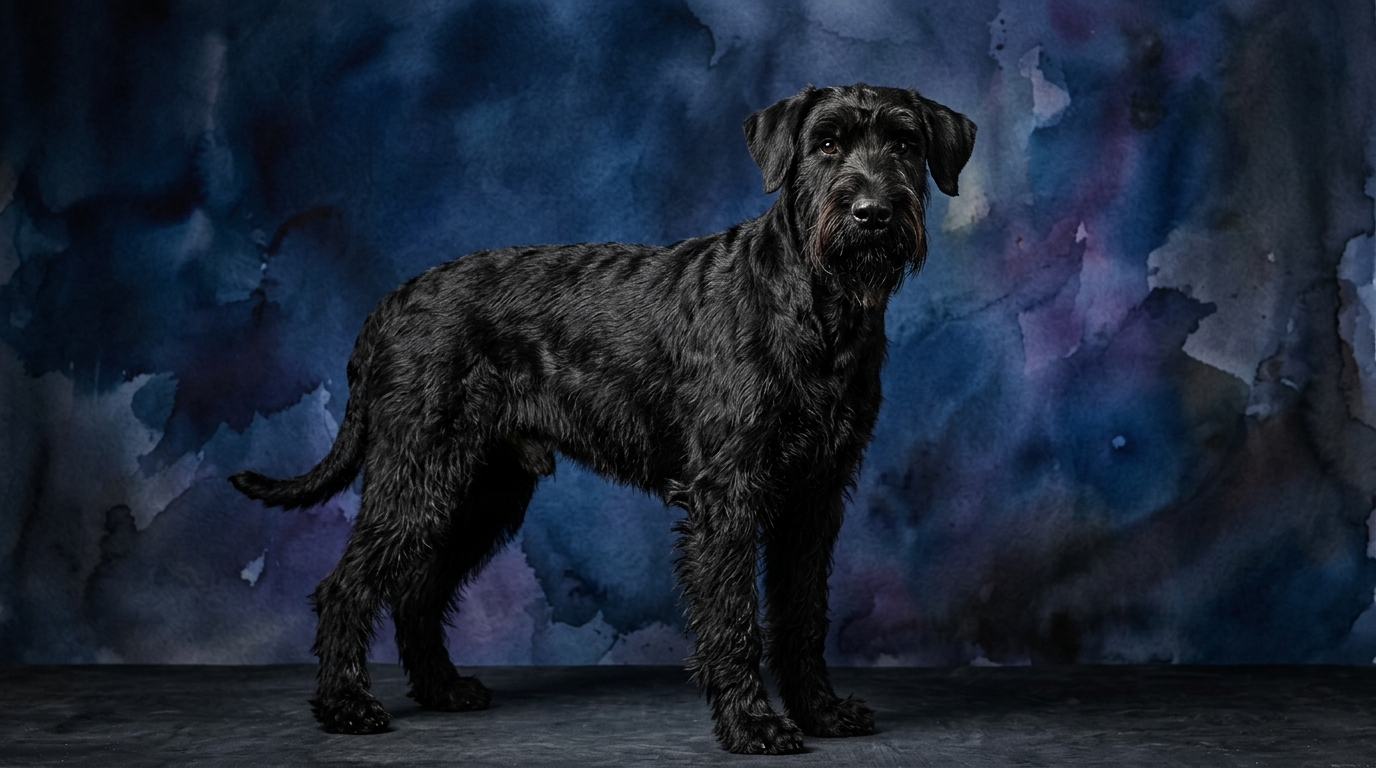
Giant Schnauzer at a glance
| IQ Rank / Score | #28 |
|---|---|
| Trainability | ★★★★☆ (4/5) |
| Social Intelligence | ★★★☆☆ (3/5) |
| Lifespan | 10-12 years |
| Shedding | Moderate to high |
| Exercise Needs | High (60+ min/day + training) |
| Origin | Germany |
The Calculated Vigilance of the Giant Schnauzer Mind
The Giant Schnauzer's primary intelligence angle is 'Calculated Vigilance,' a sophisticated blend of astute observation, robust memory, and independent problem-solving. It's not mere instinct; they assess situations, weigh threats, and determine effective action. This honed cognitive process makes them discerning protectors, distinguishing between harmless and genuine risks. Their intellect focuses on purposeful application to guardianship and task mastery, making them thinking sentinels rather than just reactive alarms. This unique mental approach is central to their profound character.
This cognitive profile means constant processing of environmental information: sounds, scents, routine changes, and body language. Their impressive memory recalls who belongs, recognizing faces and vehicles. Faced with novel situations, independent problem-solving enables evaluation and strategic responses. This adaptability means they thrive on mental engagement; unstimulated minds can lead to boredom or destructive behavior. Their calculated vigilance, a cornerstone of their personality, demands respect and understanding.
A Glimpse into Canine Cognition: What Makes Them Tick
Ranking #28 in Stanley Coren's 'The Intelligence of Dogs' places the Giant Schnauzer as an 'excellent working dog,' understanding new commands in 15-25 repetitions and obeying 85% of the time. This reflects high learning and retention, plus a strong desire to perform. As a German working breed, developed for farms, cattle driving, and guarding, their cognitive strengths lie in resilience, adaptability, and complex task capacity. They possess a strong work ethic and inherent need for purpose.
What truly 'makes them tick' is their intrinsic motivation to contribute and be part of a 'pack.' They perceive the world through utility and security, constantly evaluating their surroundings for tasks or perceived threats. This ingrained trait means they're always seeking information, analyzing, and making decisions. Their independence isn't a flaw but a feature, allowing sound judgments without direct command—vital for guardians. Understanding this proactive, analytical cognition is key to successful training and companionship.
The Unsung Herders: A Surprising Cognitive Past
Despite their formidable guardian reputation, a surprising fact about Giant Schnauzer cognition is their initial development as versatile cattle drivers and drovers in Bavaria. This early role demanded nuanced intelligence often overshadowed by their guarding instincts. Herding requires more than brawn; it involves complex problem-solving, spatial reasoning, understanding herd dynamics, and cooperative yet independent work with handlers over vast terrains. It's a testament to their cognitive flexibility.
This historical insight reveals a problem-solving facet focused on precision, control, and foresight. Managing cattle demands constant environmental assessment, quick decision-making, and adaptive tactics. It requires excellent memory for routes and boundaries, plus capacity to read multiple animal behaviors simultaneously. These skills highlight the Giant Schnauzer's ability for complex, multi-faceted tasks, suggesting their 'stubbornness' can often be independent thought or a preference for their own problem-solving method.
Debunking the Myth: Are Giant Schnauzers Stubborn or Simply Smart?
The most common myth about Giant Schnauzer intelligence is the claim they are overly aggressive and difficult to train due to strong will, making them unsuitable for pet ownership. This misconception often misinterprets their cognitive traits. The myth persists because their imposing size, powerful bark, and historical guard dog role, combined with inherent confidence, are easily seen as aggression or stubbornness by the unfamiliar.
The truth is, while strong-willed and requiring consistent, positive training, they are highly intelligent, deeply loyal, and form profound family bonds. Their 'stubbornness' isn't low intelligence; it's often independent thought, a desire to understand 'why,' or testing boundaries—all signs of intellect. Bred for independent decision-making, they thrive with proper socialization and an owner who appreciates their mental depth, channeling their intelligence into devoted companionship.
Beyond Instinct: How Giant Schnauzers Problem-Solve
Giant Schnauzers are adept problem-solvers, a trait indispensable for their working roles. Their intelligence manifests in navigating complex environments or strategizing how to retrieve objects. For example, they might figure out how to open a gate or meticulously retrieve a toy using nose and paws. This isn't random trial and error, but often a methodical approach, indicating planning and sequential thought. Persistence and observational skills allow them to apply learned experiences to new challenges.
This practical problem-solving extends to their protective instincts. A well-trained Giant Schnauzer will observe a perceived threat, assess its intentions, then make a calculated decision on response, preventing false alarms. They learn complex action sequences, understand multi-step commands, and anticipate routines, demonstrating sophisticated cause-and-effect understanding. Engaging their problem-solving skills through interactive toys, training, and 'jobs' is vital for their mental well-being.
Training a Giant Schnauzer: Harnessing Their High IQ
Training a Giant Schnauzer is rewarding, tapping into their high IQ and work ethic. Their #28 obedience ranking means quick learning and reliable performance. However, their independent nature demands consistency, clarity, and positive reinforcement. They thrive on engaging, mentally stimulating methods and variety. Establishing clear boundaries early is crucial, as they exploit inconsistencies. A firm, fair, and patient owner will find an eager, capable student.
Beyond basics, Giant Schnauzers excel in advanced disciplines like agility, protection, tracking, and competitive obedience. These provide essential physical and mental challenges. Harnessing their strong instinctive drive through structured training, like channeling protection into controlled guard work, is key. Their robust memory ensures learned skills are retained. Consistent, challenging, positive training unlocks their full potential, fostering a well-behaved, confident, and deeply bonded companion.
Living with a Giant Schnauzer: Mental Stimulation is Key
Living with a Giant Schnauzer means fulfilling their significant need for mental stimulation. These are not couch potatoes; their high intelligence and strong instinctive drive demand regular challenges for mind and body. Lack of engagement leads to boredom, manifesting as destructive behaviors, barking, or creating their own 'jobs' misaligned with household rules. Puzzle toys, scent work, new tricks, or advanced obedience are excellent ways to keep them occupied.
Their 'Calculated Vigilance' means constant observation and processing, making them great for active families. Daily walks are insufficient; they need opportunities to 'think' and 'work.' Interactive play, like hide-and-seek, or varying walk routes for new sights and smells, is enriching. Owners understanding this intellectual need will find a well-adjusted, content, and devoted family member, thriving on partnership and shared mental challenges.
The Emotional Intelligence of a Giant Schnauzer
Often perceived as stoic, Giant Schnauzers possess deep, selectively expressed emotional intelligence. They form incredibly strong bonds with their immediate family, acutely aware of human moods, offering quiet comfort. This sensitivity is reserved for their 'pack.' With strangers, their social intelligence shifts to reserved observation, reflecting guardian instincts; they are not typically effusive, preferring to assess before interaction.
Their loyalty is unwavering. Once accepted, they are deeply devoted. This social intelligence allows seamless family integration, understanding dynamics and their place. They learn routines and are attuned to subtle cues, showing capacity for non-verbal communication. While not overtly 'cuddly,' their affection is genuine, rooted in trust and mutual respect. This discerning social intelligence makes them deeply personal, dedicated companions to their chosen few.
The Cosmic Pet's Pet IQ Lab: Giant Schnauzer Intelligence Scores
Our Pet IQ Lab scores provide a holistic view of the Giant Schnauzer's cognitive strengths on a 1-5 scale. Their **Problem-Solving** ability scores a strong 4, reflecting their practical application of intellect. For **Training Speed**, they also earn a 4; highly intelligent learners, their independence requires thoughtful engagement, making them discerning students. Their **Social Intelligence** is a 3; deeply loyal to family, but reserved with strangers. **Instinctive Drive** is a definitive 5, a cornerstone of the breed, reflecting powerful protective and guarding instincts. Finally, their **Memory** scores a 4, demonstrating excellent retention of commands and recognition vital for vigilant guardianship.
3 At-Home Tests to Measure Your Giant Schnauzer's IQ
These tests are adapted from peer-reviewed ethology research. No equipment is needed beyond items you have at home. Run each test 5–10 times for reliable results.
The Myth: "Giant Schnauzers are overly aggressive and difficult to train due to their strong-willed nature, making them unsuitable for pet ownership."
✅ While they are strong-willed and require consistent, firm, and positive training, they are highly intelligent, deeply loyal, and form strong bonds with their families. Their 'stubbornness' is often an expression of independent thought or testing boundaries, rather than a lack of intelligence or willingness to learn. Proper socialization and training channel their intelligence into devoted companionship.
Giant Schnauzer vs. Similar Breeds
🧠 What's Your Dog's IQ Score?
Our full Pet IQ Lab assessment includes 12+ tests across 5 cognitive dimensions, calibrated for Giant Schnauzers specifically.
Take the Full IQ Test →Frequently Asked Questions
How smart is a Giant Schnauzer?
Our Pet IQ Lab framework scores cognition across five dimensions (max 25). The Giant Schnauzer totals 18/25 — high for a domestic dog. The full article breaks down each dimension with at-home tests.
Are Giant Schnauzers easy to train?
Giant Schnauzers are generally easy to train when you use consistent, reward-based sessions. They score 4/5 on Training Speed in our breed profile.
Are Giant Schnauzers good with children and other pets?
Giant Schnauzers can live well with families when socialized early. Their Social Intelligence scores 3/5, so supervise interactions with small children and introduce new pets gradually.
Do Giant Schnauzers need a lot of mental stimulation?
Absolutely. With Problem Solving 4/5 and Instinctive Drive 4/5, Giant Schnauzers need daily mental work — puzzle feeders, scent games, training sessions, or nose-work — to avoid boredom.
How much exercise does a Giant Schnauzer need?
Giant Schnauzers need active engagement. Plan for 45-60 minutes of exercise and training per day, plus mental stimulation.
How good is a Giant Schnauzer's memory?
Giant Schnauzers score 3/5 on memory. They remember high-value associations well; less-used cues fade without refresher sessions.
What is the typical lifespan of a Giant Schnauzer?
Typical lifespan is 10-12 years for a large dog like the Giant Schnauzer.
The Giant Schnauzer stands as a testament to calculated canine intelligence, a breed whose cognitive prowess extends far beyond simple obedience. Understanding their unique mental landscape allows us to better appreciate their profound loyalty, purposeful vigilance, and the rewarding challenge of nurturing such a truly remarkable companion.