Side-by-Side Cognitive Profile: Giant Schnauzer vs. Brussels Griffon
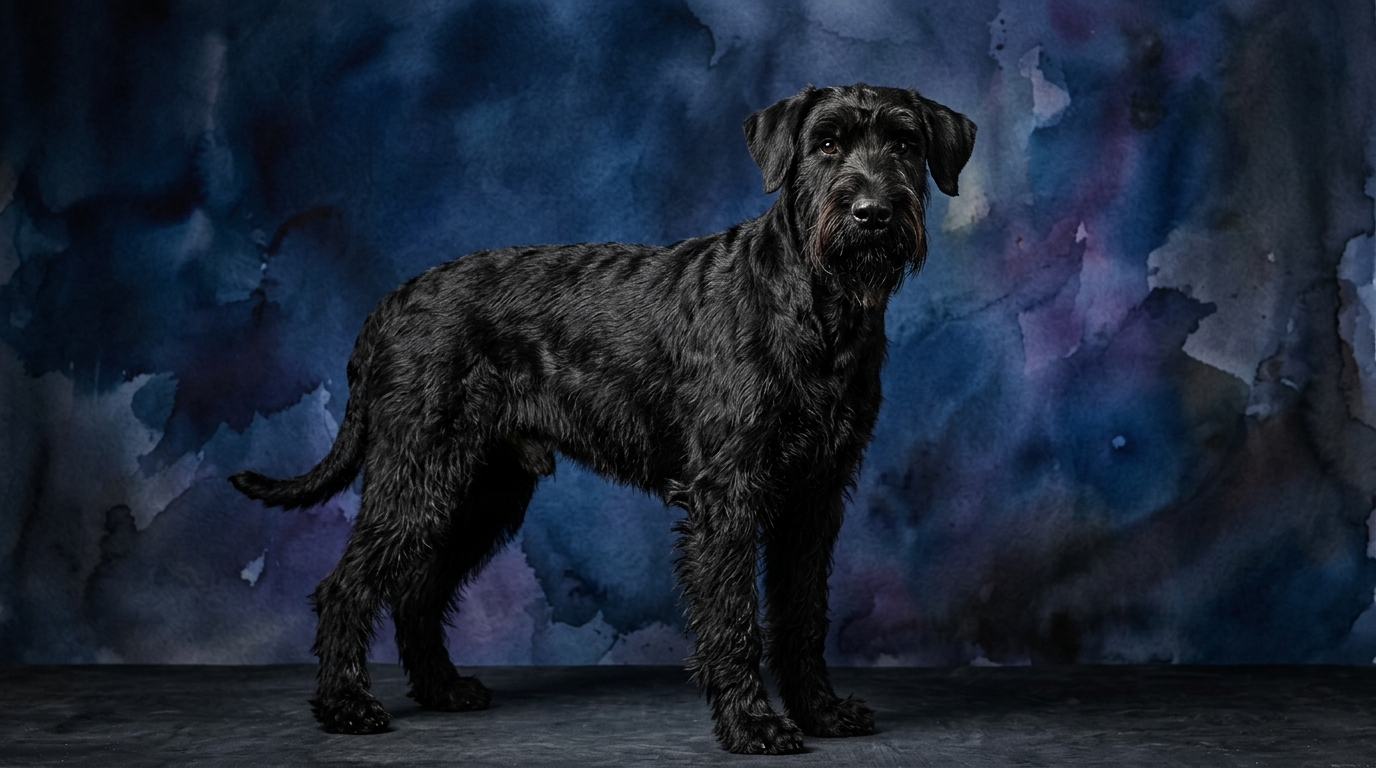
The Giant Schnauzer, a robust member of the Working Group, presents a cognitive profile that underscores its heritage in demanding roles, reflected in its Coren rank of #28. Its problem-solving ability scores a strong 4/5, indicating a capacity for intricate thought and strategic thinking to overcome challenges. Training speed also rates 4/5, suggesting a quick grasp of new commands and routines, making them responsive learners.
With a 3/5 in social intelligence, the Giant Schnauzer demonstrates a solid understanding of human cues and pack dynamics, contributing to their cooperative nature, while their instinctive drive, also 3/5, hints at a balanced but present inclination towards protective or working behaviors. Their memory, a notable 4/5, means they retain learned information and experiences with considerable recall, contributing to their reliability in task execution.
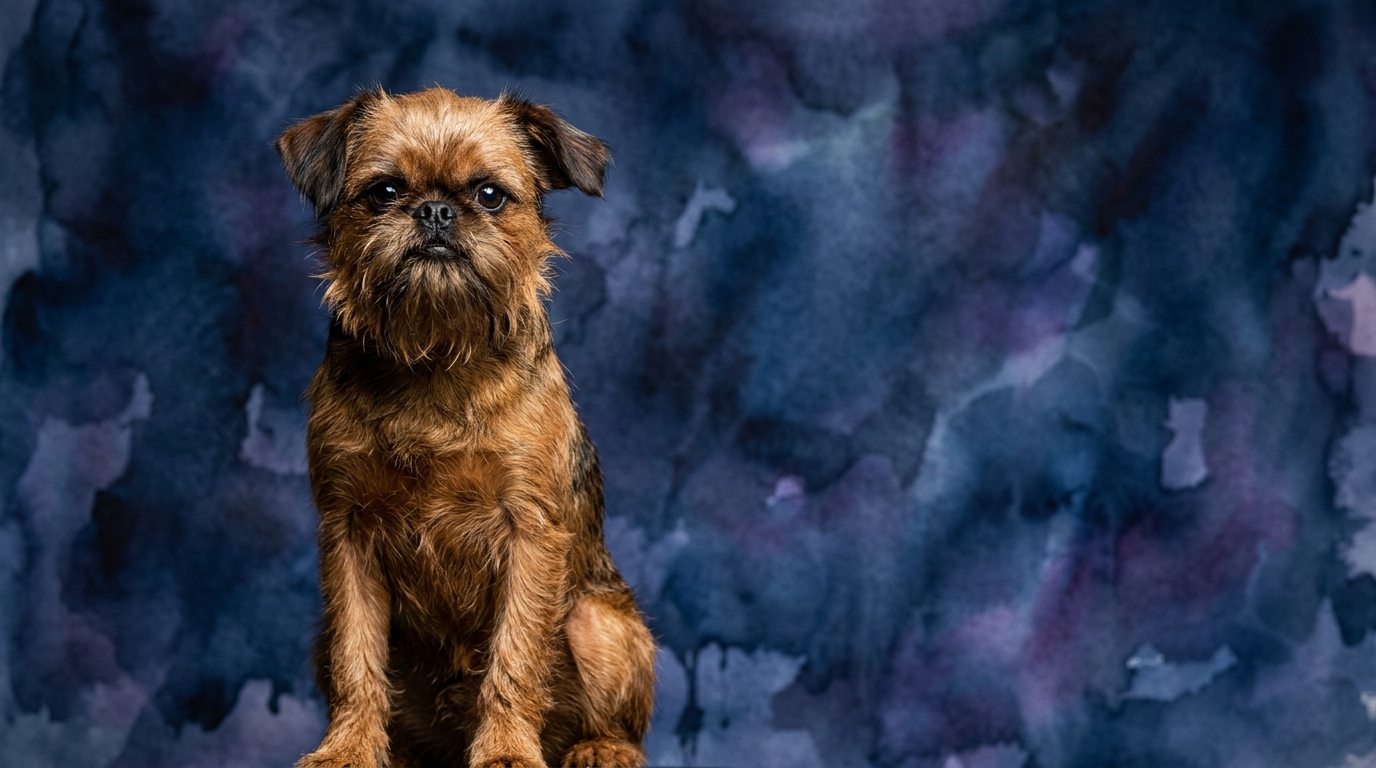
In contrast, the Brussels Griffon, a charming Toy breed not typically assessed by Coren's working intelligence rankings, displays a cognitive makeup suited to devoted companionship. Its problem-solving capacity sits at 3/5, indicating practical intelligence for navigating daily life and learning from experience, though perhaps with less inclination for complex, multi-step strategizing. Training speed is also 3/5, suggesting a reasonable pace for learning, though potentially requiring more consistent repetition than a higher-scoring breed.
The Brussels Griffon's social intelligence, at 3/5, reflects an ability to read human emotions and engage in nuanced interactions, often forming deep bonds with their caregivers. Their instinctive drive, rated 3/5, might manifest as curiosity, a playful chase instinct for small objects, or a strong desire for proximity to their human companions. Memory for the Brussels Griffon is 3/5, indicating sufficient recall for routines, familiar faces, and learned associations within their domestic sphere.
Comparing these dimensions, the Giant Schnauzer generally exhibits a higher aptitude for complex cognitive functions, quicker learning, and stronger retention, aligning with its role as a working dog. The Brussels Griffon, while perhaps not excelling in the same metrics, demonstrates a practical and socially attuned intelligence perfectly suited for its companion role, where adaptability and emotional connection are paramount.
Where the Giant Schnauzer Demonstrates Cognitive Strengths
The Giant Schnauzer's cognitive strengths are particularly evident in its superior problem-solving (4/5) and training speed (4/5), which are foundational for its success in roles requiring precision and adaptability. These dogs often exhibit a methodical approach to new situations, quickly analyzing and strategizing to achieve a desired outcome, whether it's navigating an obstacle course or figuring out a gate latch. Their quick learning curve means they absorb new commands and multi-step tasks with fewer repetitions, allowing them to master complex obedience routines or specialized skills like scent work or protection training more rapidly.
Furthermore, their robust memory (4/5) ensures that these learned behaviors and strategies are retained over long periods, making them consistently reliable partners. This combination of swift learning, deep retention, and strategic thinking allows the Giant Schnauzer to excel in environments that demand consistent mental engagement and the ability to adapt to varying demands, from competitive dog sports to demanding service roles. Their intelligence is geared towards active collaboration and purposeful execution.
Where the Brussels Griffon Demonstrates Unique Cognitive Adaptations
While the Brussels Griffon's scores might appear lower in comparison, their cognitive profile (3/5 across all categories) reflects a highly effective adaptation for their primary role as a devoted companion. Their problem-solving, though not geared towards complex working tasks, is often exquisitely honed for navigating social dynamics within a household. They can be remarkably clever in devising strategies to gain attention, secure a comfortable spot, or communicate their desires to their human companions, often through subtle cues and persistent charm.
The Brussels Griffon's social intelligence, rated 3/5, is particularly refined in its application to human-animal bonds. They are adept at reading the emotional states of their caregivers and often respond with comforting presence or playful antics, showcasing a nuanced understanding of social interaction focused on companionship rather than task execution. Their memory (3/5) is entirely sufficient for recalling daily routines, the location of favorite toys, and the people they cherish, fostering a sense of security and familiarity crucial for a companion breed. This breed's intelligence is expressed through their ability to integrate seamlessly into family life and provide focused emotional connection.
Training Ease: Giant Schnauzer vs. Brussels Griffon
When considering ease of training, the Giant Schnauzer (training speed 4/5) generally presents a more straightforward experience for an engaged owner. Their quick uptake of commands means fewer repetitions are needed, and they often show a keen desire to work and please, especially when provided with consistent, positive reinforcement. This breed's strong memory (4/5) further solidifies learned behaviors, leading to reliable responses even in distracting environments. Their cognitive makeup makes them highly receptive to advanced obedience, agility, and even protection training, often thriving on the challenge of learning new skills and executing complex sequences.
The Brussels Griffon (training speed 3/5), while certainly trainable, may require a more patient and consistent approach. Their independent spirit, sometimes perceived as stubbornness, can mean they need greater motivation and more creative training methods to maintain engagement. House-training, for instance, can sometimes take longer due to their smaller bladder capacity and potential for selective hearing when engrossed in other activities. While they can learn a wide array of tricks and basic obedience, their training benefits from short, fun sessions that cater to their desire for companionship rather than demanding strict adherence to commands for extended periods. Understanding their motivation, often linked to affection and treats, is key to successful training.
Lifestyle Match: Active vs. Relaxed Owners
For active owners seeking a canine partner for adventures and structured activities, the Giant Schnauzer is often the more fitting choice. Their cognitive profile, marked by high problem-solving and training speed, means they thrive on consistent mental and physical stimulation. These dogs are at their best when given a 'job,' whether it's participating in dog sports, engaging in complex scent games, or rigorous obedience training. An owner who enjoys hiking, running, or competitive dog events will find the Giant Schnauzer to be an enthusiastic and capable companion, whose intelligence requires an outlet to prevent boredom and potential behavioral issues.
Conversely, the Brussels Griffon often aligns well with more relaxed owners who appreciate a devoted, charming, and sometimes quirky companion without the demand for intense physical or mental exertion. While they enjoy walks and playtime, their primary need is for close human companionship and inclusion in family activities. Their cognitive strengths are geared towards social interaction and domestic adaptability rather than high-performance tasks. Owners who enjoy a cozy home life, gentle strolls, and plenty of lap time will find the Brussels Griffon's intelligence perfectly suited to a life of affectionate companionship, where their cleverness is often expressed in delightful ways within the home environment.
The Verdict
Choose the Giant Schnauzer if you are an active owner seeking a highly trainable, mentally engaged partner for demanding activities, eager to channel their impressive problem-solving and memory into purposeful work. They thrive with consistent mental challenges and a structured environment.
Opt for the Brussels Griffon if you desire a charming, devoted companion whose intelligence shines in social interactions and domestic adaptability, offering witty companionship without requiring intensive physical or competitive mental exertion. They flourish in a loving home where they are central to family life.
🧠 Find Your Pet's IQ Score
Our Pet IQ Lab assessment covers 25+ tests across 5 cognitive dimensions — personalized to your breed.
Take the Full IQ Test →Frequently Asked Questions
Do Giant Schnauzers require a lot of mental stimulation?
Yes, with a 4/5 in problem-solving and memory, Giant Schnauzers benefit significantly from consistent mental engagement. Activities like puzzle toys, obedience training, and learning new tricks are crucial to keep their minds active and prevent boredom, which can lead to undesirable behaviors.
Are Brussels Griffons difficult to house-train due to their intelligence?
Brussels Griffons, with a 3/5 training speed, can sometimes present a challenge in house-training, not necessarily due to a lack of intelligence, but often their independent streak and smaller size. Consistent routines, frequent potty breaks, and positive reinforcement are key to success, as they respond well to patient, reward-based methods.
Can a Brussels Griffon learn complex tricks or commands?
Absolutely. While their training speed is 3/5, Brussels Griffons are capable of learning a variety of complex tricks and commands with patience and consistency. Their social intelligence and desire to interact with their owners mean they can be quite eager to please when motivated by affection and treats, often surprising owners with their cleverness.