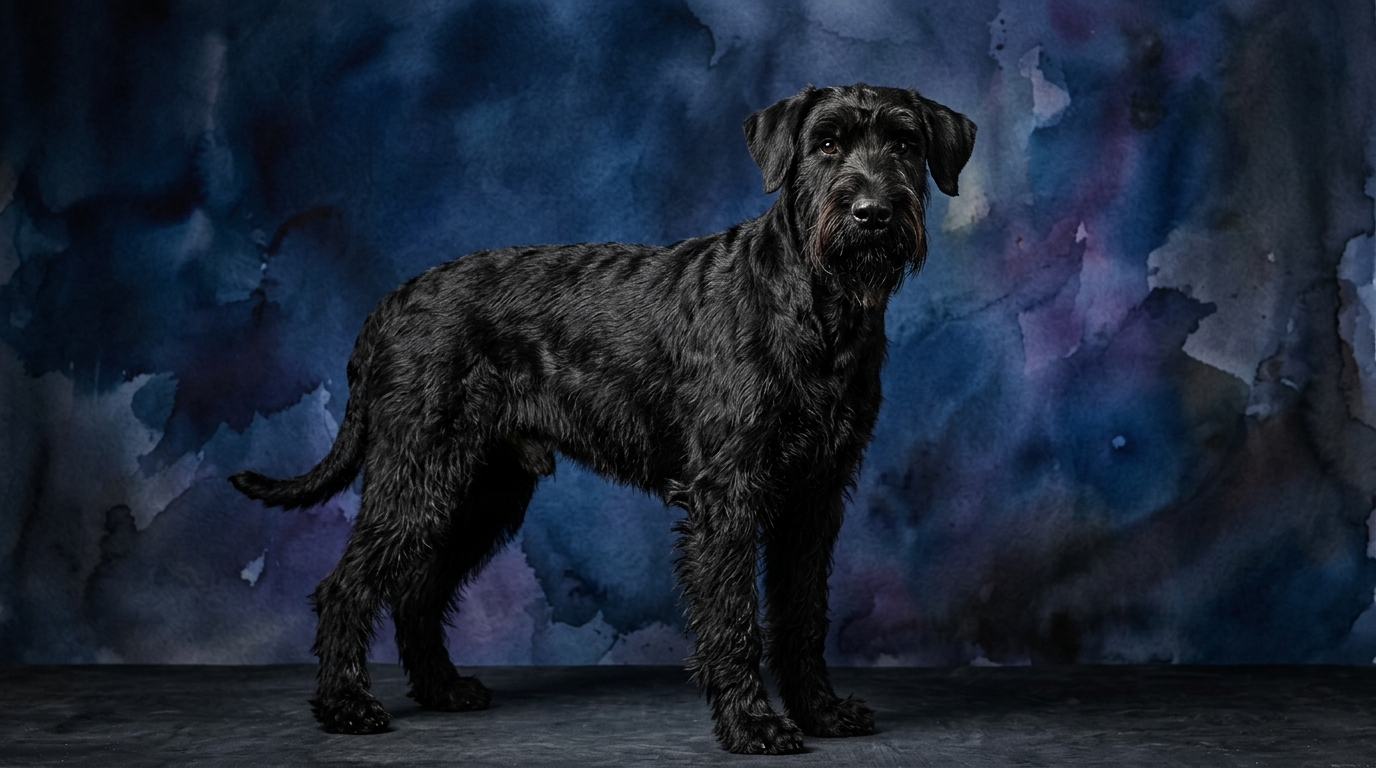

Side-by-Side IQ Profile: Giant Schnauzer vs. English Cocker Spaniel
**Giant Schnauzer (Working Group, Coren Rank #28):** This robust breed demonstrates a Problem Solving score of 4/5, indicating a strong capacity for independent thought and devising solutions to novel challenges. Its Training Speed, also 4/5, suggests a quick grasp of new commands and routines, often requiring fewer repetitions to solidify learning. Social Intelligence stands at 3/5, meaning it capably interprets human cues and group dynamics, though it might occasionally prioritize its own focused agenda. An Instinctive Drive of 3/5 reflects a moderate inclination towards its natural working behaviors, such as guarding or herding, which can be channeled. Finally, its Memory score of 4/5 points to effective retention of learned behaviors and experiences over time.
**English Cocker Spaniel (Sporting Group, Coren Rank #18):** Ranking higher on the Coren scale, this agile breed also scores 4/5 for Problem Solving, showing a comparable aptitude for navigating complex situations and finding effective solutions. Its Training Speed mirrors the Schnauzer's at 4/5, indicating a similar ease in acquiring new skills and commands. Social Intelligence, at 3/5, suggests it too understands human communication and social structures well, though its primary focus might be on its handler. Its Instinctive Drive, also 3/5, highlights a moderate but persistent drive for its sporting tasks, such as scenting and retrieving. A standout feature is its Memory, rated 5/5, signifying an exceptional ability to recall information, commands, and experiences with remarkable clarity and longevity.
Where the Giant Schnauzer Wins Cognitively
The Giant Schnauzer's cognitive strengths shine particularly in areas demanding robust independent action and discerning judgment. Its 4/5 Problem Solving score, coupled with its Working group heritage, suggests an aptitude for tackling complex, multi-step tasks where autonomy is beneficial, such as learning intricate protection routines or navigating obstacle courses that require more than simple obedience. While its social intelligence is 3/5, this often translates into a keen ability to assess situations and individuals, making independent decisions when a threat is perceived, rather than solely relying on direct human instruction. The combination of its solid Memory (4/5) and its moderate Instinctive Drive (3/5 for working tasks) means it can reliably execute learned protective or patrol duties, remembering boundaries and specific protocols with consistency.
Where the English Cocker Spaniel Wins Cognitively
The English Cocker Spaniel distinguishes itself with its exceptional Memory, scoring a perfect 5/5. This superior recall means it excels in tasks requiring long-term retention of sequences, scent profiles, or complex retrieve patterns, making it highly effective in field trials or advanced obedience where precision and consistency over time are paramount. Its 4/5 Problem Solving ability, combined with this memory, allows it to adapt and apply past solutions to new but similar challenges with remarkable efficiency. The Sporting group's inherent drive, moderately rated at 3/5, is often channeled into focused, repetitive tasks like scent discrimination and retrieving, where its superb memory allows it to quickly learn and flawlessly execute specific cues associated with different targets or locations, making it a formidable partner for intricate scent work or agility courses where remembering the order of obstacles is crucial.
Which is Easier to Train and Why
Both breeds share a Training Speed score of 4/5, suggesting they both learn new commands and routines with considerable ease and efficiency. However, the nuances of their cognitive profiles lead to differing training experiences. The English Cocker Spaniel's superior Memory (5/5) means that once a command or behavior is learned, it is likely to be retained with exceptional clarity and for a longer duration, potentially requiring less frequent refreshing. Its moderate instinctive drive leans towards cooperation in activities like retrieving or scent work, making it highly responsive when engaged in tasks aligned with its natural predispositions. The Giant Schnauzer, while also quick to learn (4/5 Training Speed), might present a different dynamic due to its more independent working temperament. While it grasps concepts quickly, its moderate social intelligence and strong self-assured nature mean trainers might need to ensure clear leadership and consistent motivation to keep it fully engaged and compliant, especially when tasks deviate from its inherent working drives. Therefore, while both learn quickly, the English Cocker Spaniel might offer a slightly smoother, more consistent training journey due to its phenomenal memory and cooperative nature in its preferred activities.
Which Suits Active Owners vs. Relaxed Owners
Both the Giant Schnauzer and the English Cocker Spaniel are breeds that generally thrive with active engagement, making neither an ideal match for truly relaxed or sedentary owners. The Giant Schnauzer, with its Working group background and solid problem-solving skills, requires consistent mental stimulation and physical activity to prevent boredom and channel its moderate instinctive drive. Owners who enjoy structured training, canine sports like protection work or advanced obedience, and long, vigorous walks will find a rewarding companion. Its independent streak means it appreciates having a "job" and thrives when given purpose. The English Cocker Spaniel, as a Sporting group dog, also demands significant activity, especially related to its natural drives for scenting and retrieving. Its exceptional memory means it can excel in complex field activities, agility, or competitive obedience, which require dedicated and active owners. While it might be content with a slightly less intense physical regimen than some high-drive working dogs, its need for mental engagement through training and "work" remains high. Neither breed is suited for an owner seeking a low-maintenance, couch-potato companion; both require owners committed to consistent exercise, training, and enrichment to flourish.
The Verdict
When considering a Giant Schnauzer, choose this breed if you are an experienced owner seeking a robust, intelligent companion for structured working tasks, protection, or advanced obedience, valuing a dog with strong problem-solving skills and a discerning, independent nature.
Opt for an English Cocker Spaniel if you desire a responsive, exceptionally trainable partner for activities like scent work, retrieving, or agility, where its superior memory and cooperative sporting drive will truly shine, thriving with consistent, engaging interaction.
🧠 Find Your Pet's IQ Score
Our Pet IQ Lab assessment covers 25+ tests across 5 cognitive dimensions — personalized to your breed.
Take the Full IQ Test →Frequently Asked Questions
Does a higher Coren rank mean the English Cocker Spaniel is "smarter" than the Giant Schnauzer?
The Coren rank primarily measures "working and obedience intelligence," reflecting a breed's ability to learn and obey commands. While the English Cocker Spaniel ranks higher (18 vs. 28), both breeds possess strong cognitive profiles, with the Giant Schnauzer excelling in independent problem-solving and the Cocker Spaniel demonstrating superior memory, indicating different facets of intelligence.
How does the "Instinctive Drive" score impact daily life for these breeds?
Both breeds have an Instinctive Drive of 3/5, meaning they possess moderate natural urges tied to their historical roles. For the Giant Schnauzer, this might manifest as a tendency to guard or patrol, requiring owners to provide appropriate outlets. For the English Cocker Spaniel, it often translates to a keen interest in scenting and retrieving, which can be channeled into engaging games or field activities.
Given their similar "Problem Solving" scores, how might their approaches to challenges differ?
While both score 4/5 in Problem Solving, the Giant Schnauzer's Working group background often means it approaches challenges with a degree of independent thought and self-reliance, seeking its own solutions. The English Cocker Spaniel, with its exceptional memory and sporting drive, might leverage learned patterns and handler cues more readily, applying remembered solutions to new but similar puzzles.