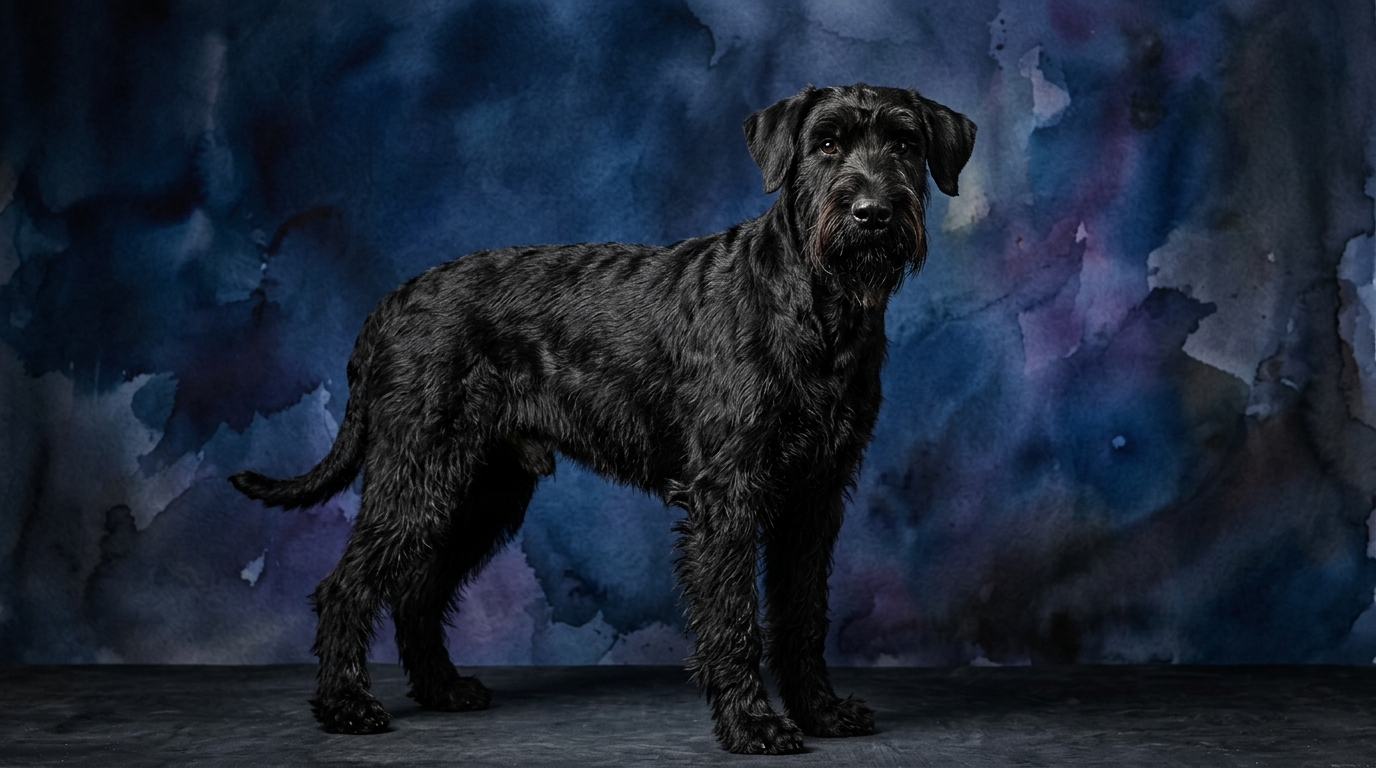
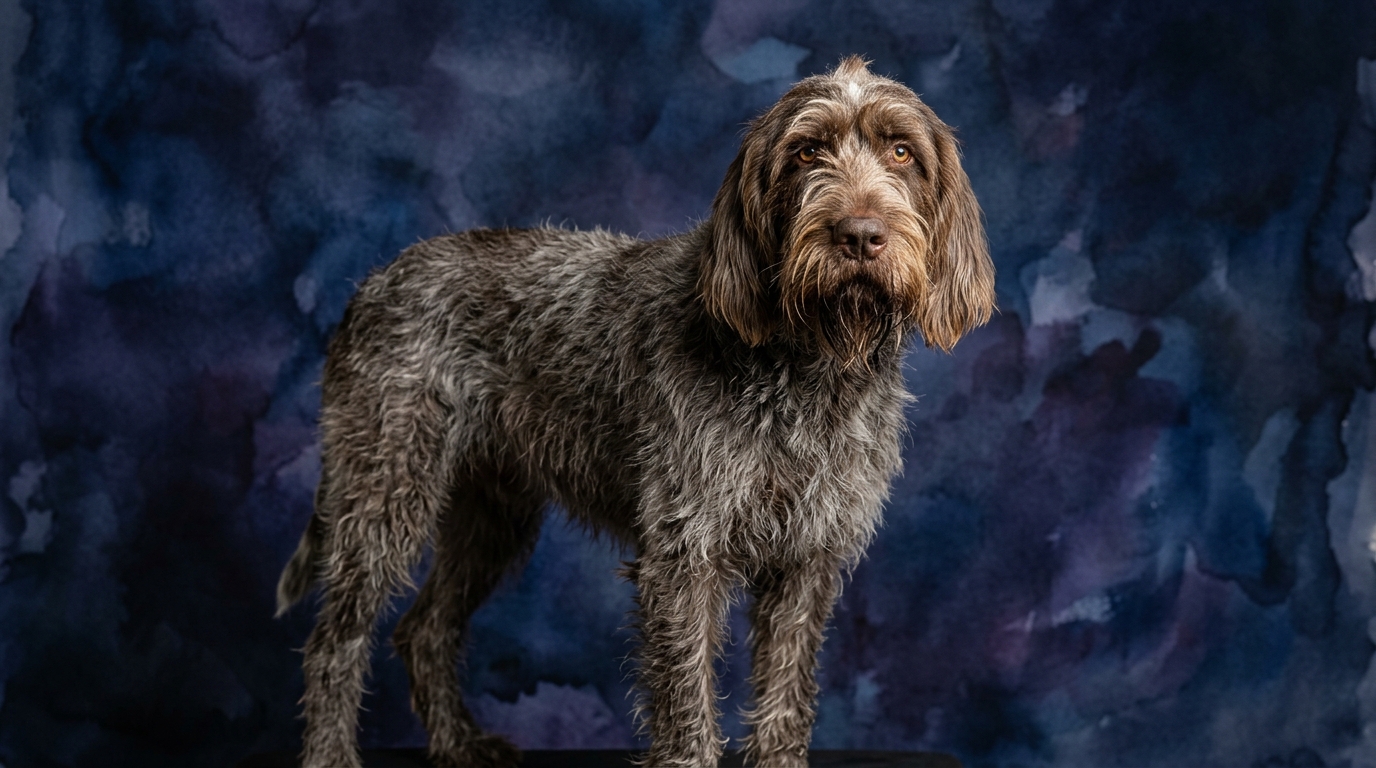
Side-by-Side IQ Profiles: Decoding Canine Cognition
The Cosmic Pet Pet IQ Lab employs a five-dimensional model to map canine intelligence, offering a detailed lens through which to view these breeds. For the Giant Schnauzer, a working dog with a Coren ranking of #28, its profile reflects a breed built for complex tasks and vigilance. Its Problem Solving is rated at 4/5, indicating a strong capacity for independent thought and navigating novel situations. Training Speed also stands at 4/5, suggesting a quick grasp of new commands and routines. Social Intelligence is 3/5, implying competence in interpreting human cues but perhaps not exceptional strategic interaction. Instinctive Drive is 3/5, a balanced score for a working breed, demonstrating purposefulness without overwhelming intensity. Memory, at 4/5, underscores its ability to retain learned information and experiences over time.
In contrast, the Spinone Italiano, a sporting breed not listed in Coren's ranking, presents a profile geared towards cooperative hunting and companionship. Its Problem Solving scores 3/5, indicating a solid but perhaps less independent approach to challenges compared to the Schnauzer. Training Speed is also 3/5, meaning it learns consistently, though possibly requiring more repetition than its working counterpart. Social Intelligence is 3/5, mirroring the Schnauzer's score, suggesting a similar level of understanding and interaction with its human family. Instinctive Drive is 3/5, a fitting score for a sporting dog that needs drive for the field but also composure for companionship. Memory is 3/5, indicating a reliable capacity for recall, though potentially not as sharp or long-lasting as the Schnauzer's. These scores paint a picture of two capable breeds, each optimized for different forms of engagement and purpose.
Where the Giant Schnauzer Excels Cognitively
The Giant Schnauzer's cognitive strengths lie in its superior problem-solving and memory, coupled with a faster training speed. A 4/5 in Problem Solving means this breed is adept at figuring out how to achieve goals, whether it's manipulating latches, navigating complex obstacle courses, or strategizing during protection work. This isn't about brute force; it's about mental agility and the capacity to analyze situations. For instance, a Giant Schnauzer might quickly understand how to open a gate that's not fully secured, or devise a new route to a desired object after an initial path is blocked.
Its 4/5 Training Speed indicates a breed that absorbs new information with efficiency. Owners often report that Giant Schnauzers pick up complex command sequences or multi-step tasks in fewer repetitions than many other breeds. This rapid learning curve makes them highly suitable for advanced obedience, agility, or specific working roles where precision and quick comprehension are paramount. Furthermore, a 4/5 Memory score reinforces this, ensuring that once a lesson is learned or an experience is cataloged, it remains accessible for future application. This robust memory contributes to their reliability in learned tasks and their consistent response to commands, making them a predictable and capable partner in structured activities.
Where the Spinone Italiano Shines Cognitively
While the Spinone Italiano's cognitive scores are generally a point lower than the Giant Schnauzer's, its strengths are found in the application of its balanced profile, particularly its approach to social interaction and its sustained, cooperative drive. A 3/5 in Social Intelligence, while matching the Schnauzer's raw score, often manifests as a more overtly amiable and engaging disposition in the Spinone. This breed thrives on partnership and connection, using its understanding of human cues to foster close bonds. Their social cognition supports their role as a cooperative hunting companion, where working *with* the handler is paramount rather than independent strategizing.
Its 3/5 Instinctive Drive, while not as intense as some other sporting breeds, is a significant asset. This score represents a balanced drive that allows them to perform their traditional hunting tasks with enthusiasm and persistence, yet transition smoothly into a relaxed family environment. They possess the drive to search and retrieve but are less likely to become hyper-focused or overly demanding compared to breeds with higher, more intense drives. This balance makes them adaptable companions who can enjoy a day in the field and then comfortably settle down at home, making their cognitive profile particularly suited for owners seeking a versatile, genuinely cooperative, and less high-strung sporting partner.
Ease of Training: A Tale of Two Learning Styles
When it comes to ease of training, the Giant Schnauzer generally holds an advantage due to its higher scores in Problem Solving, Training Speed, and Memory. A Giant Schnauzer's 4/5 Training Speed means it typically grasps new commands and sequences with fewer repetitions, often showing an eager willingness to engage in structured learning. Their 4/5 Problem Solving ability allows them to infer solutions and adapt to new training scenarios more readily, making progress feel swift and rewarding. For instance, teaching a multi-step retrieve or a complex agility course might see a Giant Schnauzer connecting the dots relatively quickly, building on previous lessons with robust 4/5 Memory.
The Spinone Italiano, with 3/5 in Training Speed and Memory, will also learn, but often requires a more patient and consistent approach. They may need more repetitions to solidify new commands, and their learning might progress at a steadier, rather than rapid, pace. Behavioral differences often observed include the Spinone's "softness" and sensitivity; they respond best to positive reinforcement and can shut down if training is harsh or inconsistent. While they possess a cooperative spirit (3/5 Social Intelligence), their learning style leans towards collaboration and gentle guidance rather than the Schnauzer's more independent, task-oriented approach. Training a Spinone is a rewarding journey of consistent reinforcement and building trust, whereas training a Giant Schnauzer can feel like a rapid progression through mental challenges.
Matching Breeds to Lifestyles: Active vs. Relaxed Owners
The cognitive profiles of these two breeds offer clear guidance for prospective owners considering their lifestyle. The Giant Schnauzer, with its 4/5 Problem Solving and 4/5 Training Speed, thrives with active owners who can provide consistent mental stimulation and purposeful work. This breed needs more than just physical exercise; it requires challenges that engage its strategic thinking and learning capacity. Owners who enjoy dog sports like obedience, agility, protection work, or even complex trick training will find the Giant Schnauzer a willing and capable partner. A relaxed owner who cannot commit to regular, engaging mental tasks might find a Giant Schnauzer becoming bored and potentially developing undesirable behaviors stemming from unfulfilled cognitive needs.
Conversely, the Spinone Italiano, with its balanced 3/5 scores across most dimensions, is better suited for active owners who appreciate a cooperative, less intensely driven companion. While they require regular physical activity, especially outdoor excursions that tap into their 3/5 Instinctive Drive for scent work and exploration, their cognitive needs are often met through companionship and shared activities rather than intense, independent problem-solving challenges. A Spinone will enjoy long walks, hikes, and family activities, thriving on social interaction (3/5 Social Intelligence) and being part of the pack. They can adapt to a slightly more relaxed pace than the Schnauzer, provided they receive ample companionship and moderate physical engagement. Owners seeking a genial, devoted companion for outdoor adventures and comfortable home life will find the Spinone Italiano a fitting choice.
The Verdict
Select the Giant Schnauzer if you desire a highly engaged canine partner for advanced training, dog sports, or a working role, appreciating a dog that thrives on mental challenges and learns rapidly.
Opt for the Spinone Italiano if you seek a cooperative, amiable companion for outdoor adventures and family life, valuing a dog that learns steadily and forms strong, devoted bonds.
🧠 Find Your Pet's IQ Score
Our Pet IQ Lab assessment covers 25+ tests across 5 cognitive dimensions — personalized to your breed.
Take the Full IQ Test →Frequently Asked Questions
Is the Giant Schnauzer a good family dog given its working background?
Yes, with proper socialization and training, Giant Schnauzers can be devoted family members. Their 3/5 social intelligence means they understand family dynamics, but their working drive requires owners to provide structure and mental engagement to ensure they are well-adjusted and calm in a home environment.
Does the Spinone Italiano's 3/5 training speed mean it's difficult to train?
Not at all; it means they learn at a steady pace and may require more consistent, positive reinforcement than breeds with higher training speed scores. Their cooperative nature and 3/5 social intelligence make them eager to please, responding best to patient, reward-based methods.
Which breed requires more exercise, physical or mental?
Both breeds require regular physical exercise, but the Giant Schnauzer's 4/5 problem-solving and memory demand more intense and consistent mental stimulation. The Spinone Italiano also benefits from mental engagement, but its needs are often met through companionship and exploring environments rather than complex, task-oriented challenges.