
Side-by-Side IQ Profile
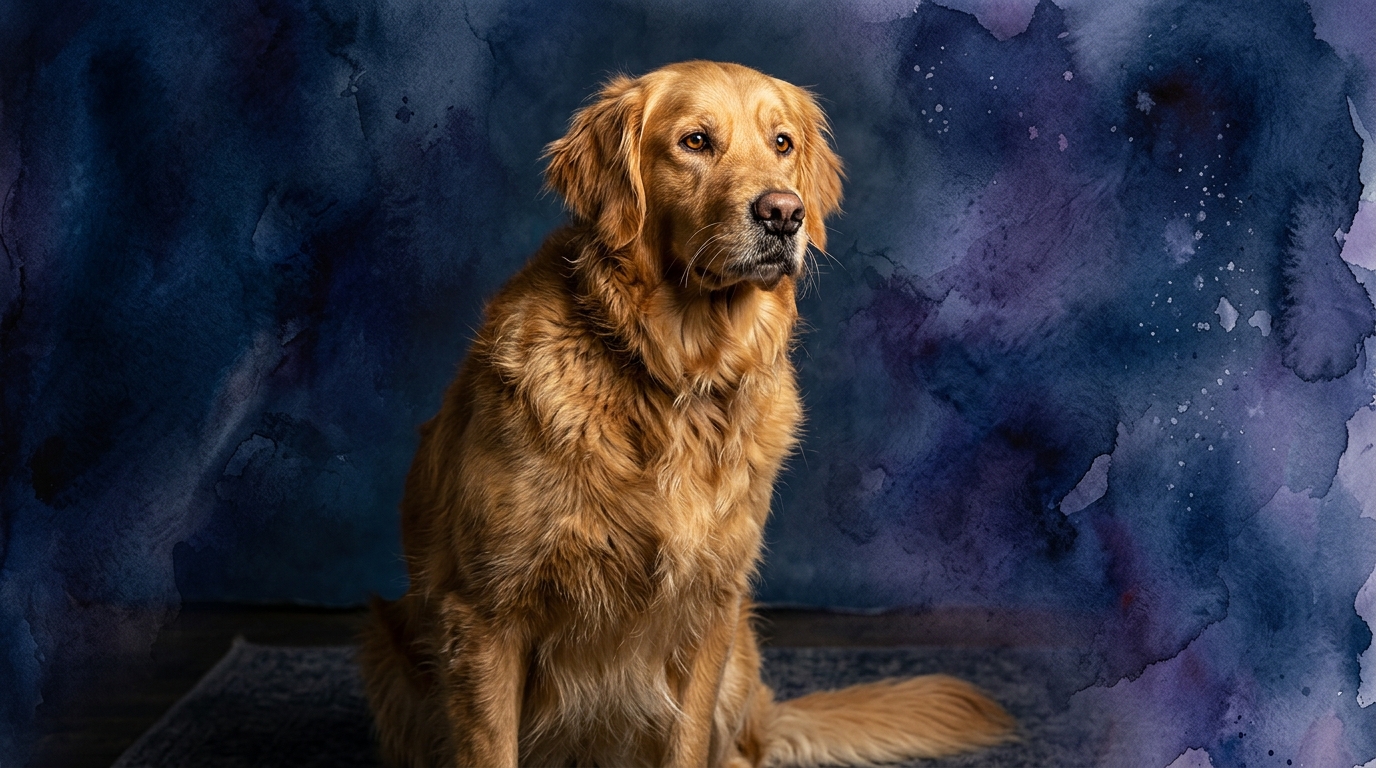
The Golden Retriever, a member of the Sporting group and notably ranked #4 by Coren, exhibits a remarkable aptitude for learning and interaction. Their Problem Solving is rated 4/5, indicating a strong capacity to navigate novel situations and independently figure out solutions. Training Speed, at a perfect 5/5, means they grasp new commands with exceptional quickness, often requiring minimal repetitions. Social Intelligence, also 5/5, reflects their profound ability to read human cues and adapt to diverse social contexts, making them highly empathetic companions. Their Instinctive Drive, 4/5, points to a robust natural inclination for tasks like retrieving, often with enthusiasm and focused determination. Memory, 4/5, ensures they retain learned behaviors and experiences over time, effectively building on past knowledge.
The Chinook, a distinguished Working breed, though not Coren-ranked, represents a different cognitive blueprint rooted in its sled dog heritage. Their Problem Solving rates 3/5, suggesting a practical intelligence focused on task completion within familiar frameworks rather than broad exploratory problem-solving. Training Speed, 3/5, implies they learn steadily but may require more patient, consistent reinforcement and repetition than some breeds. Social Intelligence, 3/5, indicates they are capable of forming strong, loyal bonds and understanding their immediate family, though perhaps less universally adaptable than a Golden Retriever. Instinctive Drive, 3/5, suggests a purposeful drive, often related to endurance and pulling, rather than a wide range of innate behaviors. Memory, 3/5, confirms they retain information, though perhaps with less immediate recall for complex sequences than a higher-scoring breed.
Where Golden Retriever Wins Cognitively
The Golden Retriever's cognitive strengths shine particularly in areas demanding adaptability and nuanced understanding of human social structures. Their superior Social Intelligence (5/5) means they excel at interpreting subtle human gestures, vocal tones, and emotional states, making them exceptional service animals, therapy dogs, and family companions who seem to intuitively understand their people. This profound empathy allows them to respond appropriately in diverse social settings, from boisterous family gatherings to quiet hospital visits, a trait less pronounced in the Chinook's more task-oriented social profile. Furthermore, their 5/5 Training Speed and 4/5 Problem Solving combine to create a dog that not only learns commands rapidly but can also generalize those learnings to new situations, demonstrating flexible thought processes. This manifests in their ability to quickly pick up complex multi-step tasks, such as guide dog work or competitive obedience routines, where a Chinook might require more sequential, repetitive teaching. Their strong memory (4/5) reinforces this, ensuring that once a lesson is learned or a social interaction understood, it's retained for future application, contributing to their consistent and reliable nature.
Where Chinook Wins Cognitively
While the Chinook's numerical scores are generally lower across the board, their intelligence is distinct and purpose-driven, excelling in traits vital to their working lineage. Their Instinctive Drive (3/5), though not the highest, is concentrated on endurance, consistency, and a strong work ethic, which is a significant cognitive win in specific contexts. Unlike the Golden Retriever's broad retrieving instincts, the Chinook's drive is geared towards sustained effort in a team, often in challenging environments. This translates to an unwavering focus on a given task, such as pulling a sled or hiking for miles, where they demonstrate remarkable stamina and mental fortitude. Their Problem Solving (3/5) might be less about inventing novel solutions and more about efficient execution within a defined role, a strength when predictability and reliability are paramount. They might not devise a new way to open a gate, but they will consistently follow the path they know to achieve a goal. This pragmatic intelligence, coupled with their robust physical capabilities, means they are less likely to be distracted by peripheral stimuli when engaged in a task, exhibiting a focused determination that is a hallmark of many dedicated working breeds. Their social intelligence (3/5) means they form incredibly strong, loyal bonds with their immediate family, displaying a deep, albeit narrower, emotional connection.
Which is Easier to Train and Why
The Golden Retriever unequivocally presents as the easier breed to train, primarily due to their exceptional Training Speed (5/5) and high Social Intelligence (5/5). Their eagerness to please, combined with an innate ability to quickly grasp new concepts and understand human intentions, makes them highly receptive students. They thrive on positive reinforcement and often seek out opportunities to engage with their trainers, making sessions productive and enjoyable. For instance, a Golden Retriever might learn a complex sequence of commands, like retrieving a specific item by name, in significantly fewer repetitions than a Chinook, who might require more consistent, methodical drilling. Their strong memory (4/5) also plays a crucial role, ensuring that once a behavior is learned, it is retained, leading to reliable performance over time. In contrast, the Chinook's Training Speed (3/5) indicates a dog that learns steadily but may require more patience and repetition. Their lower Social Intelligence (3/5) suggests they might be less attuned to subtle human cues, necessitating clearer, more direct communication during training. While highly capable, their working breed independence means they might not possess the same inherent desire to please as a Golden, sometimes requiring more motivation to comply if a task doesn't align with their intrinsic drives.
Which Suits Active Owners vs Relaxed Owners
For active owners seeking a highly engaged and versatile companion, the Golden Retriever is an excellent match. Their high Instinctive Drive (4/5) for activity, combined with their superior Problem Solving (4/5) and Social Intelligence (5/5), means they thrive on varied physical and mental stimulation. They excel in activities like agility, obedience, dock diving, and long hikes, requiring consistent engagement to prevent boredom and potential restlessness. A relaxed owner might find a Golden's needs for interaction and exercise overwhelming, as an under-stimulated Golden can become mischievous. Conversely, the Chinook, while still requiring regular exercise due to its working heritage, might suit a specific type of active owner who values endurance and a more focused, task-oriented partnership. Their Instinctive Drive (3/5) is geared towards sustained effort rather than broad exploration, making them ideal for long-distance activities like skijoring, canicross, or extended wilderness treks where they can utilize their stamina. A relaxed owner might struggle with the Chinook's need for consistent, purposeful activity, but an owner who enjoys consistent, methodical outdoor pursuits would find a loyal and capable partner. The Chinook's social intelligence (3/5) also suggests they are content with a smaller, familiar social circle, making them less demanding in terms of constant novel social interaction compared to a Golden.
The Verdict
Choose a Golden Retriever if you seek a highly adaptable, socially astute, and rapidly trainable companion eager for diverse activities and deep interaction. They thrive in busy family environments, excel in advanced obedience or service roles, and offer boundless enthusiasm for learning and play.
Choose a Chinook if you desire a steadfast, resilient partner for consistent, endurance-based outdoor activities, valuing loyalty and a focused, purposeful work ethic. They are best suited for experienced owners who appreciate a dog with a strong, independent streak and a deep bond with their immediate family.
🧠 Find Your Pet's IQ Score
Our Pet IQ Lab assessment covers 25+ tests across 5 cognitive dimensions — personalized to your breed.
Take the Full IQ Test →Frequently Asked Questions
Is the Chinook a difficult dog to train?
No, the Chinook is not inherently difficult, but their training requires patience, consistency, and clear communication due to their 3/5 training speed and independent working breed nature. They learn steadily, but may not pick up new commands as rapidly as a Golden Retriever, thriving with experienced trainers who understand their specific motivations.
Do Golden Retrievers need a lot of mental stimulation?
Yes, Golden Retrievers absolutely require significant mental stimulation, matching their 4/5 problem-solving and 5/5 social intelligence. They are inquisitive and eager to learn, thriving on puzzle toys, training games, and opportunities to engage their minds, which helps prevent boredom and destructive behaviors.
How do their social needs differ?
Golden Retrievers, with 5/5 social intelligence, generally thrive on broad social interaction and are highly adaptable to new people and situations, often seeking out companionship. Chinooks, at 3/5 social intelligence, form deep bonds with their immediate family but can be more reserved or selective with strangers, preferring a smaller, familiar social circle.