A Side-by-Side Look at Their IQ Profiles
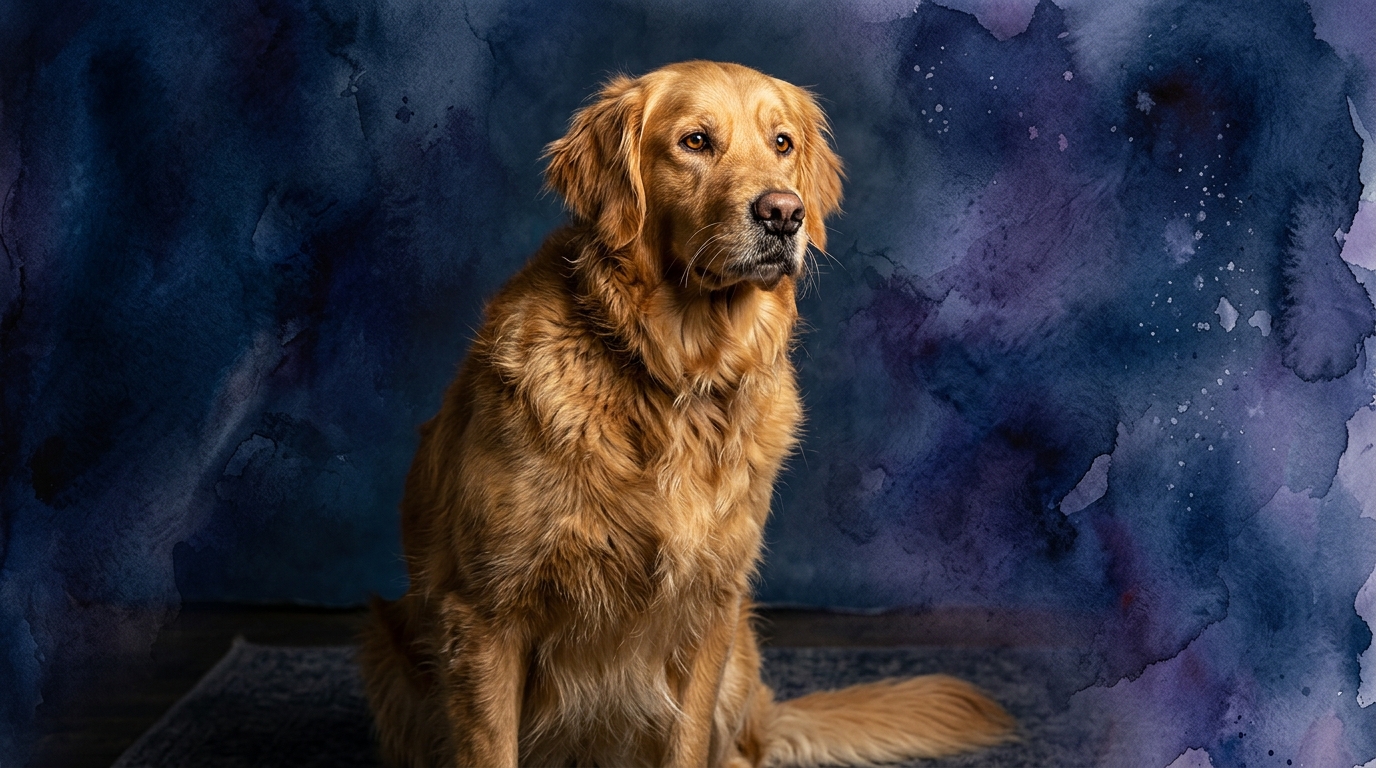
The Cosmic Pet Pet IQ Lab employs a five-dimensional framework to map canine cognitive abilities, offering a nuanced view beyond simple labels. For the Golden Retriever, a Sporting group dog with a Coren ranking of #4, their profile reflects a breed bred for partnership and task execution. They score 4/5 in Problem Solving, indicating an aptitude for navigating complex situations and learning new tasks. Their Training Speed is exceptional at 5/5, suggesting a rapid grasp of commands and routines. Social Intelligence, crucial for cooperative work, also stands at a robust 5/5, highlighting their attunement to human cues and social dynamics. Instinctive Drive, focused on their retrieving heritage, is rated 4/5, while Memory, essential for retaining learned behaviors and recognizing patterns, is a strong 4/5.
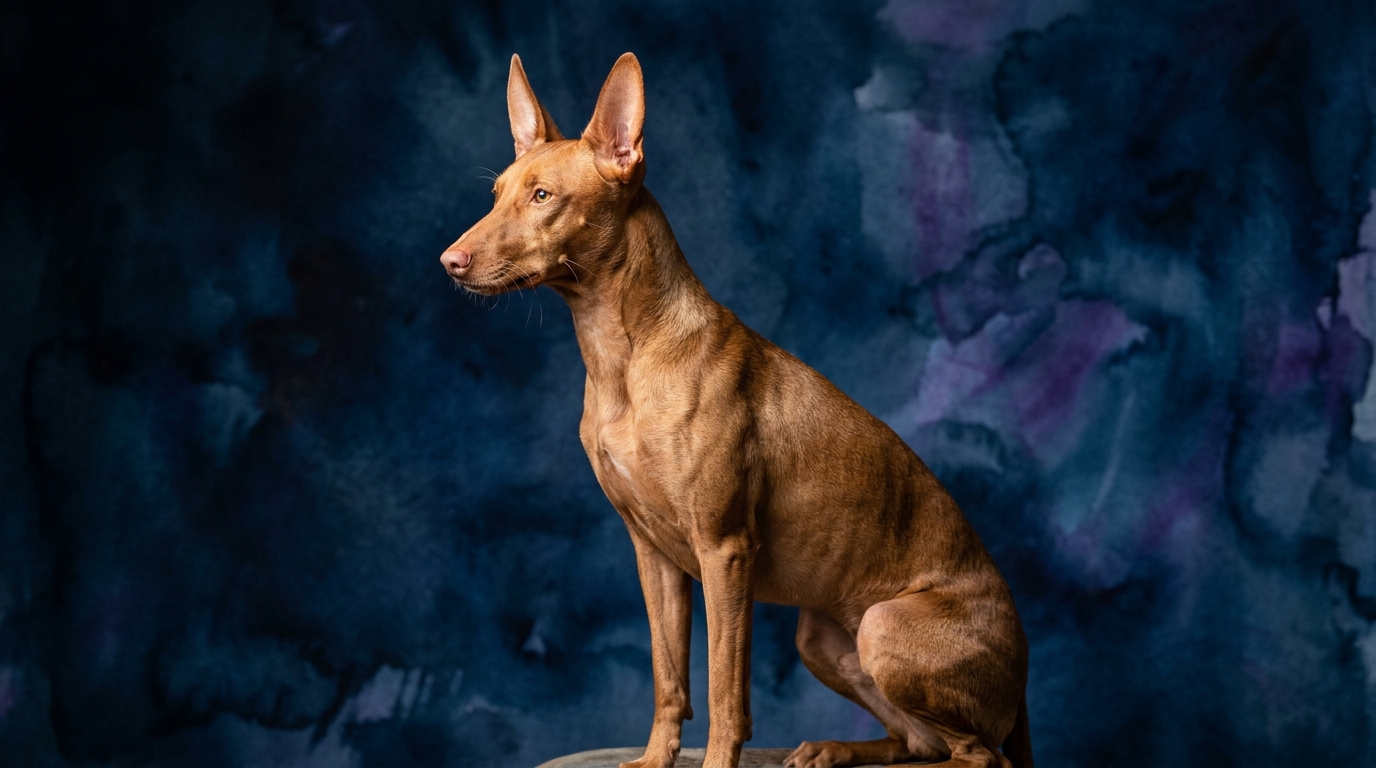
In contrast, the Pharaoh Hound, a member of the Hound group, presents a different cognitive blueprint, reflecting its ancient sighthound origins. This breed does not appear on Coren's ranking, which often favors breeds with cooperative working roles. Across all five IQ dimensions – Problem Solving, Training Speed, Social Intelligence, Instinctive Drive, and Memory – the Pharaoh Hound consistently scores 3/5. This profile suggests a canine whose cognitive strengths lie in independent action and sensory perception rather than direct collaboration. Their problem-solving often manifests in self-directed hunting strategies, while their training speed reflects a need for different motivational approaches. Social intelligence, while present, isn't geared towards constant human interaction, and their instinctive drive strongly aligns with pursuit. Memory serves their hunting needs, perhaps less about complex sequences and more about terrain and prey.
Where the Golden Retriever's Cognition Shines
The Golden Retriever's cognitive strengths are particularly evident in scenarios requiring sustained attention, rapid learning, and keen social awareness. Their 5/5 Training Speed means they absorb new commands and routines with remarkable efficiency, often mastering a behavior after only a few repetitions. This makes them exceptionally adaptable to various roles, from service work to competitive obedience, where precision and quick execution are paramount. Their high Social Intelligence (5/5) translates into an acute sensitivity to human body language, vocal tone, and emotional states, allowing them to form deep, responsive partnerships. They are adept at interpreting subtle cues, making them intuitive companions and effective working dogs who genuinely desire to cooperate.
Furthermore, their 4/5 Problem Solving ability, combined with a 4/5 Memory, allows Golden Retrievers to navigate novel situations by applying previously learned principles. For instance, they can figure out how to open a child-proof gate after observing a human, or remember a complex retrieve sequence over time. This cognitive flexibility and capacity for recall enable them to excel in dynamic environments where quick thinking and consistent performance are required, whether it's navigating an agility course or completing a multi-step retrieve. Their instinctive drive (4/5) for carrying objects in their mouths is neatly channeled into cooperative retrieving games and tasks, making their inherent predispositions align well with human-directed activities.
The Pharaoh Hound's Unique Cognitive Strengths
While the Pharaoh Hound's IQ scores of 3/5 across the board might suggest a less 'trainable' dog in the traditional sense, their cognitive profile reflects a different kind of brilliance—one forged in millennia of independent hunting. Their Problem Solving (3/5) isn't about deciphering human puzzles, but rather about independently strategizing during a chase, navigating varied terrain, and anticipating prey movements. This self-reliance means they are less likely to wait for human instruction when a compelling scent or sight appears, instead relying on their own judgment to pursue. Their instinctive drive (3/5) is intensely focused on the hunt, a deep-seated impulse to spot, chase, and capture, which is a complex cognitive sequence in itself.
The Pharaoh Hound's Memory (3/5) is likely finely tuned to its environment and hunting grounds. They might recall specific pathways, optimal hunting spots, or the habits of local wildlife with precision, even if they don't retain multi-step obedience routines with the same alacrity as a Golden Retriever. Their Social Intelligence (3/5), while not centered on eager-to-please cooperation, allows for strong bonds with their immediate family, often expressed through affectionate, though sometimes aloof, companionship. They understand their social unit, but their motivations are less about pleasing a handler and more about satisfying their inherent drives. This independent nature, rather than a deficit, is a highly refined cognitive adaptation for their historical role.
Training: Cooperation vs. Independent Spirit
When considering ease of training, the difference between these two breeds is pronounced, stemming directly from their divergent IQ profiles. The Golden Retriever, with a Training Speed of 5/5 and Social Intelligence of 5/5, generally approaches training with an eager, cooperative mindset. They thrive on positive reinforcement and the positive social interaction it brings, quickly connecting commands with actions and seeking to please their handler. Behavioral differences like their natural 'soft mouth' for retrieving and their focus on human interaction make them highly responsive to consistent, reward-based methods. They typically enjoy the process of learning and performing tasks alongside their human companions, making them a more straightforward choice for those seeking a dog to excel in structured obedience or complex skill acquisition.
The Pharaoh Hound, with 3/5 scores in both Training Speed and Social Intelligence, requires a different approach. Their independence and strong instinctive drive for pursuit mean they are less inherently motivated by human approval alone. Training them often demands immense patience, creativity, and high-value rewards to capture and hold their attention, especially outdoors where scents and sights can easily override human commands. Their problem-solving manifests in figuring out how to achieve their own objectives, which might not align with the handler's. While certainly trainable, they are often described as having a 'what's in it for me?' attitude, requiring owners to make training engaging, varied, and relevant to their natural inclinations. Establishing a strong, trusting bond is paramount, as is understanding that their 'listening' might be selective when their chase instinct is activated.
Matching Breeds to Lifestyles: Active Partnership vs. Independent Companionship
The cognitive profiles of the Golden Retriever and Pharaoh Hound suggest they suit different owner temperaments and lifestyles. Owners who thrive on active, collaborative engagement will likely find the Golden Retriever a perfect fit. Their robust Instinctive Drive (4/5) for retrieving, coupled with their high Social Intelligence (5/5) and Problem Solving (4/5), means they excel in activities like agility, dock diving, obedience trials, or even just extensive games of fetch and hide-and-seek. They require consistent mental stimulation that involves human partnership, and they genuinely enjoy being an active participant in family life. Their cognitive makeup means they are happiest when given a 'job' to do, even if that job is simply being a well-mannered, highly responsive family member.
For owners who appreciate an independent spirit and can accommodate a dog with strong, ancient instincts, the Pharaoh Hound offers a unique companionship. While they are certainly active and require significant physical exercise—often in the form of secure, off-leash running opportunities to satisfy their chase drive—their mental engagement is less about cooperative tasks and more about self-directed exploration and sensory processing. Their lower Social Intelligence (3/5) doesn't mean they aren't affectionate, but their affection might be expressed differently, perhaps with a quiet presence or sudden bursts of playful interaction. Owners must understand that a Pharaoh Hound's cognitive needs revolve around fulfilling their sighthound nature, providing outlets for their keen senses and chase instincts, rather than expecting a dog that lives to follow every command or participate in every human-directed activity.
The Verdict
Choose the Golden Retriever if you seek a highly cooperative, eager-to-please companion who thrives on shared activities and rapidly masters new skills alongside you. Their cognitive makeup makes them exceptional partners for diverse training goals and family integration.
Opt for the Pharaoh Hound if you appreciate an independent, ancient breed with a strong drive for pursuit, valuing their unique blend of affectionate companionship and self-reliant spirit. Be prepared to provide outlets for their innate sighthound behaviors and approach training with patience and creativity.
🧠 Find Your Pet's IQ Score
Our Pet IQ Lab assessment covers 25+ tests across 5 cognitive dimensions — personalized to your breed.
Take the Full IQ Test →Frequently Asked Questions
Are Pharaoh Hounds difficult to train given their 3/5 training speed?
Pharaoh Hounds are not 'difficult' but require a different training approach compared to more cooperative breeds. Their independence means training needs to be highly motivating, engaging, and consistent, often focusing on high-value rewards and making activities relevant to their natural instincts. Patience and understanding their sighthound nature are key to success.
How does a Golden Retriever's 5/5 social intelligence manifest in daily life?
A Golden Retriever's high social intelligence means they are highly attuned to their human family's emotions, body language, and routines. They often anticipate needs, respond quickly to verbal and non-verbal cues, and actively seek interaction and companionship. This makes them exceptionally adaptable to family dynamics and sensitive to their owners' moods.
What kind of mental enrichment is best for each breed?
Golden Retrievers thrive on mental enrichment that involves partnership, such as puzzle toys, obedience training, scent work, or learning complex tricks. Pharaoh Hounds benefit from activities that engage their senses and chase drive, like lure coursing, secure off-leash running, or challenging scent games that allow for independent problem-solving.