
Side-by-Side Cognitive Profiles
The Cosmic Pet Pet IQ Lab employs a multi-dimensional approach to assess canine intelligence, moving beyond simple obedience to encompass a broader spectrum of cognitive functions. For the Golden Retriever, a Sporting group dog with a Coren rank of #4, its profile paints a picture of a capable and cooperative intellect. Their Problem Solving score of 4/5 indicates a strong aptitude for navigating complex situations and figuring out novel challenges, often with a methodical approach. Training Speed, rated 5/5, highlights their exceptional capacity for rapid command acquisition and retention, making them eager and quick learners. Social Intelligence, also at 5/5, underscores their profound understanding of human cues, empathy, and ability to integrate seamlessly into social structures. Instinctive Drive, at 4/5, reflects their strong innate desire to retrieve and work alongside humans, a legacy of their breeding. Finally, their Memory score of 4/5 signifies a robust ability to recall commands, routines, and individuals over time.
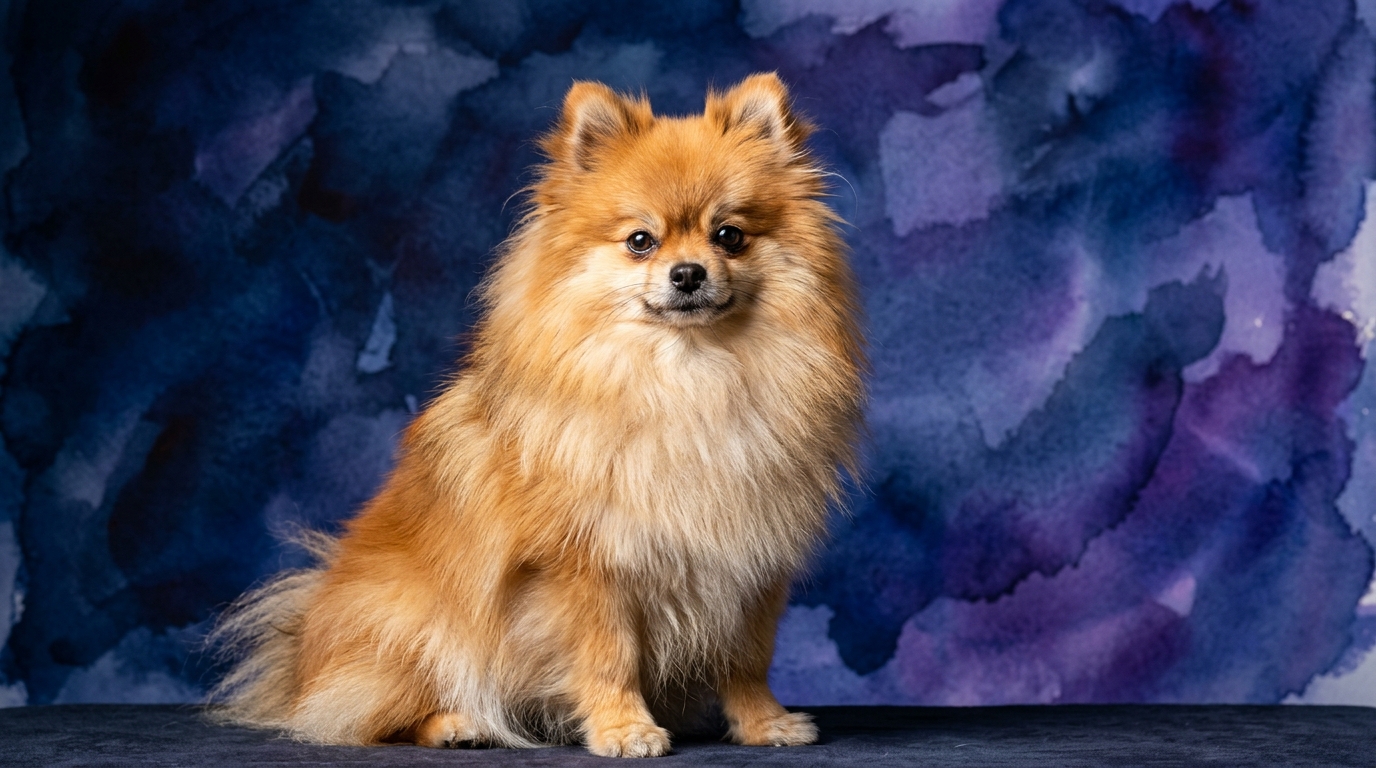
In contrast, the Pomeranian, a Toy group dog with a Coren rank of #23, presents a cognitive profile well-suited to its role as a companion, often surprising with its mental agility given its diminutive size. Their Problem Solving score of 4/5 matches that of the Golden Retriever, suggesting a surprising capability for tackling mental puzzles and adapting to varied home environments. Training Speed, at 4/5, indicates a good, though perhaps slightly less rapid, ability to learn and respond to commands compared to the Golden. Social Intelligence, also 4/5, demonstrates their capacity for forming deep bonds and interpreting their owner's emotional states, making them highly perceptive companions. Their Instinctive Drive, rated 3/5, is less pronounced than a working breed, focusing more on companionship rather than specific tasks, though they can exhibit strong prey drive towards small animals. Memory, like the Golden, is rated 4/5, reflecting their consistent recall of routines, people, and learned behaviors.
Where the Golden Retriever Excels Cognitively
The Golden Retriever's cognitive strengths are particularly evident in areas demanding collaboration, rapid learning, and a strong work ethic. Their superior Training Speed, marked at 5/5, means they pick up new commands with remarkable alacrity, often requiring fewer repetitions than many other breeds. This isn't just about obedience; it reflects a deep engagement with the learning process and a desire to understand and execute human directives efficiently. Their 5/5 Social Intelligence further amplifies this, allowing them to intuitively grasp complex social cues, anticipate human intentions, and respond with an almost empathetic understanding. This makes them exceptional partners in multi-step tasks, service roles, or advanced canine sports where nuanced communication is paramount.
Furthermore, the Golden's 4/5 Instinctive Drive, rooted in their retrieving heritage, translates into a sustained focus and motivation for goal-oriented activities. While both breeds share a 4/5 Problem Solving score, the Golden's larger physical capacity and inherent drive often lead them to apply their problem-solving skills to more physically demanding or extended tasks, such as navigating complex agility courses or performing intricate scent work. Their cognitive profile is geared towards a partnership where they are actively seeking to engage in and complete tasks alongside their human companions, making them particularly adept at roles requiring sustained mental and physical effort.
Unique Cognitive Strengths of the Pomeranian
While the Pomeranian may not lead in every category, their cognitive profile reveals distinct strengths perfectly suited to their companion role. Their Problem Solving score of 4/5, identical to the Golden, is particularly noteworthy for a toy breed. This indicates a surprising mental dexterity, enabling them to cleverly navigate intricate home environments, figure out how to access preferred spots, or master complex puzzle toys with persistence. They demonstrate an impressive ability to adapt and strategize within their smaller world, often using their keen observation skills to achieve their objectives.
The Pomeranian's 4/5 Social Intelligence, while slightly lower than the Golden's, is still highly developed and manifests as an acute perceptiveness of their primary human's moods and routines. They often become incredibly attuned companions, anticipating emotional states and offering comfort or playful distraction as needed. This deep connection, combined with their 4/5 Memory, allows them to establish and recall consistent behavioral patterns and expectations within the household, making them reliable and predictable companions once routines are established. Their lower 3/5 Instinctive Drive, in this context, can be a strength; it means they are generally less driven by a need for specific 'jobs' and are content with more focused, intimate interaction, making them excellent companions for those seeking a less task-oriented relationship.
Training Ease: A Tale of Two Temperaments
When it comes to training, the Golden Retriever generally presents an easier experience due to its 5/5 Training Speed and 5/5 Social Intelligence. Their innate desire to please, coupled with their rapid command acquisition, means they often eagerly absorb new instructions and strive to perform them correctly. Goldens thrive on positive reinforcement and consistent guidance, quickly grasping complex sequences and demonstrating a remarkable capacity for generalization – applying learned behaviors to new situations. Their history as working dogs means they are predisposed to cooperation and focusing on their handler, making advanced obedience or specialized training feel like a natural extension of their daily lives.
The Pomeranian, with a 4/5 Training Speed, is certainly capable of learning, but may require a slightly different approach. While perceptive and intelligent, they can sometimes exhibit an independent streak or be more easily distracted than a Golden. Training a Pomeranian often benefits from shorter, highly engaging sessions, utilizing high-value treats and playful reinforcement to maintain their interest. Their strong social intelligence means they respond well to positive interaction, but consistency is key to prevent them from developing 'small dog syndrome' behaviors, which are often a result of insufficient training and boundaries rather than a cognitive deficit. With patience and appropriate methods, Pomeranians can excel in obedience, trick training, and even agility, showcasing their problem-solving and memory skills.
Matching Canine Intellect to Lifestyle
Considering the distinct cognitive profiles, the Golden Retriever aligns beautifully with active owners and families who can provide substantial mental and physical engagement. Their high Training Speed, Social Intelligence, and Instinctive Drive mean they flourish when given 'jobs' to do, whether that's learning advanced obedience, participating in dog sports like agility or retrieving, or serving as a therapy dog. Owners who enjoy outdoor activities, regular training sessions, and desire a highly interactive companion will find the Golden Retriever's intellect a perfect match, as they thrive on complex interactions and sustained partnership.
Conversely, the Pomeranian's cognitive strengths make them an excellent choice for owners seeking a companion with a keen mind but perhaps less demanding physical and task-oriented needs. Their 4/5 Problem Solving and Social Intelligence ensure they are engaging and responsive companions, capable of learning tricks and enjoying puzzle toys, but their lower Instinctive Drive means they aren't constantly seeking a 'job'. They are content with indoor play, short walks, and ample lap time. Relaxed owners, those in smaller living spaces, or individuals who appreciate a highly perceptive and affectionate companion that doesn't require extensive outdoor activities will find the Pomeranian's intellect and personality perfectly suited to their lifestyle.
The Verdict
Choose a Golden Retriever if you seek a highly trainable, empathetic partner for active lifestyles, complex tasks, and sustained intellectual engagement.
Opt for a Pomeranian if you desire a clever, perceptive, and adaptable companion for a more relaxed lifestyle, appreciating their surprising problem-solving in a compact form.
🧠 Find Your Pet's IQ Score
Our Pet IQ Lab assessment covers 25+ tests across 5 cognitive dimensions — personalized to your breed.
Take the Full IQ Test →Frequently Asked Questions
Do Golden Retrievers need more mental stimulation than Pomeranians?
Yes, Golden Retrievers generally require more intense and varied mental stimulation due to their higher instinctive drive and working dog heritage. While both benefit from engagement, Goldens thrive on complex tasks, extended training, and problem-solving activities that challenge their 5/5 social intelligence and 4/5 instinctive drive.
Can a Pomeranian be trained for advanced obedience or tricks?
Absolutely. Despite their smaller size and slightly lower training speed compared to a Golden, Pomeranians possess excellent problem-solving skills (4/5) and memory (4/5). With consistent, positive reinforcement and engaging methods, they can master a wide array of advanced obedience commands and perform impressive tricks, often delighting with their cleverness.
Are there any cognitive similarities between Golden Retrievers and Pomeranians?
Yes, both breeds share a strong 4/5 score in Problem Solving and Memory, indicating a similar capacity for navigating novel situations and retaining learned information. While their application of these skills might differ due to physical attributes and breed purpose, both demonstrate a notable aptitude for understanding and adapting to their environment and routines.